



























• Latest
  • Trending
Mai: Child of Ages Review

Mai: Child of Ages Review: When European Philosophy Meets Japanese Design

Toy Story 5 Review

Toy Story 5 Review: Pixar Still Knows How to Play

Whispers In May Review

Whispers In May Review: The Adult World Waits at the End of the Road

Amazomania Review

Amazomania Review: Who Owns First Contact?

Moonsigil Atlas

Moonsigil Atlas Review: The Moon Makes Every Turn Count

Never Change! Review

Never Change! Review: High School Becomes a Bureaucratic Trap

That Friend Review

That Friend Review: Friendship Turns Sour in Palm Springs

We Are Stardust Review

We Are Stardust Review: Cosmic Wonder in the Gutter

Just Look Up Review

Just Look Up Review: Climate Activism Caught Mid-Chant

Nickelodeon Extreme Tennis: Next! Review

Nickelodeon Extreme Tennis: Next! Review: Couch Chaos Wins the Match

Mariinka Review

Mariinka Review: War Turns a Town Into Memory

Girlfriends Review

Girlfriends Review: Tracy Choi Finds Drama in the Words Left Unsaid

Replica Review

Replica Review: AI Romance Becomes a Mirror for Modern Loneliness

  • Home
  • Privacy Policy
  • Terms and Conditions
  • Gazettely Review Guidelines
Wednesday, June 17, 2026
GAZETTELY
  • Home
  • Movie and TV News
    Kiki’s Delivery Service

    BBC Studios and Kadokawa Are Developing a Live-Action ‘Kiki’s Delivery Service’ TV Series

    John De Mol Alliance

    Prime Video Launches Its First Daily Original Series Worldwide With Indian Reality Show ‘Alliance’

    Laverne Cox

    Laverne Cox Says Trump’s DEI Crackdown Cost Her 90% of Her Income: ‘There Are Material Consequences’

    Curry Barker

    YouTube Filmmaker Curry Barker Turned $750,000 Into $224 Million — Now He’s Calling Out Hollywood

    I Am Frankelda

    Mexico’s First Independent Stop-Motion Feature Arrives on Netflix With Guillermo del Toro’s Blessing

    Auliʻi Cravalho

    Auliʻi Cravalho Cast as Jessica Cruz in ‘My Adventures with Green Lantern,’ DC’s First Animated Universe in 20 Years

    Stephanie Suganami

    Oliver Stone Ends Decade-Long Directing Hiatus with ‘White Lies,’ Adds Stephanie Suganami to Star-Studded Cast

    The Devil Wears Prada 2

    ‘The Devil Wears Prada’ Crosses $1 Billion Worldwide, Cementing Sequel’s Status as 2026’s Surprise Powerhouse

    Milly Alcock

    Milly Alcock’s Supergirl Cape Contains Fabric From Christopher Reeve’s 1978 Superman Costume

  • Movie and TV Reviews
    Toy Story 5 Review

    Toy Story 5 Review: Pixar Still Knows How to Play

    Whispers In May Review

    Whispers In May Review: The Adult World Waits at the End of the Road

    Amazomania Review

    Amazomania Review: Who Owns First Contact?

    Never Change! Review

    Never Change! Review: High School Becomes a Bureaucratic Trap

    That Friend Review

    That Friend Review: Friendship Turns Sour in Palm Springs

    We Are Stardust Review

    We Are Stardust Review: Cosmic Wonder in the Gutter

    Just Look Up Review

    Just Look Up Review: Climate Activism Caught Mid-Chant

    Mariinka Review

    Mariinka Review: War Turns a Town Into Memory

    Girlfriends Review

    Girlfriends Review: Tracy Choi Finds Drama in the Words Left Unsaid

  • Game Reviews
    Moonsigil Atlas

    Moonsigil Atlas Review: The Moon Makes Every Turn Count

    Nickelodeon Extreme Tennis: Next! Review

    Nickelodeon Extreme Tennis: Next! Review: Couch Chaos Wins the Match

    Junkster Review

    Junkster Review: UM-13 Builds a Bright Path Through Familiar Platforming

    RoadOut Review

    RoadOut Review: Strong Atmosphere Carries an Uneven Road War

    Duck Side of the Moon Review

    Duck Side of the Moon Review: Doug’s Crash Landing Becomes a Gentle Delight

    TetherGeist Review

    TetherGeist Review: Clever Platforming Carries a Heartfelt Adventure

    Gambonanza Review

    Gambonanza Review: Chess Gets a Roguelite Shuffle

    Solarpunk Review

    Solarpunk Review: Peaceful Crafting Above the Clouds

    House Flipper Remastered Collection Review

    House Flipper Remastered Collection Review: The Definitive Cozy Renovation Sim

  • The Bests
No Result
View All Result
  • Home
  • Movie and TV News
    Kiki’s Delivery Service

    BBC Studios and Kadokawa Are Developing a Live-Action ‘Kiki’s Delivery Service’ TV Series

    John De Mol Alliance

    Prime Video Launches Its First Daily Original Series Worldwide With Indian Reality Show ‘Alliance’

    Laverne Cox

    Laverne Cox Says Trump’s DEI Crackdown Cost Her 90% of Her Income: ‘There Are Material Consequences’

    Curry Barker

    YouTube Filmmaker Curry Barker Turned $750,000 Into $224 Million — Now He’s Calling Out Hollywood

    I Am Frankelda

    Mexico’s First Independent Stop-Motion Feature Arrives on Netflix With Guillermo del Toro’s Blessing

    Auliʻi Cravalho

    Auliʻi Cravalho Cast as Jessica Cruz in ‘My Adventures with Green Lantern,’ DC’s First Animated Universe in 20 Years

    Stephanie Suganami

    Oliver Stone Ends Decade-Long Directing Hiatus with ‘White Lies,’ Adds Stephanie Suganami to Star-Studded Cast

    The Devil Wears Prada 2

    ‘The Devil Wears Prada’ Crosses $1 Billion Worldwide, Cementing Sequel’s Status as 2026’s Surprise Powerhouse

    Milly Alcock

    Milly Alcock’s Supergirl Cape Contains Fabric From Christopher Reeve’s 1978 Superman Costume

  • Movie and TV Reviews
    Toy Story 5 Review

    Toy Story 5 Review: Pixar Still Knows How to Play

    Whispers In May Review

    Whispers In May Review: The Adult World Waits at the End of the Road

    Amazomania Review

    Amazomania Review: Who Owns First Contact?

    Never Change! Review

    Never Change! Review: High School Becomes a Bureaucratic Trap

    That Friend Review

    That Friend Review: Friendship Turns Sour in Palm Springs

    We Are Stardust Review

    We Are Stardust Review: Cosmic Wonder in the Gutter

    Just Look Up Review

    Just Look Up Review: Climate Activism Caught Mid-Chant

    Mariinka Review

    Mariinka Review: War Turns a Town Into Memory

    Girlfriends Review

    Girlfriends Review: Tracy Choi Finds Drama in the Words Left Unsaid

  • Game Reviews
    Moonsigil Atlas

    Moonsigil Atlas Review: The Moon Makes Every Turn Count

    Nickelodeon Extreme Tennis: Next! Review

    Nickelodeon Extreme Tennis: Next! Review: Couch Chaos Wins the Match

    Junkster Review

    Junkster Review: UM-13 Builds a Bright Path Through Familiar Platforming

    RoadOut Review

    RoadOut Review: Strong Atmosphere Carries an Uneven Road War

    Duck Side of the Moon Review

    Duck Side of the Moon Review: Doug’s Crash Landing Becomes a Gentle Delight

    TetherGeist Review

    TetherGeist Review: Clever Platforming Carries a Heartfelt Adventure

    Gambonanza Review

    Gambonanza Review: Chess Gets a Roguelite Shuffle

    Solarpunk Review

    Solarpunk Review: Peaceful Crafting Above the Clouds

    House Flipper Remastered Collection Review

    House Flipper Remastered Collection Review: The Definitive Cozy Renovation Sim

  • The Bests
No Result
View All Result
GAZETTELY
No Result
View All Result
Mai: Child of Ages Review

The World Of Love Review: Seo Su-bin Anchors a Masterful Character Study

Giant Review: The Anti-Hagiography of a Boxing Legend

Home Games Reviews Games

Mai: Child of Ages Review: When European Philosophy Meets Japanese Design

Enzo Barese by Enzo Barese
8 months ago
in Games, PC Games, Reviews Games
Reading Time: 5 mins read
A A
0
Share on FacebookShare on TwitterShare on PinterestShare on WhatsAppShare on TelegramSummarize with ChatGPTSummarize with Perplexity

Chubby Pixel’s Mai: Child of Ages arrives from Milan carrying the weight of multiple lineages. This 3D action-adventure game, five years in development with a core team of just five people, represents the small studio’s boldest venture after a catalog of experimental projects. Launching on PC via Steam on September 18, 2025, and reaching Nintendo Switch a week later at $14.99, the game positions itself at a curious intersection: Italian indie sensibility meeting the structural language of Japanese adventure design.

The premise centers on Mai, who players guide from age four through adolescence across a world fractured by “The Last Great War.” Here, past and future timelines bleed into each other, creating a suspended reality where ancient ruins stand beside dystopian wreckage. The Uroboro Stone, your central artifact, manipulates temporal flow, allowing Mai to exist simultaneously as child, adolescent, and shadowed future self.

Drawing clear inspiration from Ocarina of Time’s temporal shifts while layering in Journey’s contemplative rhythm and Nier Automata’s philosophical density, the game offers twenty hours of content that speaks to how independent European studios absorb and reinterpret the grammar of Japanese game design, filtering it through different cultural anxieties about memory, responsibility, and cyclical violence.

Mechanics as Metaphor: The Architecture of Temporal Identity

The time manipulation system functions as both structural foundation and thematic statement. Switching between Mai’s temporal states transforms problem-solving from linear progression into something closer to archaeological excavation. A bridge intact in the past allows young Mai passage; in the present, those same ruins might conceal hidden routes. This phasing between temporal layers creates puzzles that demand spatial thinking across multiple timelines simultaneously. Simple cause-and-effect scenarios (seed a tree in the past, climb it in the present) evolve into intricate chains requiring players to balance actions across three distinct periods at once.

What distinguishes this from standard time-travel mechanics is how age fundamentally alters capability. Young Mai moves with the speed and freedom of childhood: agile, able to jump freely, employing mystical plants as environmental tools. Adolescent Mai trades that lightness for physical presence. She cannot jump on command but gains the strength to climb ledges and scale vines, stamina permitting. This shift mirrors something essential about growth itself, the simultaneous loss and gain that accompanies maturation. European games often explore childhood through loss and nostalgia. Mai: Child of Ages extends that tradition while grafting it onto Japanese action-adventure structure, creating hybrid gameplay that feels culturally amphibious.

Combat introduces the Uroboro Stone’s sword form and the Tempo Shield, but here the system reveals its limitations. Mai sends temporal echoes of herself to attack and evade, with each age offering different combat profiles: young Mai exploits speed and gaps, present Mai balances power with agility, future Mai delivers slow but crushing force. Timing and positioning matter, yet enemy encounters grow tedious when foes absorb excessive damage without offering dynamic challenge. Boss battles salvage this somewhat by integrating puzzles into combat scenarios, transforming fights into themed problem-solving.

Also Read

  • best 2025 games
    Gazettely's 30 Best Video Games of 2025
  • Best Christmas Movies
    30 Best Christmas Movies to Watch This Holiday Season
  • best 2025 tv shows
    Gazettely's 30 Best TV Shows of 2025
  • best sci fi movies
    30 Best Sci Fi Movies Ever: Gazettely's Ultimate…
  • 30 Best Drama Movies
    30 Best Drama Movies to Watch Before You Die
  • best fantasy movies
    30 Best Fantasy Movies Ever, Ranked: From…

The Metroidvania structure encourages revisiting environments with new abilities, though progression deliberately rejects grind-based advancement. Experience flows from discovering memories, rewriting timeline events, and solving major environmental problems. This narrative-driven growth rewards investment in the world’s lore over mechanical repetition, a choice that aligns with European preferences for story integration. A two-player cooperative mode allows a second player to control spirits or enemies, opening tactical possibilities without compromising the single-player focus.

The Friction Between Vision and Execution

The visual design constructs a dreamlike space where organic beauty collides with industrial decay. Each temporal period claims distinct aesthetic identity: the past bathes in warm, nostalgic hues; the present mingles hope with underlying dread; the future turns cold and ominous. Environments rich in specific detail create strong atmospheric grounding. Mai herself shows expressive animation work that subtly shifts depending on which temporal version you control, a small touch that reinforces the game’s thematic concern with fractured identity.

Mai: Child of Ages Review

Technical execution, particularly on Nintendo Switch, cannot match this artistic ambition. The console version locks at 30 frames per second with reduced resolution. What proves disruptive is the persistent pop-in that begins immediately upon stepping outside Mai’s home. Objects materialize and dematerialize as you move, rocks shift appearance while you stand still, and textures blur during moments of heightened activity. Frame rate drops occur during intense sequences, and some character animations carry stiffness that breaks immersion.

This gap between vision and technical polish reflects the reality of small-team development attempting ambitious scope. The five-person core team at Chubby Pixel pushed beyond their previous projects’ scale, and the strain shows. Yet the art direction maintains atmosphere despite these shortcomings, suggesting that strong aesthetic choices can partially compensate for technical limitation.

Eric Ferrari’s musical composition succeeds where technical execution falters. The score blends haunting orchestral swells with delicate piano work, creating sonic landscapes that shift across temporal periods. Soft lullabies accompany the past, bittersweet melodies define the present, and distorted soundscapes tinged with melancholy mark the future. Voice acting remains limited but effective, particularly Mai’s internal monologues, which carry emotional weight that grounds increasingly abstract narrative developments. Environmental audio adds textural authenticity, though occasional mixing issues bury dialogue beneath music or effects.

Memory, Trauma, and the Weight of Cyclical History

The narrative positions Mai simultaneously as past self, present self, and shadow of her future incarnation. These temporal states function as lived realities rather than mere plot mechanisms, informing how she perceives and interacts with her fractured world. The story begins simply: a four-year-old living with her grandfather, an earthquake, a cave discovery that reveals the seed of time. What follows transforms from basic fetch quests into a mission to prevent universal collapse and confront historical injustice.
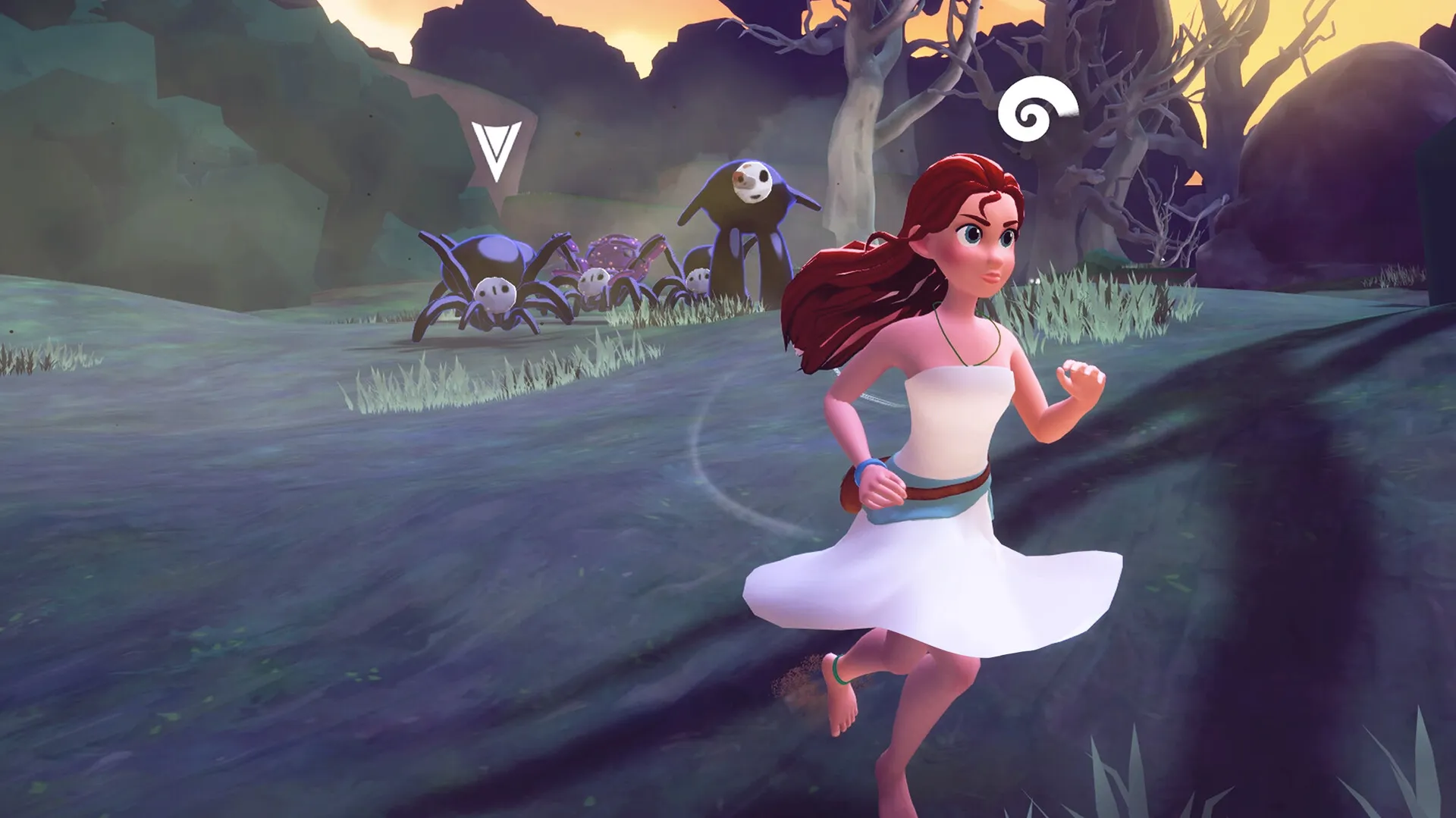
Mai: Child of Ages Review

Thematically, the game explores maturation within a world bearing visible scars from war, environmental catastrophe, and cultural trauma. Time here refuses linearity, flowing and doubling back on itself, raising questions about determinism and agency. Mai’s journey balances cosmic-scale concerns (the fate of civilizations, the weight of collective memory) against intimate personal struggles rooted in fear, loneliness, and the search for identity. This dual focus reflects European philosophical traditions that situate individual experience within broader historical currents.

The philosophical dialogue occasionally tips into preachiness, moments where the writing tells rather than shows its thematic concerns. Yet sincerity permeates the work, and when the storytelling finds its rhythm, it achieves genuine emotional resonance. The game asks players to consider human mistakes, the fragility of hope, questions of duty and legacy that extend beyond individual lives.

Pacing remains uneven. The rough opening gives way to stronger material, but constant shifts between exploration, puzzle-solving, and combat demand careful rhythm the game doesn’t always maintain. Players seeking straightforward action-platforming will find the contemplative stretches frustrating.

Mai: Child of Ages demonstrates how small studios can absorb design languages from other traditions and filter them through local cultural concerns. It stumbles technically, struggles with combat depth, and occasionally loses control of its pacing. Yet it pursues something meaningful: an examination of how we carry the past forward, how identity fractures across time, how personal growth intersects with historical trauma.

The Review

Mai: Child of Ages

7 Score

Mai: Child of Ages reaches beyond its technical grasp, yet that ambition deserves recognition. Chubby Pixel's five-person team crafted a thoughtful meditation on identity and temporal consequence that resonates despite persistent performance issues and repetitive combat. The time manipulation mechanics integrate meaningfully into both puzzle design and thematic exploration, creating moments where gameplay and narrative achieve genuine synthesis. Technical limitations on Switch and uneven pacing prevent this from reaching its full potential, but the emotional core remains intact. For players valuing contemplative storytelling over polish, this flawed but heartfelt journey offers something memorable.

PROS

  • Intelligent time manipulation that serves both mechanics and narrative
  • Strong thematic exploration of identity and cyclical trauma
  • Age-based gameplay evolution creates meaningful mechanical shifts
  • Excellent musical composition by Eric Ferrari
  • Distinctive visual aesthetic across temporal periods

CONS

  • Significant technical issues, especially pop-in and frame rate drops on Switch
  • Combat becomes repetitive against damage-sponge enemies
  • Rough opening sequence with basic fetch quests
  • Uneven pacing between exploration, puzzles, and combat
  • Some stiff animations and occasional sound mixing problems

Review Breakdown

  • Overall 0

Tags: Action gameAdventureChubby PixelFeaturedMai: Child of Ages
Previous Post

The World Of Love Review: Seo Su-bin Anchors a Masterful Character Study

Next Post

Giant Review: The Anti-Hagiography of a Boxing Legend

Try AI Movie Recommender

Gazettely AI Movie Recommender

This Week's Top Reads

  • Is This Seat Taken? Review

    Is This Seat Taken? Review: A Satisfying Mental Workout

    1026 shares
    Share 0 Tweet 0
  • House of the Dragon Season 3 Review: The Throne Learns to Bleed

    1 shares
    Share 0 Tweet 0
  • Trust Review: Squandered Potential and an Incoherent Plot

    6 shares
    Share 0 Tweet 0
  • The Polygamist Review: Betrayal Burns Bright in Netflix’s 22-Episode Drama

    0 shares
    Share 0 Tweet 0
  • Tip Toe Review: Channel 4’s Five-Part Drama Turns Everyday Politeness Into Dread

    3 shares
    Share 0 Tweet 0
  • Proud Review: Ignacy Liss Shines in HBO Max’s Striking New Series

    2 shares
    Share 0 Tweet 0
  • The Evil Lawyer Review: Netflix’s Thai Thriller Puts Ethics on Trial

    1 shares
    Share 0 Tweet 0

Must Read Articles

Toy Story 5 Review
Movies

Toy Story 5 Review: Pixar Still Knows How to Play

13 hours ago
House of the Dragon Season 3 Review
TV Shows

House of the Dragon Season 3 Review: The Throne Learns to Bleed

2 days ago
Patience Season 2 Review
TV Shows

Patience Season 2 Review: Ella Maisy Purvis Carries a Sharper, Smarter Mystery Drama

2 days ago
X-Men ’97 Season 2 Review
TV Shows

X-Men ’97 Season 2 Review: Apocalypse Rises in a Darker, Sharper Mutant Epic

3 days ago
Sweet Magnolias Season 5 Review
TV Shows

Sweet Magnolias Season 5 Review: Serenity Finds Comfort in Change

4 days ago
Loading poll ...
Coming Soon
Which of Alfred Hitchcock's 1960s thrillers is your all-time favorite?

Gazettely is your go-to destination for all things gaming, movies, and TV. With fresh reviews, trending articles, and editor picks, we help you stay informed and entertained.

© 2021-2026 All Rights Reserved for Gazettely

What’s Inside

  • Movie & TV Reviews
  • Game Reviews
  • Featured Articles
  • Latest News
  • Editorial Picks

Quick Links

  • Home
  • About US
  • Contact Us
  • Advertise with Us
  • Review Guidelines

Follow Us

Facebook X-twitter Youtube Instagram
No Result
View All Result
  • Home
  • Movies
  • Entertainment News
  • Movie and TV Reviews
  • TV Shows
  • Game News
  • Game Reviews
  • Contact Us

© 2024 All Rights Reserved for Gazettely