
























![Kingdom Hearts Collection [I-III] Review](https://gazettely.com/wp-content/uploads/2026/10/Kingdom-Hearts-Collection-I-III-1-360x180.webp "Kingdom Hearts Collection [I-III] Review: KHII Holds Steady as Newer Entries Fluctuate 37")



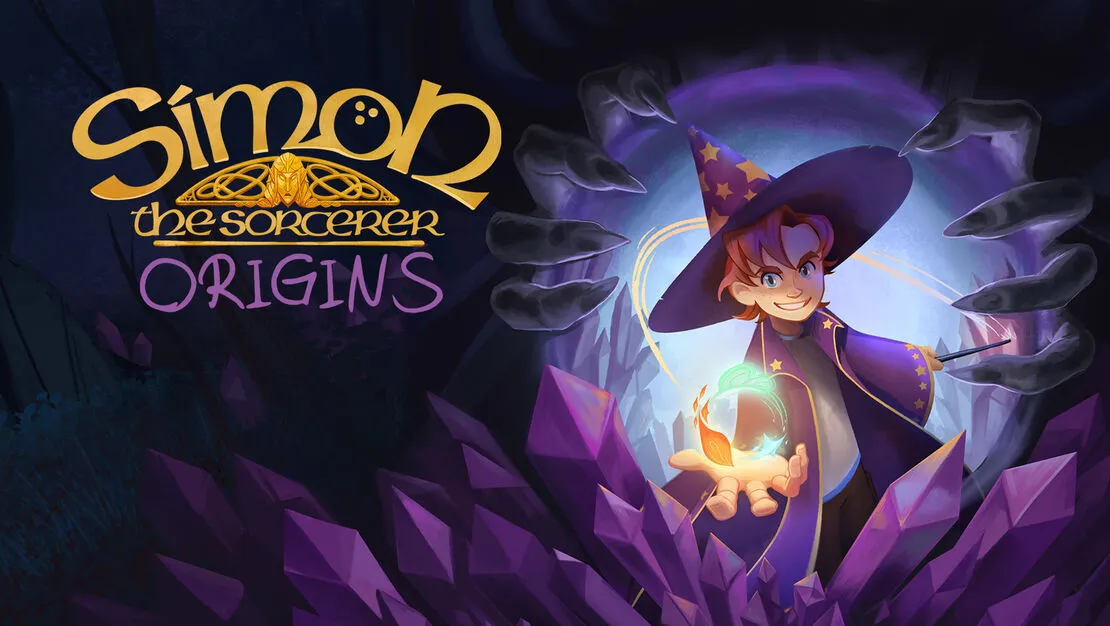

Simon the Sorcerer Origins returns to a classic point-and-click series with a prequel that lands decades after the originals of the late 1980s and early 1990s. The story traces the beginning of Simon’s arc. He is pulled from a rough Earth routine into a magical world, told he fulfills a prophecy, starts learning magic, meets the old wizard Calypso, and has first run-ins with the antagonist Sordid.
The tone sets quickly and stays consistent: sarcastic, cynical, and distinctly British. Bringing back Chris Barrie to voice Simon anchors that tone with a familiar, witty performance. The core mechanic follows the established point-and-click formula.
Performance and Witty Scripting
The narrative design relies on sharp writing and clear character delivery. Dialogue leans into British humor that drives the comedy. Voice acting lifts the script. Chris Barrie’s performance as a pre-teen Simon provides the right snark and appeal, and the supporting cast contributes strong work.
The script supports the humor with fourth wall breaks. Simon remarks on the absurdity of his tasks and addresses the player during yet another fetch quest. A waypoint icon even collides with the environment during a self-aware gag.
Presentation favors a hand-drawn look with a warm, stylized quality that recalls the classic spirit associated with ScummVM-era adventures. Visual fidelity wavers at times. Animation can read as stiff, and close camera work can expose clunky detail. The opening credits use Rick Astley to set a light mood with a nostalgic touch.
The Puzzles of Logic and Leaps
The loop holds to genre standards. Players scour locations for disparate objects, stash them in Simon’s bottomless wizard hat, and test combinations or uses to meet objectives. Many puzzles sit on firm logic and reward careful trial. Several sequences lean into challenging, opaque design that can extend a four to five hour playtime significantly.
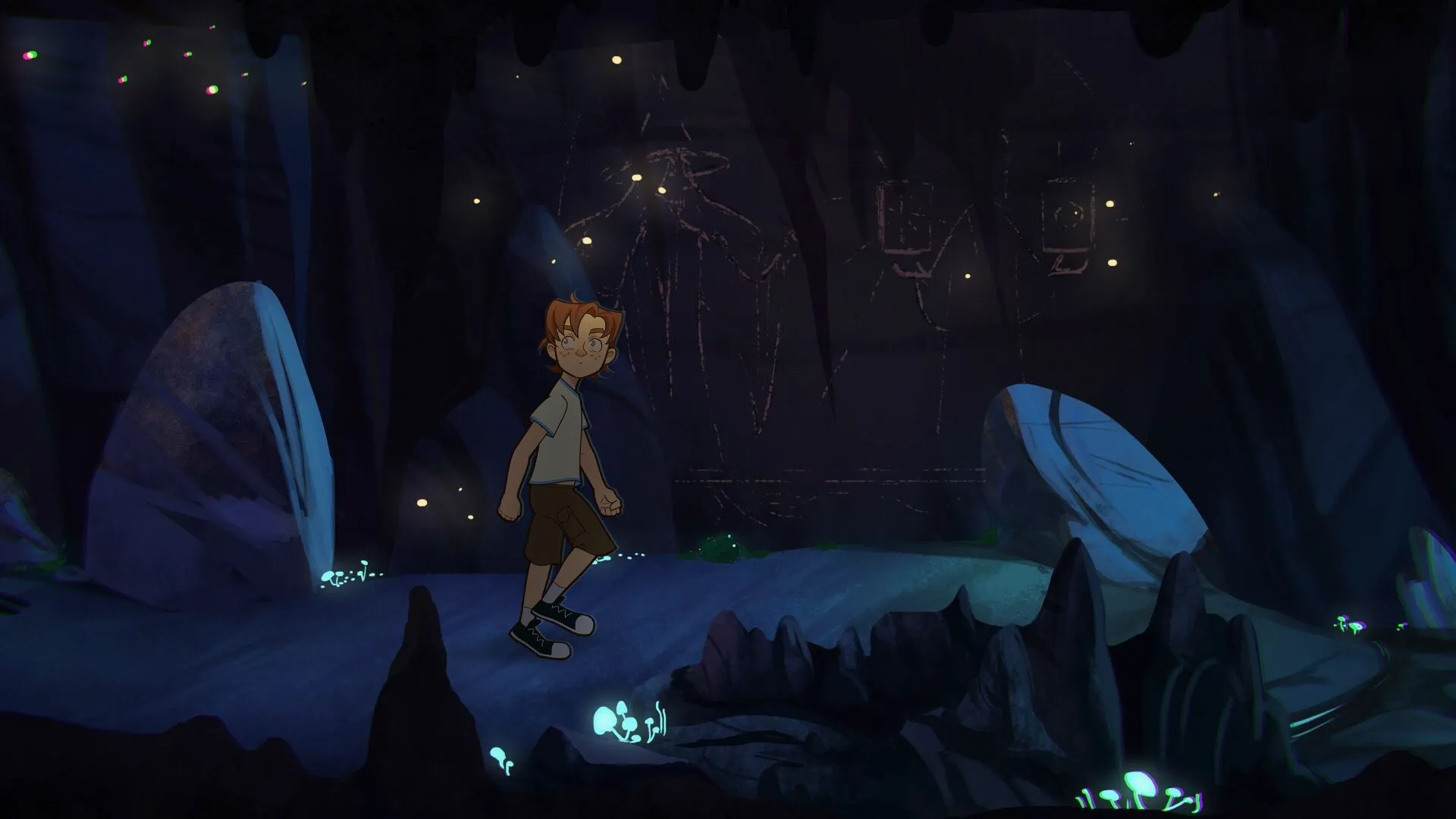
Frustration centers on specific, demanding puzzles. Large areas encourage wandering while players try every interaction and apply each inventory item. Obscure logic creates the difficulty. A late-game step asks players to infer that a cuttlefish in the inventory contains ink, a link not made explicit in Simon’s dialogue. Crafting a particular sleeping potion lacks clear in-game context.
These moments can stall progress for hours. A technical risk compounds matters. Missing a key interaction can produce a soft-lock that blocks advancement in later chapters. Solving a tough puzzle without outside help still delivers a strong hit of satisfaction.
Accessibility and Interface Design
Players can select how they move through the world. Dynamic controls allow direct movement across environments, while classic controls mirror a cursor-driven point-and-click setup. Touchscreen input is available in undocked mode. A run function assists traversal and offsets Simon’s slow base walk speed across large maps.
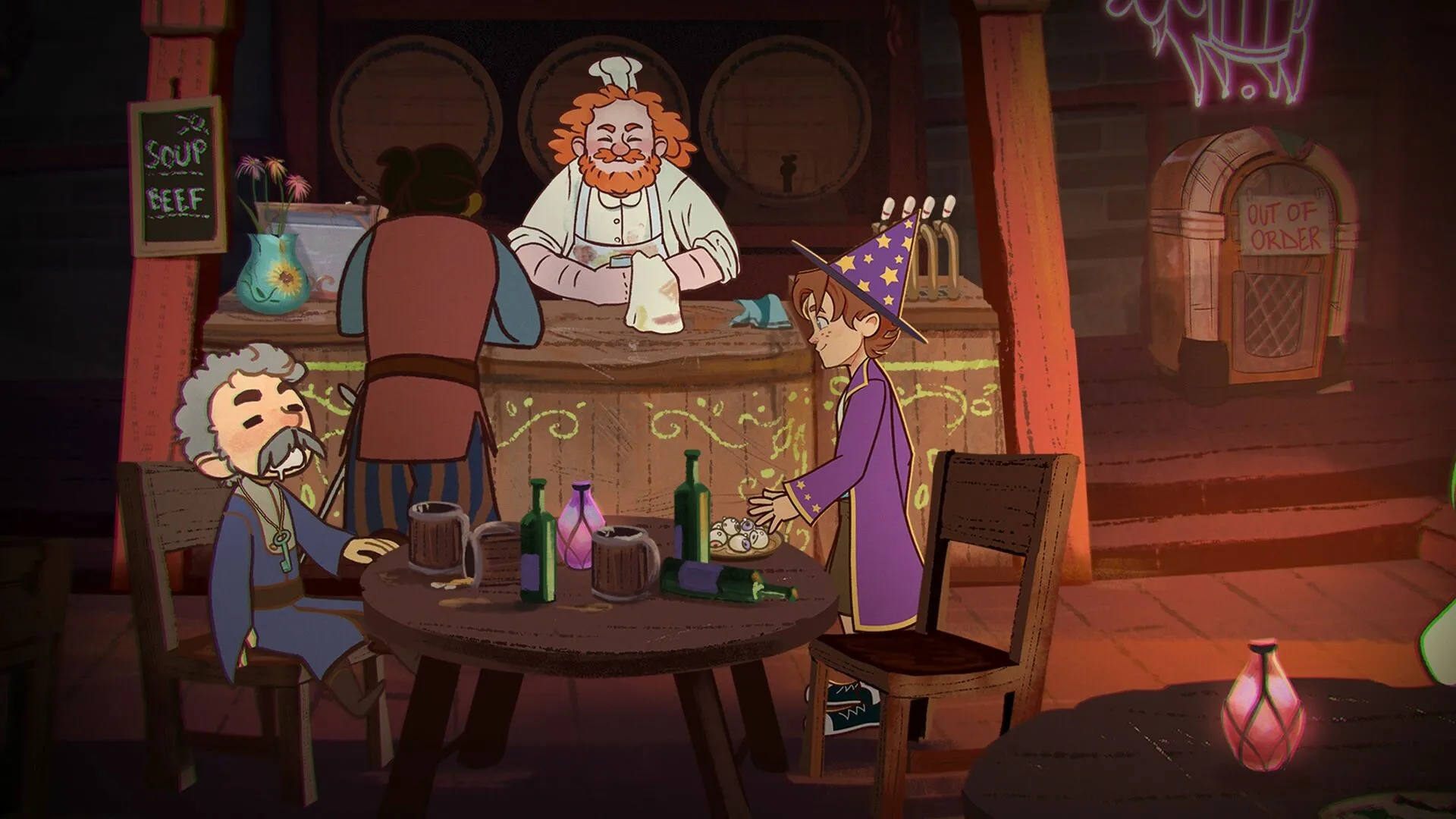
Interface choices reduce busywork. Pixel hunting is addressed with a system that cycles through interactable objects via shoulder buttons or reveals all points of interest with a single press. This modern quality-of-life feature suits contemporary expectations.
One key tool is missing. There is no built-in hint system. Simon offers occasional nudges through commentary, though a contextual hint option or NPC queries about inventory items would ease the most opaque sections. The absence of a formal hint feature affects approachability for players new to the hardcore end of the adventure genre.
The Review
Simon the Sorcerer Origins
Simon the Sorcerer Origins is a successful revival, capturing the cynical wit and nostalgic feel of the original series. Chris Barrie and the charming hand-drawn visuals deliver a delightful experience. However, the game's devotion to 1990s puzzle logic creates significant barriers. While dedicated fans will appreciate the challenge, the absence of a contextual hint system makes the most obtuse challenges frequently frustrating. This is a witty, polished adventure that risks alienating new players with its uncompromising difficulty.
PROS
- Witty writing and British humor.
- Stellar voice acting by Chris Barrie.
- Stellar voice acting by Chris Barrie.
- Charming hand-drawn art style.
- Improved modern interface for interactions.
CONS
- Highly obtuse puzzle logic.
- No in-game hint system.
- Movement becomes tedious when stuck.
- Minor visual clunkiness in close-ups.







