

















![Kingdom Hearts Collection [I-III] Review](https://gazettely.com/wp-content/uploads/2026/10/Kingdom-Hearts-Collection-I-III-1-360x180.webp "Kingdom Hearts Collection [I-III] Review: KHII Holds Steady as Newer Entries Fluctuate 40")


A porcelain bowl trembles on Sarah Tucker’s dining table as a bomb goes off next door, a shockwave that cracks the calm of an immaculate Oxford suburb. The blast tears through the performance of polite conversation and exposes the brittleness of Sarah’s carefully arranged life. From that rupture springs Down Cemetery Road, an eight-part thriller created by Morwenna Banks from Mick Herron’s debut novel. Sarah, an art restorer played by Ruth Wilson with flint-edged precision, fixates on Dinah, the lone child survivor who disappears from the hospital without explanation.
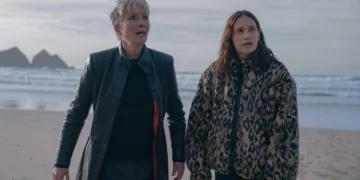
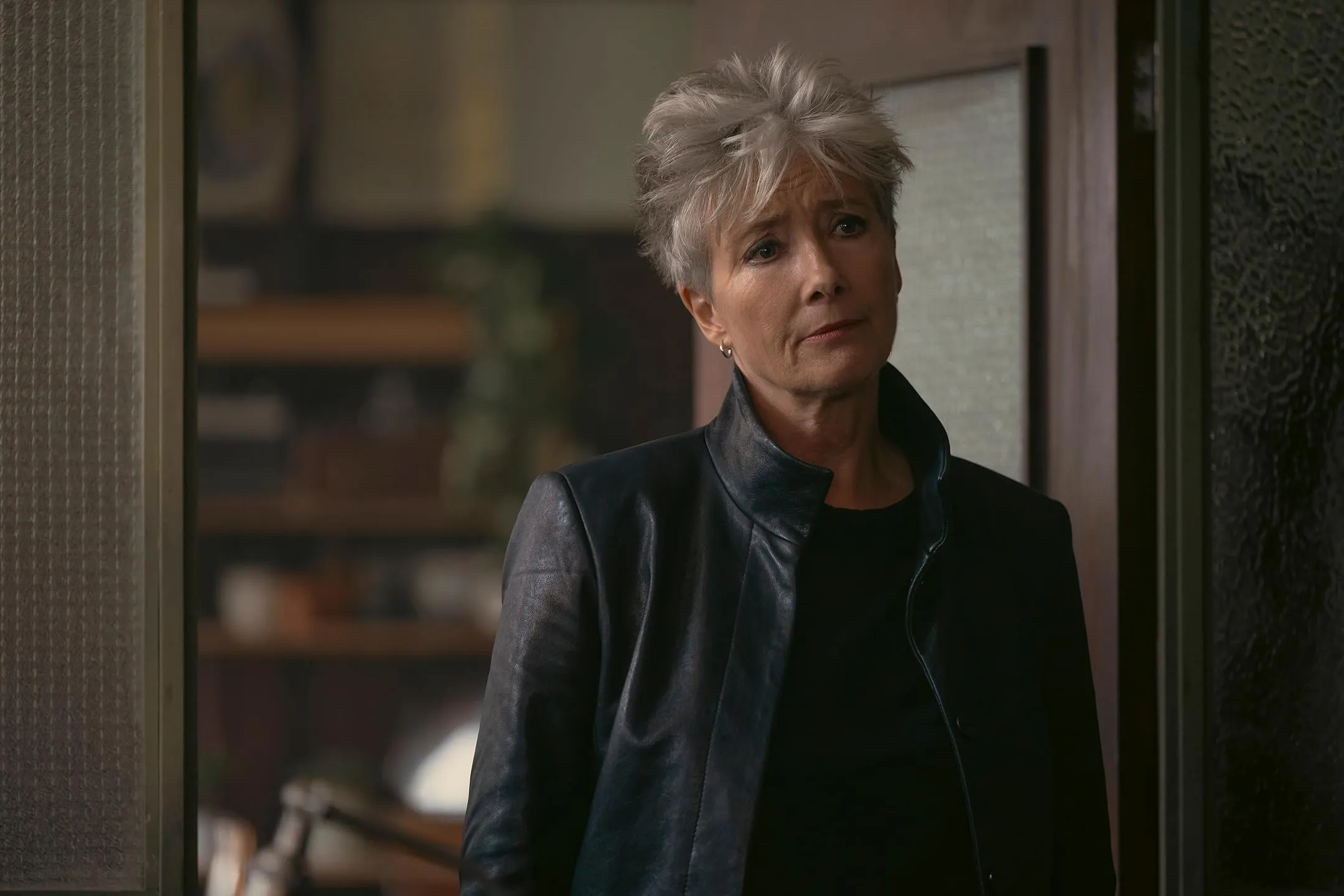
That fixation draws her toward private investigator Zoë Boehm, played by Emma Thompson with a dry snap that cuts through every scene. Zoë works from a space that looks like a rebuttal to Sarah’s tidy order, a nest of practicality and hard truths. She greets Sarah’s urgency with skepticism, and the missing child inquiry soon widens into a perilous tangle of secrecy. The picture grows from a neighborhood tragedy into a government cover-up, and the two women push into a pursuit that peels back the polished surface of Britain’s quiet streets to reveal the rot beneath.
Archetypes of Astringency: The Central Duo
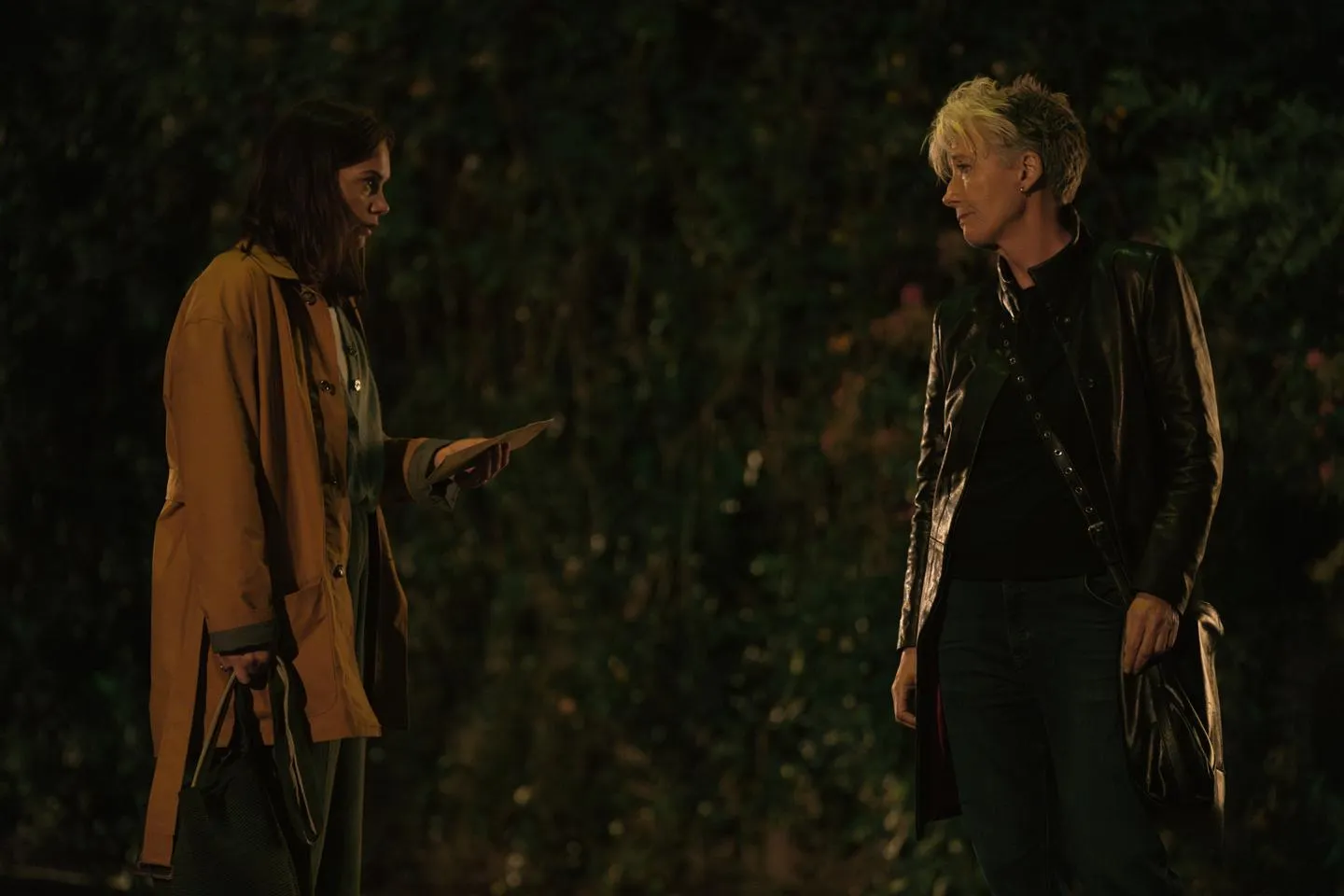
The series builds its charge on the friction between its leads, an unlikely pairing that gives the investigation snap and bite. Thompson’s Zoë moves with a clipped efficiency that refuses sentiment. She carries herself like a blade, quick and unadorned, and she tosses off a credo at first meeting: “I don’t drink prosecco and I don’t bond emotionally.”
The line lands as both armor and thesis. Thompson threads that flinty wit with fine-grained hints of softness, the kind that suggests history without laying it bare. The silver hair and leather jackets read as a deliberate uniform, a visual shorthand for independence from client-pleasing decorum.
Sarah arrives coiled and careful, an ordered life held together by habit and good manners until the explosion forces a choice. Wilson sketches a woman whose routines no longer answer to any real need. Mark, her financier husband, played by Tom Riley, recedes into the background noise of busy laptops and small talk. The missing girl gives Sarah a clean line to follow, and Wilson marks each step with sharpened attention. The bright focus in her gaze tightens scene by scene, a picture of conviction that grows louder as comforts fall away.
Their partnership forms through necessity and sparks. Zoë’s practiced realism checks Sarah’s fervor, and Sarah’s drive keeps the case from cooling. Humor flashes in the gaps between them, a dry crackle that plays off urgency without puncturing it.
Around them, the show crowds the frame with vivid side figures. Joe Silverman, Adam Godley’s warm and brainy partner to Zoë, brings steadiness that softens the office’s hard angles. Across the aisle sit the state actors, each with a distinct edge. Adeel Akhtar’s Hamza Malik fidgets through briefings, a handler perpetually out of depth yet persistently present. Darren Boyd’s C, the division head, mixes charm with chill, a cocktail that unsettles as it pleases. Fehinti Balogun’s Amos stands out as the cleanest blade in the drawer, an assassin whose calm reads colder than any shout. He moves with economy, and each appearance tightens the show’s pulse.
Narrative Alchemy and Tonal Balance
Down Cemetery Road advances from a single blast and a vanished child to a lattice of agents, assassins, and official secrecy. The eight episodes follow a deliberate dot-to-dot design that widens the picture with care. Each reveal slots into place with a measured click, and the scale of wrongdoing grows without breaking the thread back to that ruined Oxford street.
Herron’s signature tone sits in the writing. Dry wit takes a seat at the table beside danger, and the series lets that pairing breathe. Quips skate across scenes that carry real threat, especially in Zoë’s exchanges with people who underestimate her. Broad humor around Hamza sometimes rubs against the weight of a child gone missing. Even then, the script holds to a line that keeps gravity intact while allowing relief to flicker in and out.
Pacing favors patience. Mid-season chapters stretch, and the show treats silence as information. That breathing room lets small details shift meaning inside a scene, a choice that fits the creeping paranoia of the investigation. The late run tightens. Set pieces stack, players collide, and the methodical build pays off with sequences that move clean and fast. The show prizes grounded mood over constant pyrotechnics, and that choice suits the material.
Aesthetic of Deception and Thematic Resonance
Oxford arrives as a visual argument. Orderly terraces, clipped hedges, spotless glass. The frame looks arranged with the care of a gallery wall, an echo of Sarah’s restoration work. The camera keeps finding hairline fractures in that arrangement, tiny flaws that steal attention once you see them. The neatness reads as performance, which makes the violence of the conspiracy hit with a sharper snap.
The themes track the present. The plot points a finger at institutional secrecy and Ministry of Defense machination, and the story lingers on guilt, cover stories, and the dry comedy of English propriety colliding with lethal practice.
The investigation clears a path for renewal, most visibly for Sarah, who finds clarity in the act of pursuit. Zoë’s movement registers in quieter beats, small reckonings with the state of her life and work. The series keeps its feet on the ground and its eye on composition. Atmosphere carries weight, and the images wear intention.
A Confidently Assured Thriller
Down Cemetery Road defines its own shape. The show runs as a coiled, slow-burn thriller built on character charge and a particular strain of humor. Thompson and Wilson give the piece its spine, and their scenes together hold every chapter steady.

The plot can tangle and the middle can sag, small irritations beside the precision of the dialogue and the strength of the cast. A cool assurance runs through the production. Darkness shares space with quick laughter, and the final stretch hints at roads still open for these characters. The staying power belongs to the two leads and the chemistry that sparks whenever they occupy the same room.
Down Cemetery Road is a British thriller series adapted from the novel by Mick Herron. The show premiered globally on October 29, 2025, on Apple TV+. The series follows art restorer Sarah Tucker (Ruth Wilson) who becomes obsessed with finding a missing child after a house explosion in her quiet Oxford suburb. She enlists the help of cynical private investigator Zoë Boehm (Emma Thompson), and the pair are quickly drawn into a complex government conspiracy. The first season is structured as an eight-episode run, with the first two episodes released on the premiere date.
Credits
Title: Down Cemetery Road
Distributor: Apple TV+
Release date: October 29, 2025
Rating: TV-MA
Running time: Eight episodes, approximately 50 minutes per episode
Director: Natalie Bailey, Samuel Donovan, Börkur Sigþórsson
Writers: Morwenna Banks, Mick Herron, Rose Heiney
Producers and Executive Producers: Emma Thompson, Morwenna Banks, Mick Herron, Jamie Laurenson, Hakan Kousetta, Tom Nash, Emma Burge
Cast: Emma Thompson, Ruth Wilson, Adeel Akhtar, Nathan Stewart-Jarrett, Tom Goodman-Hill, Darren Boyd, Tom Riley, Adam Godley, Sinead Matthews, Ken Nwosu, Fehinti Balogun, Aiysha Hart
Director of Photography (Cinematographer): Nick Cooke, Annika Summerson, Anna Patarakina
Editors: Daniel Greenway, Oral Norrie Ottey, Peggy Koretzky, Edel McDonnell
Composer: Laura Karpman
The Review
Down Cemetery Road
Down Cemetery Road is a sophisticated thriller anchored by the exceptional pairing of Emma Thompson and Ruth Wilson. It successfully translates Mick Herron's sardonic wit and thematic preoccupations with institutional rot into a television format. The series expertly balances dark conspiracy with sharp humor. While the eight-episode structure causes some meandering in the middle and the plot is occasionally messy, the strong character dynamics and Thompson’s magnetic performance ensure the show remains compelling viewing. It is a confident, smart, and character-driven mystery.
PROS
- Emma Thompson’s dryly humorous, commanding performance as Zoë Boehm.
- Ruth Wilson's compelling portrayal of Sarah Tucker's intense obsession.
- The sharp, sardonic Herronian humor that pervades the script and dialogue.
- The unconventional and prickly chemistry between the two lead characters.
- The quality of the supporting cast (Boyd, Akhtar, Balogun) in eccentric roles.
- The visually deceptive aesthetic of the Oxford setting.
CONS
- Pacing issues that cause the series to drag during the middle episodes.
- The main conspiracy plot feels somewhat simple for its magnitude.
- The tonal shifts between dark conspiracy and broad comedy are occasionally jarring.
- The eight-episode length feels slightly padded compared to a tighter structure.