























![Kingdom Hearts Collection [I-III] Review](https://gazettely.com/wp-content/uploads/2026/10/Kingdom-Hearts-Collection-I-III-1-360x180.webp "Kingdom Hearts Collection [I-III] Review: KHII Holds Steady as Newer Entries Fluctuate 37")



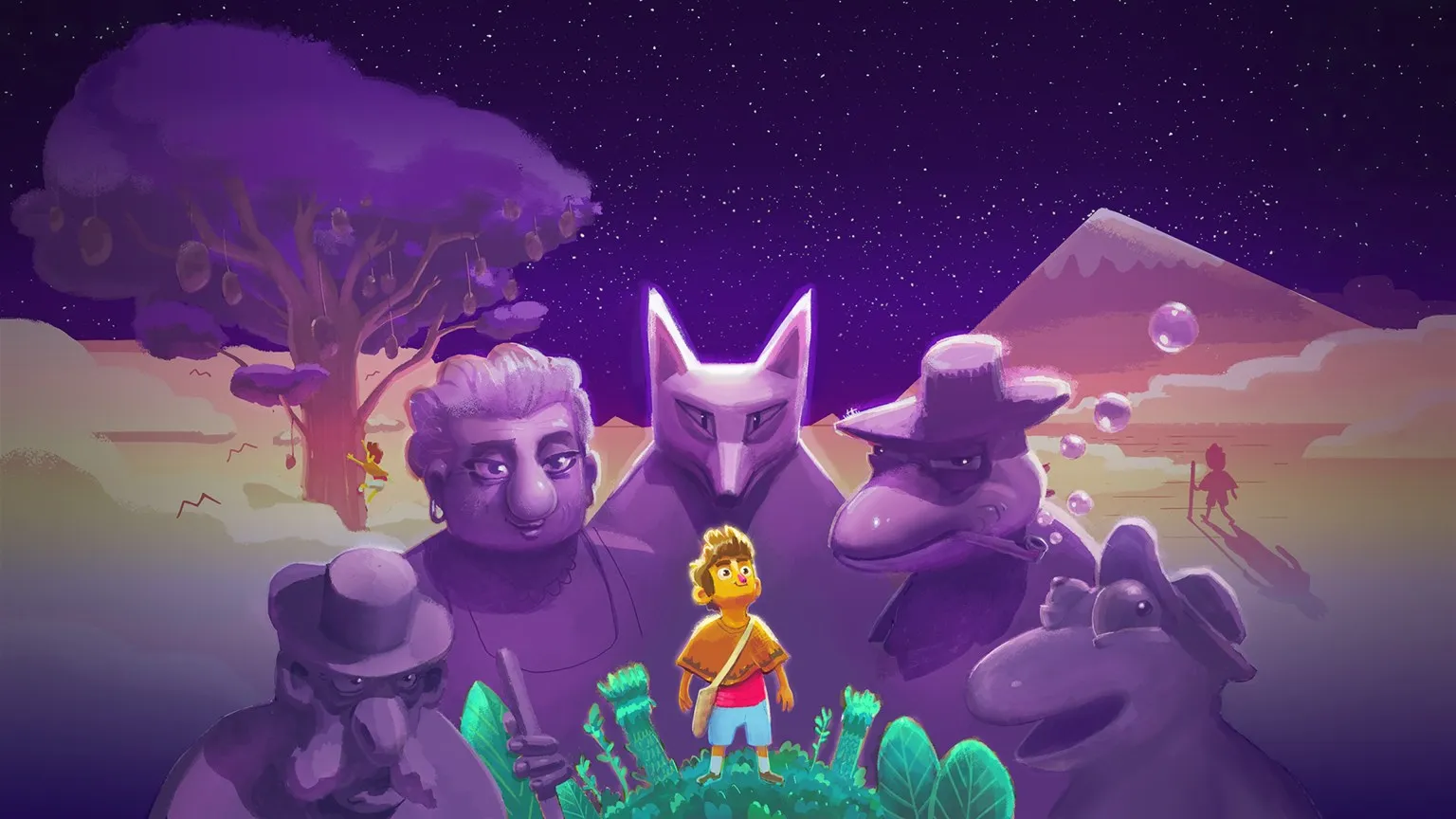

There is a peculiar logic to childhood that fades with age. It is a way of seeing the world where the pantry is not an endpoint but a threshold, where a potato is not just an ingredient but the catalyst for a grand quest. Video games often try to recapture this feeling, but few manage to build their mechanics around this specific, imaginative mindset.
SOPA – Tale of the Stolen Potato is one of those rare titles. It understands that the most memorable adventures are not about saving the world, but about the world you discover when you set out to complete one small, important task for someone you love. It all begins with Nana’s soup. She needs a potato.
When Miho, our small hero, goes to the pantry to retrieve one, he finds the entire sack being spirited away by a very determined, hat-wearing purple frog. Giving chase is not a choice but an instinct, a childhood impulse that pulls him through a shimmering doorway and into a place governed by the forgotten rules of make-believe.
A Story Simmering with Heart
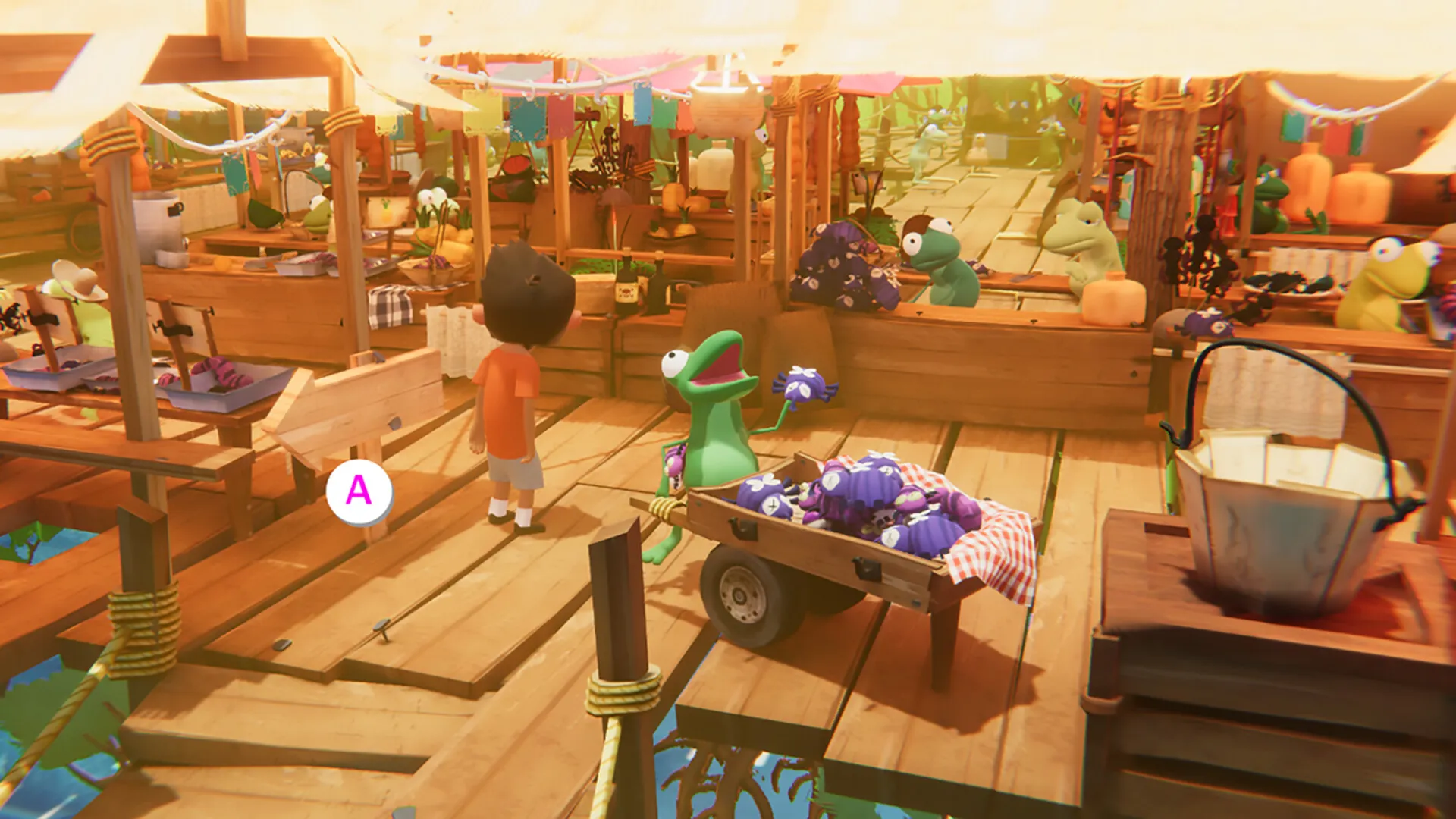
Miho’s fall into this new world is disorienting and immediate. He finds himself in a reality steeped in the magical realism of South American folklore, a place that feels both ancient and cobbled together. His primary destination is a ramshackle black market run entirely by frogs. The place is a chaotic shantytown, with rickety platforms and merchants hawking questionable goods.
The frogs themselves are wonderfully realized, a community of shady operators, con artists, and dim-witted locals, each with their own small problem or piece of gossip. Their dialogue is sharp and funny, painting a picture of a society that is just barely holding itself together. Listening to their feeble complaints and bizarre reasoning is a consistent delight.
The narrative soon takes an even stranger turn, stranding Miho inside the belly of a colossal fish. Here, the game’s pacing slows, shifting from a bustling town to a contained, almost theatrical setting. He discovers a small, hopeless community of humans who have been trapped for so long they have created their own strange society.
One, a naval commander, stands at a makeshift helm, convinced he is piloting the creature. Another man is obsessed with repairing a pile of broken radios, a futile task that gives his life meaning. Interacting with these characters reveals layers of comedy and tragedy. Their eccentricities are coping mechanisms, and Miho’s arrival disrupts their strange equilibrium. It is in these conversations that the game’s deeper themes about family and memory begin to surface.
The quest to retrieve a potato for his Nana’s Sancocho becomes a metaphor for recovering something lost, a connection to home that feels increasingly distant the deeper he goes. Each trip back to his own world reveals subtle changes, reinforcing the sense of time and memory being as fluid as the river he travels.
The Logic of Imagination
SOPA presents itself as a 3D exploration game, but its heart and soul belong to the classic point-and-click adventures of a bygone era. The core gameplay is a loop of discovering problems, exploring the environment for items, and piecing together unlikely solutions. You will fill Miho’s inventory with an assortment of seemingly useless objects: ant grease, a single shoe, a broken mug. The brilliance of the game’s design is that it forces the player to abandon adult pragmatism. The puzzles do not yield to conventional logic; they demand the creative, often absurd, reasoning of a child.
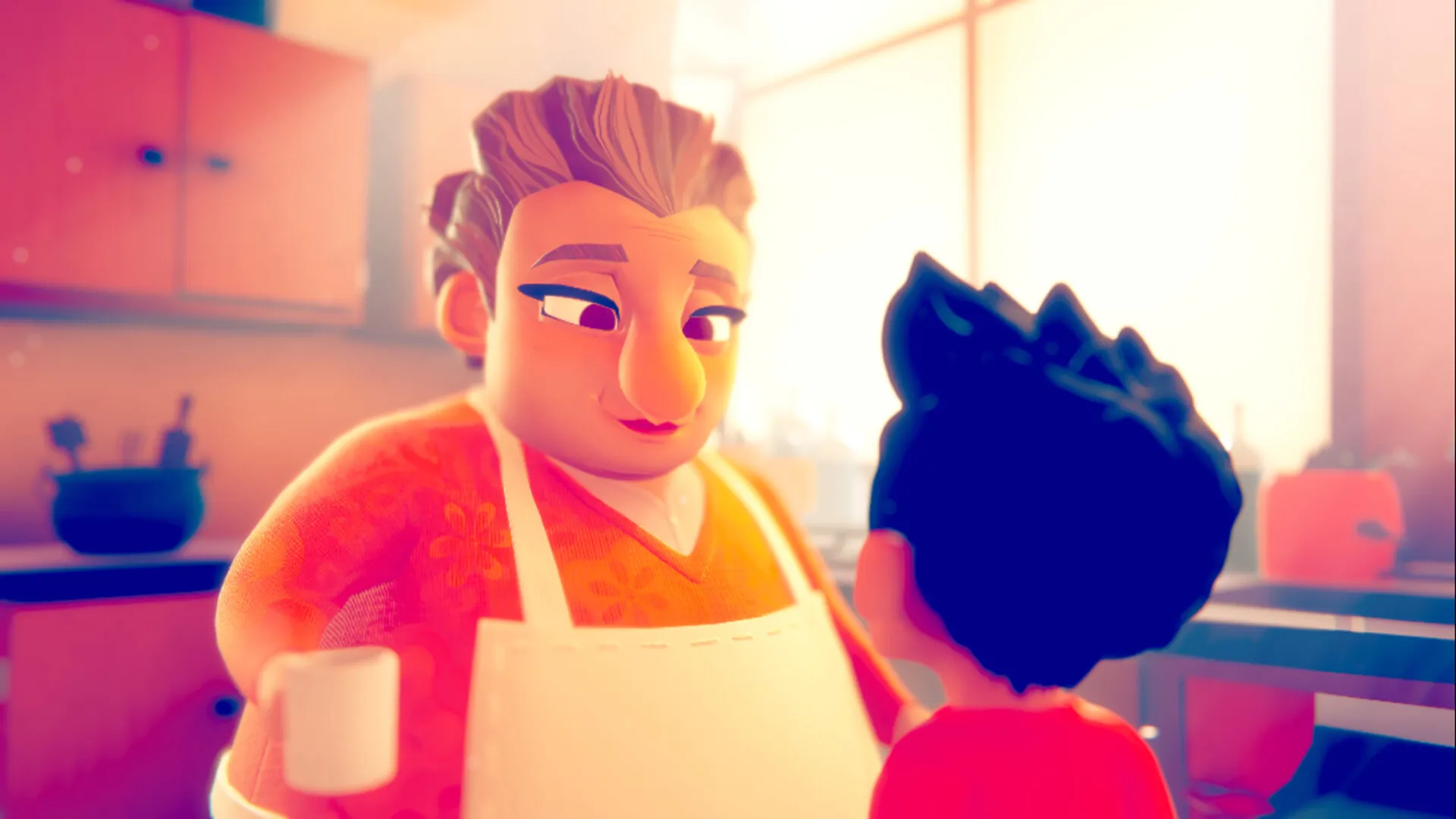
The game establishes early that Miho is clumsy. A player conditioned by other games might see a high object and instinctively look for a box to push or a chair to climb. This direct approach will fail. The game’s internal consistency respects its own characterization. A clumsy kid standing on a wobbly chair is a recipe for disaster, so another way must be found.
This design philosophy permeates every challenge. You might need to make coffee for one of the fish-bound castaways, a task that involves a sequence of trades and item combinations that feel like a Rube Goldberg machine of favors. There is no hint system to guide you. The game trusts you to observe, to listen to the characters, and to experiment.
This lack of hand-holding is a refreshing change of pace. It makes every breakthrough feel earned, a genuine moment of connection between your thought process and the game’s whimsical wavelength. Solving a puzzle feels less like finding a key for a lock and more like being told the punchline to a long, elaborate joke.
This process is how the game mechanically aligns the player with Miho’s perspective. You are not just controlling him; you are being taught to think like him, to see the world as a collection of possibilities instead of a set of rigid rules.
A Hand-Painted Dream
The game’s aesthetic is one of its strongest assets. The world is rendered in a soft, painterly style that gives every scene the quality of a lovingly crafted illustration. The color palette is warm and rich, and the artists make excellent use of lighting to create a dreamlike atmosphere, with sunbeams cutting through dusty rooms and bio-luminescence casting a gentle glow inside the great fish.
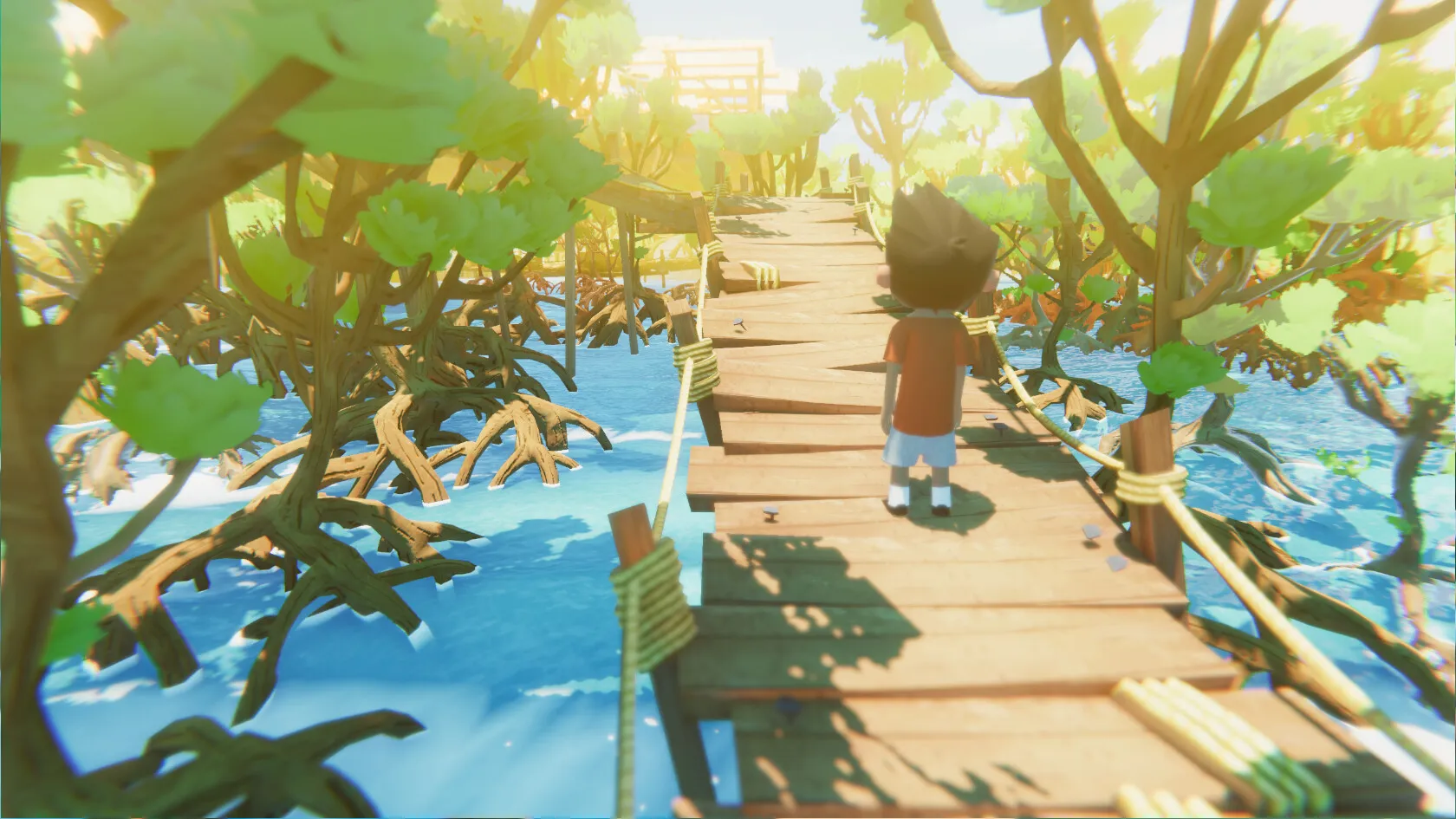
This visual language feels indebted to the emotional expressiveness of animated studios like Pixar and Ghibli, yet it maintains its own distinct South American identity. The character designs are a highlight. Miho is endearing, with wide eyes that take in the absurdity of his situation with a humorous blankness. The frogs are delightfully varied, their appearances reflecting their shady personalities.
The animations carry a great deal of the game’s comedic and emotional weight. Miho’s movements are spritely, though they sometimes shift with a suddenness that reflects the game’s indie roots. The supporting cast is full of small, observable quirks, like a character’s dead-eyed stare or another’s fidgety hands. These details bring the world to life.
The audio design completes the immersion. The score is built around pleasant cumbia-style rhythms that are both catchy and atmospheric, grounding the fantasy in a recognizable cultural soundscape. Environmental audio is equally effective, from the wet squelch of the frog market to the low, groaning ambiance within the fish’s belly. The entire presentation is a cohesive work, with sight and sound working in concert to build a world that is inviting and full of personality.
Some Cracks in the Crock-Pot
For all its creative vision and charm, SOPA is not without its technical frustrations. The experience is frequently hampered by a general lack of polish that suggests a small budget and development team. Controlling Miho can feel stiff, his movements lacking the fluidity needed for smooth 3D navigation. This clumsiness can turn simple exploration into a minor chore.
Animations, while often charming, can also appear jerky or skip frames, which momentarily disrupts the otherwise immersive world. More significant are the reports of bugs, including audio that fails to loop correctly and, in some cases, softlocks that can halt progress entirely. An issue like this can completely derail the experience for an unlucky player.
These rough edges are made more apparent by the game’s short runtime, which is only a few hours. When the adventure is so brief, every technical hiccup feels more pronounced. The design also relies on reusing some locations, which can make the world feel smaller than it initially appears.
These are not devastating flaws, but they are persistent. They represent a layer of jank that sits atop a wonderfully imaginative game. The technical shortcomings do not ruin the dish, but they are noticeable lumps in an otherwise delicious soup. They hold the game back from fully realizing its clear and admirable potential.
The Review
SOPA - Tale of the Stolen Potato
SOPA - Tale of the Stolen Potato is a wonderfully imaginative adventure with a heartfelt story and genuinely clever puzzle design. Its painterly world and charming characters are a consistent delight, successfully capturing the feeling of a childhood storybook. This creative vision is unfortunately let down by a significant lack of polish, seen in its clunky controls and technical bugs. The experience is special, but its flawed execution keeps it from greatness. It is a delicious meal served on a chipped plate.
PROS
- A genuinely funny and heartfelt narrative.
- Unique puzzle design that rewards creative, childlike thinking.
- Beautiful, painterly art style and enchanting music.
- A memorable cast of quirky characters.
CONS
- Clunky movement and frequent technical glitches.
- A very short playtime for its price point.
- The overall experience lacks polish.