














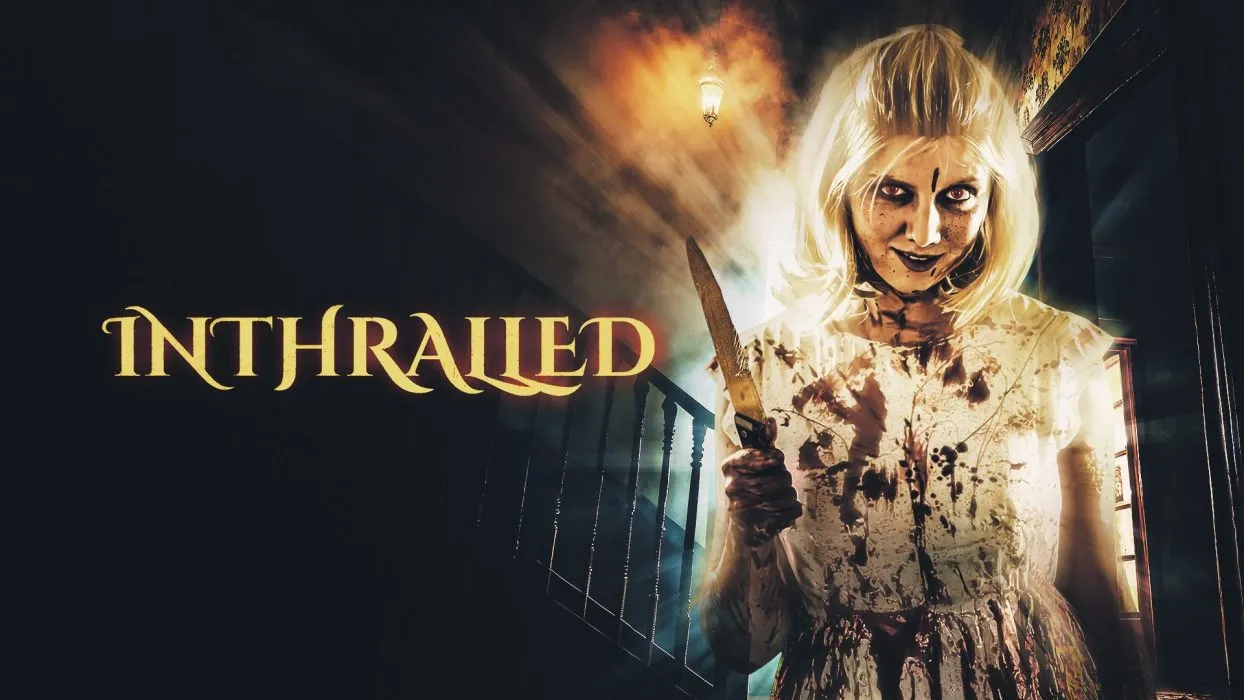

The past is never a neutral territory for return; it is an occupied state, armed with its own sentinels and traps. For the widowed mother and daughter in Inthralled, their pilgrimage back to the family home is not a search for comfort but an unwitting surrender to a dormant malevolence. The house itself seems to exude a low-frequency dread, its silence a form of auditory pressure.
Director Douglas Bankston resists the urge to populate these early scenes with cheap scares, instead allowing the camera to drift through rooms as if mapping a psychological tomb. The discovery of a grimoire feels less like a plot point and more like an act of predestination. This is not a story of a family haunted by a house, but of a bloodline haunted by itself.
The curse it describes, one that immediately ensnares the pregnant daughter, establishes a grim thesis on inheritance: that we inherit not just property, but patterns of sin, a debt that is passed down and always comes due.
An Architecture of Dread
The film’s narrative construction is its most audacious feature, a piece of cinematic misdirection that weaponizes audience expectation. For its first half, the picture operates with the patient, atmospheric rigor of a 1970s psychological thriller, building its world through methodical pacing and sustained ambiguity.
The horror is cerebral, focused on the slow erosion of safety and sanity through witchcraft and spectral suggestion. The soundscape is a careful composition of whispers and unsettling quiet. We are lulled into a specific mode of viewing, prepared for a battle of wits and wills against an unseen force. Then, the screenplay detonates its own foundation.
The introduction of a raw, brutally physical slasher element is a shocking structural pivot. This is not a seamless blend; it is a deliberate collision, a formal choice designed to feel as jarring for the viewer as it is for the characters. This abrupt shift from a psychological chess match to a visceral bloodletting feels like a cynical commentary on the genre itself, suggesting the dark forces of the mind are ultimately no match for a blade in the dark.
Chiaroscuro in the Ozarks
The film’s visual language is a study in purposeful restraint, punctuated by moments of startling expressionism. Bankston’s direction demonstrates an understanding that what is withheld is often more powerful than what is shown. The camera is largely an observational instrument, maintaining a formal distance with static compositions and slow, deliberate pans that instill a sense of clinical detachment.
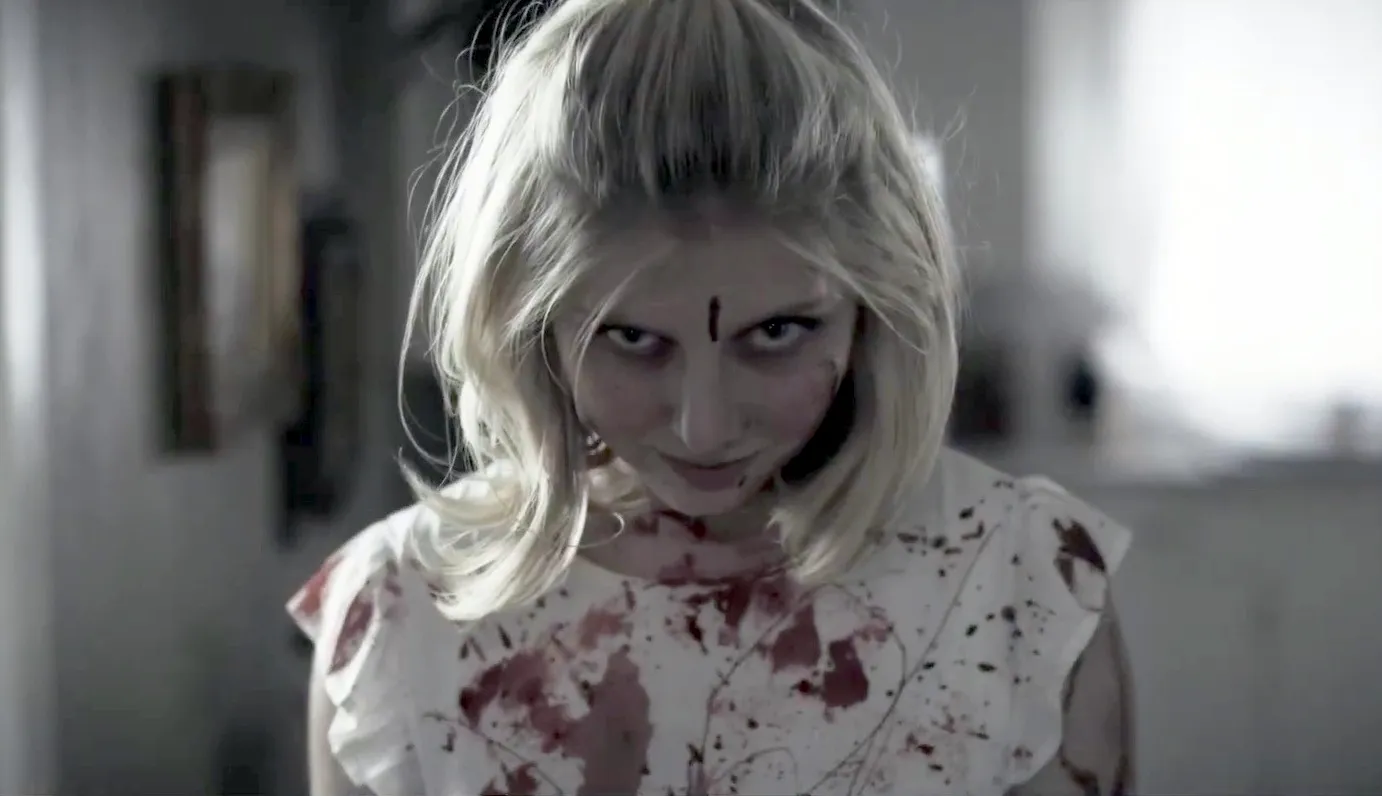
The lighting scheme owes a significant debt to classic noir. Natural light from windows carves characters into silhouettes, trapping them between the illuminated world and the deep, impenetrable black of the interiors. This is not merely aesthetic; it is thematic, visually reinforcing their entrapment in a zone of moral ambiguity.
This austere visual grammar is violently interrupted during the scenes of witchcraft, where Dutch angles and distorted lenses turn the familiar home into a German Expressionist hellscape. Contrasting this interior claustrophobia are the expansive drone shots of the Arkansas wilderness. These God’s-eye-view shots function as moments of cold objectivity, pulling back to frame the human drama as a tiny, insignificant infection on a vast, unfeeling canvas.
No Exit
A film’s conclusion should provide a sense of finality. Inthralled offers something else entirely: a philosophical punchline to a very grim joke about free will. The climax arrives not as a chaotic surprise but as the sickeningly logical endpoint of the film’s deterministic trajectory, a knot pulled tight with horrifying precision.
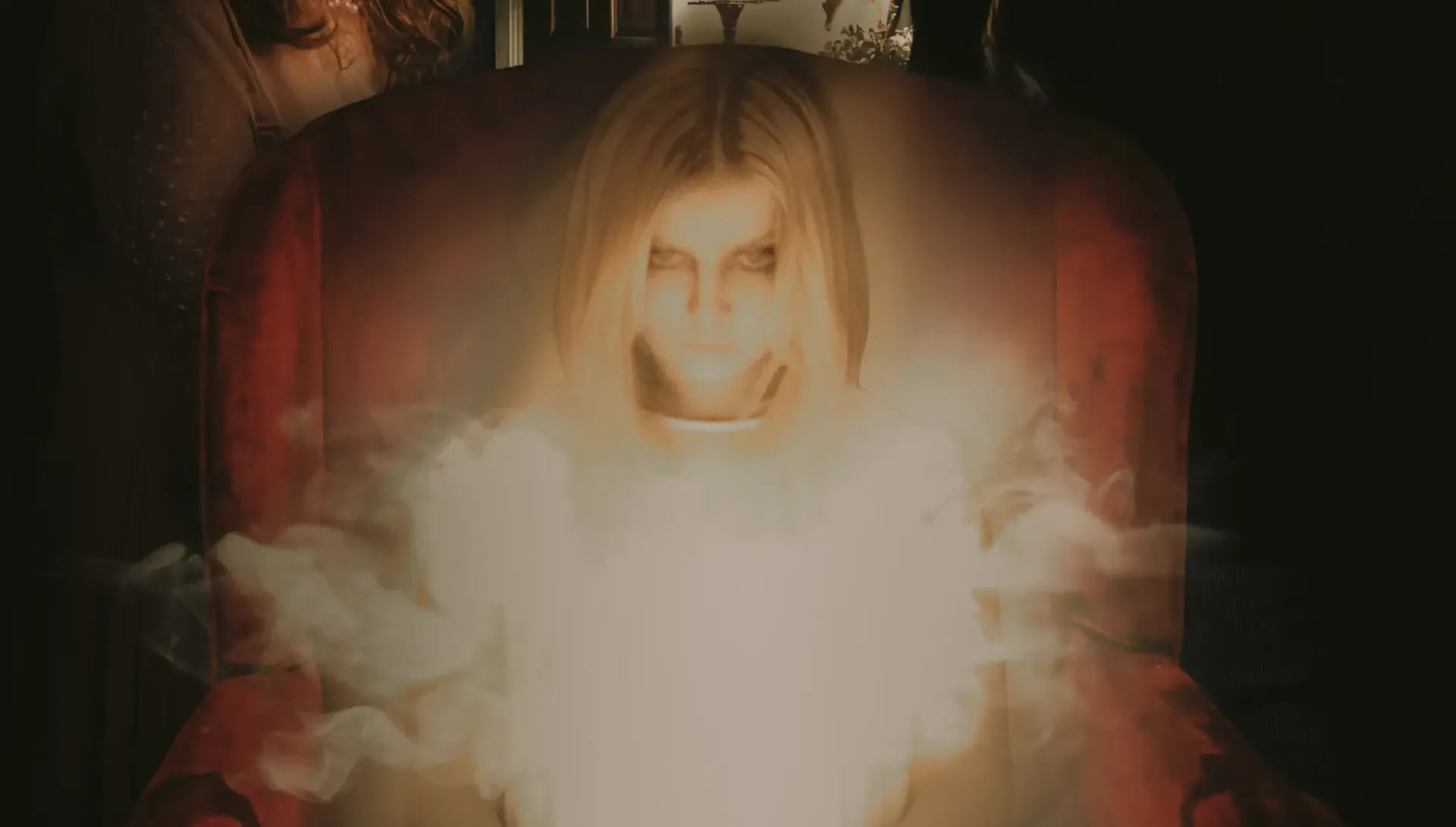
It is an event that feels both shocking in its execution and, in retrospect, completely unavoidable. The raw, visceral power of this resolution is a physical experience. Yet the film is not finished. Its coda is its most cynical and brilliant act, a final sequence that serves as a brutal negation of hope. It locks the narrative into a perfect, horrifying loop, transforming the story from a singular tragedy into a recurring nightmare.
It dares the audience to search for a moral lesson and then punishes them for the attempt. The film’s final moments are less an ending and more a contamination, embedding a shard of its own bleakness in the viewer’s mind. It offers no comforting answers, only the chilling echo of its own conviction.
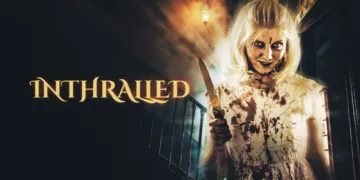
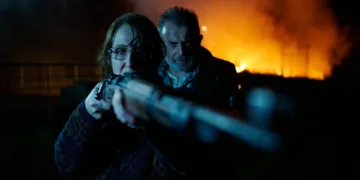
Inthralled is a supernatural thriller film directed by Douglas Bankston. The movie premiered at the Fayetteville Film Fest in Arkansas and was scheduled for a worldwide release on VOD (Video On Demand) on October 7, 2025. Distributed by Breaking Glass Pictures, the story follows a widowed mother and her daughter who return to the mother’s childhood home, only to unleash an ancient family curse tied to a long-buried secret and a forbidden book. The film is planned as the first installment in a trilogy.
Full Credits
Director: Douglas Bankston
Writers: Douglas Bankston, Kate Siegenthaler
Producers and Executive Producers: Kate Siegenthaler, Douglas Bankston, Dan Robinson
Cast: Annie Sullivan, Alanna Hamill Newton, Kelcey Watson, Brad Adams, Philip Paz, Madi Watkins, Lily Workman, Lily Workman
Composer: Dan Robinson
The Review
Inthralled
Inthralled is a fiercely intelligent and structurally daring piece of horror that sacrifices comfort for a chilling, philosophical dread. Its audacious mid-film genre shift and bleak, unyielding conclusion make it a challenging watch, not intended for casual viewing. For audiences who appreciate formal rigor and a truly unsettling vision, it is a potent and viciously memorable film that embeds itself in the mind long after its final, cynical act.
PROS
- An intelligent screenplay with an audacious, genre-shifting structure.
- Effective use of suspense and atmosphere over cheap scares.
- Strong visual direction that maximizes a limited budget, especially through its use of the landscape.
- A powerful and philosophically provocative ending that defies horror conventions.
CONS
- The deliberate slow-burn pacing of the first half may deter some viewers.
- Its extreme bleakness and lack of catharsis will prove alienating for many.
- The visual style is intentionally austere in parts, which could be misinterpreted as uninspired.