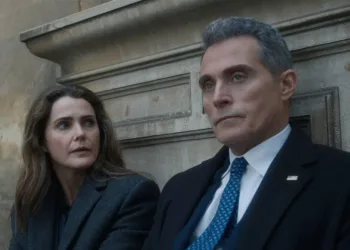




















Shards glitter against a calm California sky as Carrington howls, “Are you calling me an ugly duckling? So what if I give myself home perms? It’s economical!” while ripping apart a mentor’s office. The scene lays out a stage of excess and theatrical fury, a doorway into Ryan Murphy’s legal spectacle, All’s Fair.
Murphy, with co-creators Jon Robin Baitz and Joe Baken, positions the series inside ultra-wealthy California divorce law. An elite, all-female firm pursues enormous settlements for high-status clients who feel wronged. The central trio features Kim Kardashian as Allura, Naomi Watts as Liberty, and Niecy Nash, a lineup designed for glamour and instant recognition. The show courts high drama and high camp, treating celebrity culture and conspicuous wealth as design principles and promising a glossy satire of privilege.
High-Speed Justice and Shallow Trophies
Episodes move fast, pairing personal arcs with case-of-the-week fireworks. Divorces worth fortunes resolve at a pace that swallows credibility. A $210 million settlement appears and closes inside a single hour of television, a flourish of cinematic expediency that leaves procedural sense behind.
The machinery feeds on excess. Brand names whip by. Private jets idle on the runway. A character marvels, “Oh my God, didn’t this belong to Elizabeth Taylor?” Objects carry value like trophies on a shelf. The series equates financial victory with female empowerment and repeats that claim with polished certainty. The refrain lands thin, a glittering prize cabinet that sidesteps any sustained argument about equity.
Dialogue buckles under the production’s taste for melodrama. Lines shoot for provocation and leave character integrity behind. The writing speaks in a strange, unmistakable register shaped by three hands, a voice that nudges scenes toward accidental comedy and leaves the drama wobbling.
The Ensemble Under the Glare
The principal cast works inside a text that keeps shifting its mask. Kardashian’s Allura arrives with a restrained presence: spare delivery, minimal expression, a poise that reads as tightly controlled and fashion-plate severe. The marriage that frays around her forms a primary personal thread and locks her to the series’ fixation on romantic collapse.

Watts voices Liberty with an arch, preening tilt, a style that brushes against the clumsiest memories of television legal theatrics. The performance searches for a center that the script refuses to provide, meeting a character outline that prioritizes attitude over depth. Nash brings force and timing and finds laughs where the page allows them, yet the role corrals her into a stale “Loud and Sassy” mold, a regrettable recycling of a limiting stereotype for a Black attorney who deserves dimension.
The bench around them keeps the show’s mood unsteady. Sarah Paulson’s Carrington lunges into psychopathy with relish, an extreme choice that either crowns the camp design or tears away from the series’ primary register, depending on a viewer’s appetite. Glenn Close appears as a mentor in a smaller capacity, a prestige presence that hovers over the story’s ugly business and deepens the sense of heightened unreality.
Gloss and Gimmickry
All’s Fair wears the Ryan Murphy signature like lacquer: reflective surfaces, hard polish, and an appetite for opulence. The world of divorce attorneys becomes a showroom where wealth gleams under museum lighting.

Design teams obey the brief. Wardrobes favor couture silhouettes and attention-drawing labels. The fixation on brands reduces characters to walking signage and pulls eyes away from behavior and motive. Offices and mansions arrive like catalog spreads, curated to advertise power. The fantasy is complete and unrelenting.
Direction and pacing strain the tone. Campy melodrama collides with scenes that ask for real stakes, and the cast often seems to act inside different versions of the script. Technical quirks magnify the friction. The widely mocked kissing scenes point to staging issues or an absence of chemistry among leads, glitches that leave a visible seam where craftsmanship should sit.
Assessing the Glamorous Misfire
All’s Fair invites an appraisal of spectacle as entertainment: can a show built on flaws still captivate through sheer excess and chaos? The result leans toward a thud. A long executive-producer roster that includes Kardashian, Kris Jenner, Watts, and Nash hints at dispersed control, and the finished product bears the imprint of competing sensibilities.

The series speaks most clearly to devotees of the Murphy brand, viewers who savor stylized provocation and glossy disorder. Others will meet stiff performances, thin writing, and a tone that wobbles from scene to scene. The production glitters and parades its resources, and Nash’s charisma registers, yet the scripts and the overall shape keep collapsing. The artifact that remains is a jewel box of excess with little inside to hold.
The television series All’s Fair is an American legal drama created by Ryan Murphy, Jon Robin Baitz, and Joe Baken. It follows a team of fierce female divorce attorneys who leave a male-dominated firm to open their own powerhouse practice, navigating high-stakes breakups and scandalous secrets in the world of the ultra-wealthy. The series premiered its first three episodes on November 4, 2025. It is available to stream on Hulu in the US and on Disney+ internationally. The first season is set to have 10 episodes, with new installments released weekly every Tuesday until the finale on December 23, 2025.
Credits
Title: All’s Fair
Distributor: Hulu (US), Disney+ (International)
Release date: November 4, 2025
Rating: TV-MA
Running time: Varies (Episode length)
Director: Ryan Murphy (Pilot), Anthony Hemingway, others not specified
Writers: Ryan Murphy, Jon Robin Baitz, Joe Baken, Jamie Pachino, Lyn Greene, Richard Levine
Producers and Executive Producers: Ryan Murphy, Jon Robin Baitz, Joe Baken, Kim Kardashian, Glenn Close, Sarah Paulson, Naomi Watts, Niecy Nash, Kris Jenner, Anthony Hemingway, Jamie Pachino, Lyn Greene, Alexis Martin Woodall, Eric Kovtun, Scott Robertson, Nissa Diederich
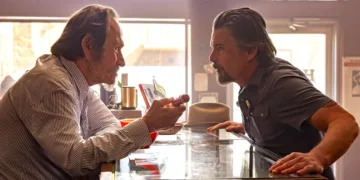
Cast: Kim Kardashian, Naomi Watts, Niecy Nash, Sarah Paulson, Glenn Close, Teyana Taylor, Matthew Noszka, Judith Light, Ed O’Neill, Steven Pasquale, James Remar, Grace Gummer, Michael Nouri, Kate Berlant, Clara Wilsey, Elizabeth Berkley, Eddie Cibrian, Jack Davenport, Jessica Simpson, Rick Springfield
The Review
All’s Fair
All’s Fair wraps a deeply flawed script and confusing direction in an aggressively glossy aesthetic. The series aims for satirical camp but lands as uneven melodrama, wasting the considerable talent of its ensemble on thinly written roles. The hyper-speed legal resolutions strip away any sense of stakes. It offers visual spectacle and celebrity presence, yet fails as coherent, compelling television.
PROS
- Highly stylized, glossy Ryan Murphy production design.
- Niecy Nash maintains a strong, engaging presence.
- Escapist focus on extreme wealth and glamour.
CONS
- Tonal confusion; actors seem to be in different shows.
- Key lead performances are flat or overly arch.
- Poorly written scripts and often embarrassing dialogue.
- Unrealistic, rapid-fire resolution of legal cases.
- Stereotypical character writing (e.g., Nash's role).