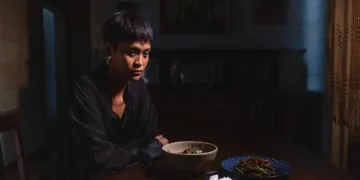




























Thai filmmaker Pen-ek Ratanaruang’s Morte Cucina applies his meditative, enigmatic touch to a revenge thriller frame. Sao, a gifted cook with a scarring past, crosses paths with Korn, the man who assaulted her years earlier. She turns culinary mastery into a slow, richly staged act of payback.
The setup leads to a pitch-black, often perplexing experience that leans into audacity. What starts as retribution shifts into a portrait of fixation and a knotty bond between victim and aggressor. Ratanaruang reunites with cinematographer Christopher Doyle, which sets expectations for a charged visual language that suits this dark drama’s mood.
Narrative and Thematic Indulgence
Ratanaruang’s style lands immediately, shaping a mood-first film that reads like arthouse with a jolt. Early passages complicate a conventional three-act rhythm, and the film scrambles chronology with jumps that blur memory and present tense. This structural play echoes patterns familiar in his filmography, and the explicit marker of fifteen years passing can momentarily unsettle orientation. The watch asks for patience, which may challenge viewers discovering his work for the first time.
The film speaks to a global conversation about trauma and power. Sao’s exile and hurt inform every move, and cooking becomes a tool that asserts control and prolongs revenge. Morte Cucina questions simplistic ideas about payback and widens into an inquiry into gluttony, fixation, and mutual dependence. Ideas about a good life, alongside life and death, appear in quiet narrative cues.
The thriller surface loosens, and a more erotic and romantic current surfaces, a register that aligns with deeper character studies visible across contemporary Asian cinema. The thread connects Thailand’s auteur tradition to international art-thriller trends that prize psychology, appetite, and ritual over plot mechanics.
Visuals, Sensory Texture, and Sound
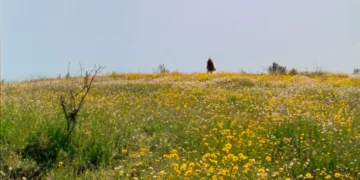
Christopher Doyle’s work shapes the film’s pulse. He crafts distinct visual grammars for Sao’s inner and outer worlds. Memories rooted in Songkhla arrive in desaturated 16mm, which gives recollection a weathered texture. The present uses crisp digital imagery, catching the polish of Bangkok’s luxury dining rooms and the grit of its back lanes. A later movement to the lush greens of Chiang Mai introduces a fresh register in the palette, widening the film’s sensory field.
Culinary imagery drives the film’s allure. Preparations gleam in extreme close-up, with steam, sear, and glaze filling the frame to the point of excess. This seduction comforts Sao and ensnares Korn. Food reads as a photographed metaphor for hunger, patience, and ruin.
Korn’s ferocious appetite and constant indulgence pull focus and build character through action. The sound design favors atmosphere over a traditional score. Key dinners build real suspense without jump scares. Editing trims dialogue, lets silence sit, and holds on looks, which sharpens tension. Sao’s wardrobe matters too. Flowing gowns and soft drape chart an evolving arc without speech.
An Ensemble Anchored by Grace
The film’s psychological weight rests on its leads. Bella Boonsang gives Sao steadiness and quiet command. She balances lingering pain with forward motion, and her most effective tactic becomes a stillness that disarms. The performance finds grace in restraint and draws the audience toward empathy.
Kris Srepoomseth plays the target with full commitment to excess, capturing entitlement and unchecked appetite that suit Sao’s sustained, passive retaliation. Nopachai Chaiyanam, as Arun, a doctor and Korn’s friend, supplies a wary presence whose doubts grow scene by scene.
Together, the cast carries an emotionally tight, psychologically exacting story, keeping focus even as pacing resists familiar beats. The result links Thai auteur cinema’s taste for mood and ritual with global art-thriller currents that favor sensory detail, formal precision, and an unflinching gaze at desire and control.
This film is a culinary psychological thriller from acclaimed Thai director Pen-ek Ratanaruang. Morte Cucina follows Sao, a highly skilled chef with a traumatic past, who sets a meticulous, years-long revenge plan in motion after she accidentally encounters the man who sexually assaulted her. Her cooking skills become the central, overindulgent tool of her retribution. The film premiered on September 23, 2025, as the opening film of the Culinary Zinema section at the 73rd San Sebastián International Film Festival. As of now, it has primarily been showcased at international film festivals like the San Sebastián and Tokyo International Film Festival, and its broader theatrical or streaming release availability is still pending.
Credits
Title: Morte Cucina
Distributor: Goodfellas
Release date: September 23, 2025 (San Sebastián International Film Festival)
Running time: 96 minutes
Director: Pen-ek Ratanaruang
Writers: Pen-ek Ratanaruang, Kongdej Jaturanrasamee
Producers and Executive Producers: Soros Sukhum, Conor Zorn, Manuel Chiche, Alexandra Hoesdorff, Désirée Nosbusch, Stefano Centini, James Khoo
Cast: Bella Boonsang, Krit Sripoomseth, Nopachai Chaiyanam, Tadanobu Asano, Wendy Zhuo, Thanatphon Boonsang, Wisit Junloon, Punika Ranschaya
Director of Photography (Cinematographer): Christopher Doyle
Editors: M.L. Pattamanadda Yukol
Composer: Vichaya Vatanasapt
The Review
Morte Cucina
Morte Cucina stands as a challenging, yet rewarding, piece of cinematic art from Pen-ek Ratanaruang. It succeeds through sheer visual poetry and the committed, layered performance of Bella Boonsang. The film is less concerned with clear narrative arcs than with exploring psychological decay, using luscious food photography as a powerful metaphor for destructive obsession. While its fractured timeline can frustrate, the technical mastery from Christopher Doyle and the atmospheric pacing provide a sensory, unforgettable experience. This film will satisfy those who appreciate mood over linearity.
PROS
- Stunning, atmospheric cinematography by Christopher Doyle.
- Bella Boonsang's powerful, nuanced central performance.
- Unique, mood-based pacing that sustains genuine psychological tension.
- Compelling, creative use of food as a complex metaphor for simmering emotion and destructive obsession.
- Rich thematic exploration of trauma, power, and codependency.
CONS
- Fractured, non-linear timeline can be confusing and challenging to track.
- Deliberate ambiguity and refusal to clarify the plot may frustrate viewers seeking a standard narrative.
- The challenging "arthouse" style may not be the best entry point for newcomers to the director's work.