


























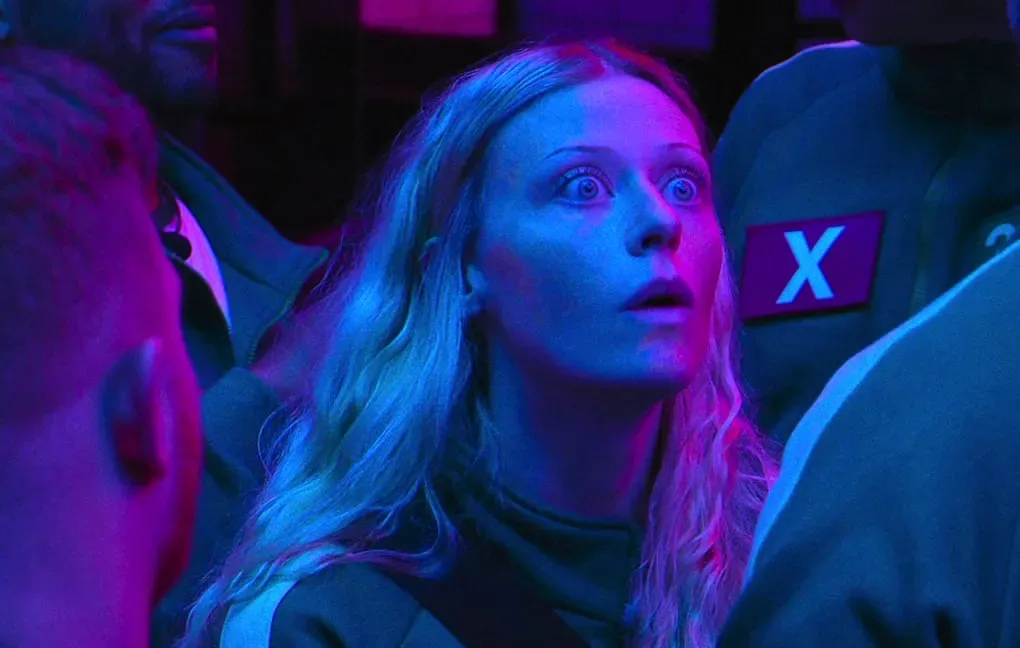

Squid Game: The Challenge Season 2 brings the reality competition back to the arena, rebuilding the ruthless playground of the original South Korean drama. The setup remains precarious on an ethical level. A field of 456 real players, many under real financial strain, face oversized versions of children’s games for a record-setting prize of 4.56 million dollars.
The scripted series framed economic despair and moral compromise as the core subject. This reality version takes financial collapse and greed and turns them into spectacle. That paradox shapes the viewer’s experience from the first minutes. Season 2 presses harder on that strain. The edit deploys quicker reversals and sharper turns, and the narrative highlights accelerating moral wear among contestants, which creates a harsher tone than the first run.
The Cynical Core of the Narrative
The central issue sits in the show’s ethics. The pitch suggests a study of human behavior under pressure, a psychological look at competition. The finished product absorbs the anti-capitalist charge of its source and channels it into display. The series presents greed’s corruptive force with unblinking clarity.
The 4.56 million dollar jackpot drives the story. That figure motivates players to treat integrity as expendable and to adopt tactics built on manipulation. The money operates as motive and permission for nearly every cutthroat move inside the game.
Many contestants act from visible need, which lands with a weight that exceeds standard reality ambition. That ground truth changes the tone. The competition often reads as a record of distress more than a night of dark amusement.
Architecture of Agony: Psychological Structuring
Production scale remains exacting. The iconic sets return with precision and size, and the build quality gives the contest a prestige sheen.

The design of the challenges delivers the real narrative engine. The season turns simple activities into instruments of stress. Counting to 456 seconds or stacking a house of cards sounds small, yet the footage captures shaking hands and sweat, and the result is a portrait of strain.
The viewing experience often shifts from excitement to unease as bodies react to pressure in real time. The episode titled “Mingle” extends this playbook. Drawn from one of the original drama’s harshest ideas, the setup engineers social rejection and tests belonging within the group. The rules do not merely eliminate players. They push insecurities to the surface and ask the cast to weaponize them.
Character Study in Moral Erosion
Season 2 maps a steady slide into self-interest. Alliances spark and break quickly, and the shared vocabulary turns to “strategy” as an all-purpose explanation for betrayals. That framing lets the show compress the path from camaraderie to cold calculus.
Inside this climate, a homegrown morality appears. Players debate who deserves the purse based on promised uses of the cash, trading claims of charity and personal need. The argument serves the speaker every time, and the game world rewards that kind of logic.
The twins Jacob and Raul Gibson emerge as the season’s main antagonists. They present polish and charm while running active schemes. Their conduct during the counting task stands out, a clear example of planned elimination that the edit spotlights for maximum jolt. The show’s point of view treats their methods as essential fuel for drama, and the arc confirms the season’s preference for ruthlessness as narrative currency.
Polish and The Persistent Ick Factor
Squid Game: The Challenge looks expensive and tightly assembled. The cuts are clean, the pace hooks the viewer, and the sound design adds bite. A pointed needle drop of Nina Simone’s “Don’t Let Me Be Misunderstood” underlines the irony on screen. The craftsmanship matches prestige standards.
That polish sits over material that drains the spirit. The series plays well on a technical level and still leaves a residue that feels grim. The core mechanic places the audience in a split mind. We watch character and conscience bend under incentive, and the structure keeps attention locked.
The experience invites self-interrogation and continuous consumption in the same breath. The season functions as a highly efficient content engine that feeds on need and outrage, which delivers compulsive viewing with a steady ethical chill.
Squid Game: The Challenge Season 2 is the highly anticipated second season of the reality competition series that brings the fictional high-stakes world of the Korean drama Squid Game to life, minus the actual deadly consequences. The series features 456 new contestants competing for a colossal $4.56 million cash prize through a series of children’s games and strategic challenges. The season premiered its first batch of episodes on Netflix on November 4, 2025, with new episodes released in batches thereafter, and it is exclusively available to stream on the Netflix platform.
Credits
Title: Squid Game: The Challenge Season 2
Distributor: Netflix
Release date: November 4, 2025
Rating: TV-MA
Running time: Approximately 40–60 minutes per episode (10 episodes in the season)
Director: Diccon Ramsay
Producers and Executive Producers: Stephen Lambert, Tim Harcourt, John Hay, Toni Ireland, Anna Kidd, Louise Peet, Stephen Yemoh, Nia Young, Emma Carroll, Rory Dalziel, Laura Doherty, Cherry Sandhu, Joe Street
Cast: The main cast consists of 456 contestants (referred to by number), including contestants like Jacob Gibson (Player 431), Raul Gibson (Player 432), and other featured players like Player 141 (Dash Katz), Player 302 (LeAnn Wilcox Plutnicki), Player 161 (Lorenzo Nobilio).
Editors: Benn Wyldeck
The Review
Squid Game: The Challenge Season 2
Squid Game: The Challenge Season 2 is a perfectly executed paradox. It showcases immaculate production value and highly effective psychological structuring, making it obsessively watchable television. However, its narrative architecture is deeply cynical. By transforming a sharp satire on capitalism into a pure spectacle of desperation, the show demonstrates the very moral decay it claims to critique. It is slick, suspenseful entertainment that forces the audience to confront the ethical cost of its consumption. The thrill of the game never quite washes away the unsettling realization of its purpose.
PROS
- Immaculate production design and set fidelity.
- Highly addictive pacing and narrative structure.
- Effective deployment of psychological pressure in games.
- Sharp character archetypes that accelerate conflict (e.g., The Gibsons).
CONS
- The premise represents a stark ethical paradox, undermining the source material's message.
- The viewing experience frequently feels "dirty" or unpleasant due to contestants' visible distress.
- Exploits the theme of financial desperation for entertainment.
- The central tension relies too heavily on moral erosion.