








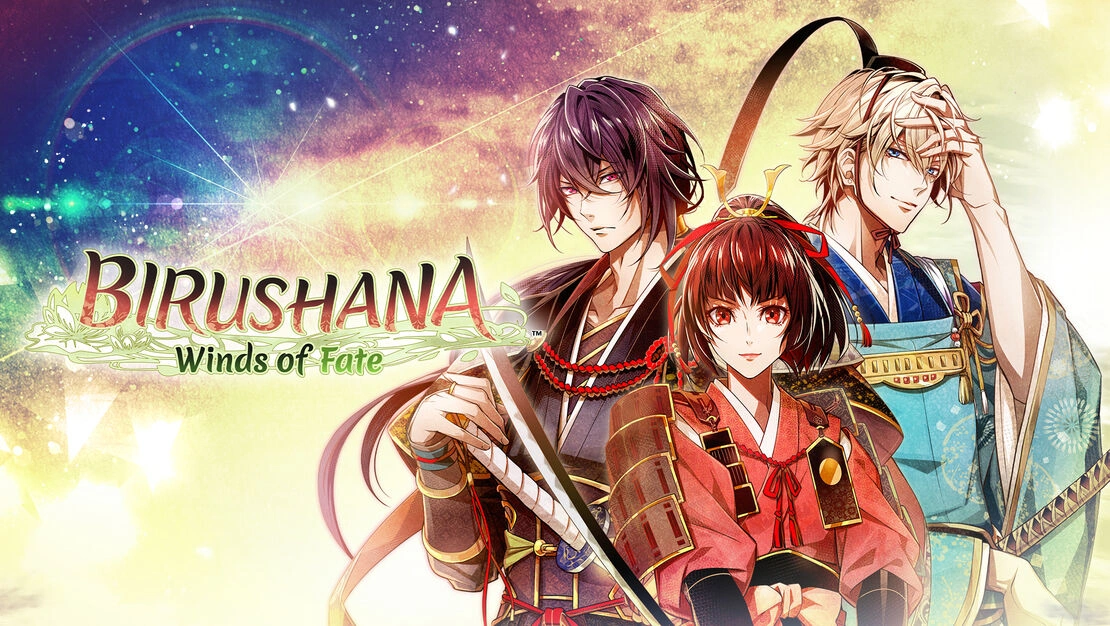

Birushana: Winds of Fate is a historical otome visual novel that works best as an encore rather than a new opening act. Developed by Otomate and Design Factory/RED, and published in the West by Idea Factory International for Nintendo Switch, it follows Birushana: Rising Flower of Genpei with the confidence of a game that knows its audience has already fought through the Genpei War once before.
The story again centers on Shanao, a young woman inspired by Minamoto no Yoshitsune, raised as a man, trained with the sword, and bound to the Genji clan during its conflict with the Heike. That premise carried the first game’s mix of political duty, hidden identity, battlefield pressure, and romance. Winds of Fate assumes that foundation is already in place. Its recaps are brief, its emotional stakes lean on established bonds, and its structure is built around return rather than discovery.
The game offers two forms of extra material: epilogues for the original love interests and new routes for characters who once stood at the edges of Shanao’s story. For longtime players, that framing gives the game its appeal. For newcomers, it creates a wall at the gate.
Romance After the War
The clearest design choice in Winds of Fate is its split between Epilogue routes and Main Routes. The Epilogue section continues the good endings for Yoritomo, Benkei, Shungen, Noritsune, and Tomomori. These chapters are short, linear, and focused on emotional aftermath. The larger war has moved aside, leaving room for quieter questions: what love looks like after survival, how two people settle into each other’s lives, and how Shanao’s chosen partner changes once political chaos no longer occupies every scene.
This format gives the original cast room to breathe. The first game often had to balance romance against clan conflict, strategy, swordplay, and shifting loyalties. Here, affection takes a stronger place. Some pairings benefit a great deal from that slower focus, especially where the writing finds tension in intimacy rather than inventing another large crisis. The best epilogues feel like a reward for earlier investment, giving Shanao and her partner scenes of vulnerability, humor, and desire that the first story could only hint at.
The weaker epilogues expose the limitation of the format. Their short length can make some emotional beats feel compressed, and a few obstacles seem added to delay romantic payoff rather than reveal character. Since these sections offer little player choice, they can feel closer to illustrated after-stories than full routes. That is not a flaw by default, since this is a fandisc, but it does affect pacing.
The new Main Routes carry a different kind of energy. Shigehira Taira, Tsugunobu Sato, Tadanobu Sato, and Takatsuna Sasaki each receive a romance path of their own, turning secondary characters into primary emotional partners. These routes work like alternate scenarios, asking how Shanao’s story shifts when her heart moves toward someone who was once outside the original romantic frame.
Shigehira stands out as one of the strongest additions. His route gives him enough emotional texture to justify the spotlight, and his connection with Shanao develops with real friction and tenderness. Tsugunobu and Tadanobu also feel like natural expansions because their ties to Shanao already had weight. Takatsuna has a harder climb. His route needs to build chemistry from a thinner base, and at times the writing strains to make that connection feel earned.
Through all of this, Shanao remains the game’s strongest asset. She is disciplined, direct, caring, and fully capable with a blade. The romances work because they do not reduce her into a passive prize. She can stand beside her partner, challenge him, protect him, and still be emotionally open. That balance gives the best routes their force.
Choice Without Mechanical Depth
As a game system, Birushana: Winds of Fate sits firmly within traditional otome visual novel design. There is no combat engine, exploration loop, puzzle layer, party management, leveling, or stat building. Anyone coming from RPGs such as Fire Emblem: Three Houses or narrative-heavy indie games like I Was a Teenage Exocolonist may need to adjust expectations. Here, choice is emotional and structural rather than tactical.
Player input comes through dialogue choices, route selection, affection values, and endings. The game signals favorable responses with a flower animation, while affection can be checked through the interface. A flowchart helps track route progress and makes it easier to move toward high or low affection outcomes. Autoplay, skip, backlog, and “skip to next choice” options support replay, especially for players moving through multiple paths.
These tools are practical and welcome. They reduce friction, which matters in a visual novel where rereading can become the main barrier between the player and a new ending. The menu-based route selection also suits the fandisc format. Instead of making players replay a large common route, Winds of Fate lets them choose the content they came to see.
The tradeoff is clear. The systems are convenient, but shallow. Once players understand how affection works, the route logic becomes easy to read. Consequences rarely feel surprising in a mechanical sense. A poor choice does not carry the sting of resource loss, altered strategy, or a dramatic branching system. It changes the emotional path, which fits the genre, but limits replay for anyone seeking complex interactivity.
For otome fans, that clarity can be a strength. For players drawn to layered consequence systems, it may feel light.
Period Beauty, Strong Voices, Uneven Text
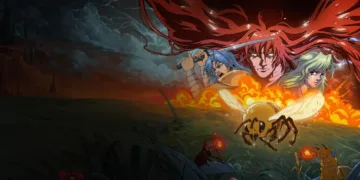
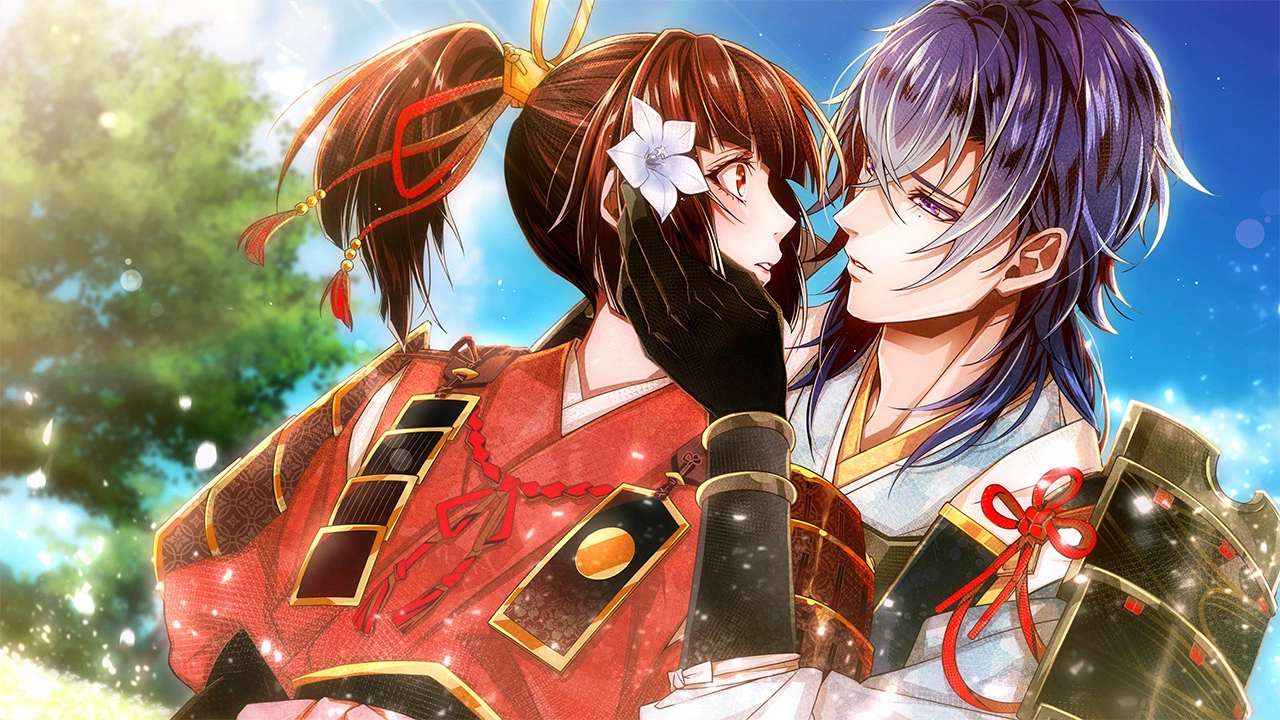
The presentation gives Winds of Fate much of its charm. Tana Khaki’s character designs remain elegant, with detailed costumes that support the historical setting and help each romantic lead feel distinct. The CG illustrations are strongest during intimate or emotionally charged moments, where posture, expression, and framing sell feelings that the prose sometimes states too directly.
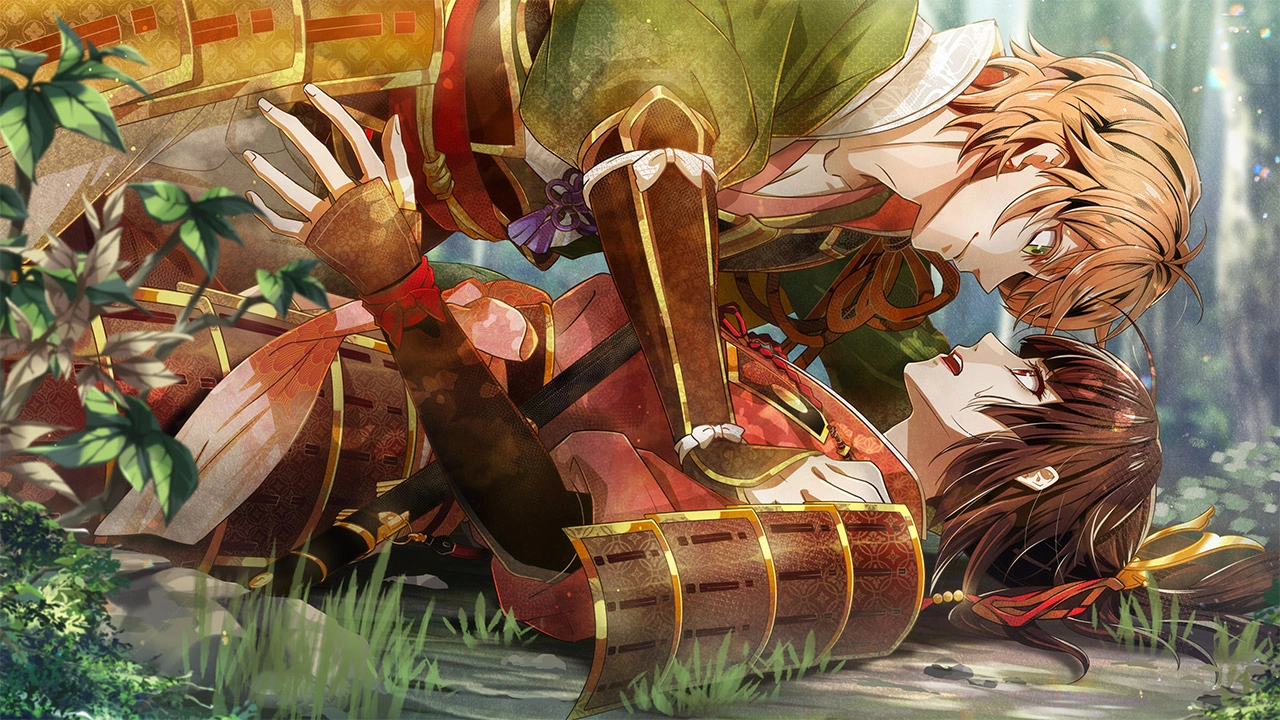
Animation is limited, mostly mouth movement, small effects, and simple action staging. That is standard for the genre, and the game uses those tools cleanly enough. Sword clashes and battlefield moments rely on visual rhythm rather than spectacle, which keeps the focus on character reaction and dialogue. Some reused or uneven sprites stand out, especially for characters who had smaller roles before, but the art direction stays consistent enough to carry the period drama atmosphere.
The Japanese voice acting adds a great deal. Performances give weight to the quieter scenes, especially when characters are testing trust, confessing fear, or trying to soften after years of conflict. The soundtrack supports the same tone, moving between romance and historical drama without crowding the writing. It is restrained in the right way.
Localization is less steady. Much of the English script gives each character a readable voice, and Shanao’s directness comes through well. Still, awkward phrasing appears, with occasional literal lines, odd sentence flow, agreement errors, and dictionary entries that feel too compressed. These problems are rarely constant enough to sink a route, but they can break immersion during key emotional scenes.
Value is the harder question. Winds of Fate gives fans romance, comedy, dramatic tension, and closure, yet its short epilogues and uneven routes make it a narrow recommendation. Players who loved Rising Flower of Genpei will find worthwhile time with Shanao and the men around her. Newcomers should begin with the original, since this companion piece depends on memories it does not fully rebuild.
The Review
Birushana: Winds of Fate
Birushana: Winds of Fate is a rewarding companion piece for players already invested in Shanao’s story, with heartfelt epilogues, strong new romance routes, and a heroine who remains the game’s sharpest strength. Its visual novel systems are smooth and accessible, though mechanically light, and its dependence on Rising Flower of Genpei makes it a poor entry point for newcomers. Short routes, uneven localization, and limited interactivity hold it back, but fans will find plenty of warmth, drama, and affection here.
PROS
- Shanao remains a strong, memorable protagonist
- Shigehira’s route stands out emotionally
- Smooth flowchart and skip features
- Strong Japanese voice acting
- Attractive period character designs
CONS
- Weak entry point for newcomers
- Some epilogues feel too short
- Limited gameplay depth
- Occasional awkward localization
- Takatsuna’s route feels less natural