

























![Kingdom Hearts Collection [I-III] Review](https://gazettely.com/wp-content/uploads/2026/10/Kingdom-Hearts-Collection-I-III-1-360x180.webp "Kingdom Hearts Collection [I-III] Review: KHII Holds Steady as Newer Entries Fluctuate 37")



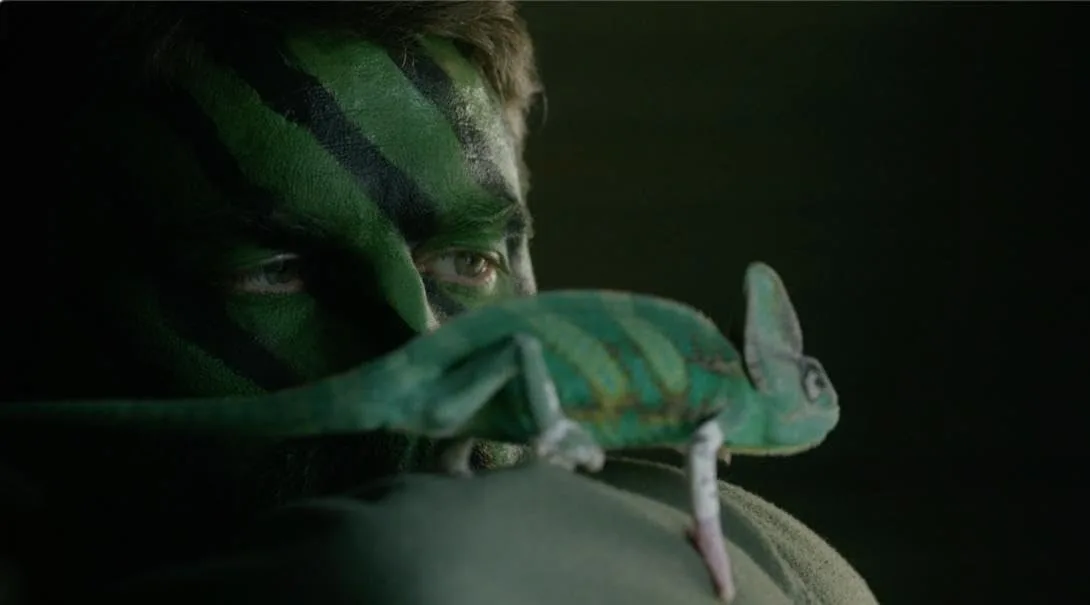

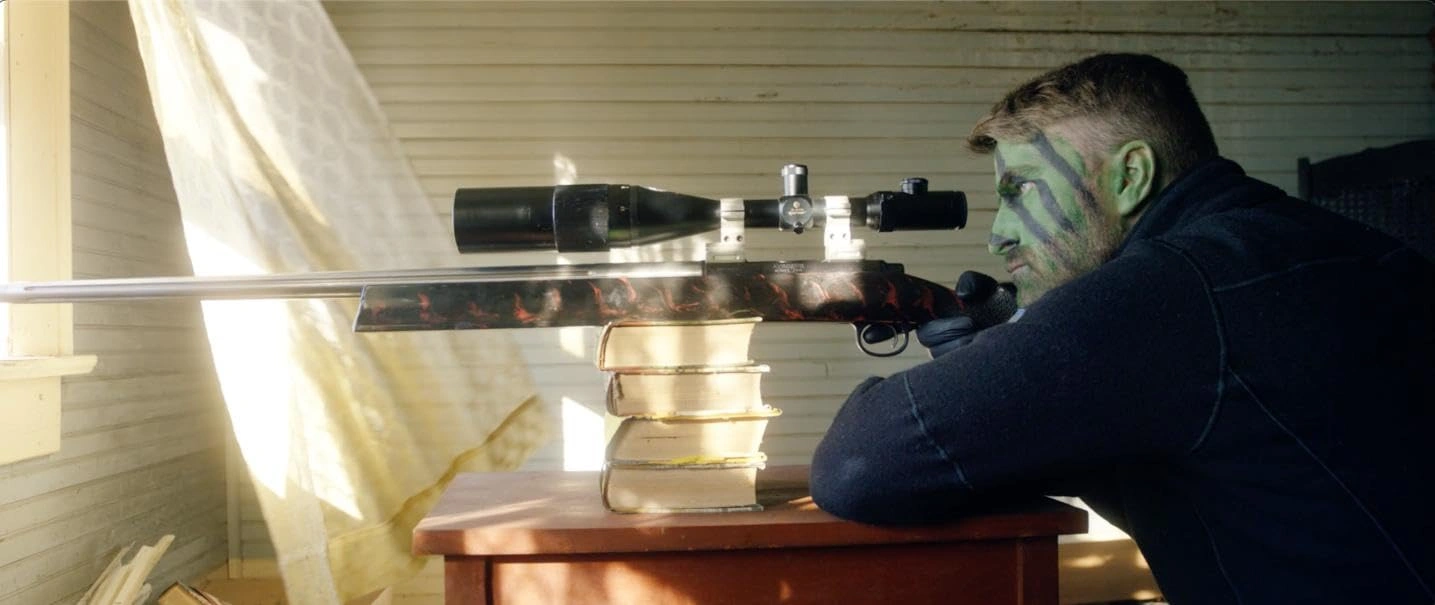
Gunfighter Paradise feels like it was carved out of a roadside sermon, a hunting manual, and a grief hallucination left too long in the North Carolina sun. Writer-director Jethro Waters builds a fiercely personal micro-budget indie around Stoner, played by Braz Cubas, a camo-painted hunter and shooting instructor who returns to his family home after his mother’s death. He brings with him the posture of a man trained to aim, yet the film keeps asking what happens when the target is inside the skull.
Stoner’s identity is fused with firearms, rural habit, masculine shame, and spiritual confusion. Homecoming does not soothe him. It fractures him. Soon he is surrounded by divine voices, strange visitors, his mother’s riddles, a mysterious green suitcase, Civil War reenactors, zealous neighbors, a cable guy named Joel, a mummified cat, and a killer who seems to have wandered in from the subconscious of a nation that keeps mistaking violence for conviction. The film is funny, abrasive, poetic, and deeply uneasy. It does not hand the viewer a clean key. It leaves the lock rusted and asks you to keep turning.
Grief, Guns, and the Gospel of Bad Wiring
Stoner’s grief is the first crack in the film’s world, yet Gunfighter Paradise uses that personal rupture to examine something older and uglier: the American romance with guns, the punitive language of certain religious cultures, and the emotional inheritance passed down through fathers, houses, and rituals. The story moves in loose, associative currents. Plot exists, yes, though it behaves like a fever chart. Encounters arrive less as steps in a mystery than as symptoms of an ideological illness.
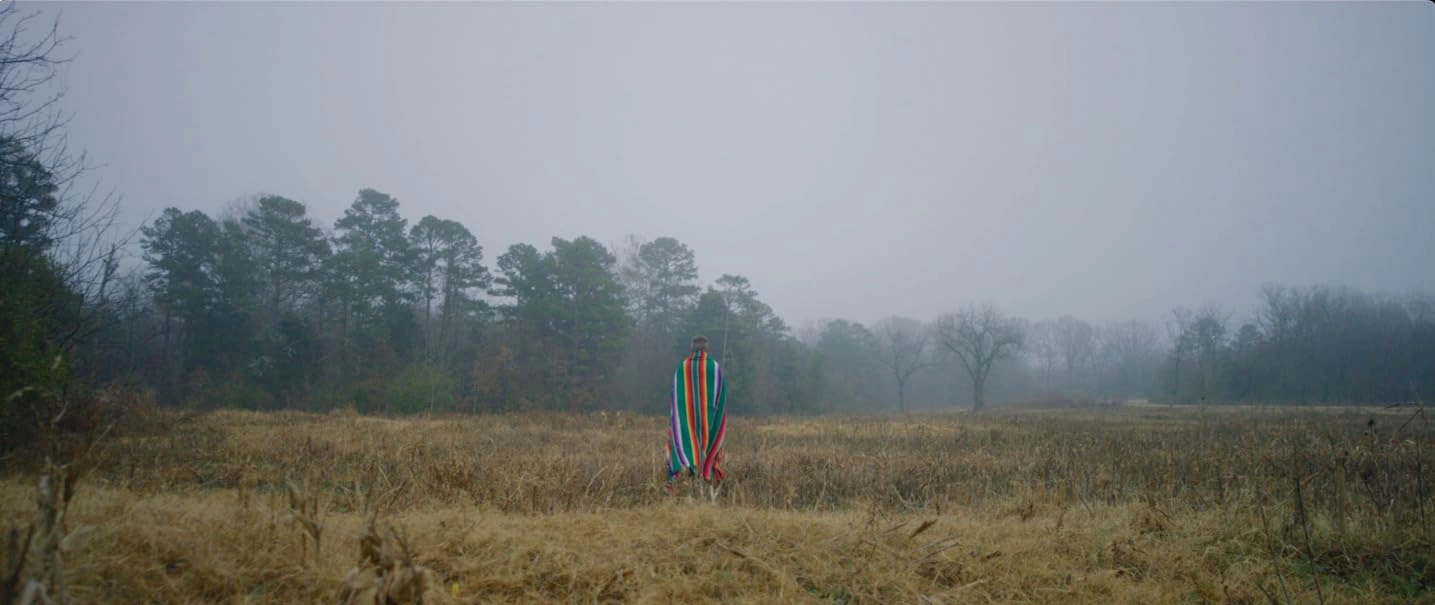
Stoner’s father, a military man and gunsmith figure, hangs over the film as an absent pressure system. He shapes Stoner’s sense of masculinity, failure, and purpose. Stoner never quite became the soldier he was expected to become, so firearms become compensation, prayer beads, costume, and confession. His mother, by contrast, represents spiritual openness and tenderness, leaving him caught between two languages: one built around control, the other around mercy.
That split gives the film its most potent psychic charge. “God” appears through distorted commands, violent imagery, and dread rather than comfort. Faith arrives like bad radio reception from a cruel frequency. Ammunition and crucifixes share the frame. Church invitations rub against gun culture. Moral certainty curdles into threat.
Waters critiques fanaticism without flattening Stoner into a mere monster. He can be frightening, wounded, absurd, loving, and ridiculous within the same stretch of screen time. Call it soul-splinter cinema, if a phrase must be coined. Joel’s presence matters because he keeps the film from drifting fully into abstraction. His concern gives Stoner’s collapse a human witness, while the killer figure stalks the margins like the embodiment of violent belief made flesh.
Sunlit Horror and Handmade Madness
Waters’ authorship is everywhere here: writing, directing, cinematography, editing, music, and performance all feel connected by the same agitated pulse. That level of control can become vanity in some micro-indies. Here, it mostly feels necessary. Gunfighter Paradise has the texture of a film made from private memory and public rot, with form and psychology fused into one sweaty apparatus.
The North Carolina locations are shot with bright menace rather than the familiar grammar of shadow-heavy horror. Fields, homes, roads, and gun ranges appear luminous, almost inviting, until the images begin to feel unstable. Sunlight becomes oppressive. Rural space becomes mental space. The horror does not always creep from darkness. Sometimes it sits in broad daylight wearing face paint and talking too much.
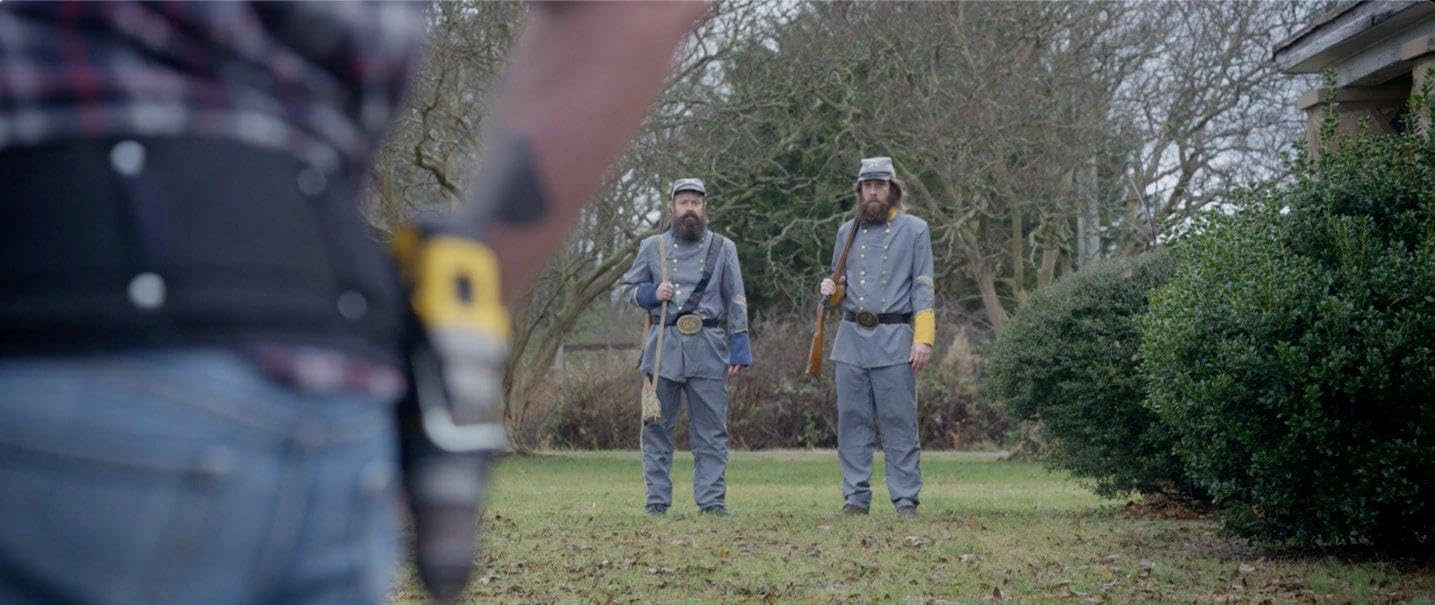
The editing favors odd pauses, lingering discomfort, and sudden tonal pivots. At times, the film resembles a hangout movie contaminated by religious panic. Stoner and Joel ride around, talk, shoot, listen, and drift, while the film keeps letting dread seep through the floorboards. The surreal details give the world its cracked comic logic: Civil War reenactors casually waiting around, the lovingly restored mummified cat Eugene, erotic visions, violent flashes, strange neighbors, and handwritten maternal riddles.
Sound is one of the film’s sharpest weapons. Bullet casings clink with fetishistic precision. Gun handling has a tactile intimacy that feels almost obscene. The score, co-composed by Waters and Bryan Black, moves through industrial roots, fractured gospel, and uneasy ambience. There are clear echoes of surrealist cinema and Lynchian dread, yet the film is too regionally specific to feel like an imitation. It has its own dirt under the fingernails.
Viewers who need flashbacks, exposition, or a tidy symbolic map may suffer. That suffering may be part of the design, which is either admirable or mildly rude. Possibly both.
Performances, Deadpan Grace, and the Price of Opacity
Braz Cubas gives Stoner a performance that could have collapsed into costume and affectation. The face paint, combat gear, gun talk, and philosophical muttering all risk caricature. Cubas finds something wounded inside the display. His Stoner is blunt, funny, spiritually terrified, ashamed, and sometimes weirdly tender. He carries himself like a man trying to hold a doctrine together after the doctrine has started leaking.
Joel Loftin’s Joel provides the film’s emotional anchor. He is patient without becoming saintly, warm without turning sentimental, and confused in ways that feel blessedly sane. His scenes with Stoner have a loose, lived-in quality, giving the film pockets of calm amid the metaphysical smoke. His singing voice, too, brings unexpected grace, the kind that seems to enter from a side door because the front one is crowded with ammo boxes.
The supporting cast adds valuable texture. The Confederate reenactors bring absurd deadpan comedy, the zealous neighbors sharpen the religious satire, and the killer figure deepens the film’s threat without reducing it to standard thriller machinery. Jessica Hecht’s vocal presence as the mother gives the absent parent emotional force, turning memory into an active dramatic pressure.
The humor is dry, strange, and frequently uncomfortable. Some jokes land like spent shells. Others sit there, hot to the touch.
Accessibility is another matter. Gunfighter Paradise is talky, surreal, slow-burning, and proudly resistant to clean interpretation. Its rough edges belong to its micro-indie ambition rather than careless construction. The film’s cryptic rhythm will divide viewers, yet its handmade craft, visual confidence, thematic bite, and strange moral weather make it difficult to shake.
Gunfighter Paradise debuted on the film festival circuit on March 9, 2024, before receiving its official theatrical distribution across the United States via AMC Theaters on February 27, 2026. The surreal indie dark comedy horror film follows a camouflage-painted hunter named Stoner who returns home to North Carolina carrying a mysterious green suitcase. Following the death of his mother, he moves back into his childhood home where his mental state fractures amid hallucinations, the literal voice of God, and an absurd assortment of local visitors. Moviegoers can watch the micro-budget art-house production at select theatrical venues or look for it on independent digital streaming channels.
Full Credits
Title: Gunfighter Paradise
Distributor: Waters Film, AMC Theaters
Release date: February 27, 2026
Running time: 93 minutes
Director: Jethro Waters
Writers: Jethro Waters
Producers and Executive Producers: Nancy Buirski, Sara Ayele, Kyle Lewis, Jethro Waters
Cast: Braz Cubas, Jessica Hecht, Valient Himself, Burk Uzzle, Joel Loftin, Christopher Levoy Brower, Pate Leatherman
Director of Photography (Cinematographer): Jethro Waters
Editors: Jethro Waters
Composer: Jethro Waters, Bryan Black
The Review
Gunfighter Paradise
Gunfighter Paradise is strange, abrasive, funny, and unnervingly sincere, a micro-indie fever dream that turns grief, guns, faith, and Southern masculinity into one long spiritual misfire. Its cryptic structure and slow rhythm will test some viewers, yet Jethro Waters’ handmade craft, Braz Cubas’ fractured lead performance, and the film’s sunlit menace give it a rare charge.
PROS
- Bold, personal filmmaking voice
- Strong lead performance from Braz Cubas
- Striking sunlit horror atmosphere
- Sharp sound design and eerie score
- Rich symbolism around guns, faith, and grief
- Dry, unsettling humor
CONS
- Slow pacing may frustrate some viewers
- Cryptic storytelling can feel opaque
- Talk-heavy scenes require patience
- Surreal structure limits mainstream appeal
- Some rough edges reflect its micro-budget scale







