

























![Kingdom Hearts Collection [I-III] Review](https://gazettely.com/wp-content/uploads/2026/10/Kingdom-Hearts-Collection-I-III-1-360x180.webp "Kingdom Hearts Collection [I-III] Review: KHII Holds Steady as Newer Entries Fluctuate 37")



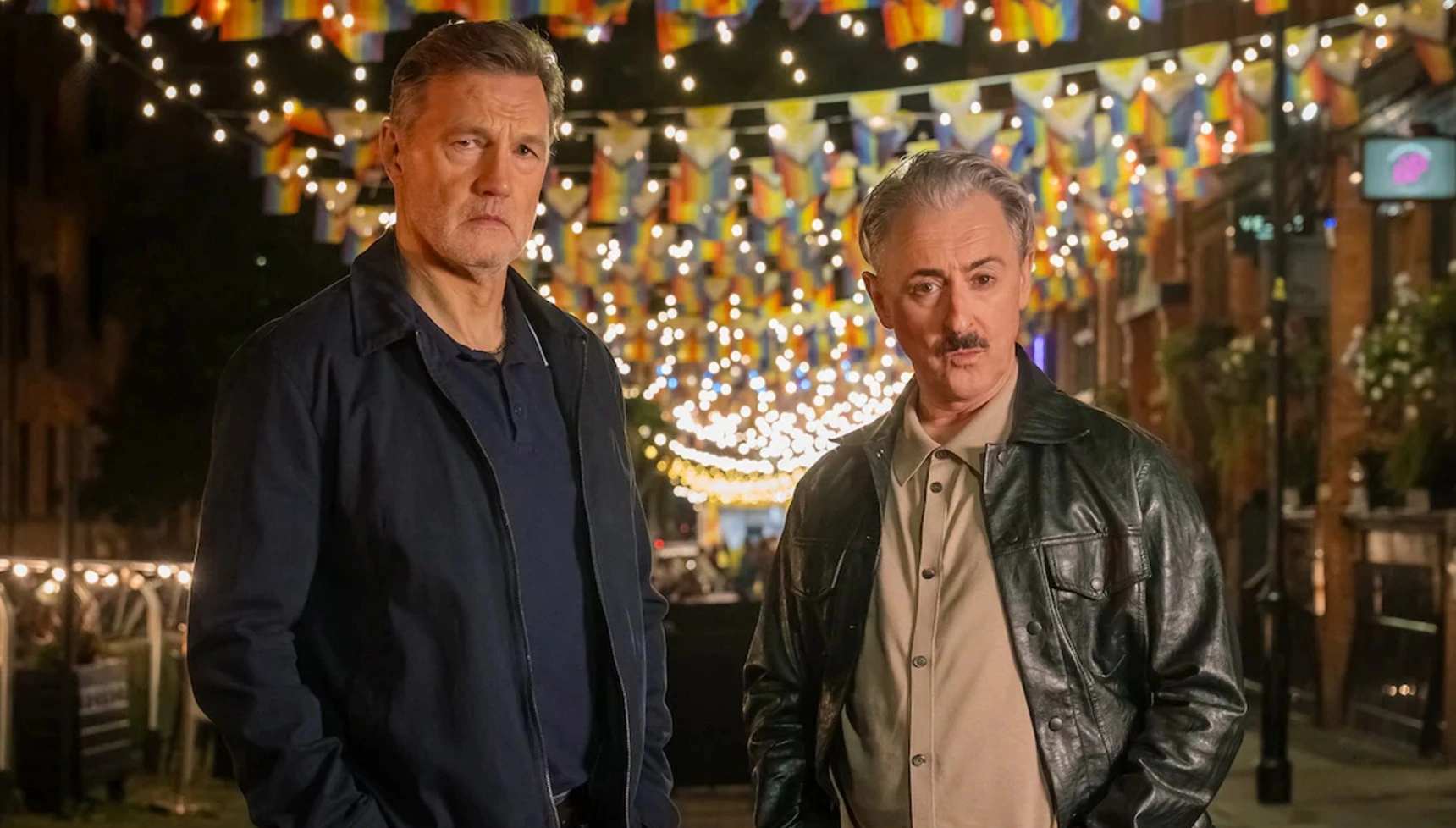

Tip Toe arrives on Channel 4 with the force of a warning siren heard through a terraced wall. Russell T Davies sets his five-part drama in Manchester, where Canal Street’s queer nightlife sits close enough to suburban family life for one world to rub against another until sparks fly. The central figures are Leo, a gay bar owner nearing 60, and Clive, an electrician next door whose stiff politeness keeps cracking to reveal something nastier underneath.
The series plants its most shocking image first, then rewinds 10 days. That choice matters. This is no puzzle-box thriller asking what happened. It tells us where the road ends, then makes us watch every missed exit.
That structure gives the show a grim pulse. A spare key. A locked door. A job at the bar. A glance held half a second too long. Davies turns neighbourly awkwardness into a countdown, and the result is anxious, angry television with a dry little grin that keeps appearing at the worst possible moments.
The Countdown Structure Turns Politeness Into a Threat
The flash-forward opening is blunt, brutal, and almost indecently effective. It places horror on an ordinary street, which is the point. Tip Toe is fascinated by how quickly domestic normality can become a crime scene. The camera does not need a haunted mansion or a dystopian skyline. A lamppost will do.
From there, the 10-day rewind creates dread through accumulation. Leo gets locked out after a one-night stand steals his laptop, leaving him stranded in his underwear and forced to knock on Clive’s door. It sounds like farce, and Davies plays the humiliation with a flicker of comic timing. Then the air changes. Clive’s discomfort is too sharp, too focused, too revealing. The joke has a splinter in it.
The series keeps finding weight in small exchanges. Clive asks Leo for a spare key, a gesture framed as practical neighbourliness, then refuses to offer one back. Leo gives him electrical work at the Spit & Polish, partly as thanks, partly as appeasement. Clive steps into Leo’s world and instantly behaves like a man allergic to the room.
He sees queer staff, trans staff, drag performers, chosen family, and the whole ecosystem of a community that has learned to protect itself. His face tightens. His words lag behind his prejudice by about half a beat. That half-beat is where Morrissey does some of his best work.
The pacing can feel heavy in the early stretch, especially when the dialogue carries a full week’s worth of headlines on its back. Davies has never been shy with a message, and here he sometimes enters the room with a megaphone and muddy boots. Yet the show finds its sharpest rhythm once the arguments become actions. A glance across a bar. A staff member watching the door. A text exchange that feels like a flare sent from danger. The tension grows because nobody can fully relax, and relaxation itself begins to seem like a privilege.
Alan Cumming and David Morrissey Make the Neighbour War Personal
Alan Cumming gives Leo a performance full of polish, cracks, and theatrical muscle memory. At the Spit & Polish, Leo knows how to hold a room. He can snap, flirt, manage, deflect, and perform the role expected of a Canal Street veteran who has seen enough history to know when a smile is armour. At home, that confidence thins. Around Clive, he becomes smaller without ever seeming weak. Cumming makes Leo’s vulnerability sting because it sits beside pride, wit, impatience, and a bone-deep fatigue.
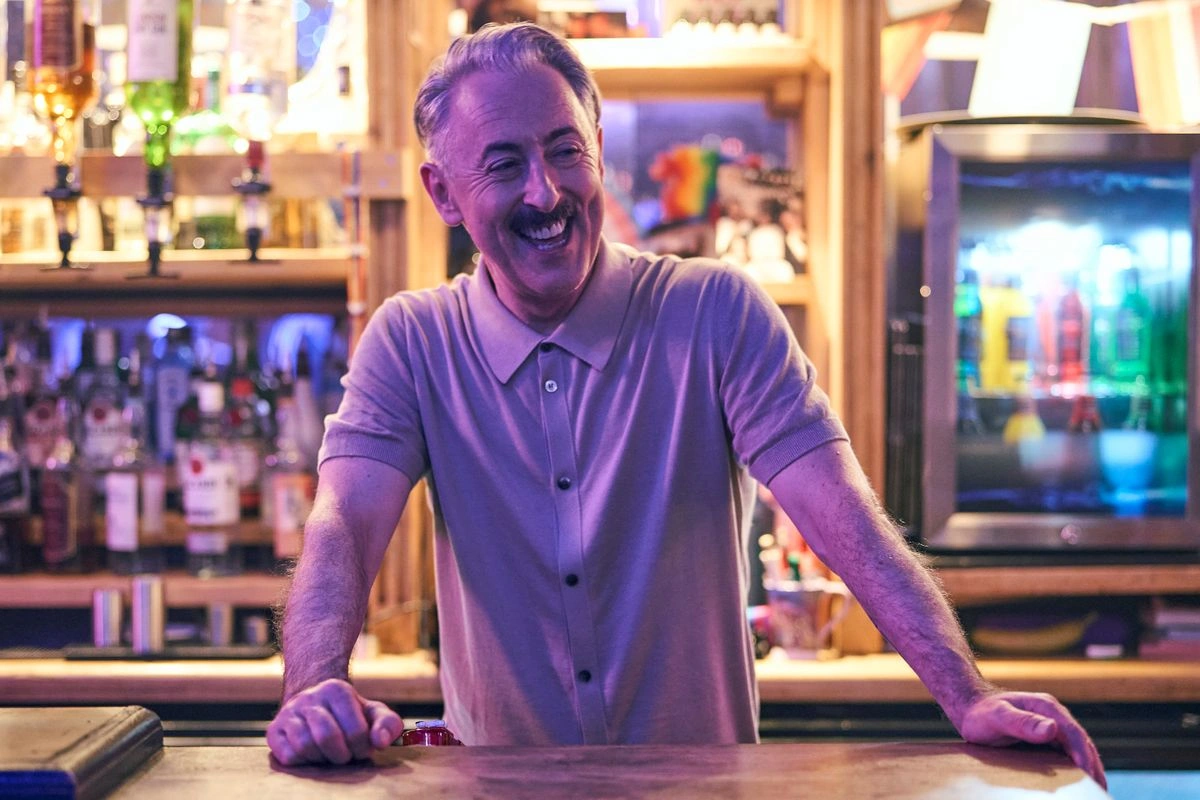
Leo is nearing 60 and carrying the memory of earlier fights for survival and equality. The show understands how insulting it is to be asked to fight the same battle twice. There is a bleak comedy in that, the kind that lands with a wince. Imagine surviving a house fire, rebuilding, then smelling smoke in the curtains.
Morrissey’s Clive is a harder role, since the writing can sometimes draw him with thick lines. He is a husband, father, electrician, and neighbour, a man who wants work from Leo while looking down on him. He believes himself reasonable, which makes him dangerous. His prejudice rarely arrives as a thunderclap. It leaks out through irritation, suspicion, and wounded entitlement. Morrissey keeps the performance controlled, resisting easy villainy. His Clive is frightening because he can still pass for ordinary.
The family material gives him sharper edges. Marie is trapped in the dead air of an unhappy marriage. Saul, the older son, has an online sex channel that Clive knows nothing about. George, 16 and gay, lives with the terror of being discovered by the very parent who should make home safe. That generational thread is one of the show’s most painful. George is surrounded by language about identity, freedom, and modern life, yet the kitchen table remains a danger zone.
The wider ensemble expands the damage beyond the two houses. Zee, a bullied trans staff member at the bar, brings the show into shared housing, where supposed privacy can turn predatory. Melba, Leo’s old friend, functions like a nightclub Cassandra with better eyeliner. He sees the weather changing before others admit the clouds are overhead. Paul Rhys gives him a bruised elegance, the look of someone who has watched history repeat itself and would very much like to invoice humanity for wasting his time.
Queer Life Under Watch Becomes the Show’s True Subject
The title Tip Toe carries a quiet ache. It describes a mode of living: step lightly, soften the voice, scan the room, judge the exit, laugh before someone else can turn hostile. The show’s strongest cultural insight lies there. Fear is rarely constant screaming. Often it is admin. It is logistics. It is remembering which streets feel safe after midnight, which jokes to ignore, which neighbours to pacify, which online comments might become a knock at the door.
Davies connects that private vigilance to public noise. Social media abuse, gender panic, far-right rhetoric, and arguments about who gets to exist all press against the story. Some scenes state these ideas with a force that can make the drama feel crowded. The first episode in particular wants to name every wound at once. The result can be jagged, like a group chat turned into theatre.
Still, the best passages are potent because they avoid neat innocence. The queer characters are funny, vain, tired, loyal, frightened, and occasionally wrong. The straight characters are no single block either, though Clive’s anger dominates the domestic side of the story. Davies is at his most persuasive when he shows how prejudice becomes weather. It changes the pressure in a room. It makes a bar feel like a bunker. It makes a teenager rehearse silence.
The Canal Street setting carries TV history with it. Davies is returning to territory associated with a very different kind of queer television: louder, freer, younger, more reckless in its pleasures. Tip Toe looks back at that energy from a harsher present. The party lights are still on, yet everyone keeps checking the lock. That shift gives the series its cultural bite. British television has offered plenty of issue dramas, but this one is less interested in polite debate than in the body’s reaction to threat.
Craft, Sound, and Atmosphere Keep the Alarm Ringing
Peter Hoar’s direction gives Tip Toe a tense, watchful quality. The camera often seems to be measuring distance: between houses, between bodies, between what someone says and what they mean. Two-person scenes become pressure chambers. Leo and Clive’s exchanges carry the terrible rhythm of bad small talk, where every pause feels armed. Leo and Melba’s conversations slow the pace without softening the mood. These are men who know how memory can bruise.
The editing supports the countdown shape, letting moments breathe long enough for discomfort to settle. The show rarely needs frantic cutting. Its anxiety comes from staying in the room. A person looks away. Someone smiles too quickly. A silence holds. There, the drama tightens.
The Spit & Polish is the visual and emotional counterweight to Clive’s home. It is warm, theatrical, funny, and lived-in, a sanctuary with glitter in the carpet and danger at the threshold. The bar scenes give the series its bursts of life, which makes the dread outside feel harsher. Davies has always understood that queer spaces are never only backdrops. They are archives, stages, shelters, gossip engines, and occasionally the only places where people can breathe.
Sam Watts’s score helps carry the tonal shifts, moving between energy and unease without smothering the performances. The sound design keeps a low tremor under casual scenes, as if the street itself has started humming with bad intent.
Tip Toe is messy in places, too full of speeches in its early movement and a little too willing to make Clive carry an entire national sickness on one pair of shoulders. Yet it has force. It has nerve. It has Cumming and Morrissey turning neighbourly tension into a slow fuse. The show asks a cruel question with a straight face: how many warnings can sit in plain sight before everyone agrees they were warnings?
Tip Toe is a five-part British drama created and written by Russell T Davies. The series premiered on Channel 4 on May 31, 2026, with its second episode airing on June 1 and the remaining episodes scheduled across June 7, June 8, and June 9. Set in Manchester, the story follows Leo, a Canal Street bar owner played by Alan Cumming, and Clive, his troubled electrician neighbour played by David Morrissey, as years of uneasy proximity curdle into hostility. The series is produced by Quay Street Productions in association with ITV Studios, with Channel 4 handling its UK broadcast and streaming availability through Channel 4’s platform.
Full Credits
- Title: Tip Toe
- Distributor: Channel 4, ITV Studios
- Release date: May 31, 2026
- Running time: Approximately 60 minutes per episode
- Director: Peter Hoar
- Writers: Russell T Davies
- Producers and Executive Producers: Phil Collinson, Nicola Shindler, Russell T Davies, Peter Hoar, Alan Cumming
- Cast: Alan Cumming, David Morrissey, Pooky Quesnel, Jackson Connor, Joseph Evans, Elizabeth Berrington, Iz Hesketh, Shakeel Kimotho, Luyanda Unati Lewis-Nyawo, Paul Rhys, Charlie Condou, Denise Welch
- Director of Photography: Matt Gray
- Composer: Sam Watts
The Review
Tip Toe
Tip Toe is bruising, angry television with a sharp sense of dread and two gripping central performances from Alan Cumming and David Morrissey. Its early episodes can feel overloaded with social flashpoints, yet the series gains power once fear, silence, and neighbourly tension take over. Russell T Davies delivers a raw drama about queer safety, family denial, and public hatred creeping into private life.
PROS
- Alan Cumming gives Leo warmth, wit, and wounded dignity.
- David Morrissey makes Clive quietly menacing without constant theatrics.
- Strong use of the 10-day countdown structure.
- Canal Street setting carries emotional and cultural weight.
- The Spit & Polish scenes add humour, community, and texture.
- Peter Hoar’s direction builds dread through ordinary spaces.
- Sam Watts’s score supports the unease without overwhelming the drama.
- George, Zee, Melba, Saul, and Marie give the story wider human stakes.
CONS
- Some early dialogue feels too packed with topical arguments.
- Clive can seem heavily drawn in a few scenes.
- A few plot choices may test plausibility.
- The polemical tone may feel too blunt for viewers who prefer subtler drama.
- The opening flash-forward reduces some mystery, relying instead on dread.







