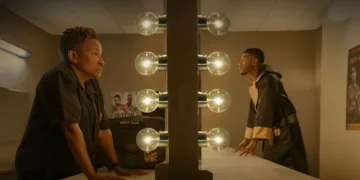


























Undercard puts Wanda Sykes in the center of a sports drama about damage, discipline, and the long, awkward labor of earning trust back after years of absence. She plays Cheryl “No Mercy” Stewart, a former boxing champion whose career was derailed by addiction, legal trouble, and personal collapse. Now sober for four years, Cheryl trains young fighters in Miami’s Liberty City while trying to keep her own life from sliding out from under her.
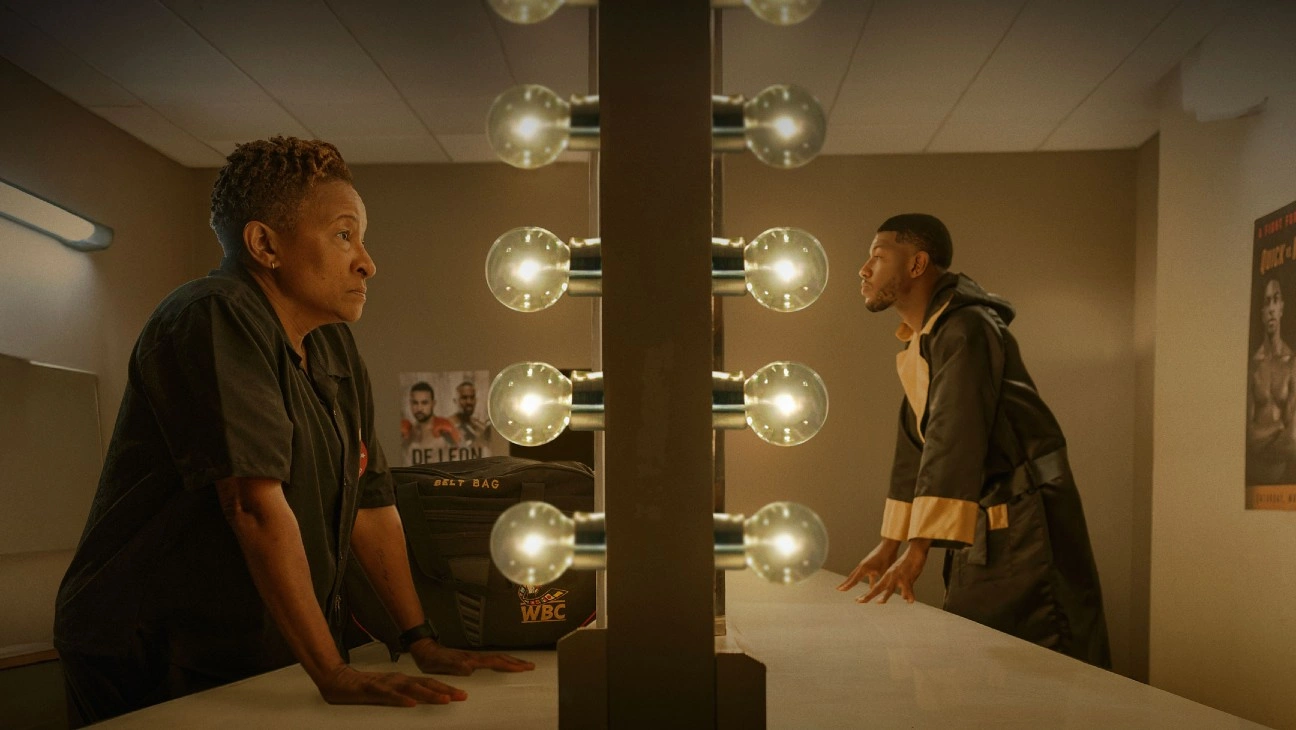
The film’s central conflict is simple and sturdy: Cheryl wants to reconnect with Keith, the adult son she lost after her worst years took control of the story. Keith, played by Bentley Green, has talent in the ring and no interest in letting his mother back into his life.
That resistance gives Undercard its cleanest dramatic engine. Boxing becomes the language they can use before either one is ready to speak plainly. The film knows the emotional bruises outside the ring can hurt longer than the ones inside it. Its best scenes understand that.
Wanda Sykes Carries the Fight
Sykes’ dramatic turn is the film’s clearest reason to pay attention. Cheryl is sharp, defensive, funny in a reflexive way, and deeply practiced at turning pain into command. Sykes brings her familiar quick rhythm to the role, which means Cheryl never feels like a total reinvention of her screen presence. That works better than expected. Cheryl’s clipped impatience and bristling pride feel tied to a woman who has spent years surviving by refusing to soften in public.
The performance is most affecting when Cheryl’s confidence slips. Her sobriety is presented as an achievement, not a magic repair kit. She has stopped drinking, but she has not stopped owing people answers. Keith’s anger gives the film a needed moral weight, since his rejection of her is not treated as a simple obstacle for Cheryl to overcome. He has been shaped by her absence. That history matters.
Their training scenes give the film its strongest dramatic material. Cheryl can read Keith’s body better than she can read his feelings, and that creates a smart tension. She knows his stance, his timing, his weaknesses. She does not yet know how to be his mother again. The ring becomes a temporary truce, a place where pain can be translated into footwork, breath, and correction.
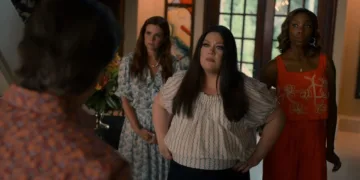
Estella Kahiha’s Meka adds another layer of pressure to Cheryl’s life, since Cheryl is raising her niece while trying to prove she can be stable. The idea has emotional force, though the film never gives Meka enough space to become a full presence rather than another crisis waiting near the edge of the frame.
Too Many Battles Outside the Ring
Undercard has the bones of a lean mother-son redemption drama, but the script keeps loading Cheryl with fresh troubles until the story starts to feel overpacked. Rent problems, possible homelessness, child services, sobriety meetings, a romantic spark with Mariana, loyalty to gym owner Baba T, a rivalry with Hector, and Keith’s boxing future all compete for attention. Any one of these threads could support a strong sports drama. Together, they crowd the ring.
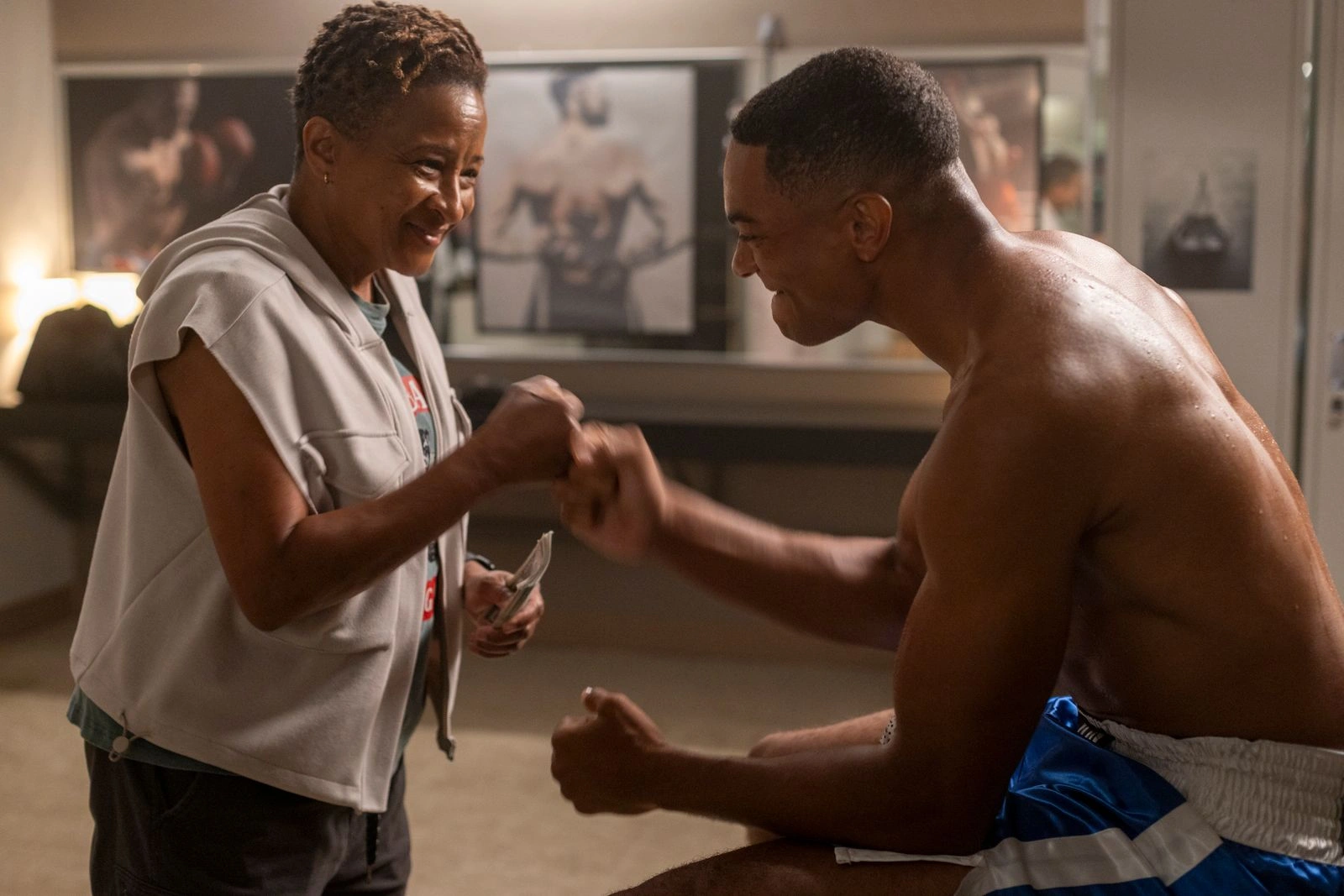
This is where the film’s narrative mechanics begin to creak. Cheryl is written as a woman under siege from every direction, which fits the spirit of a boxing picture, but the structure often treats struggle as a stack of plot devices rather than a developing emotional pattern.
Meka’s custody situation matters, then recedes. The eviction creates urgency, then becomes one pressure among many. Hector’s poaching of fighters gives Cheryl an adversary, but his role feels functional rather than fully explored.
Roselyn Sánchez’s Mariana offers Cheryl a welcome softer space. Their scenes let Sykes show warmth and guarded flirtation, a shift from the clenched energy she brings to the gym. Still, that relationship needs room to breathe. William Stanford Davis fares better as Baba T, whose presence gives the gym a sense of memory and loyalty. He feels like someone who has seen Cheryl at her worst and still chooses to stand nearby, which is a small but valuable kind of grace.
The Keith-versus-Kordell rivalry should give the film its sporting spine, yet the setup lacks clarity. The movie wants the final bout to land as a major underdog moment, but the dramatic stakes are clearer than the athletic ones. That makes the climax emotionally understandable and structurally fuzzy, a strange split decision for a boxing story.
The Drama Lands Harder Than the Punches
Tamika Miller directs Undercard with a sincere eye for community and personal wear. The film feels most assured in its quieter spaces: the gym, the neighborhood, AA meetings, training areas, and the small exchanges where Cheryl’s pride keeps bumping into the help she clearly needs.
Liberty City gives the story texture, and Ana M. Amortegui’s cinematography brings grit and intimacy to the world around Cheryl. The film looks strongest when it lets faces, streets, and worn-down interiors carry history without forcing them to announce it.
The boxing scenes are less convincing. A sports drama can survive familiar story beats if the ring has rhythm, danger, and escalation. Here, the fights often feel serviceable rather than electric. The choreography lacks the snap needed to sell Keith’s growth or Cheryl’s tactical intelligence. The editing struggles to build momentum between rounds, and the crowd energy rarely matches the importance the film assigns to the bouts.
That weakness hurts most near the end. The climactic fight is meant to gather Cheryl and Keith’s emotional history into one physical test, but the staging cannot fully match the weight of that idea. The movie asks the final bout to carry reconciliation, self-worth, strategy, and catharsis. That is a heavy bag, and the sequence swings at it with uneven force.
Still, Undercard has sincerity in its corner. Its script takes on too much, and its ring craft does not always convince, but Sykes gives Cheryl enough toughness and regret to keep the film upright. The movie works best as proof that she can carry a dramatic role with real command. Cheryl may be fighting a messy story, but Sykes knows how to stay on her feet.
Undercard is an American sports drama directed by Tamika Miller and co-written by Miller and Anita M. Cal. The film stars Wanda Sykes as Cheryl “No Mercy” Stewart, a former boxing champion and recovering alcoholic who tries to reconnect with her estranged son, Keith, played by Bentley Green, while training him for a major fight. The movie was released in U.S. theaters on February 27, 2026. As of June 1, 2026, Undercard is available to rent or buy through digital platforms including Prime Video, Apple TV Store, YouTube, and Google Play Movies.
Where to Watch Undercard (2025) Online




Full Credits
- Title: Undercard
- Distributor: Seismic Releasing / Catalyst Studios
- Release date: February 27, 2026
- Rating: R
- Running time: 1 hour 45 minutes
- Director: Tamika Miller
- Writers: Tamika Miller, Anita M. Cal
- Producers and Executive Producers: Anita M. Cal, Anne Clements, Paul Kampf, Tamika Miller, Mark Pennell, Andrés Ramírez, Holly Levow, Wanda Sykes
- Cast: Wanda Sykes, Bentley Green, Roselyn Sánchez, Berto Colón, Estella Kahiha, Xavier Mills, William Stanford Davis, Danny Pardo
- Director of Photography: Ana M. Amortegui
- Editors: Libya El-Amin, David Michael Maurer
- Composer: EmmoLei Sankofa
The Review
Undercard
Undercard is a sincere sports drama carried by Wanda Sykes’ strong dramatic presence, especially in the tense mother-son material. The film has emotional weight, a grounded setting, and a clear interest in recovery, trust, and second chances. Its problem is shape. Too many subplots crowd Cheryl’s story, while the boxing scenes lack the force needed for a great sports climax. Still, Sykes gives the film grit, humor, and bruised humanity.
PROS
- Wanda Sykes delivers a strong dramatic lead performance
- Mother-son conflict gives the film emotional pull
- Liberty City setting adds grounded texture
- William Stanford Davis brings warmth as Baba T
- Sobriety and family repair themes have real weight
CONS
- Script is crowded with too many subplots
- Boxing scenes lack tension and physical impact
- Meka and Mariana storylines feel underdeveloped
- Final fight does not fully land
- Keith-versus-Kordell rivalry needs clearer setup