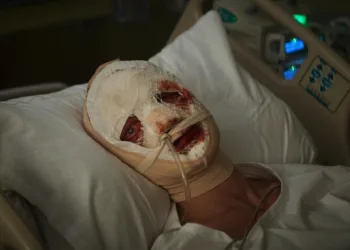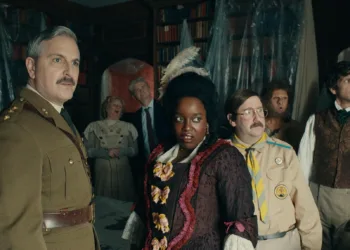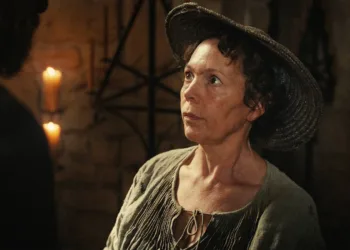








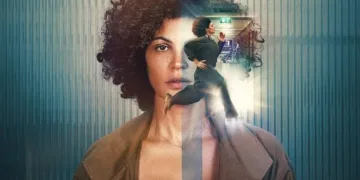





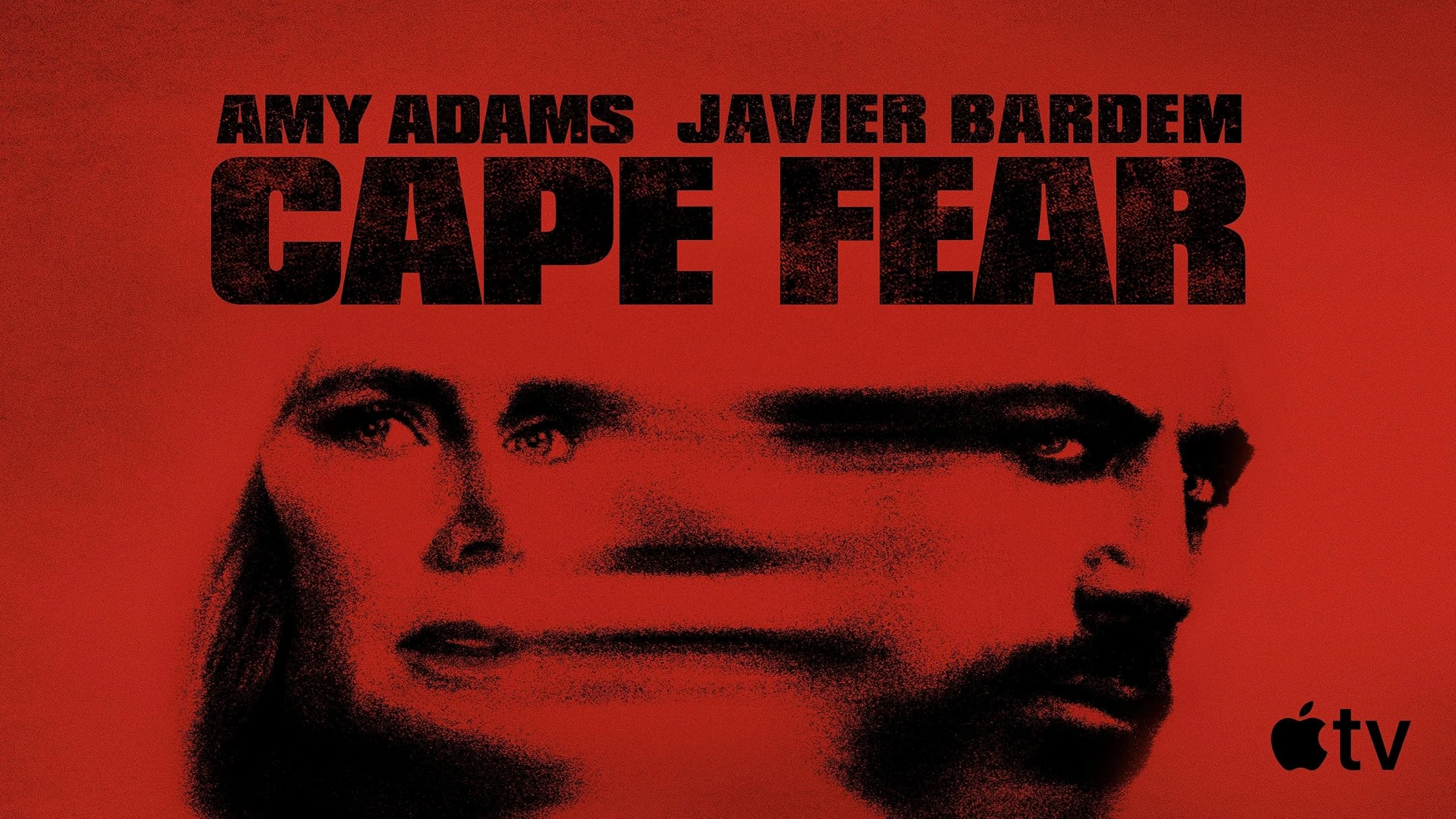

Cape Fear turns a familiar revenge premise into a long, clammy study of guilt, reputation, and family collapse. Created by Nick Antosca for Apple TV, the 10-episode psychological thriller places Max Cady back into the lives of the people he believes stole 17 years from him. Played by Javier Bardem, Max has just been released from prison after new evidence clears him of murdering his pregnant wife. Freedom, for him, is less a second chance than a stage.
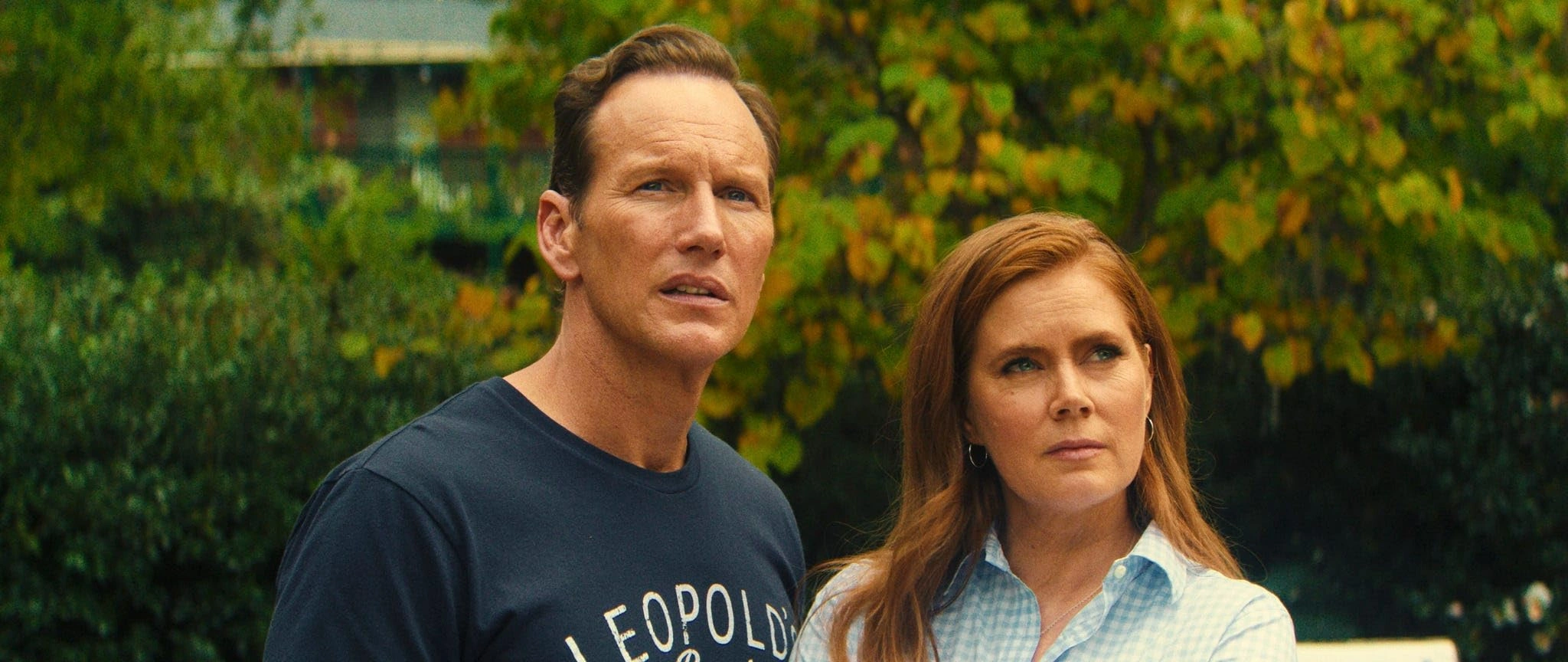
His targets are Anna and Tom Bowden, two lawyers whose past conduct during his case remains clouded by suggestion, half-spoken memories, and professional self-protection. Anna, played by Amy Adams, works to free the wrongly convicted. Tom, played by Patrick Wilson, once prosecuted cases and now defends wealthy clients. Their Savannah home is large, tasteful, and practically begging to be invaded.
The Bowdens’ children, Natalie and Zack, become emotional pressure points in Max’s campaign. The series understands that a family can be threatened from outside only after it has begun cracking within. By the time Max appears, the house already feels unsafe.
A Revenge Story Stretched Into a Siege
The plot runs on a clean engine: Max Cady is exonerated, Anna refuses to accept his innocence, Tom knows more than he wants to admit, and Max begins inserting himself into every corner of their lives. He appears in public spaces with the calm of a man who knows exactly how far he can go before the law notices. He smiles. He forgives. He waits. It is the waiting that does the damage.
The series takes a compact thriller structure and expands it into a slow psychological siege. Dead animals appear in the pool. Security systems misfire. Strangers drift into the Bowdens’ orbit. Public events become traps. Private spaces lose their privacy. The pattern is familiar enough to create dread, yet flexible enough to keep the family off balance. Max does not need to break down the door. The door, in this version of the story, is already connected to Wi-Fi and probably has a password Tom forgot to change.
That modern texture gives the show much of its identity. AI deception, catfishing, online rumor, true-crime fascination, and viral humiliation all become extensions of Max’s threat. Technology does not protect the Bowdens. It multiplies their exposure. Their home may have alarms and cameras, yet their lives remain porous, open to manipulation through phones, feeds, gossip, and institutional image-making.
The 10-episode form helps and hurts. At its best, the added length lets fear mature. The show has time to make Anna’s certainty look less heroic, Tom’s composure look less stable, Zack’s anger look less like ordinary teen moodiness, and Natalie’s curiosity feel tender, risky, and sad. The dread gathers in layers.
At other points, the series stuffs the plot with so many contemporary anxieties that the machinery starts to creak. Some threads feel designed to extend the nightmare rather than deepen it. The show can be lurid, messy, and a bit addicted to escalation. Still, it rarely becomes dull. Its storytelling has the quality of a bad decision made with impressive confidence, then repeated until everyone in the room is sweating.
Max Cady and the Bowdens’ Moral Rot
Javier Bardem gives Max Cady the menace of a man who has studied his own myth. He is charming, theatrical, wounded, funny in a way that makes laughter feel dangerous, and frightening without needing to raise his voice. Bardem plays him as someone who understands performance at a cellular level. Max knows how to look harmless to the right person, how to appear victimized in public, how to let rage flash for half a second before smoothing it back into charm.

That control makes him terrifying. He can enter a scene as a wronged man seeking recognition, then leave it having poisoned the room. His intelligence lies in making others doubt the obvious. Did he cause the damage, or did fear fill in the blanks? Is he threatening the Bowdens, or are they incriminating themselves through panic? The series gets strong material from that uncertainty.
Amy Adams gives Anna a brittle moral intensity. Anna’s professional life depends on the idea that the justice system can be corrected. Max’s release turns that belief against her. She has built a public identity around innocence, yet her private reaction to Max suggests guilt, terror, and something close to denial. Adams avoids turning Anna into a simple hypocrite. She plays her as a person whose principles are real, whose blind spots are real, and whose fear makes both harder to separate.
Patrick Wilson’s Tom is smoother, which makes him more slippery. He carries himself like a man trained to win arguments before anyone knows a debate has started. His shift from prosecutor to high-priced defense attorney gives the character a neat moral bruise. His microdosing, professional compromises, and interest in a colleague all suggest drift. Tom is not falling apart because Max arrives. Max merely gives his collapse a timetable.
Natalie and Zack give the family story its sharper contemporary edge. Natalie, Tom’s stepdaughter, is searching for belonging, sexual identity, and some form of emotional truth inside a house built on evasion. Her curiosity makes her vulnerable, yet it also gives the series a needed pulse of sincerity. Zack is angrier and more volatile, carrying damage from an incident involving an ex-girlfriend. Through him, the show connects Max’s old-school brutality to newer forms of masculine shame, resentment, and online punishment.
The supporting players widen the moral field. Noa, Anna’s boss, sees Max as useful to an organization that needs money and public attention. That choice gives the series one of its sharpest ideas: virtue can become branding with terrifying speed.
Justice, True Crime, and the Market for Monsters
Cape Fear is at its most interesting when it treats justice as a performance staged for donors, cameras, institutions, and frightened families. Anna’s work with the wrongly convicted gives her a noble public role, yet Max’s case exposes the fragility of that role. If he is innocent, her fear becomes a kind of betrayal. If he is guilty, the system that released him becomes another monster in the room.
The show keeps that moral discomfort alive by refusing to make public image and private truth match cleanly. Max becomes a media object after his release: a wronged man, a tragic figure, a charismatic survivor, a dangerous fantasy. People want to use him, desire him, study him, monetize him, and fear him. The series understands the true-crime economy as a place where empathy and exploitation often wear the same face.
Its handling of masculinity is just as pointed. Max is violence wrapped in charm and grievance. Zack is younger, rawer, shaped by embarrassment and digital judgment. Tom is respectable, educated, successful, and quietly entitled. These men do not mirror one another exactly, yet the show places them on the same cracked map. Anger changes costume across generations. The damage remains recognizable.
The Bowden home becomes the perfect arena for this breakdown. It is wealthy, beautiful, and unfinished. Repairs are ongoing. The alarm system fails. The air feels wrong. That physical instability reflects the family’s emotional design. No one inside the house is fully honest, so Max does not need to create every fracture. He only presses on what already hurts.
Privilege sits under nearly every scene. Anna and Tom have money, status, and language that can sanitize almost any choice. Max, for all his menace, exposes how easily respectable people can hide corruption behind good causes and polished rooms. The series works best when revenge stops feeling like a simple villain’s mission and becomes a brutal argument about who gets to look innocent.
Heat, Water, Noise, and Nerves
The direction gives Cape Fear a lush, feverish texture. Savannah is photographed as a place of beauty with something damp and hostile under the surface. Spanish moss hangs like a warning. Water glints with threat. The Bowden house, with its elegant rooms and open views, never feels like a refuge. It feels like a display case.

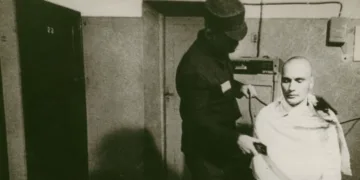
The series uses black-and-white flashbacks tied to prison and memory, color-inverted images to suggest psychological rupture, and teal lighting that makes even calm rooms feel cold. Some of these flourishes land with blunt force. The color shifts, in particular, can feel like the show underlining a sentence already written in bold. Yet the visual confidence matters. This is a thriller that wants to look heightened, sickly, and a little grandiose.
Suspense is built through small intrusions: a look held too long, a figure in the background, an alarm cutting through the night, a silence that seems to be listening back. The jump scares are not shy. At times, the show practically rolls up its sleeves before springing one, which should be ridiculous. Often, it works anyway.
The sound design may be its most predatory craft element. Alarms, ambient hums, sudden quiet, and musical cues turn ordinary spaces into traps. The score draws from classic thriller grammar, giving the series a sense of inheritance without trapping it in imitation.
Cape Fear is excessive, occasionally overextended, and far from subtle. It is also tense, well-acted, visually assertive, and unusually alert to the ways modern life has made privacy feel almost quaint. Its best scenes turn revenge into a test of story itself: who gets believed, who gets watched, who gets punished, and who gets to keep calling themselves good.
Cape Fear is a psychological thriller television series that is scheduled to make its official global debut on Apple TV+ on June 5, 2026. This gripping 10-episode limited series serves as a contemporary adaptation of John D. MacDonald’s 1957 novel The Executioners, heavily drawing inspiration from the acclaimed 1991 feature film adaptation. The narrative follows happily married attorneys Anna and Tom Bowden as their comfortable lives are upended when Max Cady, a vicious killer they were responsible for putting away, is released from prison and begins infiltrating their family to orchestrate a calculated campaign of vengeance. Audiences can watch the thriller unfold exclusively on the Apple TV+ streaming platform, with the first two episodes dropping on premier night followed by weekly installments.
Where to Watch Cape Fear Online


Full Credits
Title: Cape Fear
Distributor: Apple TV+
Release date: June 5, 2026
Rating: TV-MA
Running time: 50-60 minutes per episode
Director: Morten Tyldum, S. J. Clarkson, Amanda Marsalis, Reed Morano, Steven Piet, Trey Edward Shults, Jon S. Baird, Stephen Williams
Writers: Nick Antosca, Andre Jacquemetton, Maria Jacquemetton, Alan Page Arriaga, Tara Shivkumar, Peter Blake, Brian Evenson, Greg Goetz, Diana Pawell
Producers and Executive Producers: Nick Antosca, Martin Scorsese, Steven Spielberg, Javier Bardem, Amy Adams, Alex Hedlund, Darryl Frank, Justin Falvey, Morten Tyldum, Amanda Marsalis
Cast: Javier Bardem, Amy Adams, Patrick Wilson, Lily Collias, Joe Anders, CCH Pounder, Jullian Dulce Vida, Anna Baryshnikov, Jamie Hector, Margarita Levieva, Malia Pyles, Ron Perlman, Ted Levine, Patrick Fischler
Director of Photography (Cinematographer): Eben Bolter, Celiana Cárdenas
Composer: Jeff Russo
The Review
Cape Fear
Cape Fear is a tense, stylish, and performance-driven thriller that turns revenge into a corrosive study of guilt, family secrecy, and public image. Javier Bardem dominates as Max Cady, while Amy Adams and Patrick Wilson give the Bowdens enough moral damage to make their fear feel earned. The 10-episode format sometimes stretches the plot past its natural limits, with a few side threads crowding the central siege. Still, the atmosphere, visual craft, and psychological pressure keep it gripping.
PROS
- Javier Bardem’s magnetic, frightening performance
- Strong work from Amy Adams and Patrick Wilson
- Rich Savannah atmosphere and stylish thriller visuals
- Smart use of true-crime culture, technology, and public shame
- Sustained psychological tension
CONS
- Some side plots feel overloaded
- The 10-episode structure can drag
- A few visual flourishes feel too obvious
- Certain twists lean into pulp excess
- The Bowdens can be hard to emotionally invest in