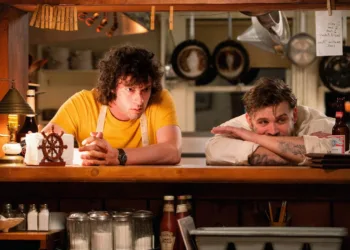



















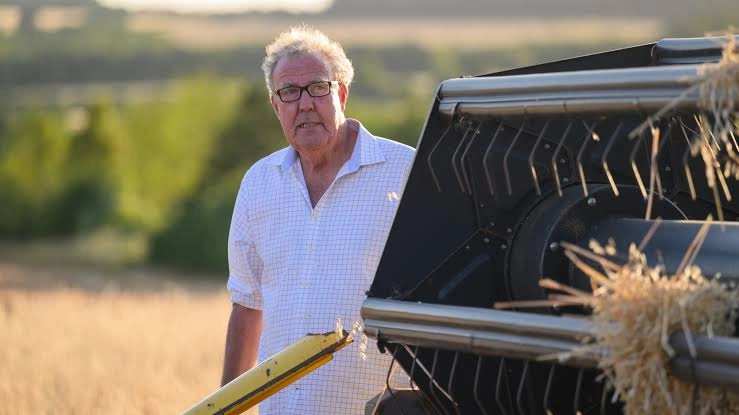

By its fifth season, Clarkson’s Farm has reached a curious stage in its life. Diddly Squat is no longer the charmingly chaotic side project of a famous man pretending he can outwit nature with bravado and a large tractor. It is now a working farm attached to a pub, restaurant, shop, livestock operation, and a tourist economy that appears to run on sausages, beer, branded glassware, and the public’s appetite for Jeremy Clarkson being told he is wrong.
Season 5 begins with a jolt: Clarkson in hospital after a serious heart scare. The image is funny in the bleak way the show often is, since Clarkson’s new enemy is no longer the weather, the council, or a suspiciously uncooperative animal. It is Greek yogurt.
That health scare gives the early episodes an unfamiliar fragility. Clarkson is still theatrical, loud, and allergic to restraint, yet the series now has to account for the body beneath the persona. Diddly Squat may be expanding, but its owner is being told to slow down. For a show built on the comic pleasure of poor decisions, that is a surprisingly sharp problem.
The Clarkson Economy Takes Over the Farm
Clarkson remains the engine of the series, for better and for worse. His great gift here is communicative force. He can make soil analysis, cattle pregnancy checks, sheep management, and farm taxation feel like pub arguments conducted with better scenery. He approaches every new problem with the certainty of a man who has already misunderstood it. Then Kaleb Cooper arrives, usually with the weary expression of someone watching a toddler operate heavy machinery.
That dynamic still works, partly because Clarkson’s arrogance contains real curiosity. He may bluster, sulk, and invent terrible plans, yet he wants to understand the machinery of rural life. The trouble is that the machinery around him has changed. Diddly Squat has become a brand organism, a thing with gravitational pull. The farm now exists beside the Farmer’s Dog pub, the shop, the merch, the car park problem, the customers stealing glasses, and the constant logistical headaches created by success.
There is a mild absurdity in watching a show about farming spend so much time on missing pint glasses. It is not fatal, but it creates what might be called celebrity soil erosion: the gradual wearing away of agricultural texture by the weight of public fascination. The farm can start to feel like one department inside the larger Clarkson business empire.
Also Read





Season 5 knows this and occasionally wrestles with it. The pub brings demand for meat, which creates pressure on livestock. The restaurant’s popularity exposes weaknesses in power supply, water access, staffing, and cost control. These are real problems, yet the framing can tilt toward spectacle. Clarkson’s Farm works best when his celebrity is a doorway into farming. It weakens when farming becomes a subplot in the story of being Jeremy Clarkson.
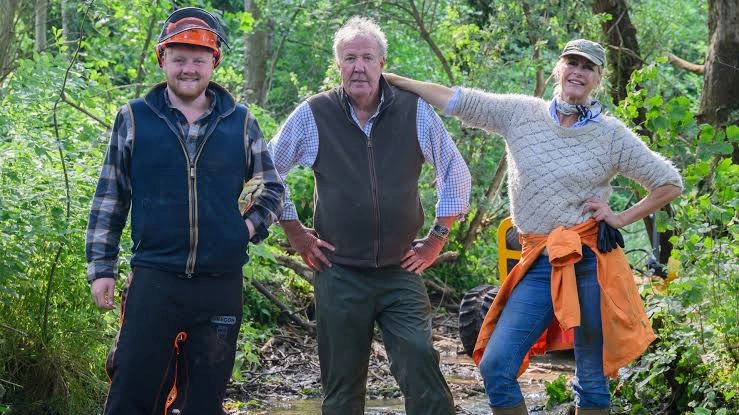
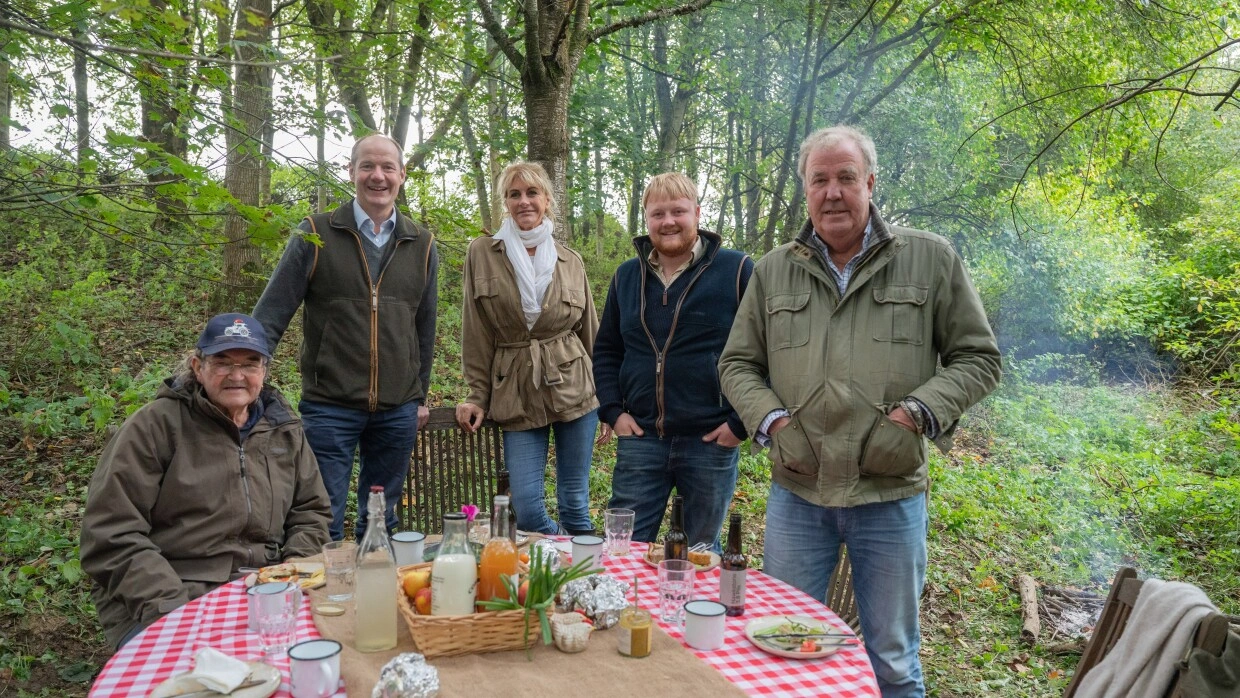
The familiar ensemble helps keep the show honest. Kaleb remains its practical conscience, Charlie Ireland its spreadsheet-shaped warning light, Lisa Hogan its agent of charming financial peril, and Gerald its local comic folklore. Their presence matters because they pull Clarkson back toward earth. Sometimes literally. Mud has always been the show’s best editor.
Mud, Sheep, and the Beauty of Practical Knowledge
Season 5 is strongest when it remembers that farming is already dramatic without decorative chaos. Animals do not need punchlines. Weather does not need a script polish. A farm is a place where biology, money, machinery, law, and chance collide before breakfast.
The livestock material gives the season some of its richest texture. The pub and restaurant create a hunger for beef and pork, which turns supply into story. Clarkson’s decision to buy “EasyCare” sheep has the comic neatness of a Greek curse: the name itself invites disaster. Kaleb’s reaction provides the necessary corrective. No sheep, he explains in spirit, is truly easy. Sheep are nature’s tiny bureaucrats, forever finding ways to make simple tasks impossible.
Lisa’s purchase of Valais Blacknose sheep adds another comic complication. They are expensive, photogenic, and faintly ridiculous, which makes them perfect for this show. Their presence also captures one of the season’s recurring questions: where does farming end and lifestyle branding begin? A sheep can be livestock, ornament, investment, headache, and Instagram bait, sometimes all before lunch.
The season’s veterinary and animal-care sequences are often frank, sometimes grim. Pregnancy checks, breeding concerns, livestock mortality, and a sheep postmortem bring the series back to the material facts of rural work. These scenes are valuable because they resist sentimentality. Animals are loved, managed, monetized, lost, and replaced. That uneasy mixture gives the show its moral grit.
The Dutch farming sequence may be the finest expression of Season 5’s better instincts. Clarkson and Kaleb encounter a potato operation transformed by data, drones, heat maps, soil analysis, and storage technology. It sounds like the sort of material that could turn television into agricultural homework. Instead, it sings in its nerdy little register.
Clarkson becomes a student again. His enthusiasm returns the show to its original pleasure: a man encountering a world he cannot bully into obedience. Modern farming appears here as a high-intelligence enterprise, closer to logistics, engineering, meteorology, and financial modeling than the soft-focus rural fantasy many viewers may carry in their heads. The sequence gives the season scale. It suggests that survival in farming may depend on adaptation, capital, and technical literacy, not romantic attachment to old ways.
That is where Clarkson’s Farm earns its cultural value. It can smuggle serious agricultural education into scenes of famous-man confusion. The trick still works.
The Politics of the Field
Season 5 gains a harder edge through its attention to taxation, rising costs, and farmer anger. The series has always carried a quiet political charge, since every failed plan at Diddly Squat tends to reveal a larger system of regulation, cost pressure, or institutional indifference. This time, the political material is far less quiet.
The show presents British farming as an industry under pressure from every direction: fertilizer costs, energy bills, livestock expenses, tax changes, planning rules, and slim margins. Clarkson’s wealth complicates the argument, of course. A rich celebrity farmer is an imperfect vessel for rural precarity. Still, the series has a knack for taking an abstract policy debate and grounding it in a bill, a broken facility, a herd requirement, or a business decision that suddenly looks impossible.
There is an old historical pattern here. Rural life is often romanticized by urban culture until farmers ask for money, policy support, or respect. Then the romance evaporates. Season 5 taps into that contradiction. The countryside looks beautiful in long shots, all autumn light and wildlife, yet the practical life inside that beauty is expensive, regulated, and exhausting.
The farmers’ protest material gives Clarkson a public role beyond entertainer. He becomes, by circumstance and camera logic, a face of agricultural frustration. There is irony in that, since Clarkson’s sympathy for protest seems highly selective. The show does not fully interrogate that contradiction, perhaps because doing so would drag it away from its preferred comic mode. Still, the tension is there, buzzing under the surface like faulty pub wiring.
The best political moments arrive when the series lets comedy lead into seriousness. Stolen glasses are funny. An energy bill is funny until it becomes a symbol of business fragility. Clarkson being told to eat yogurt is funny until the body that powers the whole circus looks less indestructible. Season 5 understands that the joke and the wound often share a fence line.
Reality Television With Mud on Its Boots
No one should mistake Clarkson’s Farm for unshaped reality. Season 5 is full of polished set pieces: Oscar Piastri attempting tractor work, The Corrs appearing at the pub, infrastructure crises timed for maximum comic irritation, and Clarkson’s hospital scare positioned as an emotional hook. The series is edited with the confidence of a machine that knows exactly when to cut to Kaleb looking appalled.
That construction can make some moments feel arranged. The banter occasionally sounds too neat, the disasters too expected, the rhythms too familiar. By season five, the “Clarkson buys something foolish and learns a lesson” pattern has lost a little of its sting. Repetition is the tax every long-running reality format must pay.
Still, the show’s craft remains effective. The countryside photography gives the series a seductive calm that the content immediately ruins. Golden fields, wildlife, and rural quiet are followed by blocked toilets, animal trouble, financial panic, and Clarkson narrating as if every inconvenience were a minor war crime. That tonal collision remains funny.
The supporting cast remains essential. Kaleb’s bluntness cuts through Clarkson’s performance. Charlie’s fiscal caution gives the show a necessary adult presence, which is amusing given that he often seems trapped in a room full of expensive children. Lisa brings unpredictability and entrepreneurial mischief. Gerald supplies texture, local rhythm, and the sense that Diddly Squat exists in a real place rather than a celebrity terrarium.
Season 5 is entertaining, educational, and slightly swollen from its own success. Its best scenes get their fingernails dirty. Its weaker passages drift toward brand management, fan tourism, and the strange modern condition of turning a farm into a content empire. The series still has life because the land keeps resisting simplification. Mud, livestock, weather, bills, and bad decisions remain richer material than merch.
For all its contrivance, Clarkson’s Farm still understands something important: farming is a philosophical insult to human arrogance. You may arrive with money, fame, plans, cameras, and a pub full of customers. The sheep will still find a way to make you look stupid.
The hit British documentary reality series returned for its highly anticipated fifth season on June 3, 2026. This season shifts focus toward the aftermath of a major cardiac health scare for Jeremy Clarkson, forcing him to adapt his routine and lower his workload on Diddly Squat Farm. Alongside familiar faces like Kaleb and Lisa, Jeremy navigates the complicated integration of autonomous, high-tech farming equipment, new livestock trials, and the financial pressures of managing his newly opened pub amid widespread protests across the British agricultural community. The eight-episode season is available to stream globally and exclusively on Amazon Prime Video, releasing in weekly installments throughout June.
Where to Watch Clarkson’s Farm Season 5 Online


Full Credits
Title: Clarkson’s Farm Season 5
Distributor: Amazon Prime Video
Release date: June 3, 2026
Rating: TV-MA
Running time: 42 to 54 minutes per episode
Director: Kit Lynch-Robinson, Gavin Whitehead, Will Yapp
Writers: Jeremy Clarkson
Producers and Executive Producers: Andy Wilman, Zoe Brewer, Peter Fincham, Peter Richardson, Conor Tighe, Vicky Hoy, Alice Gordon-Lyons
Cast: Jeremy Clarkson, Kaleb Cooper, Lisa Hogan, Charlie Ireland, Gerald Cooper, Alan Townsend
Director of Photography (Cinematographer): Casper Leaver, Robin Fox
Editors: Nick Dalton
Composer: Vik Sharma
The Review
Clarkson’s Farm Season 5
Verdict: Clarkson’s Farm Season 5 remains funny, sharp, and oddly educational, with its best moments rooted in livestock, machinery, weather, and the brutal arithmetic of modern agriculture. The season loses some freshness as the Clarkson brand starts crowding the farm itself, yet Kaleb, Charlie, Lisa, and the stubborn land keep pulling it back into shape. It is slightly overextended, still highly watchable, and at its strongest when mud beats merch.
PROS
- Strong farming and modernization material
- Kaleb and Charlie keep the show grounded
- Funny, accessible handling of complex rural issues
- Political themes give the season weight
- Beautiful countryside visuals
CONS
- Some banter feels staged
- The pub and brand expansion can distract
- Repeated comic patterns have less surprise
- Clarkson’s celebrity sometimes overwhelms the farm