





















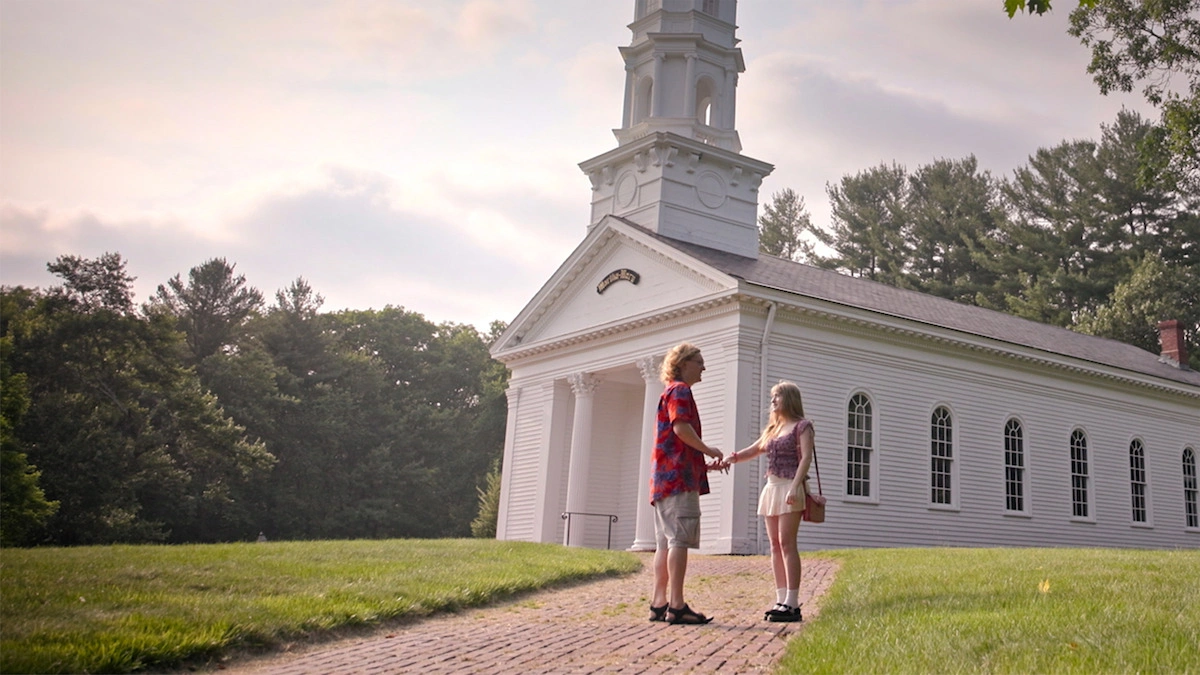

The screen flickers awake through a run of straight-to-camera greetings. One cast member looks into the specialized Prism lens and defines love with the faint polish of rehearsal and the blunt sincerity that gives this series its pull. This fourth Netflix installment returns to known terrain: neurodivergent adults looking for romantic partnership, with first dates filtered through documentary observation and the familiar machinery of reality television.
Abbey and David return with a steady bond that gives the season a working model of success. Logan and Emma arrive with new momentum from Las Vegas and Utah. The show glides from private bedrooms to public date locations with practiced speed, gathering scenes of social growth inside a package built from bio cards, bright music cues, and the soft machinery of streaming reality.
The episodes open private lives and family habits to the viewer. They track specific social hurdles, then shape those moments through a format the series has polished across its run. The camera watches date preparations, family advice, introductions, pauses, and small recalibrations of confidence.
This is television that knows its own template: the first-date nerves, the smiling family interviews, the cutaway facts, the lightly comic score that tells the audience when to lean forward. The result sits squarely inside Netflix’s reality slate: intimate, tidy, often moving, and occasionally so managed that spontaneity seems to have signed a release form before entering the room.
Growth, Engagements, and the Diversity of Experience
The cast remains the season’s strongest asset. Abbey and David give the new run its emotional anchor. Their long term connection steadies the messier rhythm of first dates around them and gives the season a visible measure of what the show treats as romantic success. They have moved from dating-experiment subjects into an established couple, which changes the texture of their scenes.
Their screen presence has a relaxed confidence that the newer dates, by design, have yet to earn. Madison and Tyler carry the season’s largest narrative payoff. Their engagement marks a major milestone for the series and gives a mainstream audience the happy ending it clearly wants.
Connor and Georgie bring a calmer study of relationship upkeep. Their story tracks the emotional shifts that come with learning how to read a partner’s needs, which can be harder than any cute meet-up over drinks or dinner. Their scenes also give the season a practical sense of romance after the first spark, where affection has to survive moods, misread cues, and the daily work of attention.
The new participants widen the season’s range. Logan prepares for his first date in Las Vegas by choosing a blue velvet jacket, a detail so good it practically deserves its own lower-third graphic. He talks about his love for toy trains and his habit of watching videos of engines crashing into water. His openness lands fast, partly because the show gives him the familiar date-prep treatment and partly because he appears sincere before the scene has time to become polished.
Emma brings brisk social energy to a cast that often leans quieter. Her outgoing personality and deep commitment to her faith in Utah cut against the lazy stereotype of the silent autistic person. She attends a school for neurodivergent young adults and looks for a partner who shares her religious values. Her Park City date with Austin shows how hard conversational rhythm can be to find.
Austin gives short answers; Emma voices her need for deeper connection. The timing of that scene is painful in the way many first dates are painful: two people in the same setting, working from different scripts. Dylan enters through a search for a bond reflected in his favorite films. He lives in Los Angeles with his cat Oreo and wants a partner who shares his specific interests.
These personalities make autism appear varied, specific, and resistant to easy packaging. The show works best when it lets Emma’s social drive sit beside the interior worlds of her peers. Each person brings a precise cluster of interests, habits, and communication styles.
The milestones here carry the familiar shape of reality-TV beats, and they register as hard earned gains in social interaction. Engagements, first kisses, family introductions, and date-night decisions are old television tools. In this season, those tools gain a sharper charge because the participants are often working through communication hurdles that dating shows usually exploit for messier comedy.
The season draws a clear line between the comfort of established history and the raw nerves of a first meeting. That arrangement gives the editing an easy rhythm: cut from a shaky opening exchange to a couple with shared memory, then back to someone preparing for the unknown. Madison’s move to Florida to be closer to Tyler gives her story a commitment that many viewers can recognize. It shifts attention toward the familiar strain of a long distance relationship.
Logan’s twin sister and mother add familial support that feels unforced. His sister helps him choose his outfit, grounding the date prep in a family scene that most viewers can read without a manual. The scene plays like a small domestic comedy with real stakes: the jacket matters, the first impression matters, and everyone knows it.
This thread sits beside the returning participants, who now face life as couples. John and Shelley supply a success story for viewers who have followed the series from its start. Their presence gives the newcomers a visible sign that the search can lead somewhere.
Each arc expands the season’s sense of how individuals process romantic interest. The show balances these threads through quick cuts between first-meeting excitement and the steadier growth of pairs with history. That structure gives the season much of its rhythm. Fresh nerves create bounce; established couples provide breath. It is a simple format, close to the classic dating-show cycle of anticipation, encounter, reflection, and next step. The difference here is the emotional volume placed on clarity, consent, and spoken needs.
The Soundtrack of Infantilization
The series’ production choices rarely arrive as neutral craft. Its auditory branding leans hard on staccato piano and xylophones, especially during introductions for newer participants. Those sounds carry cultural baggage. They suggest whimsy, clumsiness, and a sitcom-sized version of innocence. The result lands strangely next to the orchestral strings saved for romantic moments between returning couples.
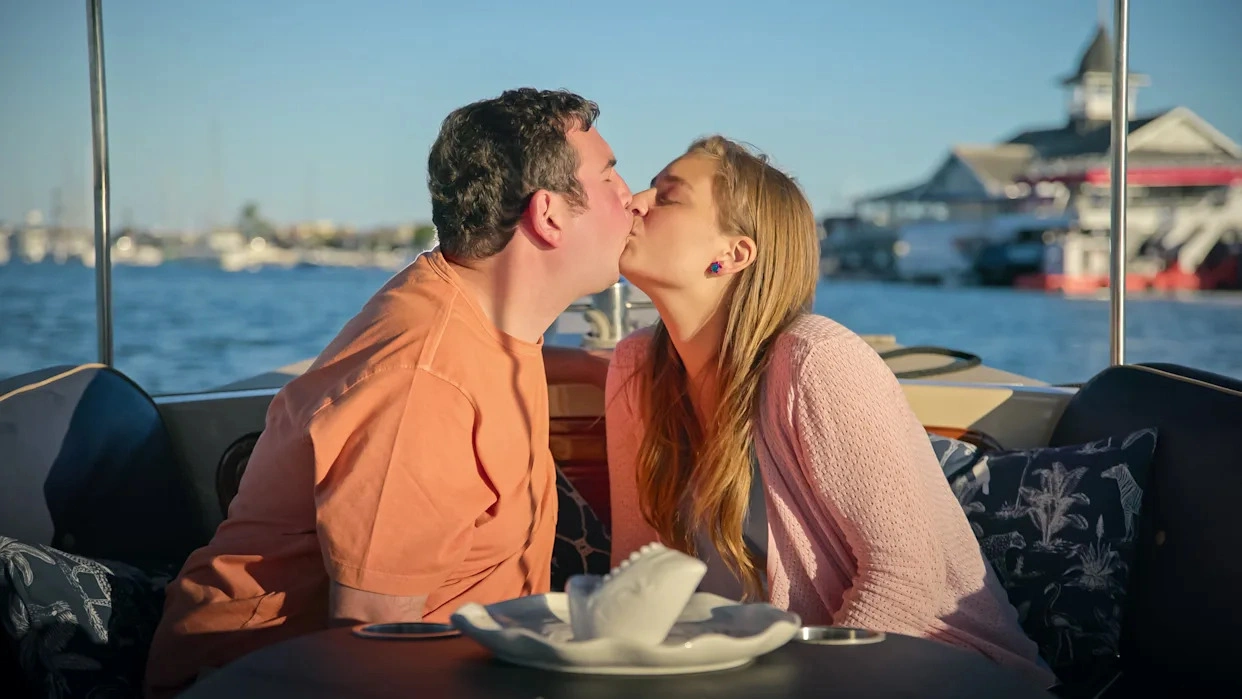
Sound design makes its sharpest dent during a first kiss in episode four. A horror stinger turns a respectful request for consent into a manufactured jolt. Logan asks Haley for permission to kiss her, which stands as a clean example of communication. The show answers with a musical sting that recasts the moment as anxious cliffhanger material. A sweet exchange gets coded as alarm. Somewhere, a sound editor found the wrong drawer and pulled out a jump scare.
The narration creates a similar problem. The narrator often speaks in the cadence of a children’s nature program. Comments about cast members visiting family can feel overexplained, as if the viewer needs field notes for ordinary adult behavior. The bio cards remain a constant frame, listing likes and dislikes such as leopard geckos or cow pastures. This format gives quirky hobbies greater weight than professional lives or adult ambitions. The Prism camera lets cast members meet the audience with direct eye contact, and the device can create fierce intimacy.
Those moments feel deeply personal because the faces control the frame for a few seconds. The technique is one of the show’s better visual ideas, since it gives the cast a clean line to the audience. The trouble begins when the surrounding package treats that intimacy like cute packaging. A direct gaze can make the cast feel self-possessed. A tinkly score can shrink the same person a few seconds later. That is a whiplash the series has never fully solved.
Editing choices often bend ordinary scenes toward suspense. Cliffhangers show up where natural flow would do the job. Awkward silences stretch through careful cutting. These choices frame the participants as charming novelties and blur their complexity as adults. The tone swings between real warmth and patronizing observation. Emma’s family visit offers a clear case: the narration describes the scene with a study-specimen air, and the jingly music pushes playfulness over the serious nature of her search for a partner.
The pacing here borrows from reality dating shows, where silence becomes a cliff edge and every pause seems to demand a cymbal. In this series, that technique can feel loaded because the pauses are tied to neurodivergent communication. Reality TV has long treated awkwardness as fuel. Here, the same old fuel burns hotter because the awkwardness can be part of the condition the show claims to treat with care.
The split in musical treatment suggests an internal ranking system. Madison and Tyler receive a dignity in their scoring that Logan lacks during early dates. The viewer gets emotional instructions before a person has a chance to speak. The staccato piano says lovable oddball. The strings say romantic lead. These cues push the audience’s response with a heavy hand. Editing affects the dates in the same way.
When a conversation stalls, the camera lingers on the silence longer than it might on another dating show. That pause highlights neurodivergent traits for dramatic effect and creates tension that may have been absent in the actual moment. The series wants tenderness, and much of the time it finds it. Then the score wanders in with tap shoes.
The visual style is polished and professional. Park City and the bright lights of Las Vegas get a clean, high-quality sheen. The cinematography gives public date spots a glossy surface, and the movement between homes and restaurants keeps the episodes brisk. That polish can cover the production’s intrusive habits.
The bio cards appear in every episode, shrinking identity into a few bullet points. We learn that someone hates mean pranks before we learn about work, unless the subject brings it up in passing. The choice keeps attention on the “quirks” linked with autism and leaves the ordinary pieces of adult life in the margins. The team seems to have a fixed idea of how these stories should look and sound, and it has kept that approach across all four seasons.
The Cost of the Documentary Loophole
The show’s industrial structure raises urgent ethical questions. Netflix classifies the series as a documentary, a label that creates a convenient financial loophole. Documentary subjects traditionally receive zero compensation for their time. That convention feels increasingly exploitative when attached to a global reality hit. Participants on comparable dating programs such as Love is Blind receive weekly stipends.
The autistic cast here receives zero dollars for the emotional labor that gives the series its entire reason to exist. The production pays for the dates so participants avoid personal expense. That hardly equals a wage. It is hospitality, useful and polite, standing in for pay. The difference matters because the dates are the labor. The nerves, the disclosures, the family access, and the romantic risk are the product.
The series has won seven Emmy Awards and remains a critical favorite. That prestige sits uneasily beside the financial position of the people on screen. Netflix has renewed the series for a fifth season. The investment clearly works for the streamer. Cast members offer intense vulnerability, opening romantic lives and private homes to a global audience. That exposure creates a lasting loss of privacy.
The benefits remain one-sided: the show collects trophies, and the participants return to daily life without a share of the profits. The series feeds a major streaming platform with intimate material. The people providing that material receive visibility, which is a slippery currency at best.
The emotional labor of filmed dates is substantial. Participants must handle cameras and crew as they try to form a romantic connection. That task would strain anyone. It carries extra weight for people who struggle with social cues. The production extracts value from that strain and turns private experience into entertainment for a global audience.
The documentary label protects the production company’s bottom line and lets it avoid the costs attached to hiring reality-TV talent. This is the old documentary arrangement placed inside the glossy engine of modern streaming reality. The categories may look tidy on a budget sheet. On screen, the human cost looks messier.
The long term effects of exposure matter too. After the show airs, cast members become public figures. They are recognized in daily life and face social media commentary. Tanner expressed pressure to keep dating because he knew the audience expected it. That remark shows how the parasocial bond built by the show can affect real choices.
The absence of financial compensation makes the situation harsher. They are working for free to build a brand Netflix owns. The production team has received specific criticism on this issue and has kept the current system. That choice makes the warmth of the finished episodes harder to separate from the business model underneath them.
The pay gap between this show and others on the same platform is stark. The platform already has a stipend model for comparable dating programs. This series receives documentary treatment and provides zero participant wages. The documentary classification appears to be the key. A technical label lets the production avoid financial obligations. The system places vulnerable participants inside a profit engine.
The show depends on the cast’s authenticity, then assigns that authenticity zero monetary value. It treats participants as “templates” for love, language that turns people into concepts with softened edges. The series asks viewers to celebrate vulnerability, then leaves the people offering it outside the financial reward structure.
Control and Parental Influence
Power on screen often tilts away from the participants. Parents and family members frequently take over the narrative. Statistics suggest that parents account for over half of the spoken dialogue in several key scenes. They often discuss perceived deficits or childhood struggles of their adult children with those adult children nearby. The participant becomes a spectator in their own life story.
In a kitchen scene in episode three, Madison’s parents discuss her spending habits and childhood difficulties with her present. Her share of the dialogue is tiny. Tyler says even less. The scene carries the uncomfortable rhythm of a family meeting where the person being discussed has been left off the agenda. The camera captures the imbalance clearly: the parents explain, Madison absorbs, Tyler nearly disappears. For a series about connection, that distribution of speech says plenty.
A secondary economy has grown around the show through parental labor. Some mothers have launched monetized podcasts and use those platforms to discuss their children’s private romantic difficulties for an audience. This content pipeline creates possible conflicts of interest.
Parents have at times used their platforms to amplify political views that clash with cast self advocacy. Some parents publicly defended remarks that characterized autism as a disease. Cast members pushed back against those statements. The rift becomes visible between parental authority and the lived experience of autistic adults.
The series often presents family involvement as support, and support can be real. The issue is control: who speaks, who profits, who gets framed as the interpreter of someone else’s life. Once podcasts, platforms, and public commentary enter the picture, private family advocacy starts to look like a small media business attached to someone else’s vulnerability.
Still, genuine agency breaks through. Logan supplies the clearest example of self advocacy. Before a date, he tells his family to avoid embarrassing him with baby photos or comments about grooming. The moment matters because it states his adulthood plainly.
He knows the family script and edits it before they can perform it. This is one of the season’s most honest scenes: a person taking control of how his story gets told. It also contains the kind of comic timing the show rarely needs to manufacture. Logan anticipates the danger, names it, and shuts it down. Clean setup, clean punchline, real boundary.
The reunion scene in the final episode gives another glimpse of autonomy. Cast members interact and support one another without parental mediation. They share experiences and offer validation. These exchanges feel cleaner and truer than many of the heavily edited dates. The cast appears as peers who understand a shared reality. The courage needed to be open on camera remains clear.
The show reaches its strongest form when it steps back and lets these voices carry the scene. Recognition supplies the drama. Personality supplies the humor; the xylophone can take a coffee break. The reunion has a looser rhythm because the participants respond to one another, free from explanation by someone beside them.
Parental dominance can create infantilization. When a parent speaks for an adult child, the frame implies that the adult child cannot speak for themself. The production often reinforces this frame by treating parents as primary narrators. They explain the “challenges” and “triumphs,” shaping the audience’s response.
The parents become the heroes of the story. The autistic adults become subjects receiving help. That framework belongs to an older television habit, where disabled adults are filtered through caregivers for maximum sentiment. The show’s warmth softens the edges of that habit. The habit remains visible.
Changing that pattern would require a different storytelling arrangement. Give participants greater screen time. Let them narrate their own lives without parental interruption. The reunion scene proves this can work. The cast members can support one another and speak with insight about their own experiences.
Their understanding of dating on the spectrum has a specificity a neurotypical observer cannot fully provide. The show could become a stronger tool for self advocacy by letting the cast lead. Its best scenes already point in that direction, often by accident, which is a very reality-TV way to discover the truth.
The monetized podcasts and speaking tours undertaken by parents raise further questions. The show gives parents a platform they can use for personal gain. The cast remains unpaid. Parents build careers as influencers and content creators. That imbalance is hard to ignore.
The show’s architecture stays in the hands of the production team and the families. Can a series celebrate neurodivergent voices when financial and narrative control sits elsewhere? The gap between Logan’s clear limits and those kitchen-island discussions shows the ongoing fight for agency inside the series. Does the show’s warmth excuse the structural inequalities built into its production?
Season 4 of Love on the Spectrum U.S. premiered globally on Netflix on April 1, 2026. This latest chapter in the Emmy Award-winning docuseries consists of seven episodes, all of which were made available for streaming on the premiere date. The season continues to follow various individuals on the autism spectrum as they navigate the complexities of dating and relationships, featuring a mix of beloved returning cast members and new participants from across the United States. You can watch the entire season exclusively on Netflix.
Where to Watch Love on the Spectrum Season 4 Online


Full Credits
Title: Love on the Spectrum U.S.
Distributor: Netflix
Release date: April 1, 2026
Rating: TV-14
Running time: 39–53 minutes
Director: Cian O’Clery
Writers: Karina Holden, Cian O’Clery
Producers and Executive Producers: Karina Holden, Cian O’Clery, Northern Pictures
Cast: Abbey Romeo, David Isaacman, Connor Tomlinson, Tanner Smith, Logan Pereira, Emma Sue Miller, Dylan Aguilar, James Jones, Shelley Wolfe, Tyler White, Georgie Harris
Director of Photography (Cinematographer): Stefan Weinberger, Daniel Hollis, Dave May
Editors: Simon Callow-Wright, Rachel Grierson-Johns, Leanne Cole, John Rosser
Composer: Mitch Stewart, Adam Gock, Brontë Horder, Dinesh Wicks, Robert Allen Elliott
The Review
Love on the Spectrum Season 4
Season 4 remains a striking human document thanks to its charming cast. However, it suffers under the weight of its own production tropes. The warmth of the participants often clashes with the cold reality of the documentary loophole and a score that trends toward the patronizing. While the milestones feel genuine, the structural flaws prevent the series from achieving the dignity its subjects deserve. It is a series caught between its desire to be heartwarming and its refusal to be equitable.
PROS
- Genuinely likable and diverse cast members who offer rare moments of unfiltered self advocacy.
- High quality cinematography that captures beautiful locations from Utah to Las Vegas.
- Meaningful relationship progress for returning couples that anchors the narrative.
- Insightful look at the variety of social experiences within the autism spectrum.
CONS
- Complete absence of financial compensation for the autistic participants despite the show's massive success.
- Infantilizing musical cues and narrative framing that can undermine the maturity of the cast.
- Dominance of parental voices and family perspectives over the lived experiences of the leads.
- Manufactured editorial suspense used to frame respectful social interactions as moments of anxiety.