























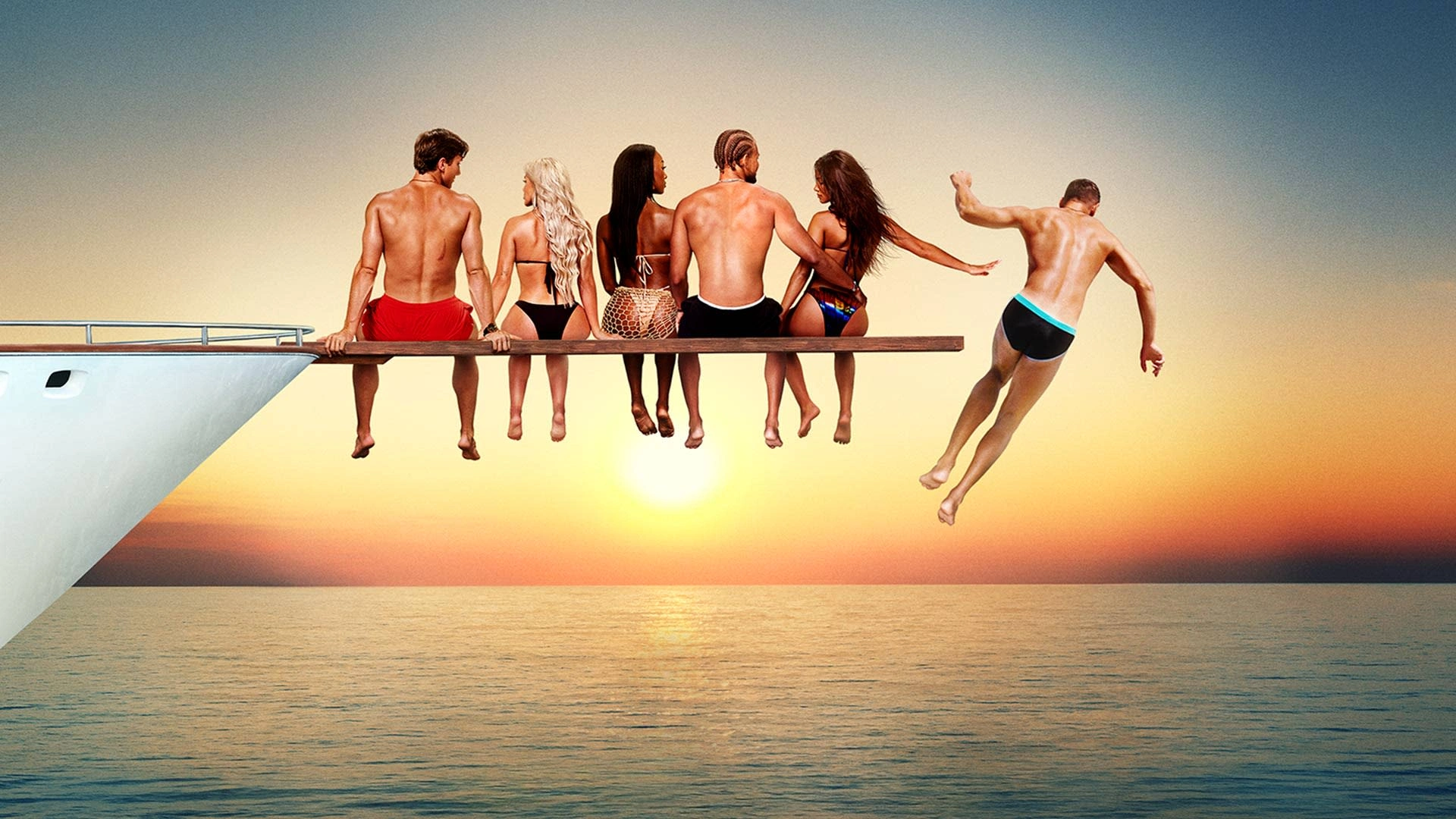

The Mediterranean Sea serves as a stubborn burial ground for ancient triremes and contemporary emotional dignity. Hulu makes use of that watery expanse in a production titled Love Overboard, a name with the blunt force of a life preserver tossed at the forehead. Sixteen singles board the Chakra, a super-yacht that functions as a floating laboratory for what I call “Erotic-Feudalism.”
Gabby Windey presides over the experiment with a detached professionalism that nearly becomes clinical. The premise demands a steady choice between carnal fulfillment and manual labor. This is the “Sweat-Stakes” model of modern dating. Pairs compete for a global excursion valued at six figures, a prize that feels suspiciously close to hazard pay for surviving the heat.
The production strips away the usual perfumed vocabulary of romance. It studies the transactional mechanics of human connection. We watch people recalibrate desire once chilled champagne depends on securing a partner. The result becomes a survival exercise built from performative flirtation. The yacht works as a microcosm of global inequality. Wealthy “Topsiders” recline while the “Downsiders” scrub. Libido meets ladder-climbing, and the collision has the wet slap of class satire.
Hull-Bound Hegemony and the Architecture of Envy
The Chakra stands as a masterpiece of “Spatial-Subjugation.” Four couples occupy the top deck as the chosen elite. They live with the ease of the leisure class. They have cocktails. They have sun loungers. They have romantic suites scented with expensive sandalwood and unearned privilege. Below, the Downsiders exist under “Scullery-Stress.” They are the crew. They cook meals. They clean bathrooms. They sleep in bunk beds with the charm of correctional architecture masquerading as hospitality.
This physical split creates a constant state of “Deck-Envy.” The social game runs on the urge to escape bleach fumes and serving trays. Resentment becomes the ship’s true engine, humming beneath the flirtation and sunblock. The yacht’s design makes every luxury on the top deck visibly dependent on someone else’s labor. That arrangement gives the show its most tangible tension. The class structure is literal enough to bruise.
The visual contrast is close to parody. Above, glowing tan skin and cocktail glass privilege. Below, sweat, irritation, and galley fatigue. This is a floating version of the old “Upstairs, Downstairs” dynamic, with extra bikinis and a tragic shortage of manners.
The Downsiders feel the stakes in every aching muscle. They want relief from drudgery, and the show turns that wish into social ammunition. The boat is a vertical hierarchy where one person’s floor becomes another person’s ceiling. Capitalism rarely gets this sunburned.
Tactical Engagement and the “Partner-Poaching” Paradigm
Tactical engagement aboard this vessel resembles a zero-sum exercise in “Erotic-Arson.” The nightly mixers create the stage for “Partner-Poaching.” A Downsider can pull a Topsider aside for a chat, which becomes an act of “Vesting-Violence” against an existing couple. The Topsider then weighs comfort against novelty with the moral warmth of a spreadsheet. Familiarity has value. So does the thrill of a fresh option, especially when that option may come with better sleeping arrangements.
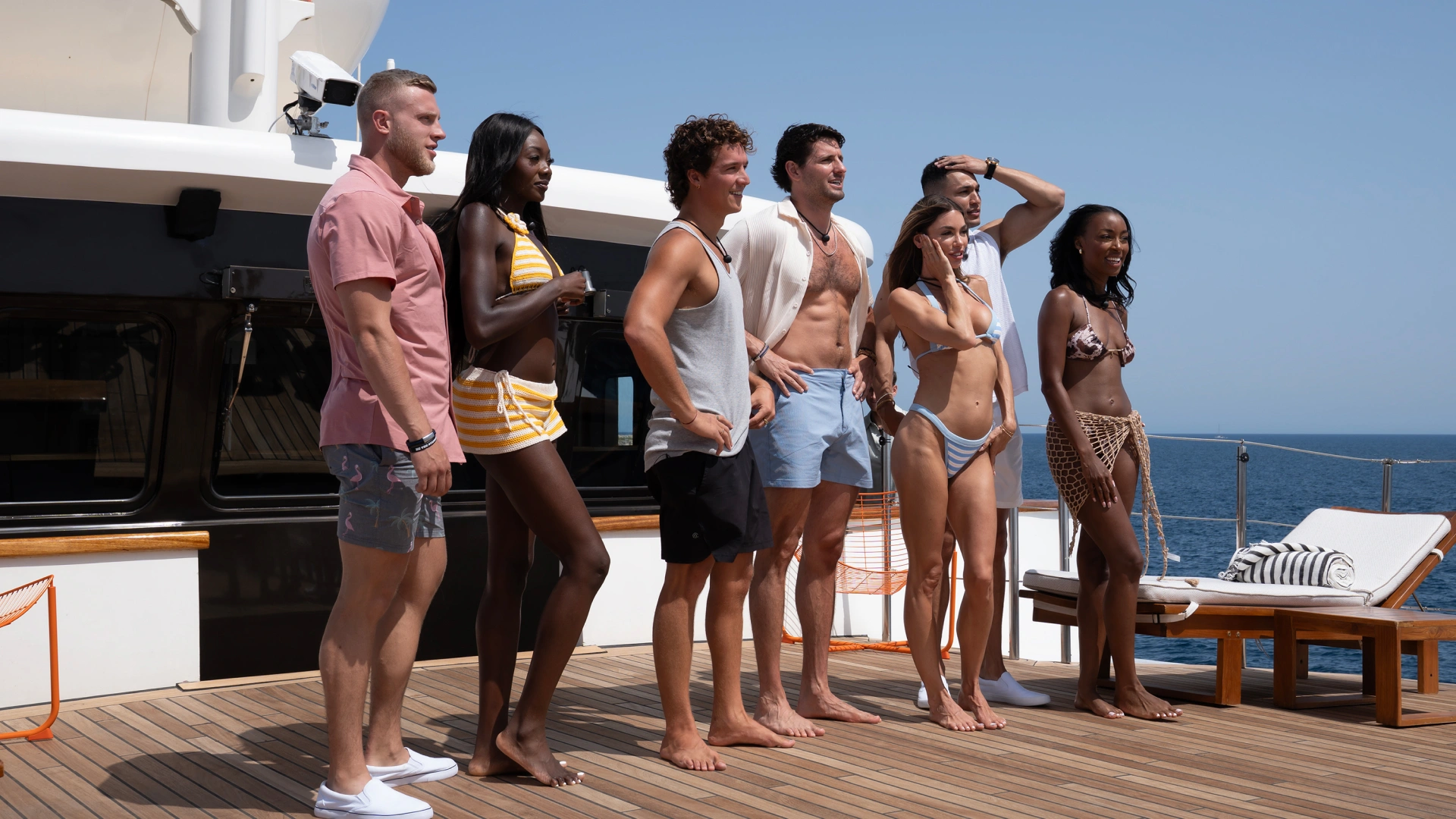
These decision points feel cold and calculated. The group challenges and off-yacht dates grant brief escape from the ship’s pressure. Those dates concentrate on “Duo-Dynamics” in isolation. They test physical chemistry in tighter, warmer settings, away from the smell of hierarchy and disinfectant.
The cast becomes a set of human prototypes built for this strange economy. Andrew brings a polarizing energy that edges toward theatre. Sophia moves with the strategic grace of a corporate raider. James uses charm that appears engineered for the lens.
The age range creates a “Maturation-Gap.” A twenty-one-year-old plays the game with a different voltage than a thirty-three-year-old. Some participants practice “Comfort-Calculus.” They prioritize the suite and treat the person inside it as part of the amenity package.
Loyalty has the shelf life of chilled seafood left in the sun. These “Dirty Games” expose the participants’ operating systems. They become predators in a floating cage, smiling through negotiations for better conditions. Every conversation carries a bid for elevation. The goal is to climb, stay there, and keep one’s hands clean enough for champagne.
Plank-Walking and the Aesthetics of the Abyss
The elimination rituals discard the polite customs of the genre. Roses have no jurisdiction here. The show offers the “Plank-Plunge.” A rejected contestant walks a wooden ledge and falls thirty feet into the Mediterranean. This is “Gravity-Grief,” staged with formal evening wear and a faint whiff of nautical cruelty. The sight of silk striking salt water at speed produces a strange satisfaction. It renders social death as slapstick baptism.
The final prize is a trip valued at one hundred thousand dollars, which keeps the remaining players hungry for victory. The finale introduces a “Resurrection-Dynamic.” Eliminated members return to vote on the winner. Every bit of “Social-Debt” accrued through the season comes due. The social ledger, once soaked, still balances itself.
The production quality is high. The Malta coastline supplies “Aesthetic-Amnesia,” making the darker mechanics of the show easier to swallow. The audio team isolates dialogue from howling maritime winds, a technical feat given how much of the series seems designed to pit human vanity against weather. The pacing is relentless. Hulu released all nine episodes at once. This “Drop-Culture” limits communal speculation and turns the experience inward, creating a private binge chamber for viewers to observe the wreckage.
Gabby Windey anchors the show with a dry, knowing presence. She becomes the “Director of Despair,” watching each fall with professional chill. Love Overboard proves that the theatre of desire has a splash zone. On the Chakra, every exit arrives wet.
Love Overboard is an unscripted reality dating competition that premiered on Hulu on March 26, 2026. Hosted by Gabby Windey and executive produced by media personality Alex Cooper, the series follows 16 singles aboard the Chakra, a luxury super-yacht navigating the waters of Malta. The show combines elements of romance and physical labor, as contestants are divided into “Topsiders” and “Downsiders” based on their relationship status. All nine episodes of the inaugural season were released simultaneously for binge-watching and are currently available to stream on Hulu in the United States and Disney+ internationally.
Where to Watch Love Overboard Online

Full Credits
Title: Love Overboard
Distributor: Hulu
Release date: March 26, 2026
Rating: TV-14
Running time: 45 minutes
Director: Jeff Jenkins, Alex Cooper, Russell Jay-Staglik
Writers: Unscripted, Jeff Jenkins, Alex Cooper, Russell Jay-Staglik
Producers and Executive Producers: Alex Cooper, Jeff Jenkins, Matt Kaplan, Mina Lefevre, Russell Jay-Staglik, Jason Ehrlich, Ross Weintraub, Reinout Oerlemans
Cast: Gabby Windey, Andrew, Sofia, David, James, Lexi, Gia, Keif, Tim, Bo, Bella, Lila, Reese, Corey, Low, Anna, Sadie
Director of Photography (Cinematographer): Jarno Iotti
Editors: Unwell Productions, Jeff Jenkins Productions
Composer: Lindsay Wolfington
The Review
Love Overboard
Love Overboard succeeds as a cynical examination of class anxiety (masked as a dating show). It forces contestants to weigh their romantic desires against the reality of manual labor. While the cast occasionally slips into "Comfort-Calculus," the high stakes of the "Plank-Plunge" maintain a consistent tension. The yacht acts as a floating laboratory for transactional affection. It is a visually stunning, mechanically cruel production that highlights the absurdity of the modern search for a partner.
PROS
- The structural divide between luxury and labor creates constant tension.
- Gabby Windey anchors the experience with an acerbic, knowing presence.
- Visuals of the Maltese coastline provide a high-budget aesthetic.
- The elimination mechanism provides a literal representation of social rejection.
CONS
- The finale relies on a manufactured "Resurrection-Dynamic" that feels forced.
- A focus on material comfort can overshadow the romantic elements.
- The wide age gap between players leads to uneven power balances.
- A single-day release schedule hinders the growth of community engagement.