

























![Kingdom Hearts Collection [I-III] Review](https://gazettely.com/wp-content/uploads/2026/10/Kingdom-Hearts-Collection-I-III-1-360x180.webp "Kingdom Hearts Collection [I-III] Review: KHII Holds Steady as Newer Entries Fluctuate 37")



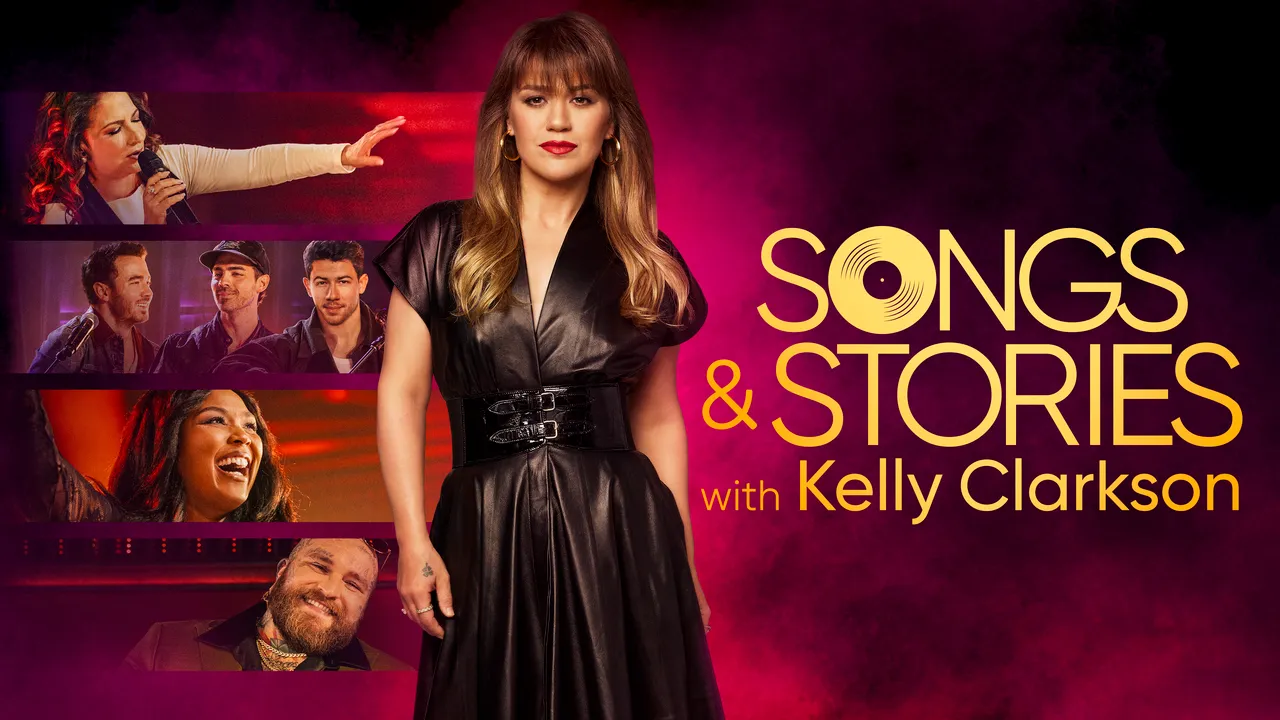

Songs & Stories with Kelly Clarkson positions itself as a calculated move from daytime comfort into prime-time pressure. The run of NBC specials stretches the familiar talk-show framework into a setting built for musical focus and a sense of occasion. Staged in Studio 6-B at NBC Studios in Manhattan, it keeps continuity through Clarkson’s house band, My Band Y’all, and leans into a format that pairs low-key conversation with live acoustic performance.
The guest list signals reach and intent, bringing in the Jonas Brothers, Lizzo, Teddy Swims, and Gloria Estefan. Each episode frames music as a pathway into personal memory, using key life moments as the entry point. That premise works on two levels: it invites big-name artists to speak in human scale, and it treats songwriting and listening as shared social rituals that cross fame, age, and background.
The show’s “universal language” pitch carries a quiet cultural argument about connection, even while the booking choices and airtime remind you that inclusion on TV still depends on who gets invited to the stage.
Acoustic Architecture and Collaborative Rhythm
Episode structure keeps the emphasis on closeness, not spectacle. Clarkson shares the front of the stage with her guests, ringed by acoustic instruments that cue a campfire mood. The staging reduces the distance that usually defines a network broadcast, making the exchange feel physical and present. Songs arrive in shortened form, with abbreviated takes on familiar hits. That choice keeps momentum high and fits an audience trained by streaming-era pacing and clip culture.
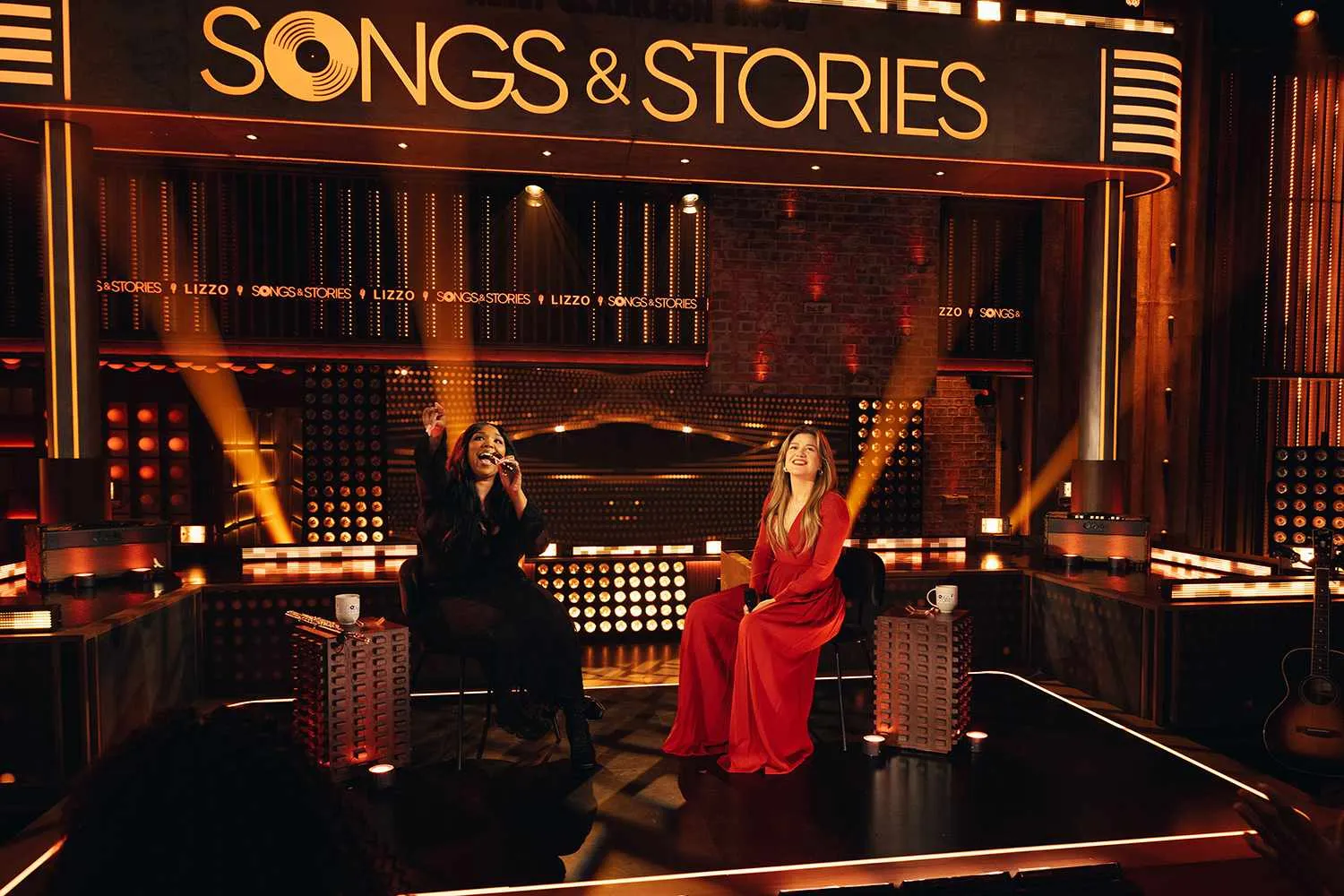
Clarkson performs as an active musical partner. She steps into harmonies and trades lines in ways that echo the appeal of her daytime covers, where shared performance reads as a form of rapport. In the premiere, she joins the Jonas Brothers for “Leave Before You Love Me” and “When You Look Me in the Eyes,” then shifts gears into the disco canon with “Stayin’ Alive.”
Conversation and music connect through design: a personal story cues the next song, and the lyrics reflect what was just said. The result gives well-known pop material a sharper narrative frame, the kind of reframing that changes how a “hit” functions once it leaves radio rotation and enters a curated TV scene.
Professional Naturalism and Artistic Rapport
Clarkson operates with a practiced kind of professional naturalism that stands out in an era built on careful image management. She projects approachability and a lightly unpolished energy, even with the obvious infrastructure of a major network production surrounding her. Her interview approach stays away from confrontation and avoids deep investigative pressure. She uses lighter prompts that open room for jokes and ease, a choice that lines up with a celebrity-media moment where audiences seek comfort and a sense of authenticity over hard-edged interrogation.
Speaking as a peer and a fan, Clarkson leans on colloquial language that reads as personal habit, not branding copy. That tone helps guests talk about creative roots, including musical families, and about how fatherhood changes the songwriting process. Craft talk enters the dialogue in small doses, with enough clarity to stay open to a wide audience.
Clarkson’s role becomes interpretive: she reacts in a way that mirrors the viewer and validates fandom as a normal response, not a guilty pleasure. The show also reinforces a cultural shift in how stardom gets packaged, presenting celebrity through shared work habits, shared nerves, and shared pride, while still keeping Clarkson framed as an everyday presence inside a glossy system.
Modern Variety and the Promotional Landscape
The series runs on buoyant energy shaped for distracted viewing. It moves fast and keeps a bright look that nods to earlier music-variety television, filtered through a present-day looseness. It also keeps an eye on its place in the publicity circuit, drawing attention to new releases such as the Jonas Brothers’ latest record. Network cross-promotion sits in the open, a reminder that contemporary TV often functions as a coordinated branding network where entertainment and advertising share the same bloodstream.
A key pleasure comes from watching songs get taken apart and rebuilt in public, with the “how” placed next to the “who.” The show speaks to audiences raised on viral performance clips and gives that appetite a recurring, polished home. Its tone lands as safe and inclusive, aimed at multi-generational viewing and a shared respect for both legacy acts and newer names.
That programming choice carries social meaning: it presents musical history as communal property and frames access as something meant to be shared across age lines. The project points toward leaner music-first prime-time experiments that prize emotional intimacy and recognizability. It argues that variety’s next phase depends on a host who can step into a guest’s space and keep the spotlight circulating, even while the business machinery stays plainly visible.
Songs & Stories with Kelly Clarkson premiered on NBC on August 19, 2025, as a prime-time extension of the popular musical segment from her daytime talk show. This four-part special features intimate, unplugged performances and deep-dive conversations with global music icons, exploring the personal histories and emotional inspirations behind their greatest hits. Viewers can watch the series on NBC or stream the episodes the following day on Peacock.
Full Credits
Title: Songs & Stories with Kelly Clarkson
Distributor: NBC, Peacock
Release date: August 19, 2025
Rating: TV-PG
Running time: 42 minutes
Director: Joe Terry
Writers: Kelly Clarkson, Alex Duda, Kareen Gunning
Producers and Executive Producers: Alex Duda, Kareen Gunning, Kelly Clarkson
Cast: Kelly Clarkson, Nick Jonas, Joe Jonas, Kevin Jonas, Gloria Estefan, Teddy Swims, Lizzo, Sarah McLachlan
Director of Photography (Cinematographer): James Palczewski
Editors: Sam Gagliardi, Justin Robertson
Composer: Jason Halbert
The Review
Songs & Stories with Kelly Clarkson
Songs & Stories with Kelly Clarkson functions as a warm, expertly produced bridge between the daytime talk format and prime-time event television. While the interviews remain light, the show succeeds by leaning into the host’s undeniable musicality and her ability to foster a genuine atmosphere of artistic community. It prioritizes emotional resonance and shared memory over deep investigative journalism, offering a cozy, high-quality viewing experience. For those seeking a relaxed celebration of the creative process and vocal harmony, this series delivers a refreshing, low-pressure alternative to more competitive musical programming.
PROS
- Authentic and approachable hosting style that avoids forced interactions.
- High-quality acoustic arrangements and impressive vocal harmonies.
- Intimate atmosphere that encourages artists to share personal background stories.
- Diverse guest list representing different genres and generations of music.
- Seamless blend of conversation and performance that keeps the pacing brisk.
CONS
- Truncated song lengths might leave fans of the music wanting full performances.
- Interview questions often lack depth or critical edge.
- Heavy focus on promotion for existing records and network properties.
- The transition to prime time offers few major structural innovations from the daytime version.







