
























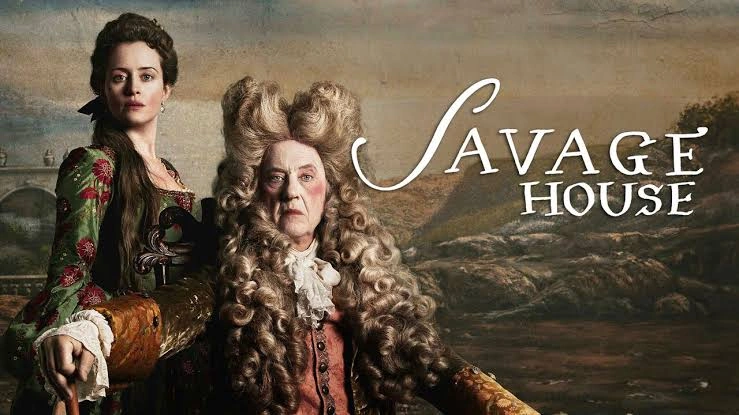

Peter Glanz’s Savage House turns the English country estate into a pressure cooker, then adds pox, debt, adultery, political unrest, and aristocratic vanity for seasoning. Set in 1715, during the early Hanoverian reign of King George I, the film follows Sir Chauncey and Lady Savage, a ruined couple still performing grandeur inside a house that seems one bad loan away from collapsing into the mud.
Their lives are already a carnival of appetites. He drinks, schemes, suffers, rages, and chases status with the dignity of a gout-ridden peacock. She maintains the poise of nobility while her family name, finances, and marriage corrode around her. Then the Duke and Duchess of Devonshire announce a visit, and the Savages respond as if salvation has arrived by carriage.
The joke is vicious. Class ambition becomes self-harm. The house must look refined while everything inside it festers. Outside, Jacobite unrest and disease press against the walls. Inside, desire and panic do the same job with better costumes.
The Comedy of Rank and Ruin
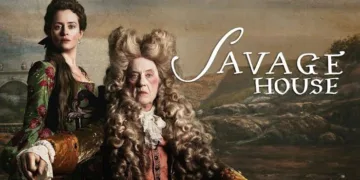
Savage House treats social standing as both religion and infection. Chauncey, played by Richard E. Grant, has married into a name he can barely afford to inhabit. His authority is theatrical, brittle, and comic, built from borrowed prestige and sheer volume. He has the posture of a lord and the soul of an opportunist who knows the ladder is burning beneath him.
Lady Savage, played by Claire Foy, carries inherited rank with greater chill, yet the film gives her no clean moral altitude. Her aristocratic identity survives through pose, language, and costume, while the estate around her reveals the poverty under the polish. The film’s central dinner-party plot turns etiquette into a form of battlefield strategy. The Savages borrow, sell heirlooms, conceal scandals, and tighten their smiles as their world turns rancid.
This is where Glanz’s satire bites hardest. The refined surface is never allowed to remain intact. Gout, pox, rotten teeth, sexual betrayal, blood, and debt keep staining the frame. The characters speak in the grammar of status while their bodies tell a less flattering truth. It is social Darwinism by way of farce, with wigs.
The philosophical tension lies in the question of agency. Are the Savages monsters because they choose greed, or are they grotesque products of a system that teaches them survival means performance? The film does not absolve them. It does, at moments, suggest that privilege can become a prison with better upholstery.
Grant, Foy, and the Art of Elegant Collapse
Richard E. Grant gives Sir Chauncey a performance of magnificent disequilibrium. His body seems at war with his ambition. Every wince, gulp, bark, and swagger becomes part of a comic anatomy of decay. Grant plays Chauncey as a man who believes himself born for command, then remembers, usually too late, that he had to marry into the illusion. He is vile, silly, desperate, and almost touching in his panic. Almost.
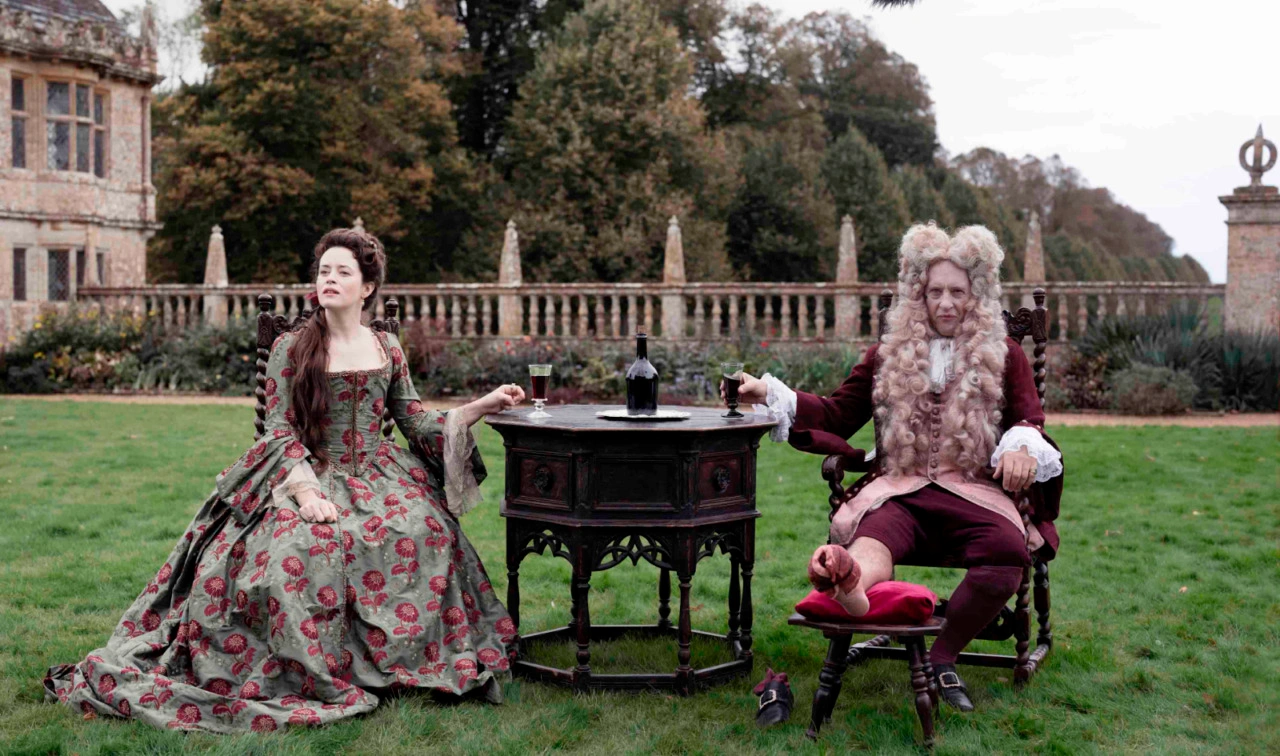
Claire Foy’s Lady Savage is the colder instrument, and the film benefits from that sharpness. Foy strips away the ceremonial restraint often attached to period-drama femininity and replaces it with appetite, calculation, and weary intelligence. Her Lady Savage knows the rules of this social theatre, yet she also knows how little protection those rules now offer. Her affair with Halifax is not framed as romance in any soft sense. It is need, rebellion, boredom, strategy, and maybe a little sport. Aristocracy, the film reminds us, had hobbies.
Bel Powley’s Dorothy and Jack Farthing’s Halifax give the household its lower-floor volatility. Their presence complicates the Savages’ fantasy of command, since servants in this world are witnesses, accomplices, lovers, and potential liabilities. The estate becomes a noir chamber, where everyone knows too much and each corridor contains a threat disguised as routine.
The performances lean toward caricature, yet they rarely tip into emptiness. That matters. The cast understands that this material needs acceleration without shapelessness. The actors make the chaos legible, turning cruelty into rhythm and panic into comic music.
Chiaroscuro, Pox, and the Architecture of Panic
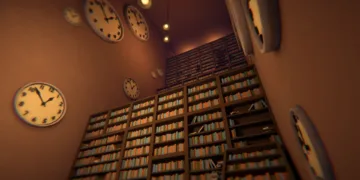
Visually, Savage House dresses itself like a prestige period piece, then lets rot seep through the seams. Candlelit interiors create a chiaroscuro effect that brings noir grammar into the 18th century. Faces emerge from pools of amber shadow. Rooms look grand and diseased at once. The framing often traps characters inside doorways, corridors, and crowded interiors, giving the estate the feel of an expressionistic mind rather than a stable home.
The production design sells status first, then sabotage. Costumes, wigs, decor, and formal arrangements suggest hierarchy and taste, while makeup and bodily detail pull the image toward horror. Pox marks, grime, bad teeth, and damp textures undercut every aristocratic gesture. The camera finds comedy in contrast: a beautiful composition, a hideous implication.
Glanz’s pacing is fast, often breathless. The editing keeps the house in motion, with characters storming through spaces as if pursued by creditors, disease, or their own bad decisions. Sound plays its part too, using orchestral jolts and heightened cues to push the viewer into a state of alert discomfort. The film manipulates perception through excess. It wants the audience slightly cornered.
That strategy has a cost. The movie can feel too insistent, too eager to prod every scene into frenzy. Plague, Jacobite politics, adultery, debt, class satire, grotesque comedy, and near-slasher violence all fight for air. A cleaner structure might have sharpened the blade. Still, the disorder has a certain integrity. This is a film about people who cannot stop performing refinement while the floor gives way beneath them. A little mess feels thematically fair.
Where to Watch Savage House (2026) Online
Savage House is a British black comedy period film that celebrated its world premiere at the SXSW London festival on June 3, 2026, ahead of its theatrical launch in the United Kingdom, Ireland, and the United States on June 5, 2026. Set against the chaotic backdrop of 18th-century England during a smallpox outbreak and political unrest surrounding the Jacobite uprising, the narrative serves as a biting satire on class and power. The plot chronicles the extreme moral compromise of Sir Chauncey and Lady Savage as they blindly pursue social mobility, resulting in a trail of ironic decadence and bloodshed. Moviegoers can watch the dark satirical feature in cinemas starting June 5, 2026, courtesy of its international distributor, Paramount Pictures.
Full Credits
Title: Savage House
Distributor: Paramount Pictures
Release date: June 3, 2026 (SXSW London world premiere), June 5, 2026 (United Kingdom theatrical release)
Rating: R
Running time: 114 minutes
Director: Peter Glanz
Writers: Peter Glanz
Producers and Executive Producers: Oliver Roskill, Mark Hopkins, Dylan Maranda, Phillip Thomas, Peter Glanz
Cast: Richard E. Grant, Claire Foy, Bel Powley, Jack Farthing, Kila Lord Cassidy, Richard McCabe, Vicki Pepperdine, Pip Torrens, Miles Jupp, Sebastian Armesto
Director of Photography (Cinematographer): Adriano Goldman
The Review
Savage House
Savage House is a British black comedy period film that celebrated its world premiere at the SXSW London festival on June 3, 2026, ahead of its theatrical launch in the United Kingdom, Ireland, and the United States on June 5, 2026. Set against the chaotic backdrop of 18th-century England during a smallpox outbreak and political unrest surrounding the Jacobite uprising, the narrative serves as a biting satire on class and power. The plot chronicles the extreme moral compromise of Sir Chauncey and Lady Savage as they blindly pursue social mobility, resulting in a trail of ironic decadence and bloodshed. Moviegoers can watch the dark satirical feature in cinemas starting June 5, 2026, courtesy of its international distributor, Paramount Pictures.
PROS
- Strong lead performances
- Rich period design
- Sharp class satire
- Grotesque comic energy
- Striking candlelit visuals
CONS
- Occasionally frantic pacing
- Some underdeveloped subplots
- Tone may feel too abrasive
- Satire can become repetitive