
























Criston Cole has finally found a cause he can believe in: his own death. Cornered in the Riverlands, stripped of horses, crossings, and any clean route forward, he tells Gwayne Hightower that one glorious final stand will release him from service. He will die for himself. Songs will carry his name. Alicent will hear them. Freedom, apparently, requires excellent publicity.
House of the Dragon’s fifth episode builds its sharpest idea around that contradiction. Nearly everyone claims some form of sovereignty, yet each claim depends on recognition from another person, institution, god, or future audience. Criston wants to escape his masters while imagining the story those masters will tell about him. Fabian Frankel lets exhaustion harden into theatrical conviction during the speech, as if Cole can speak his preferred ending into existence. Freddie Fox gives Gwayne the opposite energy: wet, depleted, and finished with grand gestures. Their exchange turns a failed campaign into an argument about ownership. Can a man choose his death when he still needs others to certify its meaning?
The military material gains most of its force once the movement stops. Caltrops, mud, leeches, and abandoned horses reduce Cole’s celebrated martial identity to a body slogging through hostile ground. The episode could draw greater visual pressure from that humiliation. The attrition registers, yet Frankel’s speech carries the larger burden. His Cole is far livelier here than the self-pitying figure who spent much of last season collapsing inward. Vanity has become a survival mechanism. It may even be his most honest quality.

Rhaenyra suffers from a grander version of the same recognition trap. Inside the High Sept, she asks why divine favor would place a crown upon her head and then permit the realm to resist. Emma D’Arcy gives the question a brittle sincerity. Rhaenyra’s faith has become a political contract in her mind: the gods selected her, so history should cooperate. The realm, being rather rude, has declined.
Daemon rejects her theology, yet his own creed sounds equally dependent on belief. He promises the Gold Cloaks future pay and speaks of remaking the Seven Kingdoms into a new Valyria. Matt Smith delivers the vision with the easy certainty of a man who treats ambition as evidence. Rhaenyra seeks confirmation from heaven. Daemon seeks it from armed men willing to invest in an empire that exists inside his rhetoric. Their quarrel concerns the preferred source of destiny, rather than destiny itself.
This leaves Rhaenyra exposed to a danger she perceives accurately and interprets poorly. Enemies are operating around her. Assassins, false signals, missing information, religious resistance, and Ormund Hightower’s shadow campaign give her fear a solid political basis. Her fixation on Aemond still narrows her attention. She struggles to see governance outside the threat to her crown and family, even as Lady Frey, Mysaria, Daemon, and the council bring competing emergencies into the room. Paranoia becomes useful to her enemies because it persuades her to stare at the hidden knife while the floor gives way.
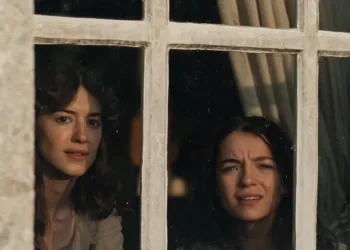
Helaena offers the hour’s clearest resistance to this logic. She refuses the abortifacient Alicent obtains from Grand Maester Orwyle and sets firm conditions for escape: Jaehaera and the unborn child come with her. Phia Saban plays the refusal without pleading. Her stillness gives it authority. Here, choice concerns a body, two children, and an immediate decision, rather than a crown or legend.
Alicent’s response complicates that authority. Olivia Cooke fills the escape plot with urgent, practical motion: securing the potion, pressing Mysaria for silence, surrendering a symbol of faith, and forcing a path through the Red Keep. Her love saves Helaena while also placing Alicent’s judgment over parts of Helaena’s will. Protection and control share the same hands. The episode refuses to separate them cleanly, which gives these scenes their moral weight.
Aegon and Aemond remain trapped by a more childish form of dependence. Each believes the family gave the other the love he deserved. Aemond, wounded and separated from Vhagar, admits how much of his identity rests on the dragon’s power. Alys answers his need with care. Aegon receives a harsher service from Larys, who cuts through his grievances and forces him to confront his role in his own ruin. Neither brother emerges wiser. Both recover movement through violence, as if cruelty could restore a self that family rejection has hollowed out.
Ormund Hightower understands the machinery better than any of them. His lesson to Daeron about Meria Martell praises intelligence, refusal, and resistance against superior force. At the same time, he turns Daeron’s face into currency and Daeron’s claim into a recruiting device. The hypocrisy feels deliberate. Ormund admires rebellion as a technique while denying meaningful independence to the people serving his design. History becomes a manual, kinship becomes branding, and murder becomes communication.

The episode’s many strands occasionally sit beside one another rather than tightening at the same rate. Criston’s march, the brothers’ recoveries, Alicent’s escape plan, and Rhaenyra’s crisis each carry enough material for their own center of gravity. The shared idea keeps the hour coherent, while some transitions leave the philosophy clearer than the drama. Still, the final return to the Gold Cloaks gives the argument its needed cruelty.
Daemon finds their bodies arranged as a public warning, their deaths converted into a sentence written by someone else. Criston dreams of choosing a glorious end and owning its story. The Gold Cloaks receive the answer first. Their killers decide what the bodies mean.
House of the Dragon Season 3, Episode 5 premiered on July 19, 2026, and is available to stream on Max and watch on HBO. In this episode, Rhaenyra struggles to maintain control over an unstable King’s Landing while Ser Criston Cole prepares his depleted forces for a brutal last stand in the Riverlands.
Where to Watch House of the Dragon Season 3 Episode 5 Online






Full Credits
Title: House of the Dragon (Season 3, Episode 5 – “Unbowed and Unbent”)
Distributor: HBO, Max
Release date: July 19, 2026
Rating: TV-MA
Running time: 61 minutes
Director: Nina Lopez-Corrado
Writers: Philippa Goslett, Ryan Condal, George R. R. Martin
Producers and Executive Producers: Ryan Condal, George R. R. Martin, Vince Gerardis, Sara Hess, Alan Taylor, Ron Schmidt, Jocelyn Diaz
Cast: Emma D’Arcy, Matt Smith, Olivia Cooke, Ewan Mitchell, Fabien Frankel, Tom Glynn-Carney, Phia Saban, Steve Toussaint, Matthew Needham, Sonoya Mizuno, Gayle Rankin, James Norton, Tom Cullen, Freddie Fox
Director of Photography (Cinematographer): Fabian Wagner
Editors: Tim Porter, Selina MacArthur
Composer: Ramin Djawadi
The Review
House of the Dragon Season 3, Episode 5 (Unbowed and Unbent)
Episode 5 turns a scattered war into a precise argument about ownership. Criston seeks freedom through a death that still needs an audience, Rhaenyra mistakes divine selection for political control, and Ormund proves that power belongs to whoever authors the meaning of other people’s choices. The hour occasionally asks dialogue to supply force its military images and transitions do not fully create, yet Fabian Frankel, Emma D’Arcy, Phia Saban, and Olivia Cooke give the philosophy human consequence. Its final massacre lands with cold clarity.
PROS
- Criston’s contradiction about freedom
- Fabian Frankel’s renewed intensity
- Rhaenyra and Daemon’s theological dispute
- Helaena’s firm act of refusal
- Ormund’s control of political meaning
CONS
- Riverlands material lacks visual pressure
- Some plotline transitions feel abrupt
- Ensemble strands tighten unevenly