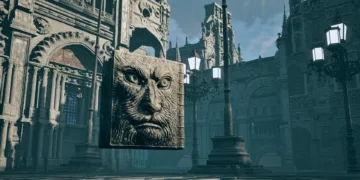

























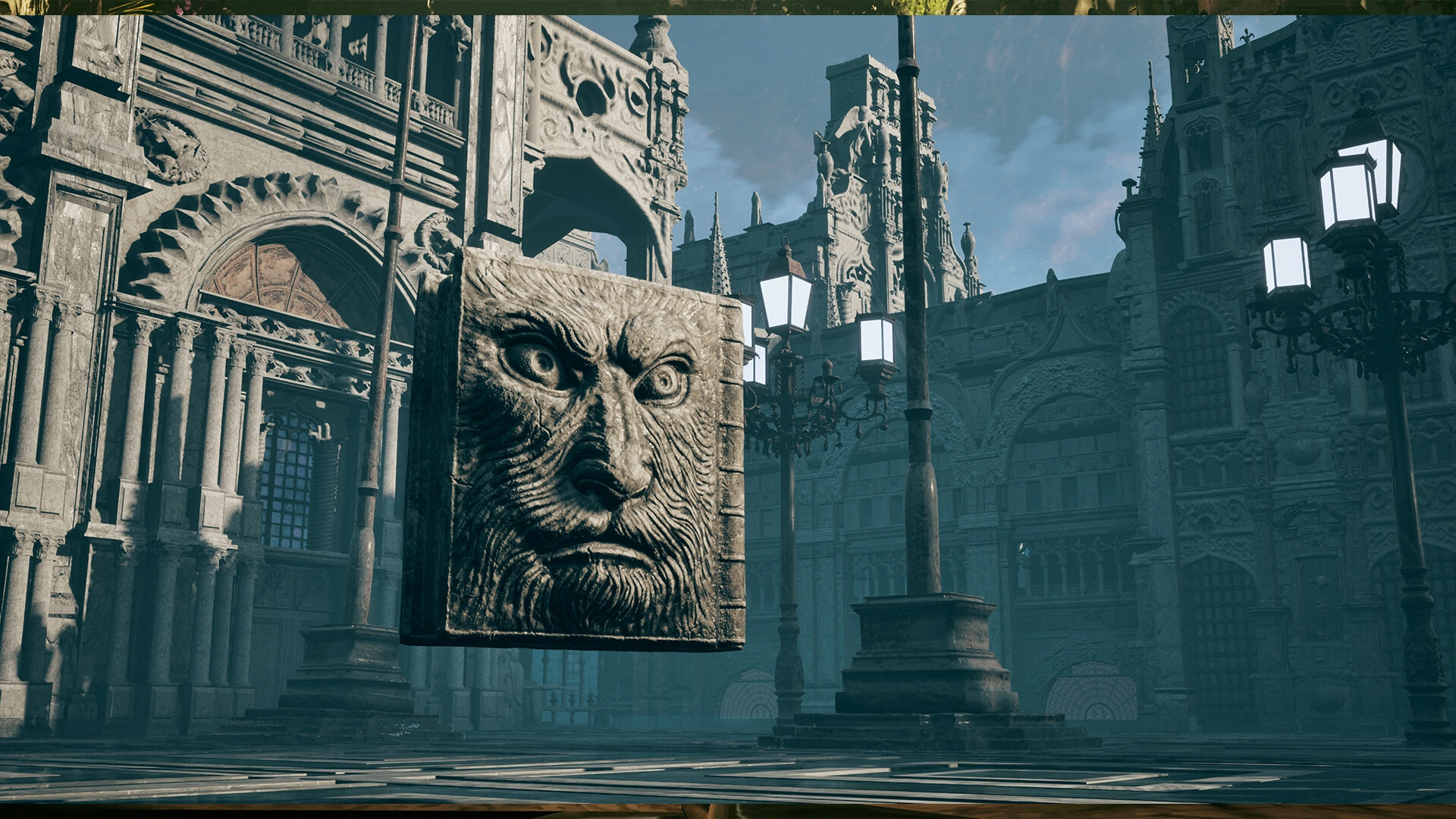

Stonemachia, the debut Soulslike from Crossfall Games, has the kind of premise that could collapse under its own eccentricity: a chess-themed action RPG set in a warped Italian fantasy realm where angels behave like a plague. Instead, its strange logic gives the game a sharp identity. You play as Zefiro, a lowly pawn moving through Medhelan, a distorted vision of Milan scarred by the Plague of Angels. These angels have seeped into statues, fountains, ornaments, and sacred architecture, turning beauty into threat.
The game moves with the shape of a Soulslike, yet its pulse is faster and more aggressive. It favors parries, form changes, pressure, and theatrical boss encounters over cautious stamina management. Its story comes through fragments: item descriptions, environmental clues, riddles, sparse dialogue, and poetic cutscenes about ascension, creation, divinity, and the strange place chess pieces hold in this cosmology.
That ambition gives Stonemachia real character. It is visually striking, mechanically inventive, and rough in ways that a small-team action RPG often is. Its best ideas hit hard. Its weaker parts chip away at clarity and polish.
Combat Written Like Strategy
The best thing about Stonemachia is how directly its combat systems express its theme. Zefiro may begin as a pawn, but the player is asked to think several moves ahead. This is a game about reading patterns, punishing openings, and turning defense into pressure.
There is no heavy stamina bar dictating every swing and dodge. Instead, the combat loop values timing. Perfect blocks trigger parries, building charge for counterattacks, while perfect dodges let Zefiro borrow the Queen’s attack. A good fight can feel like a fast tactical exchange rather than a simple reaction test.
The chess-piece transformation system gives that loop its personality. Zefiro can shift between forms such as Pawn, Rook, Knight, Bishop, and other pieces, each with its own rhythm and role. One form might suit direct pressure, another might favor spacing, burst damage, or special utility. The system encourages experimentation without punishing the player too harshly for choosing the “wrong” direction. Later fights ask for active form switching, so the best way to play is to treat each piece as part of a flexible toolset.
Healing reinforces that same aggressive mindset. There is no simple safety flask that refills in the usual way. Health recovery is earned through enemy kills and successful parries, which means hesitation can become dangerous. Players who retreat forever may find themselves drained, while confident players can pull survival out of a near-death situation. The pressure recalls the clean combat philosophy of Sekiro, with some of the forward momentum associated with Bloodborne, though Stonemachia has its own chessboard grammar.
Progression runs through the Armarium and chessboard checkpoints, where players level up, adjust forms, and reshape their loadout. The simplified stat growth reduces build anxiety, which suits a game that wants players to try different approaches.
The flaws are clear. Hit feedback can feel soft, sound effects sometimes lack force, and certain enemies seem too eager to answer player inputs. Large bosses can also expose camera issues, turning a fight built on precision into a fight against visibility. Still, when parries, form switching, and music lock together, Stonemachia finds a rhythm few indie action RPGs manage.
Medhelan as a Place of Ruined Faith
Medhelan is the game’s strongest argument for itself after combat. It is a distorted Italian world of cathedrals, canals, bridges, plazas, castles, outposts, fortified cities, and mystical ruins. The influence of Milan is easy to feel, especially in spaces that suggest the Duomo di Milano through a darker, dreamlike lens. Some canal-side areas carry a faint Venetian echo, filtered through the gothic anxiety of a decaying fantasy city.
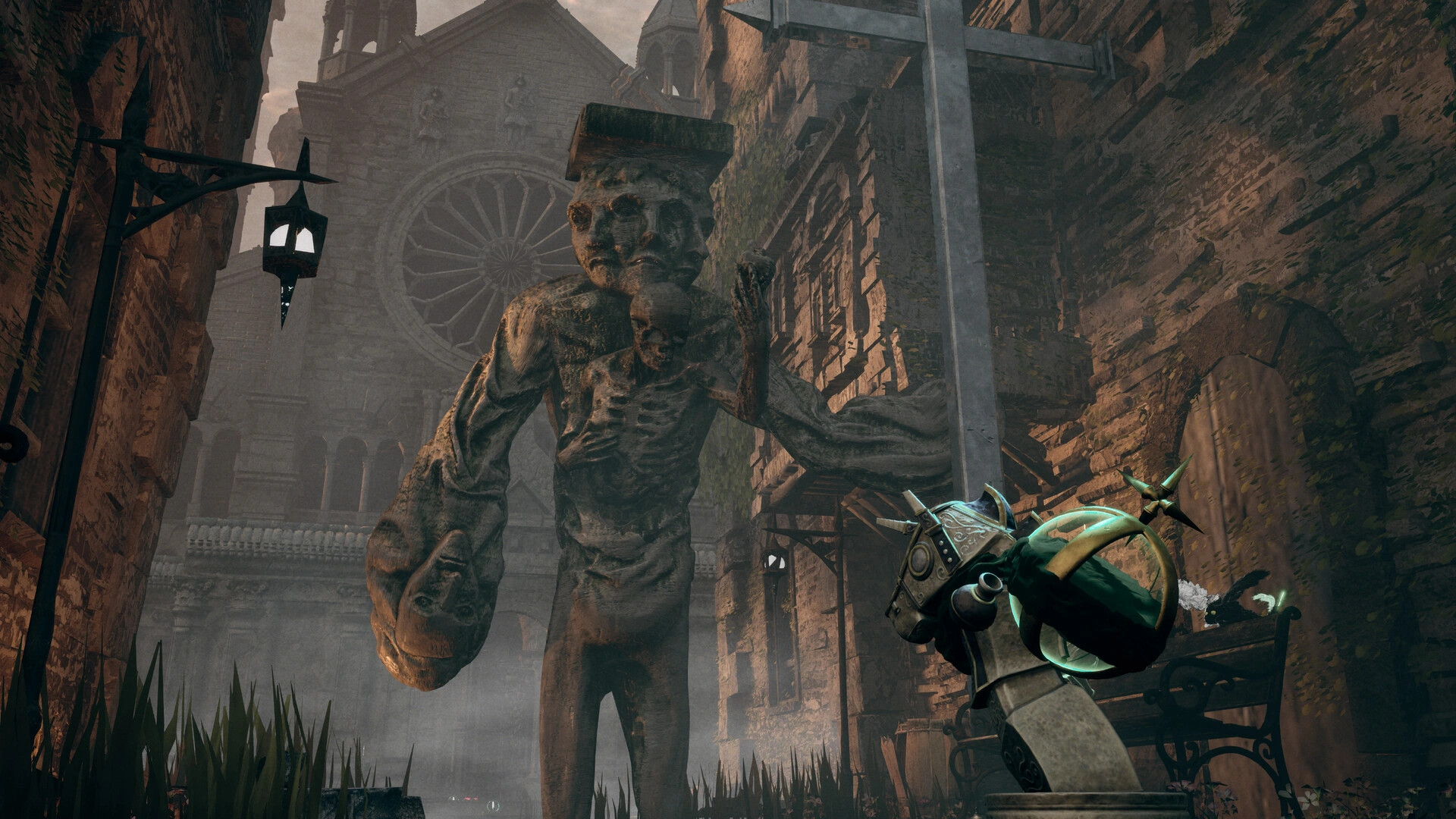
The level design works best when it folds back on itself. Shortcuts create that familiar Soulslike pleasure of turning confusion into understanding. A route that first feels hostile and unknowable can later become a place you mentally map with confidence. Optional bosses, hidden cards, vinyl records, and secret paths give exploration some texture, and those collectibles help the world feel less like set dressing.
The structure is not always that strong. Some areas lean heavily into guided paths, with branches that feel reserved for secrets rather than full exploration. Experienced genre players may sprint through certain stretches once they identify the pattern of enemy placement and reward density. The game sometimes gives you a beautiful street or corridor, then little reason to stay there.
The storytelling has a similar split. Zefiro is a silent, memory-wiped hero, and the supporting cast can feel distant. Yet the religious imagery, Dante-like allusions, Biblical echoes, chess terminology, and flashes of tragicomic tone create a setting with real flavor. “SCACCO MATTO” after boss victories and “PETRIFCATUS” upon death are small touches, but they matter. They show a game committed to its own language.
Stone, Choirs, and Glitches
Art direction is where Stonemachia speaks loudest. Stone shapes nearly every visual idea. Enemies look like statues, monuments, and ornamental figures twisted into predators. Architecture borrows from Italian Renaissance, Gothic, and religious design, then bends those influences into something jagged and uncanny. The best vistas have a sculptural grandeur, especially later areas where the mystical side of the setting becomes stronger.
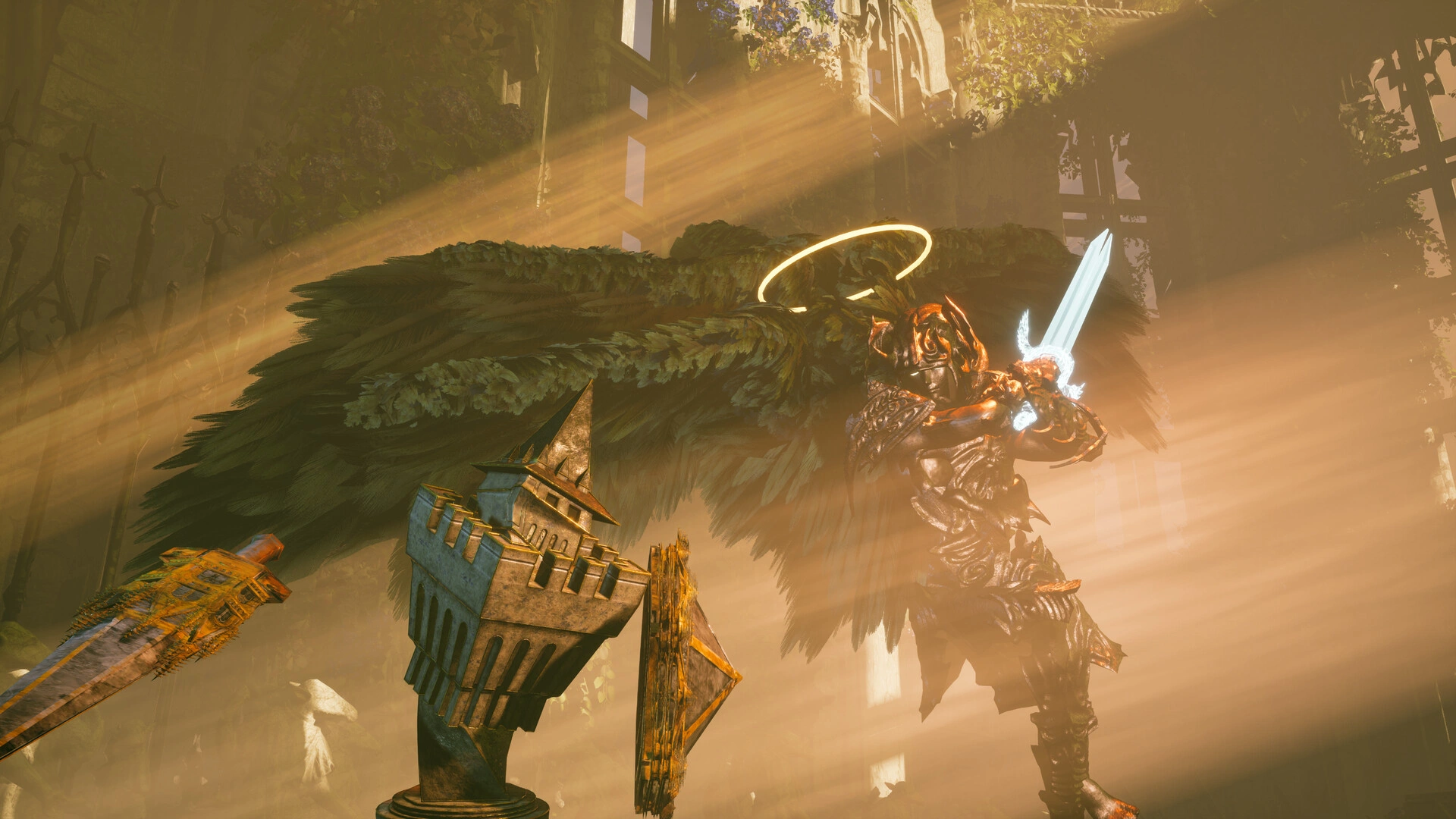
That visual density has a cost. During busy fights, dense enemy bodies, flashy parry effects, particle bursts, and crowded arenas can make attack telegraphs hard to read. This matters in a game built around perfect timing. A Soulslike can survive a lot of roughness, but unclear combat information cuts close to the bone.
The soundtrack carries much of the atmosphere. Choral writing, orchestral themes, Italian musical influence, and dramatic boss music give encounters a sacred intensity. The music understands the game’s inverted theology, where heavenly imagery feels diseased rather than comforting. Italian voice acting adds texture too, though the game uses dialogue sparingly.
Sound effects are less reliable. Parries can feel tactile, yet regular hits may lack punch. Some effects repeat too often, some seem poorly mixed, and audio can occasionally drop out or lose spatial logic.
Performance depends on hardware and patience. On a strong PC, Stonemachia can run at 4K and 60 FPS, but dips, crashes, texture pop-in, lighting bugs, stuck enemies, audio failures, and rare severe respawn glitches can appear. Steam Deck play seems shaky, especially during cutscenes and tutorials. Helpful touches soften the roughness, including PlayStation button prompts in settings, a 15 to 20 hour campaign, optional bosses, mastery challenges, and New Game Plus. For all its flaws, this is a debut with a clear soul carved into its stone.
The Review
Stonemachia
Stonemachia is a bold, stylish debut with a strong combat identity, excellent art direction, and a haunting Italian fantasy world. Its parry-driven battles and chess-piece transformations give it a distinct rhythm, while the soundtrack brings real grandeur to its ruined sacred spaces. Technical bugs, weak hit feedback, camera trouble, and occasional visual clutter hold it back, but the game’s ambition and personality carry it far.
PROS
- Creative chess-piece transformation system
- Fast, rewarding parry-focused combat
- Striking Italian Gothic art direction
- Excellent choral and orchestral soundtrack
- Strong world identity and atmosphere
- New Game Plus and optional bosses add replay value
CONS
- Camera struggles in large boss fights
- Hit feedback can feel weak
- Visual effects sometimes hurt readability
- Some areas feel too linear
- Bugs and audio issues can interrupt immersion
- Story can feel too vague for some players