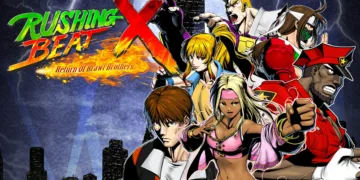




















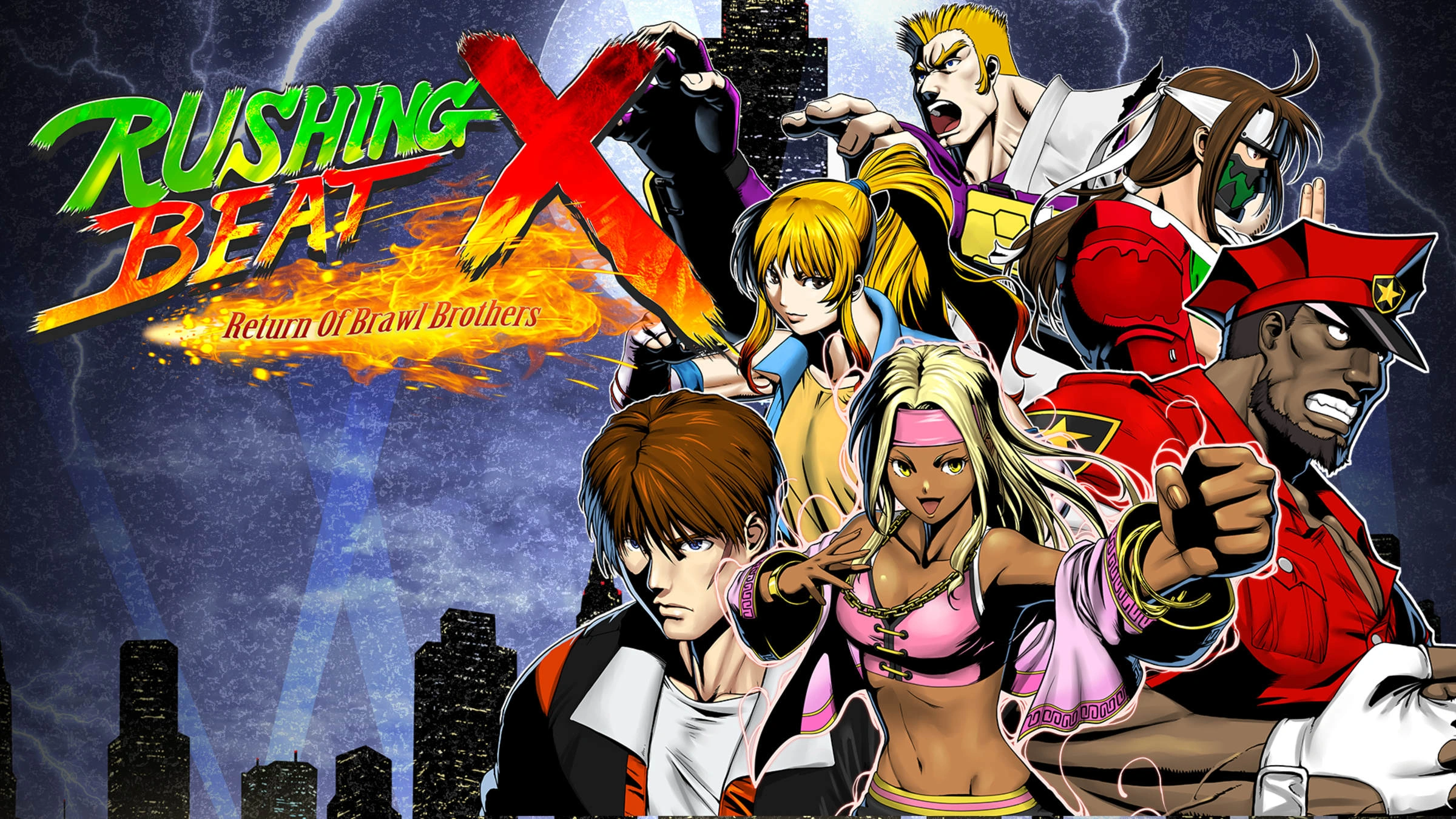

RUSHING BEAT X: Return Of Brawl Brothers arrives like a game dragged out of a 1990s arcade cabinet, dusted off, and handed a modern combo system before anyone checked if the wiring was safe. It belongs to Jaleco’s Rushing Beat line, a beat ’em up series many Western players may know through the oddly disconnected names Rival Turf!, Brawl Brothers, and The Peace Keepers. This new entry sits between Brawl Brothers and The Peace Keepers, bringing Rick Norton, Douglas Bild, Wendy Milan, Kazan, Lord J, and other familiar faces back into the street fight, joined by fresh blood like Kahlua.
The setup is gleefully absurd. Neo-Sisco is drowning in the Zeekus virus, cyber clones, robots, zombies, and the latest grand scheme from Edgar, an evil scientist with world domination on his mind. Scarlett, his recurring partner in chaos, gives the story a cartoon-villain rhythm.
The game has nine stages, local co-op, unlockable fighters, a flashy cel-shaded look, and a combat system that aims far higher than simple button mashing. It is messy, loud, and often awkward, yet it has the personality of a cult favorite that refuses to stay buried.
Zombies, Clones, and the Joy of Messy Continuity
The strangest thing about RUSHING BEAT X is how much story it tries to carry for a game built around punching mobs into furniture. The old trilogy’s confusing Western identity left the series feeling fractured, and this entry responds by leaning into that history rather than sanding it clean. Dialogue, recaps, callbacks, and images from earlier games try to bind together viruses, clones, criminal plots, and old rivalries. The result can feel like someone explaining a lost Saturday morning cartoon season at high speed.
That self-awareness gives the game charm. Edgar and Scarlett fleeing at the end of each stage, then returning with another weapon or scheme, creates a funny, theatrical pattern. They are silly antagonists, and the game knows it. The emotional pull here is not tragedy or character depth. It comes from the pleasure of watching an obscure brawler series act like its tangled continuity deserves this much attention.
The roster helps sell that energy. Rick Norton works as the classic lead fighter, Douglas Bild brings wrestler heft with suplexes and body slams, Wendy Milan offers faster grappling, and Kazan fills the agile ninja role. Lord J and Kahlua add extra texture, while bosses joining the lineup later gives the campaign a playful sense of reward.
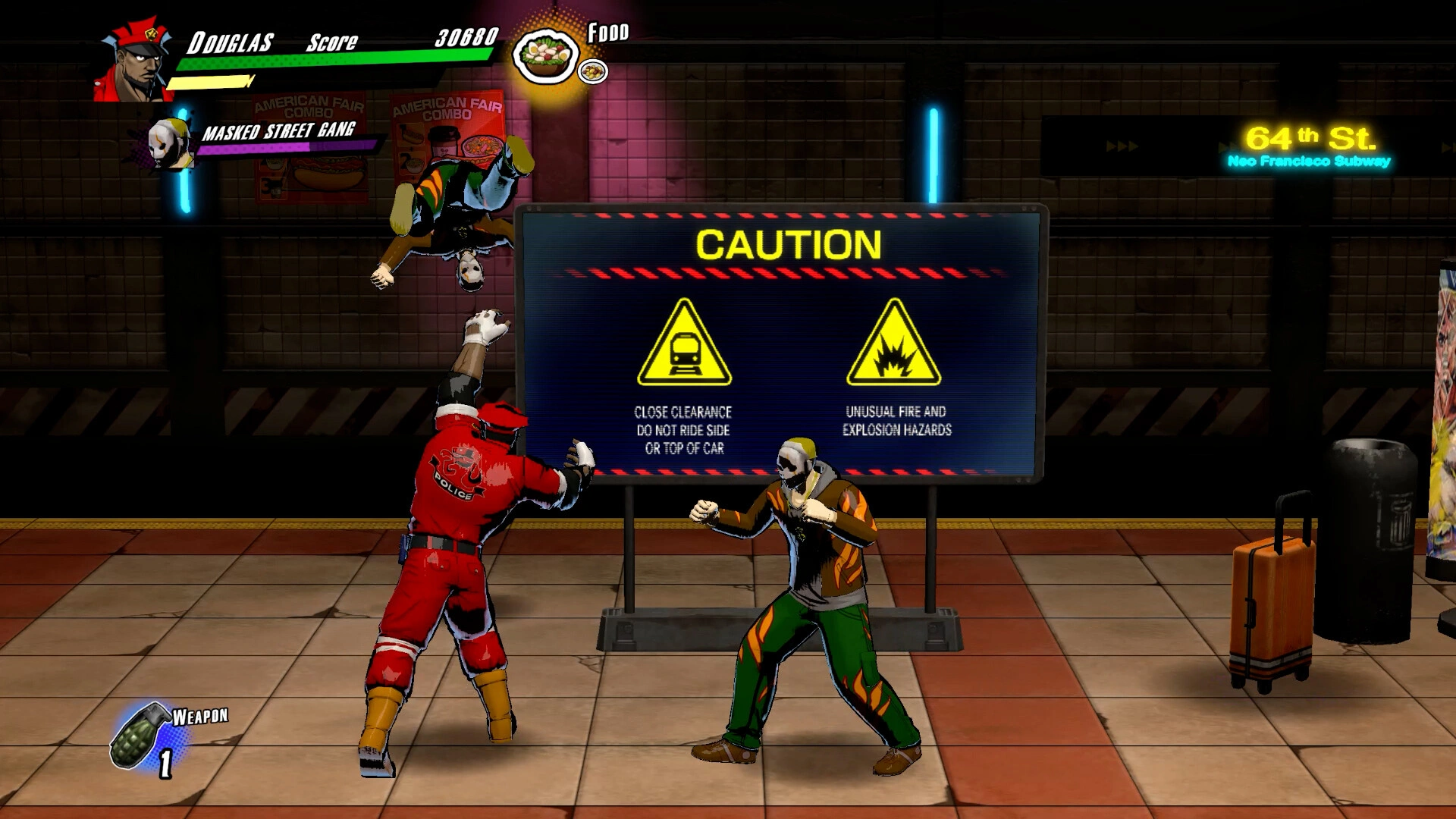
The stages move through malls, slums, subways, labs, prisons, and grimy city spaces. Some sections have real spark, such as the ridiculous zombie dance sequence and environmental destruction. Others run too long or rely on gimmicks that interrupt the brawling flow. By the late game, subway fights and vehicle-top scraps start to feel familiar. The cutscenes have personality, yet they can slow the tempo for players who came mainly for the fight.
A Brawler With Fighting-Game Ambition
The strongest part of RUSHING BEAT X is its combat, which treats the beat ’em up formula with surprising mechanical curiosity. At a basic level, this is classic belt-scrolling action: move through the stage, clear enemy waves, grab money, use weapons, eat food, and finish each level with a boss fight. Under that familiar shape, the game hides a flexible system built around launchers, aerial juggles, wall bounces, back attacks, counters, throws, and character-specific specials.
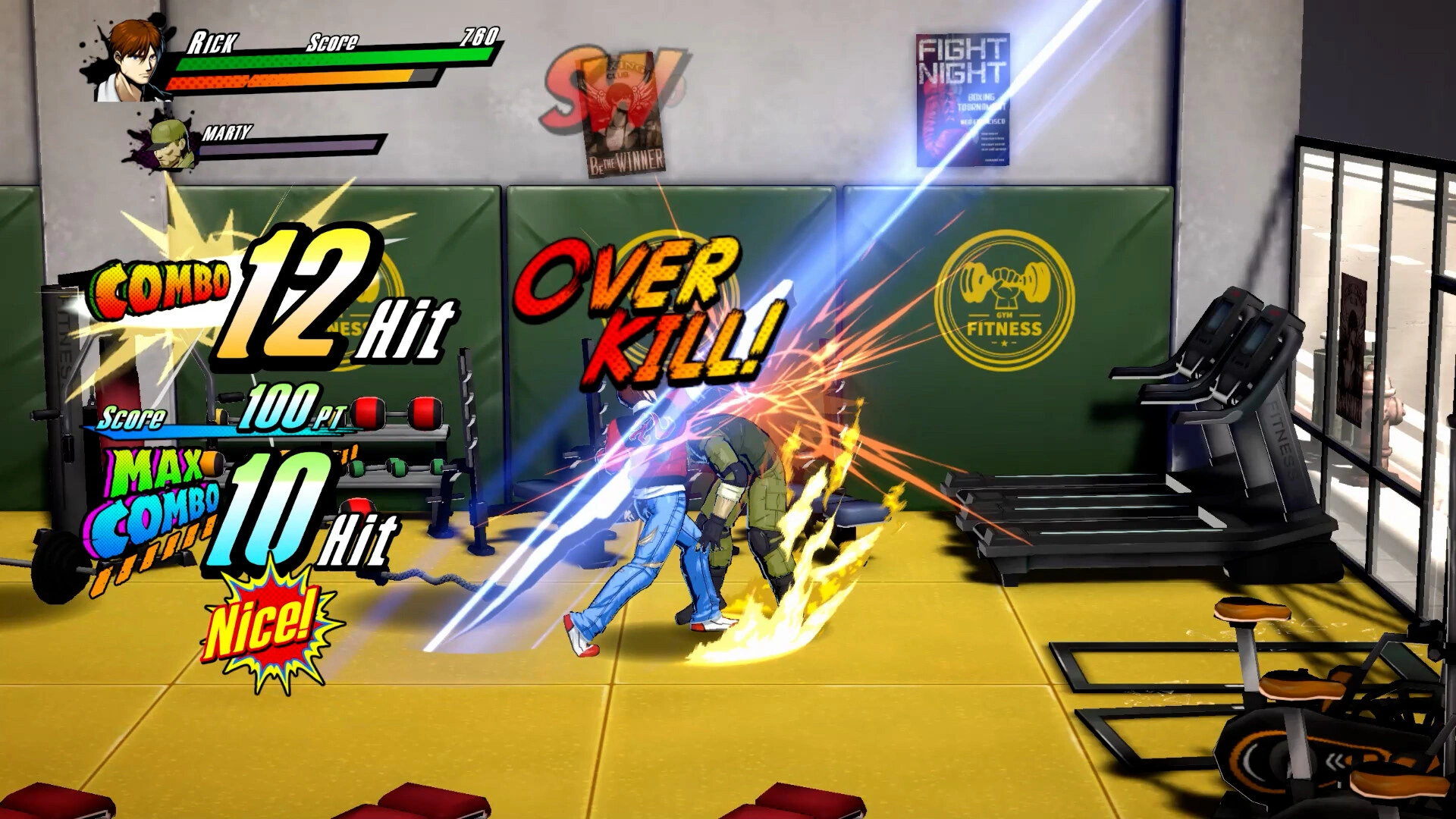
Once the rhythm clicks, fights can feel closer to a simplified fighting game than a throwback brawler. Normal strings can lead into heavy attacks, enemies can be popped into the air, and moves can be canceled into jumps or dashes.
That gives each character a sense of expressive identity. Douglas feels best when turning bodies into projectiles. Kazan thrives on speed and pressure. Wendy sits in a satisfying middle ground, quick enough to move through crowds and strong enough to make grapples matter.
The throw system gives the combat much of its physical comedy. The attack button doubles as a throw at close range, and directional inputs change the result. Slamming enemies into walls, windows, background objects, or hazards gives every room a tactile quality. It recalls the pleasure of older arcade brawlers where the best moments often came from treating the scenery like a weapon.
The inventory system is a smart modern adjustment. Food can be saved for later instead of consumed on contact. Weapons can be stored, swapped, and timed for harder encounters. Money can be spent at the Brawl Bus or Tough Enough truck for meals, health, and gear. These systems make survival feel less dependent on lucky item placement and give players a small strategic layer between scraps.
Rage mode adds another burst of control. Landing hits and throws fills a meter that boosts attack and defense, changes moves, and allows a strong special attack. It is especially useful when the screen fills with bodies or a boss starts chewing through health.
The rough edges are hard to ignore. Default controls can feel odd, with attack, throw, block, and strong attacks sharing space in ways that cause accidental inputs. Remapping helps, yet first impressions matter in a genre built on immediacy. Movement also feels stiff, and alignment can be fussy.
You can stand a hair too high or low and swing into empty air while an enemy punishes you for the insult. Weapon durability can frustrate too, since missed swings may still count as uses. The final stretch raises the pressure with stun-locks, repeated continues, and boss encounters that start to drain the joy from an otherwise lively system.
Style, Sound, Co-op, and the Shape of the Package
Visually, RUSHING BEAT X has a bold arcade pop. Its cel-shaded character models, heavy outlines, black shadows, and cross-hatched details give it a manga-flavored look that fits the absurdity of its world. The best stages feel bright and energetic, with destructible props, large boss encounters, and shifting camera angles that keep the campaign from looking flat. Some backgrounds are sparse, and certain animations lack polish, yet the game handles crowded fights smoothly enough to preserve the rush of the action.
The sound design lands with mixed force. Hits have a crunchy impact that helps sell the weight of each punch, throw, and special move. The music fits the genre’s tempo and gives several stages enough arcade momentum to keep things moving. It rarely leaves a strong memory after play, though, and repeated voice lines can start to grate during longer levels. That matters because pacing in a brawler is sensory. If a stage runs too long, every repeated bark becomes part of the fatigue.
Local two-player co-op suits the game beautifully. This kind of messy, crowd-heavy brawling feels better with another player sharing the chaos, calling out enemies, wasting weapons, and laughing at bad positioning. The absence of online co-op hurts. For a revival trying to reach modern players, local-only multiplayer feels like a missed chance.
The package includes story mode, boss rush, stage replay, four difficulty settings, loadouts, accessibility options for screenshake and text size, remappable controls, and multiple character endings. That is a decent base, yet the game still feels thin after the campaign.
Survival, versus play, branching routes, alternate costumes, online co-op, or legacy trilogy extras would have given it a stronger hook. What remains is a fun, scrappy, mechanically rich brawler with clear affection for its odd lineage, held back by uneven polish, limited content depth, and late-game balance that tests patience as much as skill.
The Review
RUSHING BEAT X: Return Of Brawl Brothers
This modern continuation wonderfully captures the nostalgic essence of the classic 16-bit trilogy. The satisfying feel of landing heavy strikes, paired with an inventive weapon-switching system and an intense rage mechanic, delivers pure beat 'em up joy. Visually, the bright neon aesthetic pops beautifully, even if a few background environments look slightly unpolished. While the story remains a predictable, campy virus-busting tale, the fluid action and seamless co-op mode provide incredible arcade entertainment.
PROS
- Highly responsive combat featuring easy-to-learn auto-combos and depth-adding dash cancels.
- Inventive weapon system allowing players to carry and cycle through multiple armaments.
- Delightfully energetic local co-op mode perfect for classic couch play.
CONS
- Uneven visual design, with some rough stage backgrounds lacking detail.
- Minimal replay value once the relatively brief story mode is cleared.