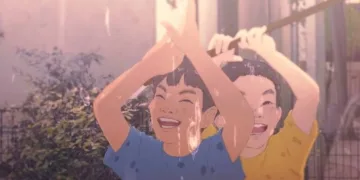



















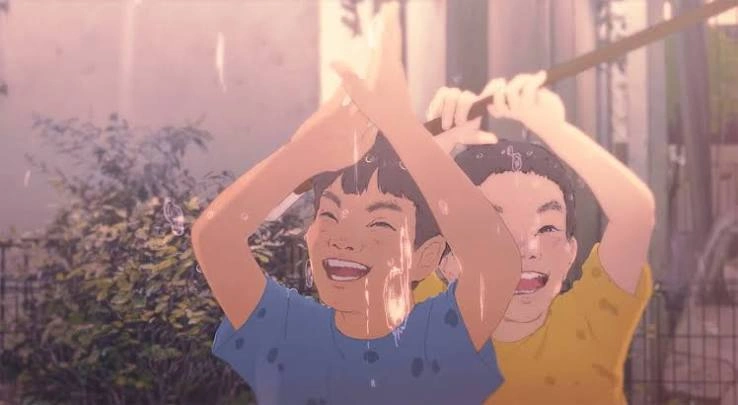

We Are Aliens takes a familiar coming-of-age shape and quietly bends it into something sadder, stranger, and sharper. Kohei Kadowaki’s animated feature debut follows Tsubasa and Gyotaro, two boys growing up in small-town Japan in the early 2000s, where classrooms, playground rumors, strict parents, and social rank can feel like the entire known universe. Their friendship starts with the charge of recognition: one lonely child sees another, and for a while, the world becomes less dull.
Kadowaki is interested in the scale of childhood feeling. A broken umbrella can become a catastrophe. A careless accusation can harden into identity. A rumor can travel faster than guilt. The film’s title gestures toward science fiction, yet its “aliens” belong to school corridors and family kitchens. To a child, another person’s oddness can look like proof of something impossible. To an adult looking back, that same thought can feel like the first step toward cruelty.
Two Boys, Two Stories, One Wound
Tsubasa is timid, withdrawn, and already skilled at disappearing inside himself. Gyotaro is louder, rougher, funny in the way children can be when nobody has told them they are too much yet. Their friendship forms through shared play, small rituals, and the comfort of having someone nearby who does not demand an explanation.
Then Gyotaro breaks Tsubasa’s umbrella during roughhousing, a small incident that Kadowaki treats with the seriousness it would have in a child’s mind. Tsubasa fears his mother’s reaction, pulls away from Gyotaro, and makes a choice that redirects both of their lives.
The film’s strongest narrative decision is its two-part design. First, events arrive through Tsubasa’s fear, suspicion, and shame. Later, Gyotaro’s side fills in the emotional spaces Tsubasa could not see or refused to face. The title card arriving near the midpoint is a neat structural flourish, yet it also has purpose. It makes the film feel divided by memory itself, as if the story has cracked and exposed another layer beneath it.
This reframing gives repeated scenes new pressure. The broken bond, the game cartridge, the schoolyard dynamics, the glances toward Konatsu, all return with altered meaning. Kadowaki understands that perspective shifts work best when they do not simply reveal information, but make earlier emotions harder to sort.
The later time jumps into adulthood are harsher, especially once Tsubasa appears socially secure while Gyotaro has become unstable and adrift. The final stretch reaches for heavier drama, sometimes with a firmer hand than the earlier material needs. The film is at its best when it lets guilt leak through silence instead of announcing itself with a siren.
Bullying as a Social System
The film’s portrait of bullying is painful because it rarely treats cruelty as one dramatic event. It grows through labels, laughter, convenience, and the terrible efficiency of group behavior. Gyotaro’s oddness first makes him exciting to Tsubasa, then makes him easy for others to reject. The idea that he might be an “alien” starts as a child’s fantasy, a way of giving shape to confusion. Once that fantasy enters the social world, it becomes a weapon.
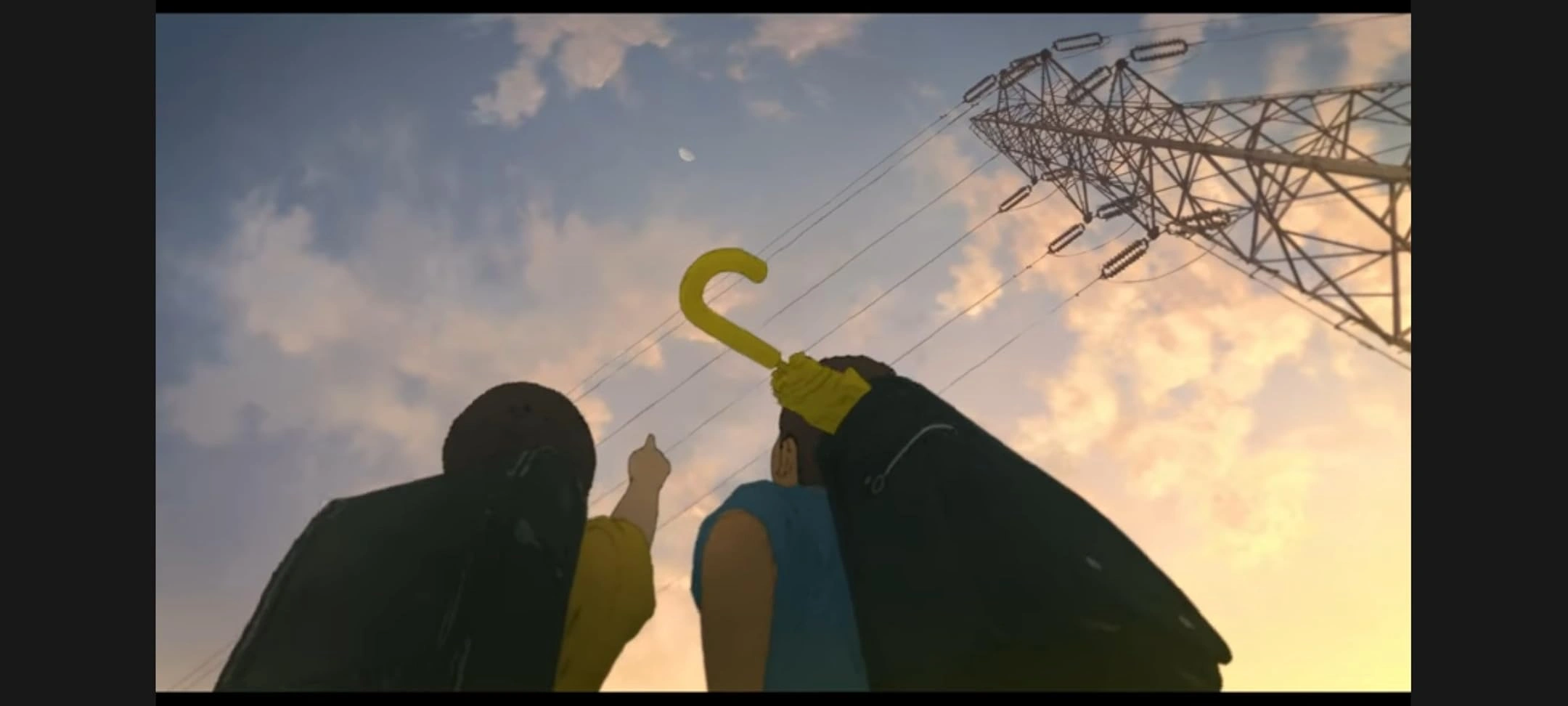
Tsubasa is written with enough care to avoid easy judgment. He is frightened, lonely, and shaped by a home life where even an umbrella can carry the threat of punishment. His weakness is understandable. That does not make it harmless. The film’s moral tension comes from watching a child’s fear become another child’s ruin. Scott Fitzgerald once wrote that there are no second acts in American lives; Japanese animated dramas, by contrast, often specialize in third acts where everyone has aged badly and still owes someone an apology.
Konatsu and Batahara help widen the film’s view of belonging. Konatsu becomes part of the social reward system that pulls Tsubasa away from his former friend, while Batahara shows how misfits can recognize each other without being able to save each other.
Memory gives the film its uneasy rhythm. Childhood returns through fragments, distorted reflections, repeated objects, and half-buried shame. The hardest question in We Are Aliens is not who caused the damage. It is why saying sorry becomes harder with every passing year.
Beauty, Uncanny Motion, and Quiet Devastation
Kadowaki’s animation carries much of the film’s emotional force. The style mixes rotoscope-influenced movement, near-photoreal backgrounds, painterly digital texture, and anime-like exaggeration. At times, the characters can look slightly uncanny, their movements tied to reality while their faces stretch into fear, rage, or panic. That awkwardness suits the story. These are children with unstable self-images, later adults still trapped inside old perceptions.
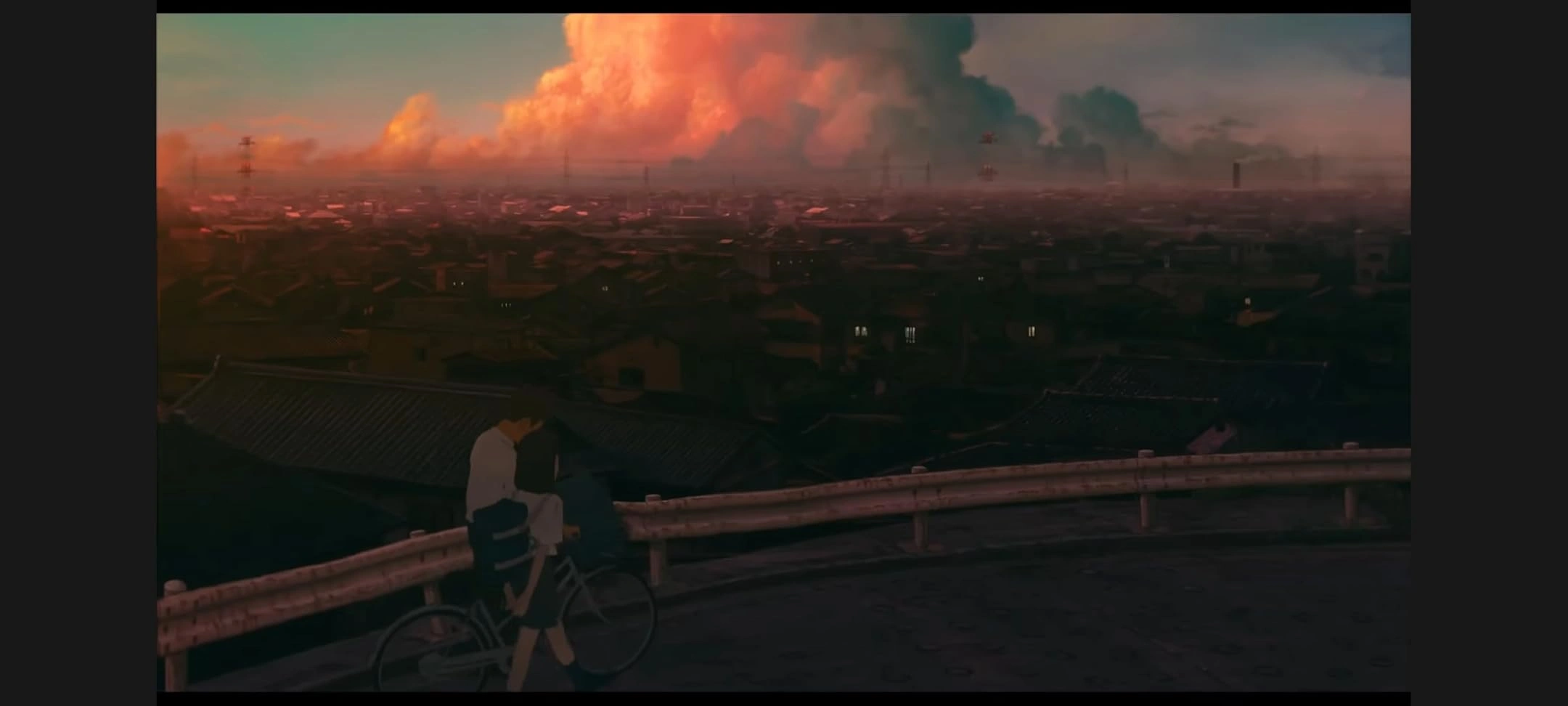
The environments are often richer than the people moving through them. Classrooms, concrete water channels, pylons, drains, apartments, rain-soaked streets, sunsets, flowers, and city lights hold memory like evidence left at a crime scene. Weather shifts with mood, and the passage of time is marked through small visual details rather than clumsy exposition. Reflections recur, reminding us that both boys keep seeing warped versions of themselves and each other.
The film’s motifs are simple yet effective: the game cartridge as a relic of friendship, Gyotaro’s yellow shirt as a visual anchor, the blood moon as an omen, rain on a taxi windshield as a tear the film refuses to call a tear. The imagined spaceship and alien imagery work best when they stay close to psychology, where fantasy becomes the shape of fear. The sound design and editing sharpen this effect through rhythmic montage and match cuts that bind childhood action to adult consequence.
We Are Aliens can be severe, and its late messaging sometimes presses too hard. Still, Kadowaki’s command of structure, visual atmosphere, and emotional cause-and-effect marks him as a filmmaker with a strong sense of how stories wound, echo, and refuse to end cleanly.
We Are Aliens premiered at the Cannes Film Festival’s Directors’ Fortnight on May 14, 2026, to critical acclaim for its striking, rotoscoped animation style. The psychological coming-of-age drama follows the fracturing friendship of two boys in rural Japan as playground rumors and adolescent anxieties drive them apart. Audiences can currently catch this groundbreaking cinematic piece at select international film festivals, including the Annecy International Film Festival, before its wider theatrical and streaming rollouts.
Full Credits
Title: We Are Aliens
Distributor: Charades, Dulac Distribution
Release date: May 14, 2026
Running time: 117 minutes
Director: Kohei Kadowaki
Writers: Kohei Kadowaki
Producers and Executive Producers: Emmanuel-Alain Raynal, Yuuri Shimojo, Kentaro Hayashi
Cast: Ryota Bando, Amane Okayama
Director of Photography (Cinematographer): Kohei Kadowaki
Editors: Kenichiro Tachikawa, Kohei Kadowaki
Composer: Yaffle
The Review
We Are Aliens
We Are Aliens is a visually striking, emotionally bruising animated drama about friendship, guilt, and the damage children can carry into adulthood. Kohei Kadowaki’s feature debut uses its split perspective with real purpose, turning a schoolyard fracture into a layered study of memory and blame. Its final act can press too hard, losing some of the quiet precision that makes the earlier sections so affecting. Still, its craft, structure, and sorrowful insight make it a memorable coming-of-age story.
PROS
- Strong two-perspective narrative structure
- Beautiful background animation and visual motifs
- Sharp handling of bullying, guilt, and alienation
- Emotionally convincing portrayal of childhood memory
- Effective use of editing, sound, and recurring imagery
CONS
- Final act becomes too blunt at points
- Some character animation may feel uncanny
- Late messaging weakens the earlier subtlety
- The bleak tone may feel heavy for some viewers