




















Matter of Time, directed by Jeremy Snead, approaches science fiction through a warm arcade cabinet rather than a cold laboratory. Its speculative device is simple: a ring that can pause time. Its moral device is simpler still: give an anxious dreamer power, then watch his better instincts begin to pixelate.
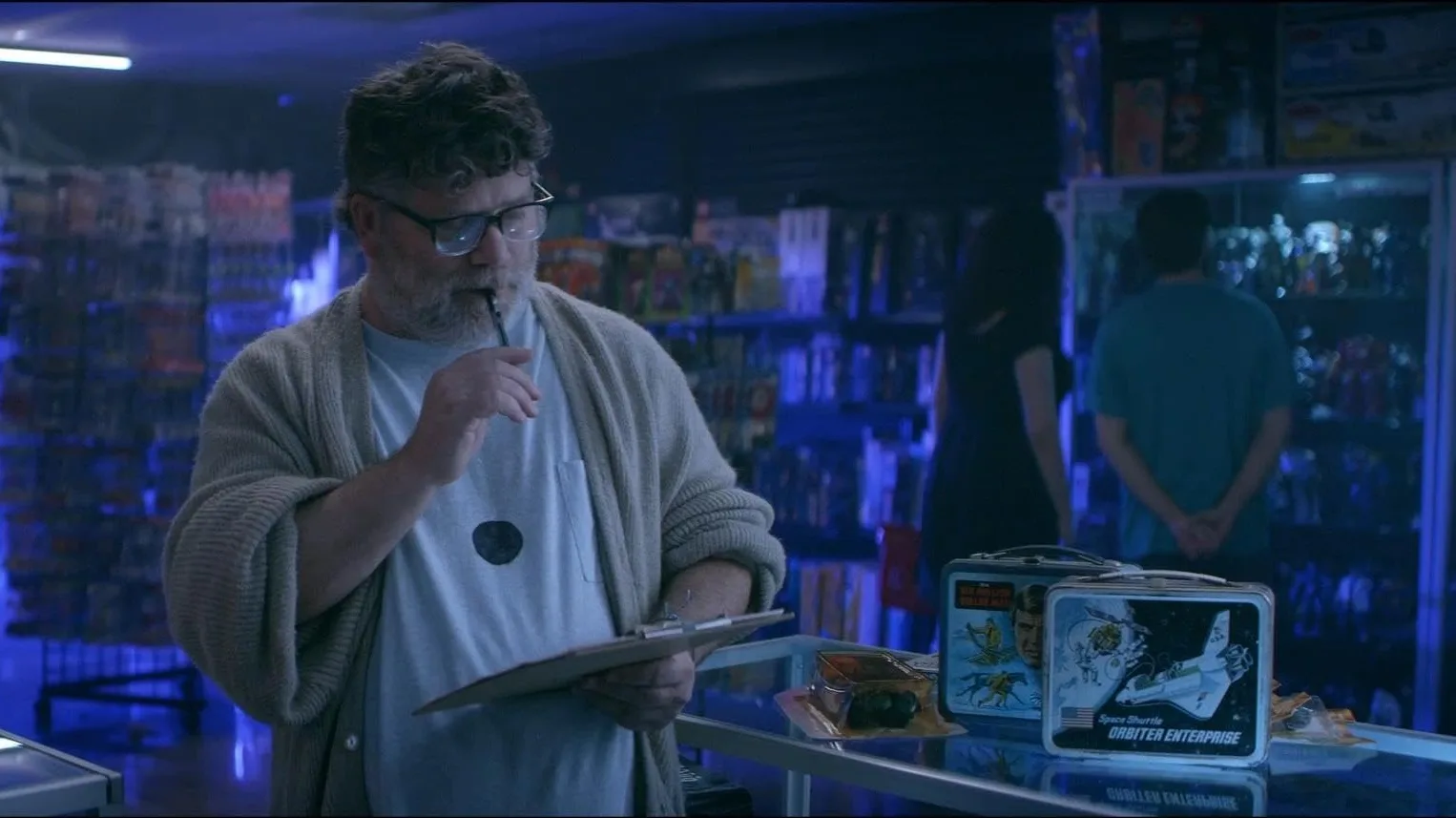
Charlie Fleck, played by Myles Erlick, is an aspiring video game designer trying to complete a project shaped by childhood encouragement and adult loss. His mother’s faith in him lingers as a kind of emotional backlight, while his present life is cluttered with delivery work, family worry, and professional pressure. Then comes Gibbs, Sean Astin’s toy shop sage, keeper of tabletop rituals and one very dangerous piece of jewelry. Charlie steals the ring, believing frozen time can rescue his dream.
The film wraps this theft in a family-friendly tone filled with comics chatter, gaming lore, Dungeons & Dragons camaraderie, and affectionate nerd shorthand. Under the soft lighting and playful surface sits a familiar question: how much of oneself can be excused in the name of creation? Charlie thinks he needs time. What he lacks is perspective. A common workplace issue, really, minus the magic ring.
Ambition as a Moral Glitch
Charlie wants to make a game that honors his mother and gives other people joy. That motivation matters because Matter of Time understands ambition as a sincere impulse before it curdles. The dream begins with generosity, then tightens into possession. A game first imagined through friendship becomes a private kingdom once Charlie gains control over time.
His pressures make the ring seductive. He has an ailing father, too many jobs, too little money, and a narrow chance to pitch his project under a punishing deadline. The film does not frame his temptation as villainy at first. It frames it as exhaustion. That makes his ethical slide easier to read: he steals hours, then trust, then creative ownership. Time stops around him, yet his character keeps moving in the wrong direction.
The ring’s mythology remains thin. Gibbs owns it, knows its rules, and warns Charlie, yet the object never develops the ominous density that great noir symbols possess. In a darker film, it might glow like a cursed cigarette ember in a rain-slick alley. Here, it mostly functions as a moral accelerator.
Gibbs supplies the counterweight. Astin gives him a gentle authority, the kind built from patience rather than force. His lesson is clear: survival comes through fellowship, not shortcuts. Charlie’s memories of his mother add tenderness, with soft-focus grief shaping the hero’s purpose. The repeated flashbacks, though, occasionally press the emotional button too firmly. The story’s destination is visible early, and the final movement follows a path worn smooth by many redemption tales.
Performers in the Game Room
Myles Erlick keeps Charlie watchable through behavior that could have made him unbearable. That is no small task. Charlie becomes selfish, evasive, and careless with the people who believe in him, yet Erlick preserves the nervous charm of someone who has confused creative hunger with moral permission. His face often carries the strained look of a man debugging his conscience and finding too many errors.
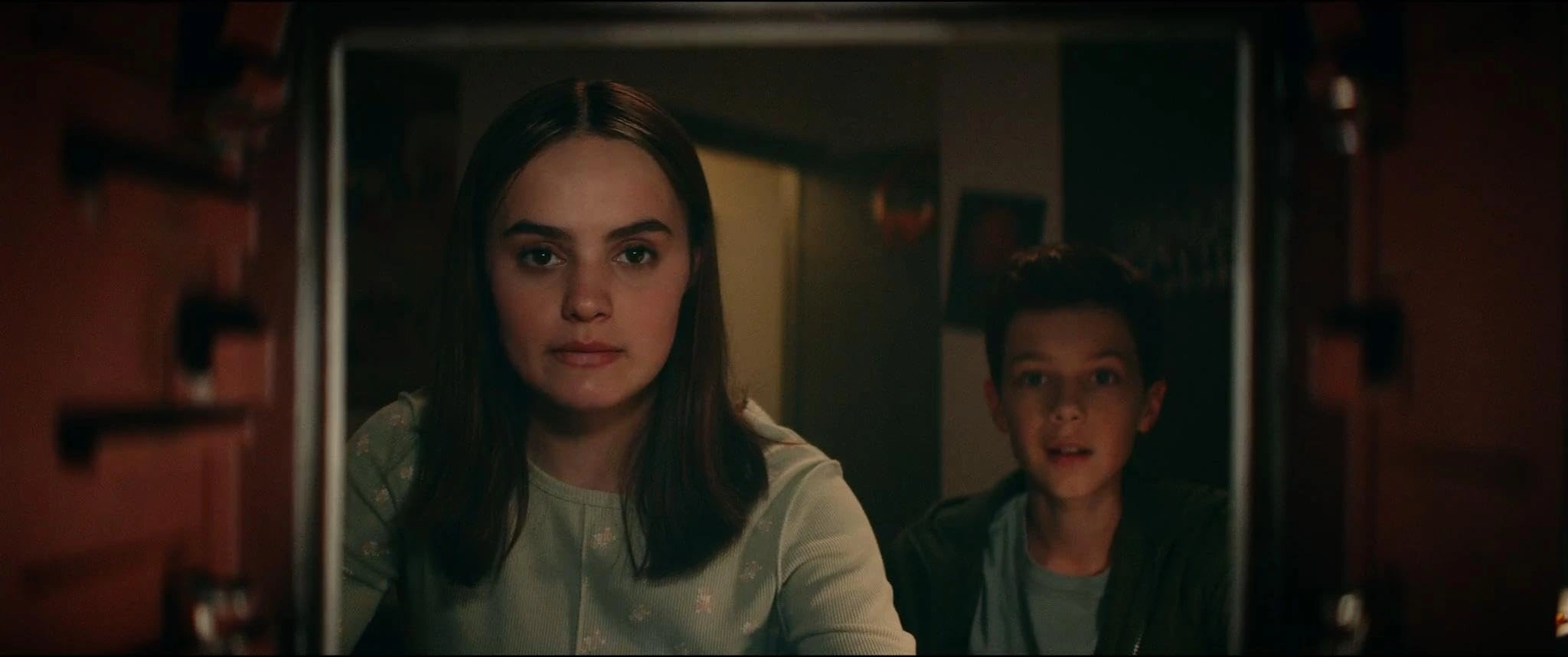
Ali Astin’s Bree serves as the film’s moral anchor and romantic figure. She brings warmth and quiet steadiness to a role that deserves sharper interiority. Bree often exists in relation to Charlie’s growth, which narrows the film’s portrait of gaming culture. The central group is heavily male and mostly white, leaving Bree as the lone major female presence in a world that could have felt wider, messier, and truer.
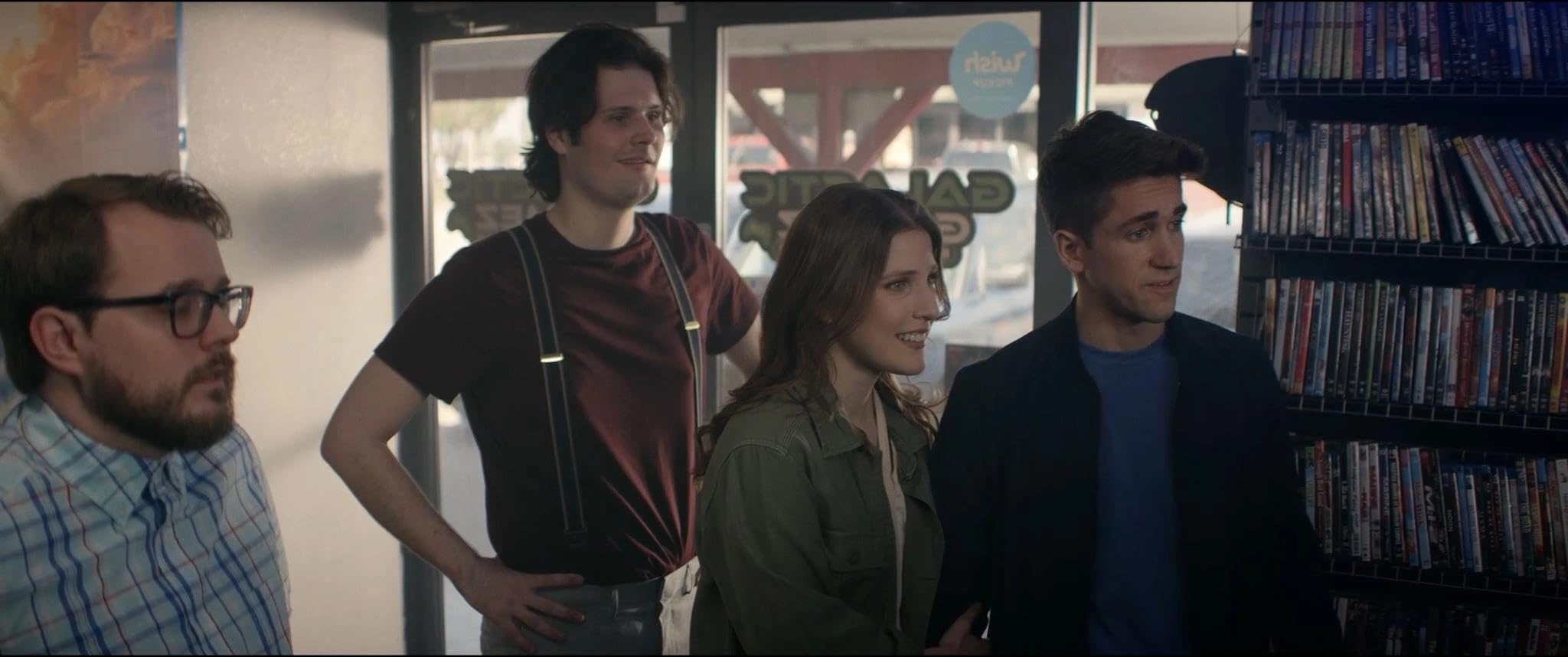
Patrick Britton’s Lucas gives the friend group its social pulse, while Quinn Angell’s Brian benefits from restraint. His quietness turns one key moment into a small release of pressure. Sean Astin, unsurprisingly, is the film’s strongest stabilizing presence. Gibbs could have been pure mentor iconography, all warmth and quotable wisdom, yet Astin gives him firmness beneath the kindness.
Jamie Alexander plays Miles Sugar with corporate cartoon voltage. His performance treats profit-first game culture like a boss battle with expensive shoes. It works. The humor leans on The Lord of the Rings, Marvel/DC arguments, tabletop banter, and recognizable geek rituals. Some jokes land with affection. Others feel a touch over-calibrated, as if the film keeps flashing its membership card at the door.
Pixel Transitions and Soft Sci-Fi Shadows
Jeremy Snead’s background in gaming documentaries gives Matter of Time its strongest texture. The toy shop, tabletop sessions, development talk, and fandom details carry an insider’s ease. The film knows the emotional architecture of hobby spaces: cluttered shelves, shared jokes, ritualized arguments, the sacred table where dice decide fate and grown adults pretend this is a reasonable way to spend a Thursday. It is, of course.
Visually, the film uses animated transitions, game-like graphics, montage passages, and in-film gameplay footage to energize the less cinematic act of making a video game. The footage has a modest quality, yet that modesty suits the scale of Charlie’s dream. Snead and the editors use these devices as connective tissue, moving between live action and creative imagination with enough rhythm to keep the design process from becoming people staring gravely at screens.
The time-stop concept is less hard sci-fi machinery than ethical lighting instrument. It casts Charlie’s choices in sharper relief. The paused world gives him the illusion of freedom, while the narrative uses that stillness to expose ego, fear, and avoidance. Noir has long loved characters who mistake control for innocence. Charlie belongs to their gentler cousinhood.
The film’s pacing is uneven. Early scenes with Gibbs and the group move with breezy confidence, helped by clean editing and light comic timing. Later, repeated flashbacks slow the pulse, and the climax arrives before the structure has spent all its runtime. The remaining stretch feels soft and predictable, sincere in feeling, thin in surprise. Still, Matter of Time remains a harmless, heartfelt gamer-friendly crowd-pleaser, carried by warmth, clear moral intent, and a belief that friendship is the rare cheat code worth keeping.
Matter of Time premiered in theaters on February 27, 2026. The independent sci-fi comedy drama follows Charlie Fleck, a struggling 29-year-old video game designer who receives a mysterious time-stopping device from an eccentric toy shop owner. Audiences can watch the feature film through major digital platforms, including Apple TV, Amazon Prime Video, and Google Play, where it is available for streaming and video-on-demand.
Where to Watch Matter of Time (2026) Online







Full Credits
Title: Matter of Time
Distributor: Mediajuice Studios, Panoramic Pictures
Release date: February 27, 2026
Rating: PG-13
Running time: 104 minutes
Director: Jeremy Snead
Writers: Zach Smith, Sean Wilkie, Jason Baumgardner, Jeremy Snead
Producers and Executive Producers: Jason Baumgardner, Ian Campbell, Jeremy Snead, Brett Womble
Cast: Sean Astin, Myles Erlick, Ali Astin, Jamie Alexander, Patrick Britton, Quinn Angell, Kevin Lawson, Alison Haislip
Director of Photography (Cinematographer): Chris Stacey
Editors: Evan Christensen, Brennan Ferguson
Composer: Ray Sharp
The Review
Matter of Time
Matter of Time is a warm, sincere sci-fi drama that uses its time-stopping ring less for spectacle and more for a clear moral study of ambition, friendship, and creative ego. Its story is predictable, and its mythology could be sharper, yet Sean Astin’s gentle presence, Myles Erlick’s likable lead work, and the film’s affectionate gaming-culture texture give it genuine charm.
PROS
- Strong Sean Astin performance
- Warm gaming-culture atmosphere
- Sincere themes of friendship and creative purpose
- Fun animated transitions and game footage
- Family-friendly tone
CONS
- Predictable story path
- Thin ring mythology
- Repeated flashbacks slow pacing
- Limited female representation
- Some nerd-culture jokes feel forced