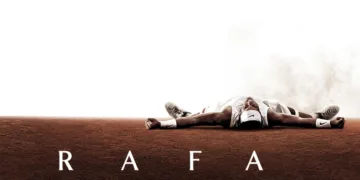


















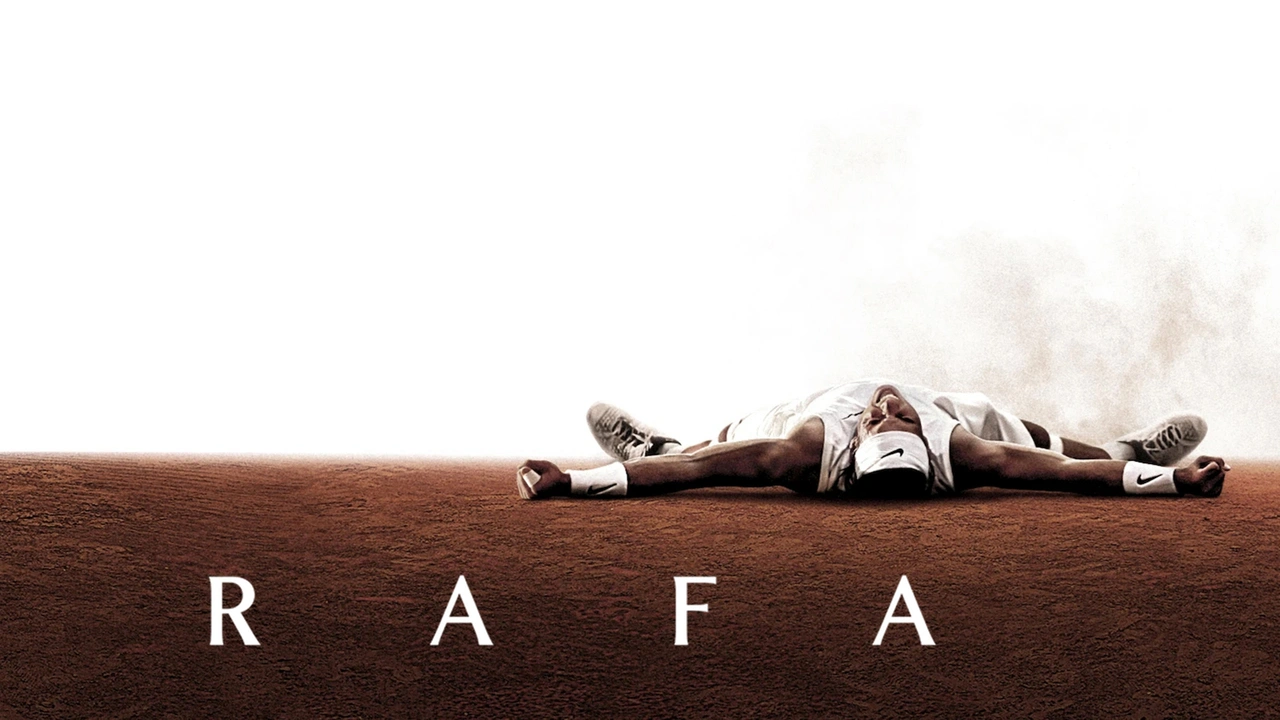

Rafa, Netflix’s four-part documentary about Rafael Nadal, arrives as a sports biography shaped by exhaustion, memory, and the uncomfortable price of excellence. Directed by Zach Heinzerling, the series follows Nadal during his 2024 attempt to return to the French Open, the clay-court kingdom where he won a staggering 14 titles.
Around that present-day struggle, the documentary builds a career portrait that moves from his Mallorca childhood to his teenage rise, his 2004 Davis Cup victory over Andy Roddick, his first French Open title in 2005, and the era-defining rivalries with Roger Federer and Novak Djokovic.
What makes Rafa engaging is its refusal to treat greatness as a clean inspirational arc. Nadal’s career is framed through discipline, pain, obsession, and bodily decline. The series has access to his home, locker room, medical appointments, family conversations, and private anxieties. That closeness gives the documentary its strongest charge. It shows the champion as a cultural figure produced by talent, family pressure, national pride, medical intervention, and a sports industry that keeps asking damaged bodies to give one final performance.
Streaming Sport And The Intimacy Machine
The structure of Rafa is built around two timelines. The first follows Nadal in the final phase of his career, training through uncertainty, receiving treatment, testing his body, and trying to decide if one last meaningful run at Roland-Garros is still possible. The second revisits the major stations of his career, tracing the boy from Mallorca who became a teenage force, then a 22-time Grand Slam champion whose clay-court dominance turned into sporting folklore.
This structure fits neatly into one of streaming television’s most visible trends: the prestige sports documentary as emotional access product. Platforms now sell proximity. Viewers are invited into locker rooms, treatment tables, family homes, and strategy meetings, receiving the illusion of being trusted with something private.
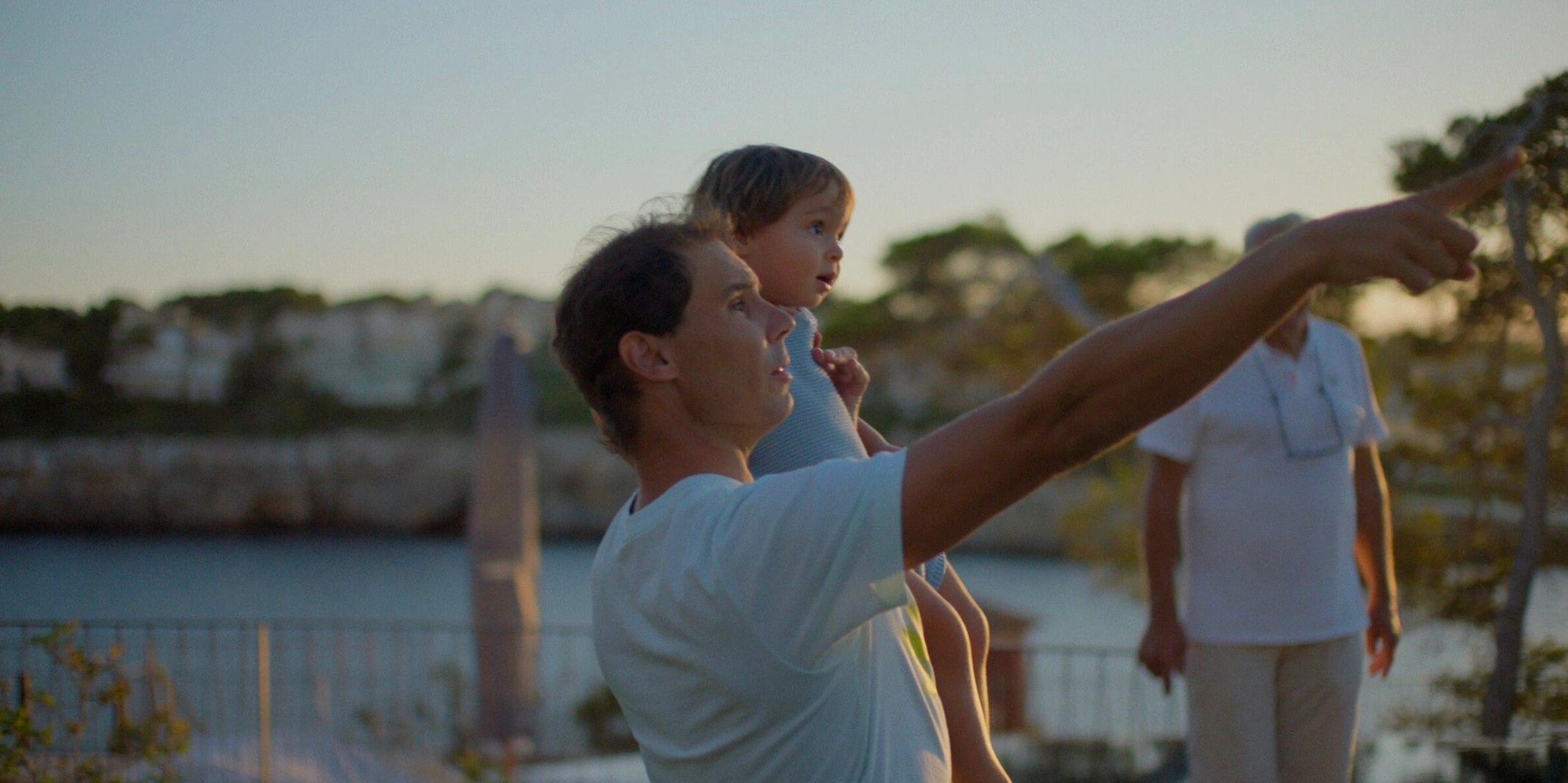
Rafa understands that appetite. The camera watches Nadal with his wife Mery, his son, his parents, coaches, doctors, and rivals. These scenes matter because they shift the story away from scoreboard mythology and toward the human infrastructure behind a champion.
Mery becomes especially important in this framing. She is presented less as a celebrity spouse than as a calm presence beside a man who has spent his adult life answering to pain, routine, and expectation. Her quiet steadiness gives the series an emotional counterweight to the grinding medical footage.
The problem is that access can become repetition. Across four hour-long episodes, Rafa returns again and again to treatment rooms, worried faces, scans, massages, and grim calculations. The heaviness has purpose, yet it can feel overstretched. Casual viewers may feel the series makes its point early, then keeps pressing on the bruise. Maybe that is appropriate for Nadal. His whole career was built on making the other person play one extra shot.
The Body As Archive
The most powerful subject in Rafa is not Nadal’s trophy cabinet. It is his body. The documentary treats his body as an archive of choices, injuries, adaptations, and consequences. After winning his first French Open in 2005, Nadal was diagnosed with Müller-Weiss syndrome, a rare foot condition that could have ended his career before his legend fully began. Orthotics allowed him to continue, yet they also altered the mechanics of his movement, helping create later problems in his knees, hips, and other areas.
This is where Rafa becomes sharper than a standard sports tribute. It asks viewers to look at athletic greatness as a transaction. The glory is real. So is the damage. Nadal’s use of anti-inflammatories across his career, along with the intestinal perforations he later suffered, gives the series a grim medical honesty. Tennis becomes less a graceful individual sport than a system of endurance management, where pain is delayed, masked, negotiated, and turned into content.
The contrast between young Nadal and older Nadal carries much of the emotional force. As a teenager, he appears explosive, muscular, instinctive, and almost feral in his movement. He looks like someone attacking the court rather than playing on it. By 2024, he is cautious and haunted, aware that a stretch, sprint, or awkward landing could undo months of work.
There is a social reading here that the series invites without always naming directly. Nadal’s image was built around heroic suffering, a model of masculinity where silence, repetition, and punishment become virtues. He chased every ball, fought through agony, and made endurance feel noble. Rafa lets us admire that will while also asking what kind of culture celebrates a person for refusing to stop hurting himself.
Family, Control, And The Mystery Of Obsession
The documentary’s treatment of Nadal’s psychology is honest, though sometimes limited by its own closeness to him. It addresses his anxiety, his visible on-court routines, and the tics that became part of his public image. Rather than reducing them to charming quirks, the series frames them as attempts to manage pressure and regain control inside an environment built on repetition, isolation, and public judgment.
Uncle Toni stands as one of the most complicated figures in Rafa. He coached Nadal from childhood and helped shape the mental hardness that became central to his career. His training philosophy treated suffering as education. That approach produced extraordinary results, yet the series leaves enough discomfort in the frame to raise necessary questions. How much pressure can be justified by success? At what point does discipline become emotional burden? The entertainment industry loves a tough mentor story, largely because it gets to enjoy the trophies without paying for the therapy.
The family material gives the documentary cultural depth. Nadal’s greatness is shown as personal, familial, and collective. His parents, wife, coaches, doctors, and team all orbit the demands of one exceptional career. That dynamic reflects a wider truth about elite achievement: individual genius often depends on invisible emotional labor from others.
Still, Rafa does not fully unlock its subject. It shows what Nadal achieved, what he endured, and what he lost to keep competing. The deeper source of his need to continue remains partly hidden. That gap is frustrating, yet it also feels fitting. The series leaves Nadal as a guarded man standing between identity and absence, facing the strange silence that waits after the applause fades.
Rafa is a four-part Netflix documentary series about Rafael Nadal, one of the most decorated tennis players in history. The series premiered globally on Netflix on May 29, 2026, and follows Nadal through the final stretch of his career while revisiting the defining moments that shaped his rise, rivalries, injuries, and legacy. Directed by Zach Heinzerling and produced by Skydance Sports, the documentary features access to Nadal’s personal life, unseen archive footage, and interviews with key figures from his career. You can watch Rafa on Netflix.
Where to Watch Rafa Online


Full Credits
- Title: Rafa
- Distributor: Netflix
- Release date: May 29, 2026
- Rating: TV-MA, 13+
- Running time: 60 minutes per episode, 4 episodes
- Director: Zach Heinzerling
- Writers: Zach Heinzerling
- Producers and Executive Producers: David Ellison, Jesse Sisgold, Jason Reed, Jon Weinbach, Zach Heinzerling, Dan Marks, Benito Perez-Barbadillo, Andrew Helms, Connie Honeycutt, Timothy Moran
- Cast: Rafael Nadal, Roger Federer, Novak Djokovic, John McEnroe, Mar Clapes
- Director of Photography: Zach Heinzerling, Adam Uhl
- Editors: Drew Blatman, Derek Doneen, Diane Grandchamp, Kate Hackett, Jim Hession, Federico Rosenzvit, Seth Skundrick
- Composer: Martin Crane
The Review
Rafa
Rafa is an intimate, sometimes heavy sports documentary that finds its strongest material in the tension between greatness and self-destruction. Its access to Rafael Nadal’s family, team, injuries, and retirement struggle gives the series real emotional weight, though its four-part structure can feel stretched. The result is a thoughtful portrait of a champion whose body became both his weapon and his debt.
PROS
- Rare access to Nadal’s private life, training, and medical struggles
- Strong focus on the physical cost of elite sport
- Moving scenes with his wife, family, team, and coaches
- Smart use of past and present timelines
- Honest treatment of anxiety, aging, and retirement
CONS
- Four episodes can feel too long
- Some injury-focused sections become repetitive
- The series could explore Nadal’s psychology with greater depth
- Casual viewers may find the pacing slow
- Uncle Toni’s influence deserves a sharper examination