










![Kingdom Hearts Collection [I-III] Review](https://gazettely.com/wp-content/uploads/2026/10/Kingdom-Hearts-Collection-I-III-1-360x180.webp "Kingdom Hearts Collection [I-III] Review: KHII Holds Steady as Newer Entries Fluctuate 37")



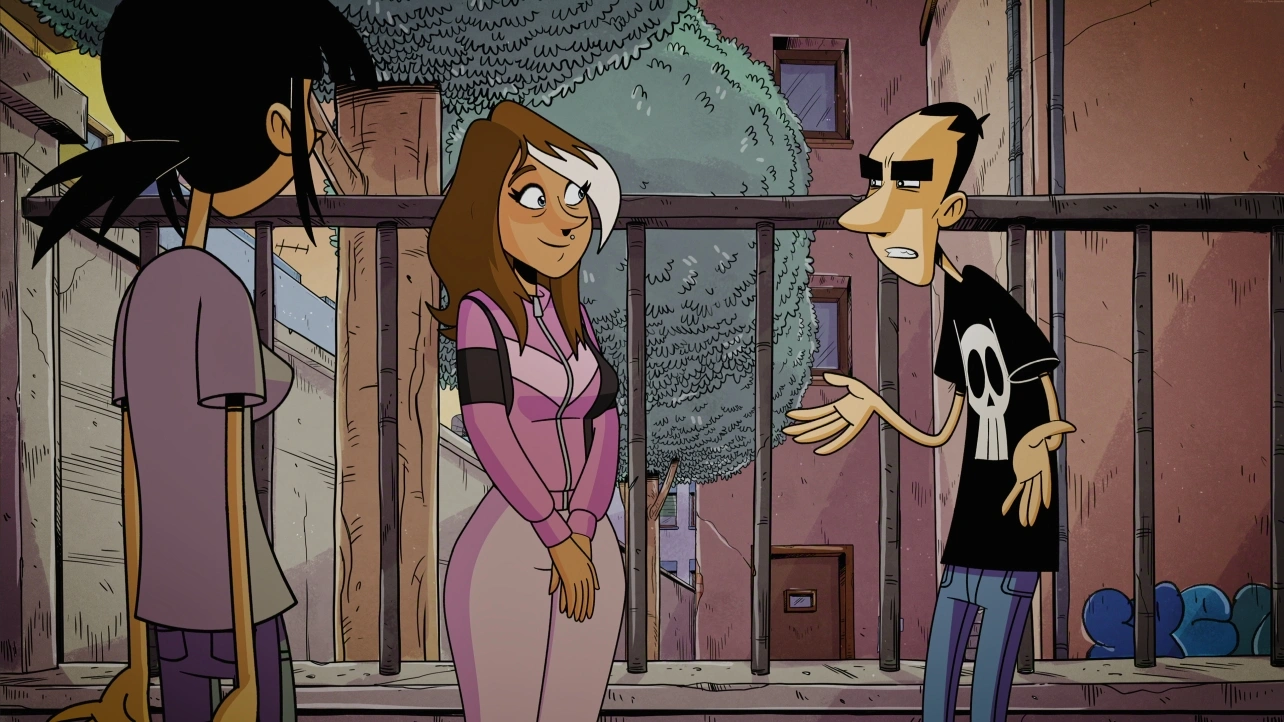

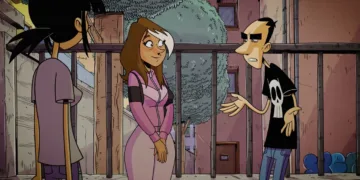
My Two Cents, also known by its original title Due spicci, brings Zerocalcare’s animated world back to Netflix with a story that feels frantic, wounded, and strangely tender. The series follows Zero, the cartoonist’s fictional alter ego, as he tries to survive the usual storm inside his head while life outside demands actual decisions. His conscience still appears as the giant Armadillo voiced by Valerio Mastandrea, a creature of scorn, panic, and reluctant wisdom. Zerocalcare, meanwhile, voices nearly everyone else, turning the show into a restless one-man chorus of anxiety.
The premise is deceptively modest. Zero has invested in a small cafe/bar run by his childhood friend Cinghiale, or Wild Boar. Soon, money starts disappearing, old fears return, and a childhood bully named Moody appears near the edges of the problem like a shadow from a worse time. Then Sarah asks Zero to shelter Smeralda, his former high school girlfriend, who is fleeing an abusive relationship. From there, the series becomes a knot of friendship, guilt, debt, love, fear, and postponed adulthood, all rooted in the streets and memory banks of Rome’s periphery.
Debt, Friendship, and the End of Postponement
The sharpest idea in My Two Cents is debt. Money gives the story its visible shape, since Cinghiale’s failing business keeps pulling Zero closer to danger and responsibility. The deeper debts are emotional. Zero owes honesty to his friend, care to Smeralda, courage to himself, and perhaps a little mercy to the younger version of him that never learned how to speak without turning pain into a joke.
Cinghiale’s cafe/bar works as a fragile symbol of a generation trying to build something stable from unstable materials. It is a business, a hangout, a memory site, and a warning sign. Zero sees the missing money and senses that Cinghiale is slipping into trouble, yet direct confrontation feels almost physically impossible to him. This is one of the series’ most accurate emotional observations: some people can identify disaster with forensic precision and still freeze before the first difficult sentence.
Smeralda’s arrival pushes the show into darker territory. Her abusive relationship is treated as a source of real threat, rather than a plot device used for easy seriousness. For Zero, her presence carries the ache of unfinished youth. He never fully left her behind, yet the series refuses to romanticize that wound. Helping her means dealing with present danger, not polishing old fantasies.
The show’s portrait of adulthood is unsentimental. Its characters have reached an age where delay has consequences. The future they expected never arrived with the promised stability, and the old tools of survival, jokes, avoidance, frantic chatter, begin to look painfully inadequate. My Two Cents understands middle age as a place where old promises come due.
Comedy at the Speed of Panic
Zerocalcare’s storytelling has always moved like a mind trying to outrun itself. My Two Cents preserves that rhythm. Zero’s thoughts ricochet through flashbacks, pop references, fourth-wall breaks, surreal metaphors, childhood humiliations, and furious debates with the Armadillo. A simple conversation can turn into an animated lecture, a memory detour, a visual gag, and a miniature philosophical breakdown before circling back to the original point.
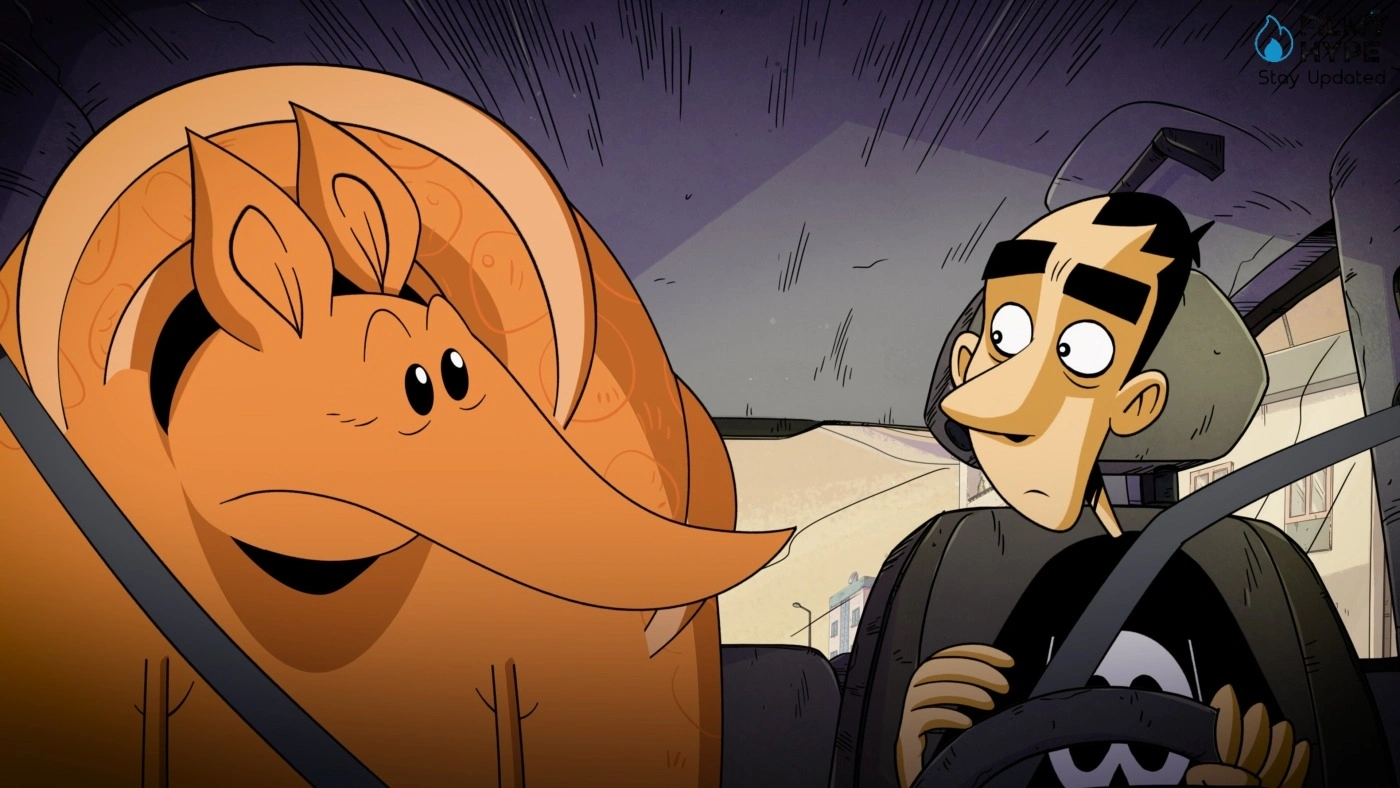
The humor works best when it springs from embarrassment and social dread. Zero can stretch a single anxious thought into a comic set piece, then puncture it with a phrase that lands much closer to grief than laughter. The show’s crude jokes and nerdy references never feel decorative, since they come from a mind trained to convert fear into performance. Comedy becomes both shield and symptom.
There are moments where the rhythm tests patience. Some gags run past their strongest beat, and the longer episodes can feel swollen by over-explanation. The series sometimes mistakes velocity for precision, especially when Zero’s narration keeps unpacking what the image has already made clear. Yet the excess is also part of the texture. This is a show about a man who cannot stop talking because silence might make the truth audible.
For newcomers, My Two Cents is surprisingly open. Prior knowledge of Zerocalcare’s earlier Netflix series helps, especially with the emotional shorthand around Zero, Sarah, Secco, Cinghiale, and the Armadillo. Still, the show offers enough context to stand on its own. Its real barrier is stylistic: viewers who prefer clean plotting may struggle with its digressive energy. Those willing to follow its mental weather will find a series with rare comic nerve and bruised sincerity.
Rome as Memory, Animation as Anxiety
The animation in My Two Cents remains deliberately rough, elastic, and expressive. It has the feel of a graphic novel shaken awake, with characters and images bending to match Zero’s emotional temperature. The series is less interested in polished beauty than in psychological accuracy. Anxiety becomes a shape. Guilt becomes a visual interruption. Memory arrives with its own texture, sometimes comic, sometimes spectral.
The visual language feels richer here, particularly in the handling of pauses and quieter exchanges. Zerocalcare’s world still thrives on exaggeration, sudden stylistic shifts, literal metaphors, and absurd images, yet the series gives greater weight to stillness. A look, a street corner, or a silence between two characters can carry as much force as a joke. This restraint gives the heavier scenes room to breathe.
Rome, especially Rebibbia and the surrounding periphery, is vital to the show’s identity. The neighborhood is no postcard backdrop. It is an emotional archive of friendships, class pressure, political memory, humiliation, and loyalty. Bars, alleys, apartments, and ordinary streets hold traces of past selves. The city seems to remember things the characters would rather misplace.
The voice work deepens that intimacy. Zerocalcare voicing most of the cast gives the series a peculiar unity, as if every character has passed through Zero’s nervous system before reaching the screen. Valerio Mastandrea’s Armadillo remains indispensable, a conscience with claws, wit, and generational fatigue. Together, they give My Two Cents its defining sound: funny, breathless, irritated, compassionate, and quietly devastated.
At its strongest, the series lets comedy and sorrow share the same room. A joke lands, and the pain underneath does not leave. That is where My Two Cents finds its most honest register, in the messy space where growing older means laughing without pretending the bruise has faded.
My Two Cents, also known by its original Italian title Due spicci and listed on Netflix as My 2 Cents, premiered on Netflix on May 27, 2026. Created, written, and directed by Italian cartoonist Zerocalcare, the animated limited series follows Zero and Cinghiale as their neighborhood hangout comes under pressure from money problems, personal chaos, and unresolved responsibilities. The series consists of eight episodes and is available to watch on Netflix.
Full Credits
- Title: My Two Cents, Due spicci, My 2 Cents
- Distributor: Netflix
- Release date: May 27, 2026
- Rating: TV-MA
- Running time: 8 episodes, 24 to 52 minutes per episode
- Director: Zerocalcare
- Writers: Zerocalcare
- Producers and Executive Producers: Movimenti Production, Doghead Productions, BAO Publishing, Banijay Kids & Family
- Cast: Zerocalcare, Valerio Mastandrea
- Director of Photography: Animation
- Composer: Giancane, Coez
The Review
My Two Cents
My Two Cents is a frantic, funny, and emotionally bruised animated series that turns adult anxiety into sharp cultural comedy. Its digressive style can stretch some jokes past their best point, yet its portrait of friendship, debt, guilt, and delayed responsibility gives the chaos real force. Zerocalcare’s voice work and Valerio Mastandrea’s Armadillo keep the series restless, human, and painfully funny.
PROS
- Sharp, emotionally honest writing
- Strong mix of comedy and melancholy
- Expressive graphic-novel-style animation
- Memorable use of Rome’s periphery
- Excellent Armadillo voice work by Valerio Mastandrea
- Accessible enough for newcomers
CONS
- Some jokes run too long
- Heavy narration may overwhelm some viewers
- Pacing can feel uneven in longer episodes
- The digressive structure may frustrate viewers who prefer direct storytelling