




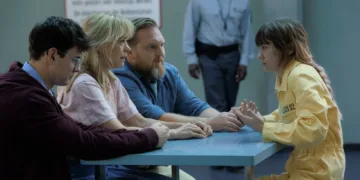





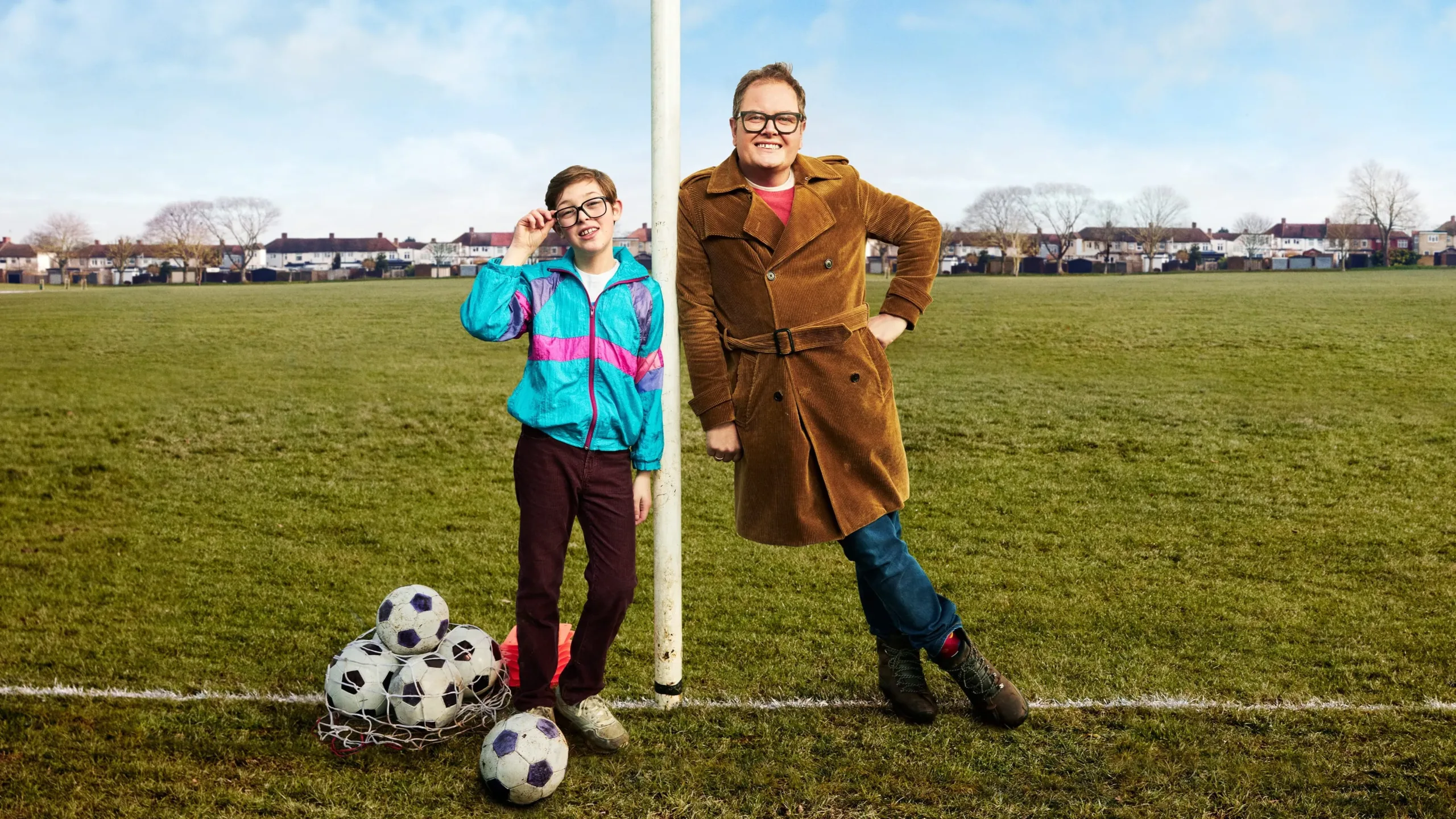

Changing Ends returns for its second season and settles back into its role as a sharp, semi-autobiographical comedy memoir shaped from Alan Carr’s childhood. The show plants itself firmly in 1980s Northampton, where a sensitive, camp, football-indifferent boy grows up under the roof of the man who manages the local club, the Cobblers.
After a successful first run, this batch of episodes keeps the same skeleton and the same breezy comic tone that worked the first time. The season again tracks young Alan through the lurches and small victories of adolescence, with a mind that strays toward murder mysteries and away from tactical drills and square back fours. The series opens the door to the Carr household once again and continues the story of a child trying to juggle family expectations and an emerging sense of self.
The Power of the Ensemble
Much of the show’s strength sits with its casting, and in particular with Oliver Savell as young Alan Carr. Savell gives a sharply observed performance that mirrors Carr’s familiar mannerisms and vocal rhythms with striking precision. The portrayal feels immediately believable because he locates the comedian’s energy and plays it without strain.
He handles broad physical gags, including mishaps with goalie gloves and chaos on a family caravan trip, while also finding the quieter notes required when Alan faces school bullies. Scenes lose a degree of spark when Savell is not present, which underlines how firmly he holds the material together.
A solid central group surrounds him. Shaun Dooley and Nancy Sullivan play Alan’s parents with clear affection and work as a nicely tuned double act. They act as a slightly puzzled anchor for Alan’s flair and eccentric turns. Across these episodes, each parent receives a defined arc: Dad faces the strain of league management, while Mum weighs up a return to paid work.
The secondary characters add further shape to this family portrait. Dotty Davies returns as Kay, Alan’s loyal and brainy friend, and their gentle, mismatched partnership stabilises Alan’s dramatic impulses. Taylor Fay, as younger brother Gary, proves very effective, saying almost nothing while delivering sharp, deadpan reactions. Recurring neighbour Ange, often sharp-tongued and petty, completes the line-up of more caricatured figures.
Nostalgia, Specificity, and Sitcom Mechanics
Changing Ends plays as bright, straightforward sitcom comedy and positions itself as a corrective to recent, heavily sentimental shows. The writing favours punchy back-and-forth exchanges and quick comedic escalation.
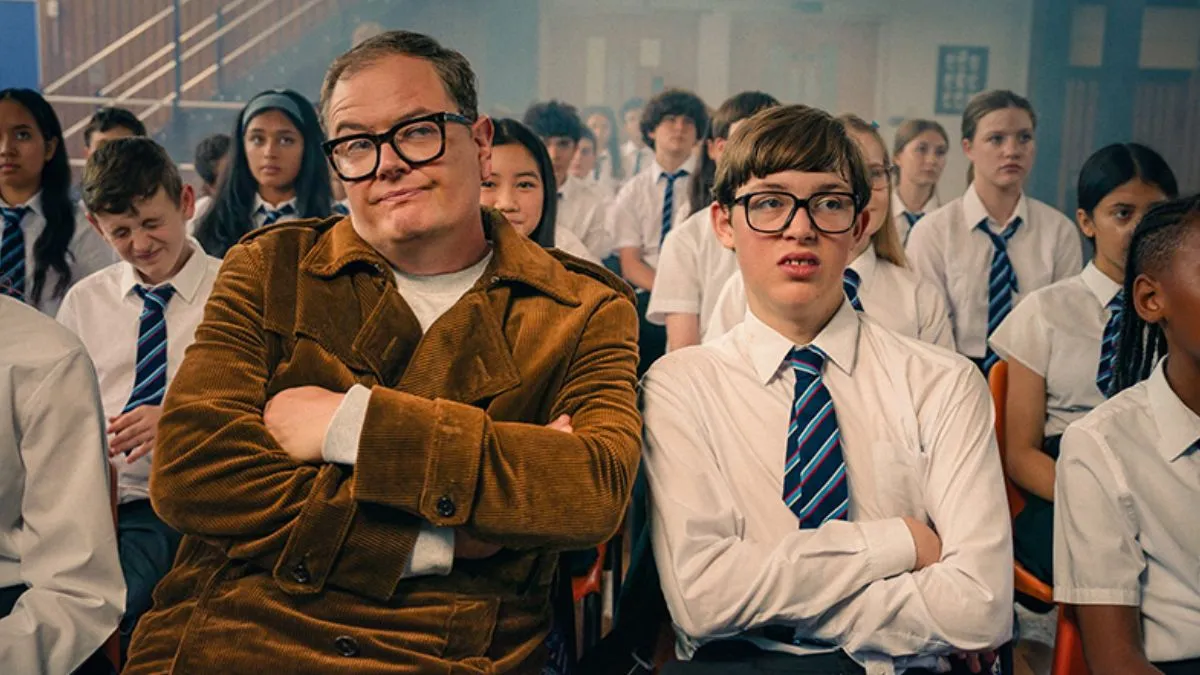
The season builds its episodes around familiar adolescent milestones: Alan’s ill-fated 12th birthday party, his clumsy attempt to sneak into the age-restricted Platoon screening to impress classmates, and a cramped caravan holiday that tests family patience. The pace aims for brisk comic rhythm.
Within that light design, the narrative still registers the difficulty faced by a sensitive, camp boy growing up in a less tolerant period. The scripts acknowledge that hurt, then keep returning to jokes and steering away from sustained drama.
Period detail keeps pulling the viewer into the 1980s, with carefully chosen references to Findus Crispy Pancakes, Battenberg cake and Saturday afternoon wrestling on television. These touches create a specific nostalgic frame, while the situations themselves, from anxious attempts to blend in at school to the familiar tension of a packed family holiday, stay easily recognisable for different generations.
Sticking to a Winning Formation
The second season’s shape reflects a high level of confidence in the existing template. The decision to hold close to the successful first-season formula gives the show a steady rhythm. Episodes keep to a clear, self-contained structure, with stories built around incidents like Alan’s crush on his optician or his attempt to play detective during his birthday party.
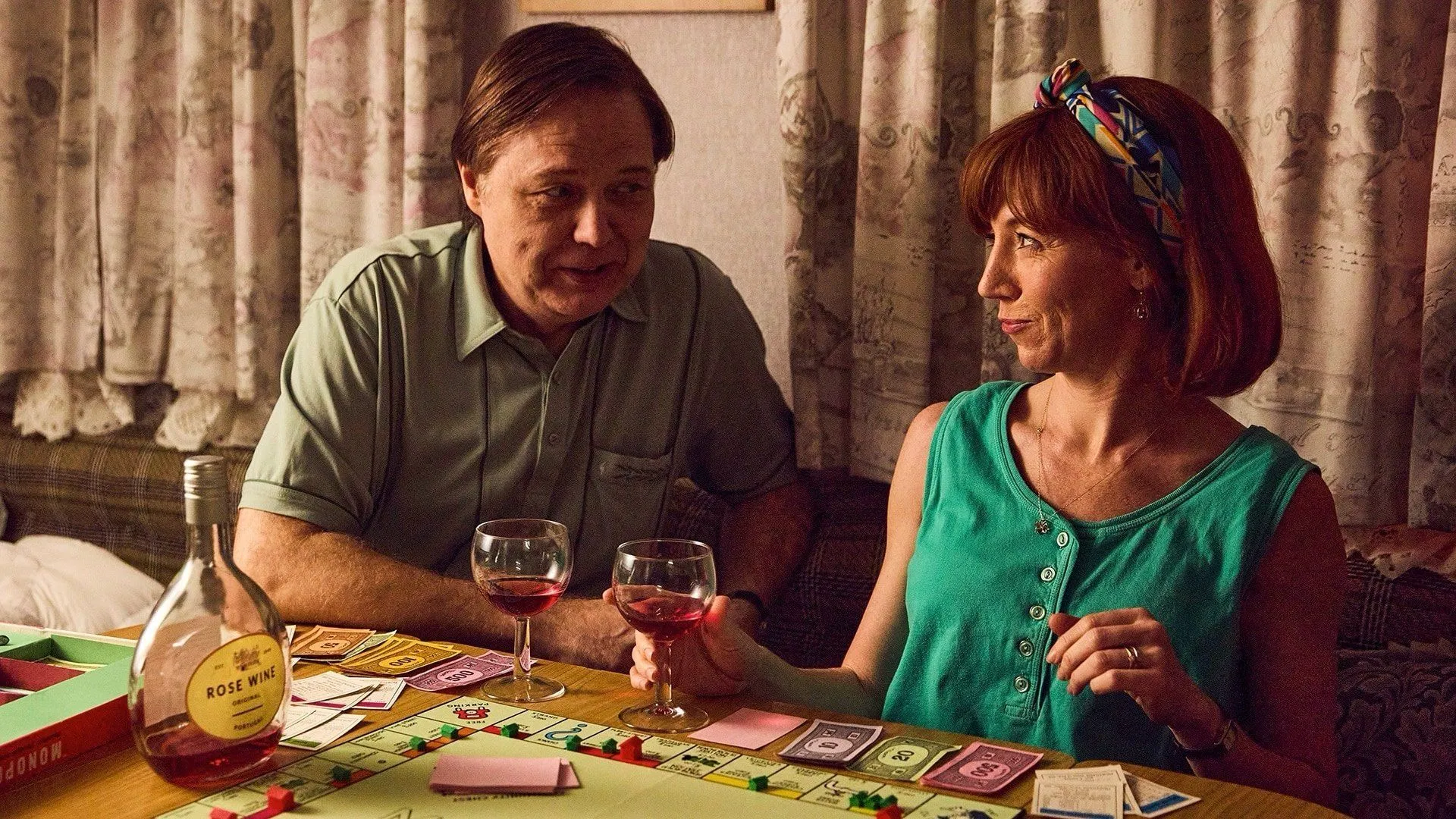
This approach gives space for the surrounding characters to grow. Alan’s mother discovers fresh independence and pushes back against her initial job description once she re-enters the workplace. At the same time, Alan’s father begins to face the reality of his son’s identity, which marks a meaningful stage in their developing relationship.
The caravan trip, a familiar piece of British family life, frames Alan’s meeting with Neville, a boy whose intelligence and eccentric tastes mirror his own and help him understand himself more clearly. The run keeps a consistent pace, and the episode built around Alan’s grandma, played by Maggie Steed, relaxes the tempo and introduces a slightly different tone from the show’s usual rhythm.
Poignancy and the Future of the Story
Production on Season 2 took place in the shadow of co-creator Simon Carlyle’s death, and the closing stretch carries a quiet sense of loss. The grandma episode, with its more contained domestic focus, can be read as a gentle nod to Carlyle’s earlier work on Two Doors Down. The show continues to act as a source of lightness and warm silliness within current television.
Oliver Savell’s performance stays central to that effect and remains the main reason to keep returning to the series, with his work here suggesting strong prospects ahead. The show pins down a specific slice of time and the mood of a formative adolescence with care. The writing leaves a strong desire to see young Alan’s story progress further, powered by the calibre of the cast and the genuine warmth that runs through the series.
Changing Ends is a semi-autobiographical British comedy series based on the childhood of popular comedian Alan Carr. The series is set in 1980s Northampton and recounts young Alan’s struggles with fitting in as a camp, sensitive boy whose father, Graham Carr, was the manager of the local Fourth Division football team. The second season premiered on ITVX as a boxset on July 13, 2024, before being broadcast on ITV1. All episodes of the second series are available to stream on ITVX.
Full Credits
Title: Changing Ends Season 2
Distributor: ITVX (UK) / ITV1 (UK broadcast)
Release date: July 13, 2024
Rating: TV-PG
Running time: Approximately 22 minutes per episode (6 episodes in Season 2)
Director: Dave Lambert
Writers: Alan Carr, Gabby Best, Simon Carlyle (co-creator of the series, deceased)
Producers and Executive Producers: Alan Carr, Simon Carlyle, Dave Lambert, Tom Beattie
Cast: Oliver Savell, Alan Carr, Shaun Dooley, Nancy Sullivan, Taylor Fay, Rourke Mooney, Gabby Best, Harry Peacock, Cariad Lloyd, Dotty Davies, Maggie Steed, Colin Salmon
Director of Photography (Cinematographer): Tim Palmer
Editors: Joe Randall-Cutler
Composer: H. Scott Salinas
The Review
Changing Ends Season 2
Verdict: Changing Ends Season 2 successfully holds onto the genuine warmth and precise humor established in its debut. Anchored by Oliver Savell's exceptional performance, the series delivers consistently cheerful, well-paced sitcom storytelling. It balances playful 1980s nostalgia with the universal struggles of finding one's identity. The season reaffirms the show's value as a heartfelt look at adolescence and family dynamics, successfully continuing its winning formula.
PROS
- An outstanding, magnetic portrayal of young Alan Carr that carries the core of the show.
- Focuses on clear, cheerful comedy that avoids excessive sentimentality.
- Excellent, well-developed supporting roles, particularly the parents, who are given meaningful individual story arcs.
- Uses specific 1980s period details to enhance the setting without becoming overly reliant on cliché callbacks.
CONS
- Some moments, such as the episode focused on the grandmother, slightly slow the overall quick comedic rhythm.
- The season adheres closely to the success of Season 1, offering little structural novelty or major deviation from the established episodic rhythm.
- While handled lightly, the depiction of adolescent bullying can feel tough, even if necessary to the character's story.