





















Citizen Sleuth, directed by Chris Kasick, presents a clear-eyed documentary portrait of the contemporary true crime podcast world. The film introduces Emily Nestor, a young and charismatic West Virginian who launched the popular podcast “Mile Marker 181.” Her show examines the 2011 death of Jaleayah Davis in Marietta, Ohio, a case officially classified as an accident yet surrounded by persistent community rumors of a cover-up and foul play.
Kasick establishes the documentary’s purpose early. The film gradually sets the cold case aside and concentrates on Nestor’s rapid rise, tracing how her enthusiasm feeds a growing public profile. Nestor has no formal investigative training and shapes herself after fictional figures like Clarice Starling, leaning on zeal and approachability in place of professional discipline. The documentary borrows the genre’s familiar moody music and tense editing rhythms, which creates an engaging and often darkly comic tone while it examines the culture that made her podcast possible.
The Performance of Passion
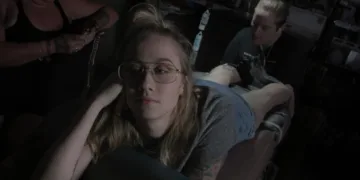
Emily Nestor’s persona anchors the film’s first half. She appears as a raw, self-aware figure who still slips easily into the clichés of the true crime obsessive, complete with a DIY home studio and tattoos inspired by her passion. This presentation gives her an immediate presence that feels accessible to listeners.
Her initial motivation reads as altruistic, a desire to secure justice for Davis that grows from suspicions about details such as the placement of the victim’s clothing and the location of the car. That sincere pursuit of truth runs alongside methods that show a pronounced lack of journalistic limits or systematic training.
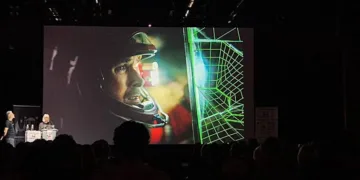
The rapid success of “Mile Marker 181” ties Nestor’s personal mission to new professional opportunities. Her talent for constructing a story and sustaining suspense attracts a devoted cult audience, which in turn leads to convention invitations, merchandise, and the freedom to leave her former waitressing job.
The documentary organizes this rise as a source of narrative strain. Kasick plants early structural warning signs, from an overly playful score to scenes that highlight Nestor’s poor judgment when she dwells on irrelevant, personal details about the victim for dramatic effect. These choices prepare the ground for a character arc that moves toward self-reckoning.
The Problem of Solved Mysteries
The film’s key structural turning point arrives with Nestor’s interview of Paul Holes, a respected professional investigator. Holes applies a careful, evidence-based reading of the case that steadily dismantles the central murder and cover-up theories that fuel “Mile Marker 181,” and his assessment strongly suggests that the original accident ruling holds.

This professional intervention generates immediate narrative tension. Nestor’s search for a definitive answer collides with the economic logic of her successful show, which relies on a persistent sense of mystery to keep listeners engaged and sponsorship revenue flowing. The documentary isolates a central ethical problem: a podcaster struggles to maintain distance and fairness when income depends on a story that never fully resolves.
Kasick then makes the documentary apparatus part of the story. The crew addresses Nestor directly and asks pointed questions about her ethical crisis, so the filmmakers’ presence becomes one of the pressures shaping her decisions. That scrutiny leads into the reluctant decision to end the podcast and remove all existing episodes. The closing image of Nestor having her true crime tattoo removed brings the narrative thread to a clear stop and marks a literal shedding of her previous identity. The film’s investigation shifts away from the specifics of a single case and turns toward the personal cost of packaging grief and suspicion as entertainment.
A Structural Critique of an Industry
Citizen Sleuth functions as a structural critique of the wider true crime ecosystem. The documentary expands beyond Nestor’s individual story and examines the blurred and often troubling space between journalistic reporting and entertainment-driven exploitation. One of Kasick’s key structural devices involves interviews with people who were suspects or otherwise connected to the original case yet declined to appear on Nestor’s podcast. Their presence provides a sober counterweight to the buzz of amateur investigation and keeps the film rooted in the difficult reality faced by those touched by the death and by the attention that followed.
Kasick’s directorial approach remains self-aware and carefully calibrated. He avoids outright mockery, while the film’s construction quietly undercuts its subject by using the visual language of true crime to reveal the shaky footing beneath it. That meta angle asks the audience to consider their own role as consumers of these narratives. The documentary’s sense of urgency comes from its examination of a booming, low-barrier-to-entry industry. Citizen Sleuth calls on content creators and audiences to think carefully about the consequences of turning real tragedies into performative, profitable media.
The documentary Citizen Sleuth follows true crime podcaster Emily Nestor and her hit show “Mile Marker 181” as she investigates the mysterious death of Jaleayah Davis. Chronicling Nestor’s rise and fall in the new media landscape, the film premiered at the SXSW Film Festival in March 2023. While the film has been screening on the festival circuit since 2023, its domestic release date from Dark Sky Films is listed as November 14, 2025. It is a sharp, self-aware film that turns the true crime genre inside out, questioning the collision of obsession, entertainment, and ethics in the age of the amateur detective.
Credits
Title: Citizen Sleuth
Distributor: Dark Sky Films
Release date: November 14, 2025 (Domestic), Premiered at SXSW Film Festival in March 2023
Running time: 82 minutes (1 hour 22 minutes)
Director: Chris Kasick
Writers: Chris Kasick
Producers and Executive Producers: Chris Kasick, Tyler Davidson, Fabiola Muñoz Washburn, Drew Sykes, Jared Washburn, Mike Mannino, Kimberley Hassett, Jason Kohn, Kevin Flanigan, Dexter Braff
Cast: Emily Nestor, Roger Nolan, Nancy Grace, Paul Holes, Jared Washburn
Director of Photography (Cinematographer): Jared Washburn
Editors: Mike Mannino, Kimberley Hassett, Jason Kohn, Kevin Flanigan, Dexter Braff
Composer: Nathan Ruyle
The Review
Citizen Sleuth
This is a compelling and timely documentary. Citizen Sleuth expertly uses its subject's complex journey as a vehicle for a broader, sophisticated critique of the true crime industrial complex. It is a necessary piece of metacommentary, exploring the ethical trade-offs when tragedy becomes profitable content, offering a fascinating look at self-correction in the digital age. It is structurally sound and intellectually rigorous.
PROS
- Masterfully shifts focus from the crime to the true crime economy, interrogating the industry itself.
- Provides a layered, organic narrative arc for Emily Nestor, moving from motivated amateur to self-aware fraud.
- Clearly articulates the dilemma of maintaining objectivity when the business model demands unsolved mystery and constant intrigue.
- Grounded interviews with the real-life suspects and affected parties provide a sobering reality check to the podcasting "game."
CONS
- Nestor’s persona in the first act borders on cliché, which might deter some viewers.
- The use of comical scoring during Nestor’s segments sometimes risks looking down on the subject rather than offering fair critique.
- The documentary's focus on the filmmaker's own involvement in the third act, while intentional, can feel slightly self-conscious.
- The subject of true crime obsession is well-trod, requiring viewers to be receptive to a meta-analysis.