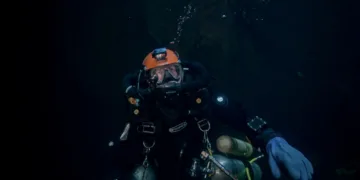


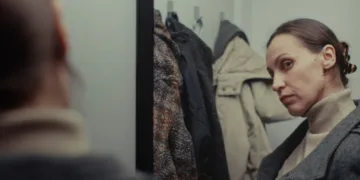
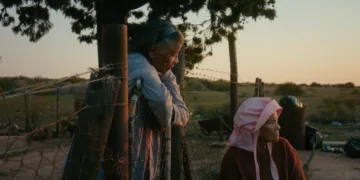
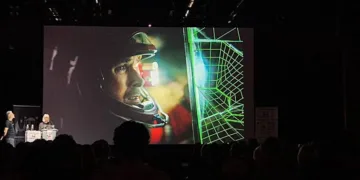





















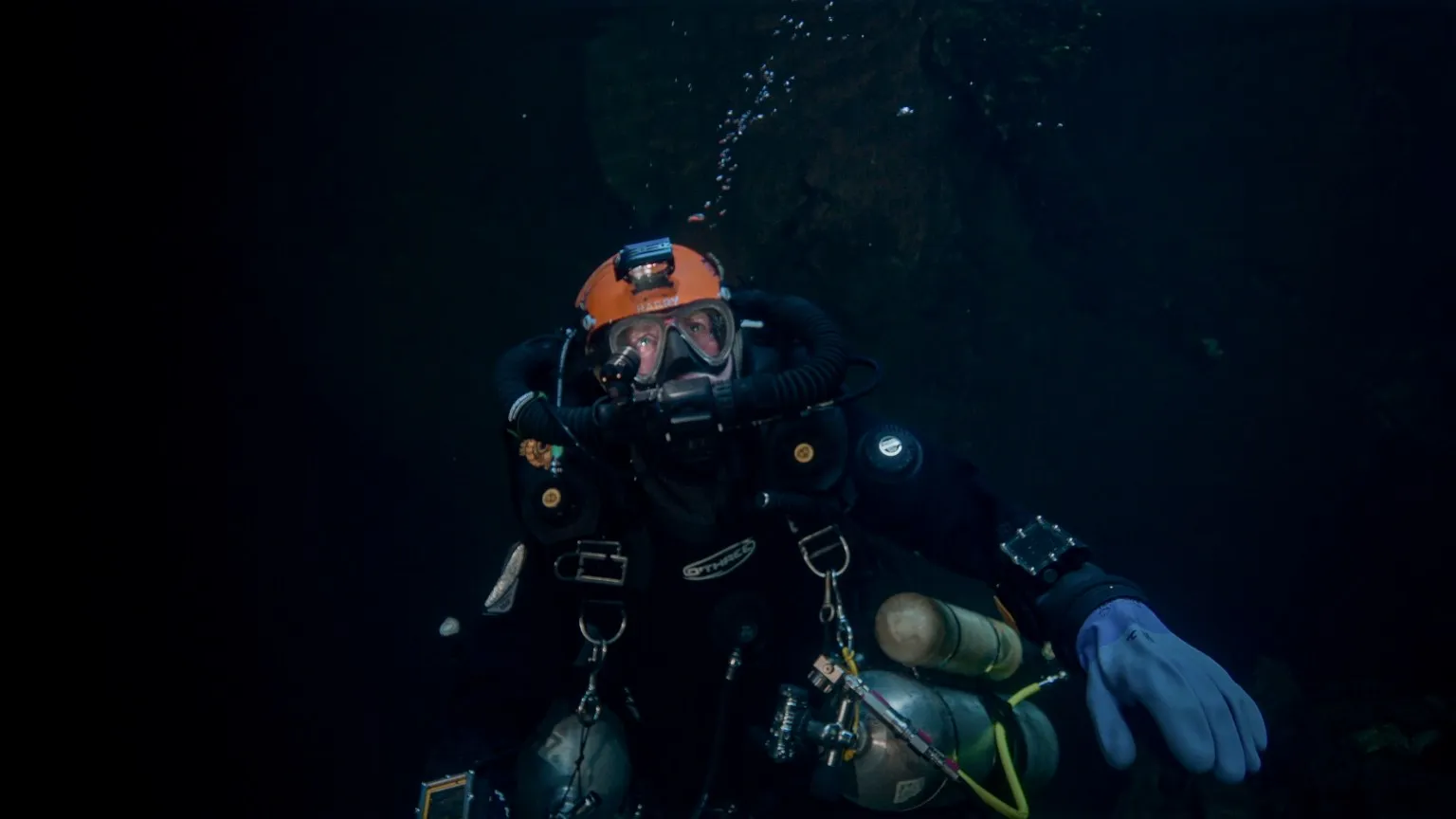

Jennifer Peedom, known for films like Sherpa and Mountain that look toward the world’s vertical extremes, aims her camera at the earth’s depths in Deeper. The film follows Dr. Richard “Harry” Harris, the Australian anesthetist and veteran cave diver who became a global figure during the 2018 Tham Luang rescue.
Peedom keeps that event as background for Harris’s true passion. The focus turns to Harris and his team, The Wet Mules, as they pursue a single objective: an expedition into New Zealand’s Pearse Resurgence. The dive functions as a scientific test at the furthest limit of human descent. The stakes rest on research goals and on a drive that keeps the team pressing forward.
The Narrative of Technical Risk
The film builds its tension around a physiological barrier known as High-Pressure Neurological Syndrome, or HPNS. At extreme depth, HPNS can cause tremors and cognitive problems that stop dives. Deeper frames this constraint as a narrative engine.
Harris and his team advance an experimental plan called the Hydrogen Expedition. They intend to add hydrogen to the breathing gas mix to reduce HPNS effects. The presentation treats the danger with restraint.
Peedom avoids artificial suspense and places attention on real procedures: the careful hydrogen mixing and the steady professionalism of The Wet Mules, including Dr. Craig Challen. Experience, shared planning, and clear logistics shape this attempt into a documented process with palpable risk.
The Psychology of the Extreme
Extreme sports documentaries such as Free Solo and The Deepest Breath often turn on mindset and motivation, and Deeper follows that path. Harris’s public image sits beside a private, self-effacing tone. He says he is “definitely not a brave man.”
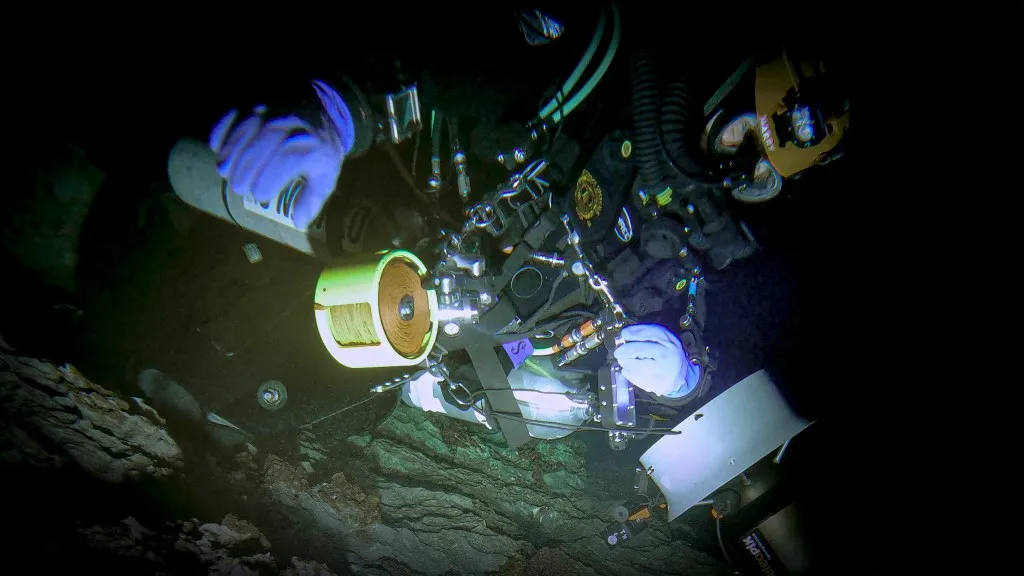
The portrait shows an obsession with deep diving, a need to go further that he struggles to fully explain. The film marks the cost of that pursuit. Peedom includes comments from Harris’s wife, Fiona, and from others who ask what keeps these divers returning to high-risk environments.
Friction between Harris, who pushes the vision, and Challen, who emphasizes measured safety, adds dimension. Their arguments and easy rapport energize planning scenes and frame the project as a study of compulsion that meets professional rigor.
Pacing and Visual Orientation
Conveying a tight, dark underwater cave on screen requires careful choices, and Peedom shapes that environment with precision. The imagery pairs the subterranean constriction with wide views of New Zealand’s landscape that recall the scale of Mountain.
The film excels at wayfinding. Maps and graphic overlays track the route during the dive, keeping the audience aware of position and distance. This structure supports pacing and ties suspense to clear technical markers. Sound design heightens the confined setting.
Sequences that reduce external audio and hold on the natural underwater noise create a close, claustrophobic mood. The film runs under 90 minutes and uses that time efficiently. Elements like decompression habitats appear early, so the final push lands with clarity. The alternation between aerial footage of the wilderness and the black interior of the cave underscores the scope of the effort.
The documentary Deeper, directed by Jennifer Peedom, premiered at the SXSW 2025 festival and began its Australian theatrical release on October 30, 2025. The film follows Dr. Richard “Harry” Harris, renowned for his part in the 2018 Thai cave rescue, as he embarks on his most challenging expedition yet: diving into the Pearse Resurgence in New Zealand, one of the world’s deepest cold-water cave systems. The documentary details the extreme scientific and personal risks involved, including the use of an experimental hydrogen breathing gas mix, exploring the intense psychological drive and obsession that motivates Harris and his fellow divers.
Credits
Title: Deeper
Distributor: Madman Films, Roadshow Films, Dogwoof
Release date: October 30, 2025 (Australian Theatrical Release), Premiered at SXSW 2025
Rating: Unclassified 15+
Running time: 87 minutes
Director: Jennifer Peedom, Alex Barry (Co-Director)
Writers: Jennifer Peedom
Producers and Executive Producers: Blayke Hoffman, Jennifer Peedom, Paul Ryan, Richard Harris, Jo-anne McGowan, Sarah Noonan, Anna Godas, David Gross, Oli Harbottle, Mark Kresser, Paul Wiegard
Cast: Richard Harris, Craig Challen, Ken Smith, Dr Simon Mitchell, Luke Nelson, Dave Hurst, Dave Apperley, John Dalla-Zuanna, Martyn Griffiths
Director of Photography (Cinematographer): Ben Dowie
Editors: Simon Njoo
Composer: Antony Partos
The Review
Deeper
Deeper succeeds as a thoughtful character study, less focused on thrill-seeking and more on the strange compulsion driving high-level expertise. Jennifer Peedom grounds the experimental science and personal risk in clear cinematic language. The film is technically impressive, using sound and visual aids effectively to overcome the challenges of its dark environment. While some viewers might desire more narrative flare, this documentary offers a precise, intelligent examination of the human cost of obsession. It is a precise portrait of drive.
PROS
- In-depth character study of Richard Harris and his team.
- Effective narrative structure built around a high-risk scientific experiment (Hydrogen Expedition).
- Visual and sound design masterfully builds a claustrophobic atmosphere.
- Restrained filmmaking avoids manufacturing cheap, unnecessary suspense.
- Strong pacing and technical clarity through the use of visual overlays and maps.
CONS
- Subject matter is niche; the scientific significance may not resonate with a general audience.
- Lack of manufactured suspense means emotional stakes are often intellectual rather than visceral.
- Visual limitations are inherent to the dark, underwater setting.