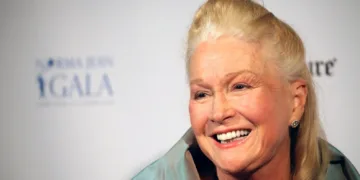




























The cause of death for three-time Oscar nominee Diane Ladd has been confirmed as acute on chronic hypoxic respiratory failure, according to her death certificate, issued two weeks after she died at age 89. The document, obtained by People, lists interstitial lung disease and esophageal dysmotility as contributing conditions and notes that the actor was cremated on November 10. Ladd died on November 3 at her home in Ojai, California, a passing first shared publicly by her daughter, Laura Dern.
The newly released details align with what Ladd and her family had spoken about in recent years. She had long contended with serious lung disease, having once been told she had only months to live. That prognosis led Dern to begin daily walks with her mother as a way to build strength and safeguard her breathing. Their conversations during those walks later became the basis of the 2023 joint memoir “Honey, Baby, Mine,” which traced their relationship through stories about work, family and mortality.
News of the medical findings arrives after a wave of tributes to Ladd’s six-decade career on stage and screen. She received Academy Award nominations for Martin Scorsese’s “Alice Doesn’t Live Here Anymore,” David Lynch’s “Wild at Heart” and “Rambling Rose,” the last of which made her and Dern the first mother–daughter pair nominated for acting Oscars in the same year. She won a Golden Globe for the television series “Alice” and appeared in films including “Chinatown,” “National Lampoon’s Christmas Vacation” and “Joy,” along with television projects ranging from “Touched by an Angel” to “Young Sheldon.”
Dern remembered her mother as “my amazing hero” and “a profound gift of a mother,” while colleagues praised Ladd’s generosity with younger performers and her commitment to complex, often unruly women on screen. The actor’s death also followed a personal loss earlier in the year: her husband of more than two decades, former PepsiCo executive Robert Charles Hunter, died in July 2025. The confirmation of her cause of death underscores how long-term respiratory illness shaped the final chapter of a career that had become a touchstone for American film and television.