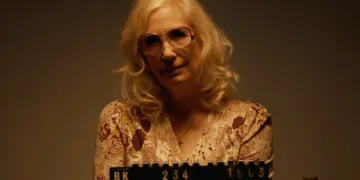



















Dorothea sketches a stark portrait of Dorothea Puente, the “Death House Landlady.” Writer and director Chad Ferrin shapes this true-crime thriller as the second entry in his cycle on California murderers. The premise begins with a confession in shadow: the imprisoned Dorothea, played by Pat McNeely, speaks near the end of her life and recounts what she did.
The film then dramatizes those accounts, combining recorded detail with crafted narrative. It traces the operation of her Sacramento boarding house, where she targeted vulnerable residents, including recovering addicts and the elderly. The path moves from check fraud to planned killing. Victims take poison. Bodies go into the garden she tends. Domestic routine conceals calculated harm, a quiet ritual that treats human presence like disposable matter.
The Aesthetics of the Grotesque
Ferrin addresses grim material with a kitsch surface and a dark, unsettling humor. Levity rubs against horror and invites a question about the ethics of looking. The structure intensifies that tension. Characters speak straight to the viewer. The killer talks to us.
The victims do too. Direct address creates a disturbed intimacy with a sociopathic core while granting a brief space to those erased by her acts. The older Dorothea frames these scenes, narrating the younger self through flashbacks. A light, almost whimsical tone becomes a chosen instrument.
The film avoids celebration of violence. It uses odd wit to drain conventional suspense, turning the disposal of remains into moments marked by twisted laughter that catches in the throat. The method aligns with an existential view: ordinary gestures can carry ruin, and absurdity can sit beside terror like a calm neighbor who keeps returning to the fence.
The Performer and the Void
Dorothea draws much of its force from Susan Priver as the younger Puente. The performance feels effortless and cold. Commitment to the part supports a portrait of double life. Priver moves from the appearance of a harmless elder to the reality of a manipulative predator.
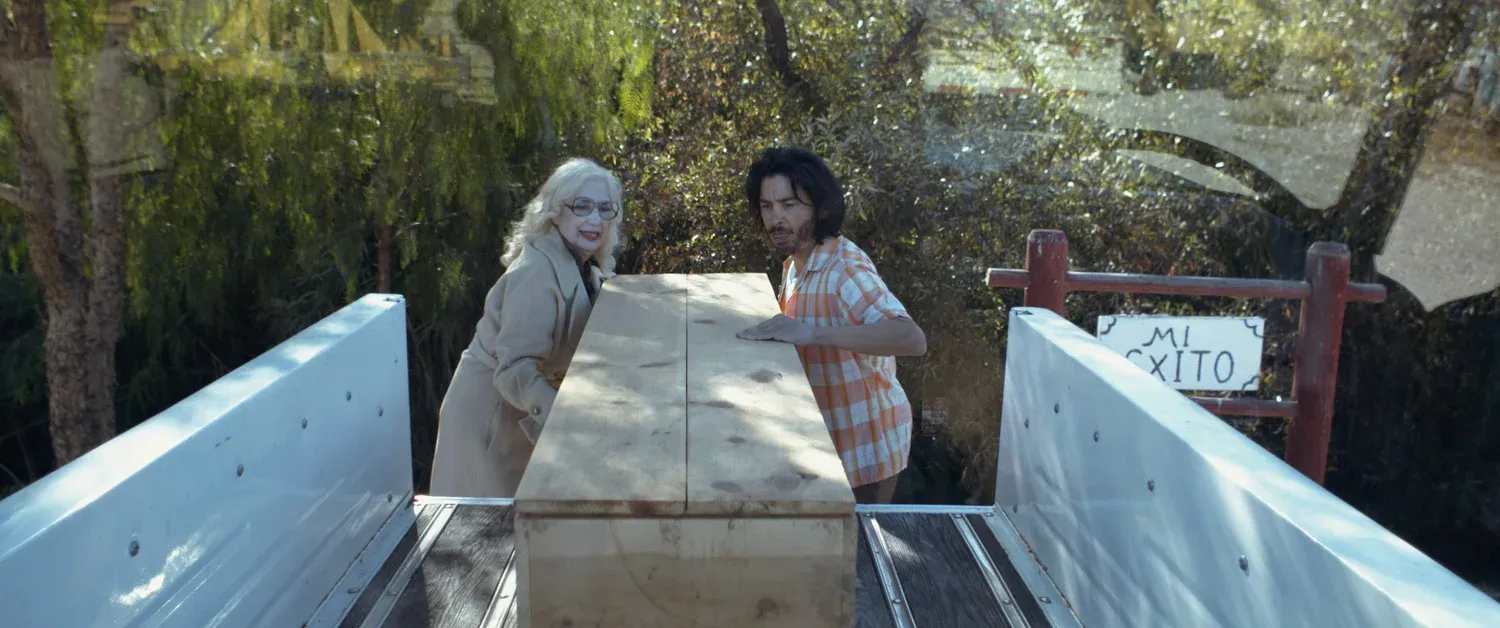
She brings a disquieting joy to the role, a lightness that repels and attracts at once. That calm chill explains the hold Puente had on people who depended on her. Pat McNeely, as the aging narrator, steadies the film and sets a final register for the memory of what happened.
The supporting ensemble, including Ginger Lynn, Brinke Stevens, and Robert Miano, receives brief attention that gives the victims voice before silence arrives. These flashes of presence deepen our recoil from the killer’s methodical calculus. Ferrin’s collaboration with Priver lets the lead turn shape the film’s warped sightline, as if the camera learned to breathe in the same rhythm as the character.
The Banality of Filmic Evil
Ferrin’s direction stays sure-footed. The script moves efficiently, and the pace holds attention. Production elements remain steady. The treatment of horror is measured. Sensational gore recedes. Poison defines the acts, so spectacle gives way to psychology.
The focus lands on casual cruelty, where routine gestures carry the true chill. The film claims true crime rather than pure invention, yet it plays as an engaging story about a subject that resists pleasure. A tilted lens finds bleak fascination in the ordinary details of terrible deeds.
Viewers seeking a strictly sober historical record may step back from this approach. Others may find coherence in the tone and the steady presentation of self-serving evil as habit, as if horror could wear the same clothes every day and still pass on the street without a second glance.
The movie Dorothea is a true-crime thriller centered on the notorious serial killer Dorothea Puente, who was known as the “Death House Landlady.” The film was released in a limited theatrical run starting October 31, 2025, with a VOD release following on November 4, 2025. It is distributed by Epic Pictures Group under their DREAD label. The story chronicles Puente’s life and crimes, where she lured vulnerable individuals to her Sacramento boarding house to steal their social security checks, ultimately murdering them and burying their bodies in her garden.
Credits
Title: Dorothea
Distributor: Epic Pictures Group
Release date: October 31, 2025
Running time: 92 minutes
Director: Chad Ferrin
Writers: Chad Ferrin
Producers and Executive Producers: Chad Ferrin, Robert Miano
Cast: Susan Priver, Lew Temple, Ginger Lynn, Brenda James, Ezra Buzzington, Brinke Stevens, Cyril O’Reilly, Robert Miano, Pat McNeely, Brandon Kirk, William Salyers
Director of Photography (Cinematographer): Jeff Billings
Editors: Jahad Ferif
Composer: Richard Band
The Review
Dorothea
Dorothea finds a disturbing vitality in confronting the true-crime genre through the lens of dark comedy and a disquieting intimacy. The film operates as an effective character study, propelled by Susan Priver’s standout performance which captures the killer’s cold, manipulative charm. While its deliberately kitsch tone may divide viewers seeking solemnity, the film succeeds by committing fully to its unique perspective on an otherwise unspectacular evil. It is an unnerving and curiously entertaining meditation on the banality of predation.
PROS
- Dynamic, chilling, and captivating.
- Breaking the fourth wall creates an immediate, unnerving connection.
- Director Chad Ferrin maintains a strong, consistent, and unconventional tone throughout.
- The film makes an effort to briefly flesh out the victims, increasing the emotional weight of the crimes.
CONS
- The dark, kitsch humor is highly polarizing and may offend some viewers.
- The measured approach to gore, dictated by the true crime method (poison), lacks the dramatic visuals some horror fans might expect.
- The balance between biographical fact and satirical presentation is sometimes uneasy.
- The intimate perspective heavily favors the killer's sociopathic viewpoint.