














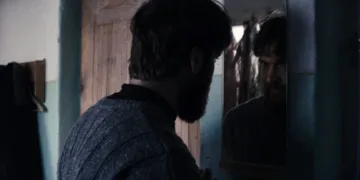












Eiji Uchida has long focused on precarious lives balanced on the brink of success, a preoccupation visible in Midnight Swan and Love And Other Cults. Night Flower continues that fixation as a dark drama set in the shadows of Tokyo, where survival feels like a full-time narrative engine. The film follows Natsuki (Keiko Kitagawa), a single mother crushed by the massive gambling debts left by her absent ex-husband. Creditors close in on her and her children, and the pressure turns every day into a countdown.
She juggles multiple exhausting jobs that barely touch the numbers on the balance sheet, so the script steadily walks her toward an extreme decision. After seeing an illicit exchange, Natsuki chooses the dangerous work of drug dealing as a way to secure fast cash for her family. That choice brings her into contact with Tamae (Misato Morita), an amateur kickboxer who gradually becomes the operation’s enforcer. The film maintains a grim, unyielding tone, yet traces out delicate glimmers of hope and human connection inside the misery it presents.
The Mechanics of Desperation
Uchida builds the story as a pressure chamber for Natsuki, carefully mapping every failed legal option before the illegal one appears. The script studies desperate decision-making and frames Natsuki’s choices as destructive but rooted in a fierce instinct to safeguard her children. Her actions grow out of maternal strain, with no hint of simple greed for profit, which keeps the character grounded in emotional logic.
Uchida presents Japan’s hidden margins by keeping the narrative fixed on the exhausting labor required just to keep a foothold in this city. The story moves forward when Natsuki comes across narcotics and, after an unsuccessful attempt at selling them on the street, crosses paths with local drug baron Ms. Sato. This accidental entry into the trade becomes the main structural engine of the film.
Secondary threads plug directly into this design of coerced collaboration. Tamae, driven by her boxing ambitions and need for money, finds her priorities lining up with Natsuki’s urgent requirement for muscle. The result is a necessary, volatile working alliance powered by financial strain. The film mirrors a harsh social reality, and scenes of Natsuki at her monotonous day job, such as painstakingly assembling desk globes, sit beside the criminal work she takes on at night and highlight the double life she leads.
Anatomy of a Found Family
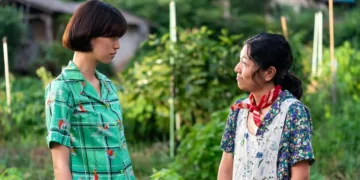
The strongest narrative element sits in the relationship between the two leads. Keiko Kitagawa and Misato Morita give grounded, believable performances that keep the rising crisis tethered to something recognizably human. Their shared presence quickly forms an easy rapport that provides the emotional anchor the story needs to stop the darkness from feeling numbing.
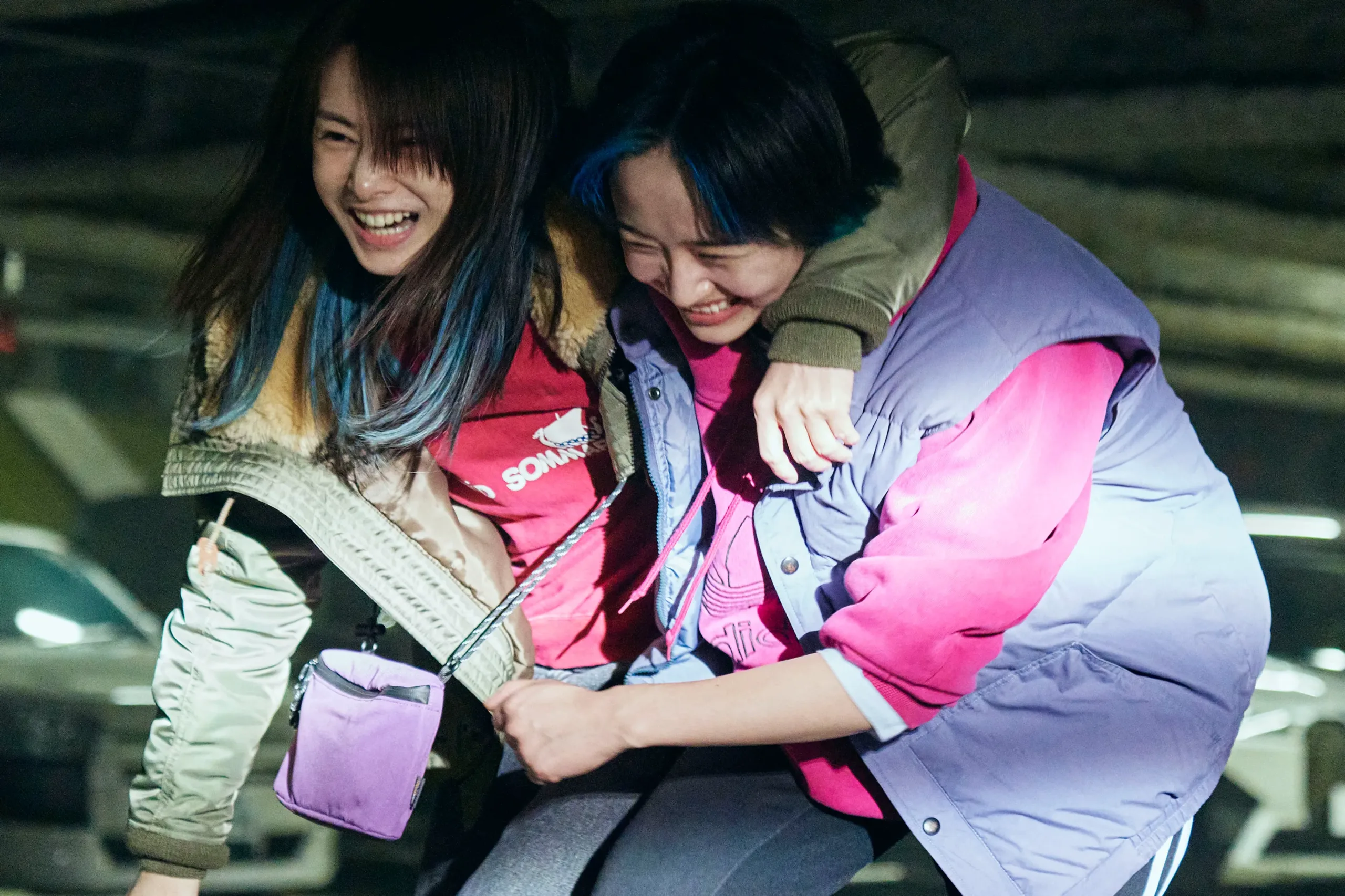
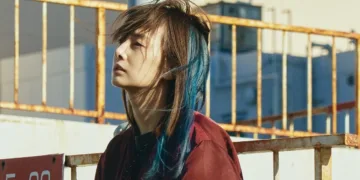
The connection grows out of mutual dependence and gradually forms a familiar “found family” structure that feels earned and necessary. Morita’s work as Tamae carries a clear physical intensity, especially in the harsh kickboxing scenes, which reportedly required extensive training. Tamae appears hardened and worn down by a murky past, traits that stand next to the quiet care she extends toward Natsuki.
One particularly strong silent beat arrives when Natsuki discovers her gifted daughter, Koharu, playing violin as a street performer. The lack of dialogue heightens the viewer’s sense of the cost Natsuki pays for every decision. The film also makes measured use of recognizable supporting players, with Daisuke Sakuma and Ryuta Shibuya helping give this shadowy city a lived-in texture.
The Aesthetics of Urgency
Uchida shows a careful command of mood, pairing grim subject matter with moments of human grace and precise craft. The film avoids decorative storytelling tricks and instead leans on a measured realism. Cinematographer Hiroki Yamada relies on handheld camerawork that gives scenes a tight, urgent charge. This close perspective serves both the everyday routines and the sharper emotional confrontations. Uchida frequently favors silence over heavy dialogue, allowing the frame to carry the narrative weight.
Several key passages unfold with little or no speech, and tension gathers inside small gestures and held looks, with little reliance on verbal explanation. When the story calls for action, in Tamae’s enforcement work or the kickboxing matches, the fights land with a rough, unpolished impact. The physical clashes fold neatly into the world of the film, so the violence feels like a direct extension of the characters’ conditions and does not feel like a stylistic flourish bolted onto the drama.
Structural Tightening and Resolution
The script grows more complex as it proceeds, introducing details that signal coming disaster. Threads about gambling trouble at Tamae’s gym and the quiet tailing of a private investigator feed directly into the mounting risk. These added pressures increase the unease and confirm that the original decision to deal drugs sets a chain reaction in motion.
The rising suspense holds steady, yet at times the buildup feels held in check, as if the film reserves some intensity for the final stretch. The closing section shifts into a restrained thriller mode. In this phase, Uchida pulls the various story strands together and delivers a firm, tidy resolution to the ordeal. The film treats each major arc with a sense of completion, giving the audience a clear view of the reckoning it has been tracking.
Night Flower is a dark Japanese drama directed by Eiji Uchida that explores the extreme lengths a mother will go to protect her children. The film premiered at the Tokyo International Film Festival and is scheduled for theatrical release in Japan on November 28, 2025, distributed by Shochiku Co., Ltd. The story centers on Natsuki, a woman fleeing loan sharks, who risks her life by turning to drug dealing in the shadows of Tokyo’s nightlife. The film runs for 124 minutes and is currently available through its theatrical release in Japan.
Full Credits
Title: Night Flower
Distributor: Shochiku Co., Ltd.
Release date: November 28, 2025 (Japan)
Running time: 124 minutes
Director: Eiji Uchida
Writers: Eiji Uchida
Producers: Chiaki Kusu, Kotaro Nagatomi, Madoka Katsumata
Executive Producers: Hideki Yoshijo
Cast: Keiko Kitagawa, Misato Morita, Daisuke Sakuma, Ryuta Shibuya, Kiyohiko Shibukawa, Hiroyuki Ikeuchi, Rena Tanaka, Ken Mitsuishi
Director of Photography (Cinematographer): Hiroki Yamada
Editors: Masashi Komino
Composer: Yohei Kobayashi
The Review
Night Flower
Night Flower is a dark, character-driven drama from Eiji Uchida, offering a powerful study of desperation on the margins of Tokyo. The film finds its strength in the authentic relationship between the two lead characters, Natsuki and Tamae, anchored by strong, realistic performances. The urgent handheld cinematography and visceral action sequences lend the story necessary grit and reality. While the buildup sometimes feels reserved, the narrative successfully progresses toward a decisive reckoning, effectively closing its many structural threads. It stands as a valuable addition to Uchida's body of work exploring Japan's unseen lives.
PROS
- Keiko Kitagawa and Misato Morita deliver authentic, committed lead performances.
- The relationship between Natsuki and Tamae successfully forms a necessary, believable found family unit.
- Provides a rigorous examination of desperate maternal choices and the social reality of survival.
- Hiroki Yamada's handheld work creates a feeling of intimacy and urgency.
- The director uses stillness and visual observation effectively to build internal tension.
CONS
- The narrative buildup of tension is occasionally reserved, with some viewers wishing for a more explosive execution.
- The overall atmosphere is consistently bleak, which may be severe for some audiences.