



























A vast, glittering forest of Christmas trees spills across Manhattan concrete as The Merchants of Joy begins, an urban thicket pressed against glass and traffic lights. Director Celia Aniskovich fixes on this visual paradox: the purest emblem of winter cheer appears here as an impermanent, high-value commodity. The documentary follows the hyper-seasonal, high-stakes trade of Christmas trees in New York City, tracking several independent vendors who control this surprisingly intense market.
Often referred to simply as the “five families,” these merchants stand as the last holdouts against the anonymity of large retailers, sustaining a tradition that spans generations. Aniskovich spends one full holiday season with these determined operators, watching them set up, haggle, and endure.
The film quickly reveals a split personality, pairing the grinding, often profane reality of their work with the polished fantasy the trees help create for a few brief weeks of collective, nostalgic magic. Twinkling city streets and glowing windows supply a luminous holiday backdrop, while the story stays fixed on cutthroat commerce unfolding on cold sidewalks.
The Season’s Brutal Calculus
The tree trade appears as a cozy seasonal ritual yet functions as a dizzying financial gamble. Merchants commit hundreds of thousands of dollars to inventory and logistics before a single fir reaches a customer, gambling on the chance to recoup that massive investment in a frantic window of 30 to 40 days. The logistics alone carry a heavy charge: balsam, Fraser, and Douglas firs travel from distant growers in states such as Oregon and Michigan.
This supply chain demands precision, as trucks haul what amounts to a year’s income across the continent. Competition grows fierce on the sidewalks, beginning with the annual NYC Parks Department auction where vendors bid aggressively for prime selling spots.
The turf war intensifies under pressure from big-box stores that attempt to undercut prices. A shadowy, elusive competitor, Kevin Hammer, operates largely off-camera; his immense financial authority hangs over the established operators and heightens their anxiety. The work itself remains brutally physical, with 12-hour days spent outdoors in freezing weather, a harsh measure of the grit required to keep this brief, luminous industry alive.
The Human Cost of Cheer
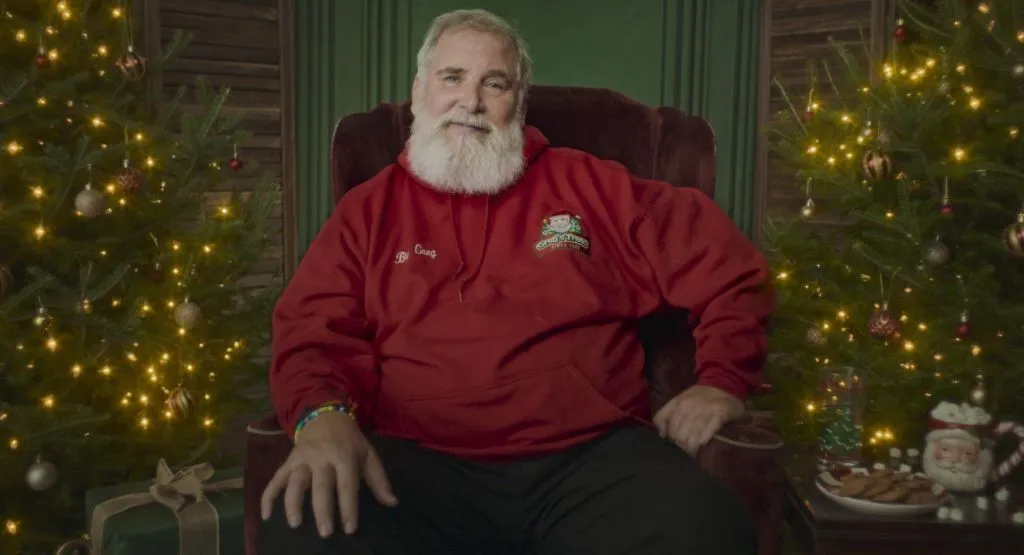
The documentary locates its heartbeat in the personalities of its central figures, a group of strong-willed New Yorkers whose lives are tightly bound to the business. They come across as resilient and unsentimental, speaking with abrasive, profane directness. Greg Walsh, the seasoned patriarch of Greg’s Trees, begins to hand responsibilities to his towering son, “Little Greg,” a shift that turns the family operation into a study of succession.

That transition echoes the charged personal struggles faced by others, such as Ciree Nash, who works to take command of her parents’ Uptown Christmas Trees and treats the immense undertaking as a symbol of overcoming past adversity.
George Smith attempts to balance the demands of the NYC Tree Shop with raising his children and the awkward rhythms of a renewed dating life. Heather Neville, the NYC Tree Lady, appears as fiercely driven, her work ethic extending into her ancillary business selling exotic meats.
The film edges toward intrusion as it folds in deeply intimate moments, capturing the raw emotional weight of a cancer diagnosis and a merchant’s reflection on youthful waywardness while confronting the city’s destitute. These scenes point toward a shared understanding among competitors. They sell wood and recognize that their true product is emotion, hope, and the “moments in time” the trees create for the city.
Sentimentality vs. Sincerity
Aniskovich channels the “breathless energy” of New York through striking cinematography that sets the glowing, idealized holiday aesthetic against the rough reality of street-level commerce. Jackson Greenberg’s score and Audra Miller’s vocals set the film’s festive momentum with bright, insistent cues.
The film begins to strain when it pivots toward overt sentimentality. The director attempts to graft “feel-good” scenes of charity work and sudden family ties onto lives shaped by sharp commercial instincts, and the softening effect feels less persuasive than the tougher material. The most vivid insights arise from unromantic logistical detail and the competitive anxiety that saturates each scene.
The film falters as it lingers on incomplete personal subplots, such as an unresolved romance or a raw health crisis, that register as exploitative and do not enrich the story. The documentary operates most powerfully as an ode to hard work and leaves the viewer with heightened respect for the intense, high-stakes effort required to realize the city’s annual winter magic.
The documentary The Merchants of Joy premiered on Prime Video on December 1, 2025. This film, which clocks in at 90 minutes, provides a candid and spirited look into the hyper-competitive world of Christmas tree selling in New York City, following five families who fiercely battle to maintain this decades-old holiday tradition against modern commercial pressures. The movie is available for streaming globally on Prime Video, released by Amazon MGM Studios.
Full Credits
Title: The Merchants of Joy
Distributor: Amazon MGM Studios / Prime Video
Release date: December 1, 2025
Running time: 90 minutes
Director: Celia Aniskovich
Writers: Owen Long (based on his articles “Secrets of the Christmas Tree Trade”)
Producers and Executive Producers: Celia Aniskovich, Zoe Vock, Arthur Spector, Joshua Davis, Joshuah Bearman, Todd Lubin, Ivan Schneeberg, David Fortier, Douglas Banker, Ben Affleck, Gillian Brown, Dani Bernfeld
Cast: Greg Walsh, “Little” Greg Walsh, Heather Neville, George Smith, Ciree Nash, Jane Waterman, Kevin Hammer
Director of Photography (Cinematographer): Carrie Cheek
Editors: Brett Banks, Samuel Kun
Composer: Jackson Greenberg
The Review
The Merchants of Joy
The Merchants of Joy offers a fascinating look at the frantic commerce that drives the New York holiday season. The film shines brightest when detailing the high-stakes logistics and the sheer physical effort required by these independent vendors. Director Celia Aniskovich successfully captures the city's nostalgic glow but struggles to balance the inherent grit with forced emotional beats. While some personal narratives feel incomplete or intrusive, the documentary remains an authentic, engaging portrait of resilience. It provides compelling insight into the intense effort needed to manufacture seasonal cheer.
PROS
- Features authentic, resilient, and direct-speaking New York vendors.
- Provides excellent detail on the intense financial risks and logistics of the seasonal trade.
- Effectively captures the "breathless energy" and nostalgic, glowing aesthetics of Christmas in the city.
- Offers a rare, unvarnished look into a tradition often taken for granted.
CONS
- Attempts to inject "feel-good" elements that sometimes feel disingenuous.
- Incomplete personal narratives (e.g., health crises, romance) can feel exploitative.
- Sacrifices some business depth by focusing too heavily on emotional melodrama.