



















![Kingdom Hearts Collection [I-III] Review](https://gazettely.com/wp-content/uploads/2026/10/Kingdom-Hearts-Collection-I-III-1-360x180.webp "Kingdom Hearts Collection [I-III] Review: KHII Holds Steady as Newer Entries Fluctuate 37")



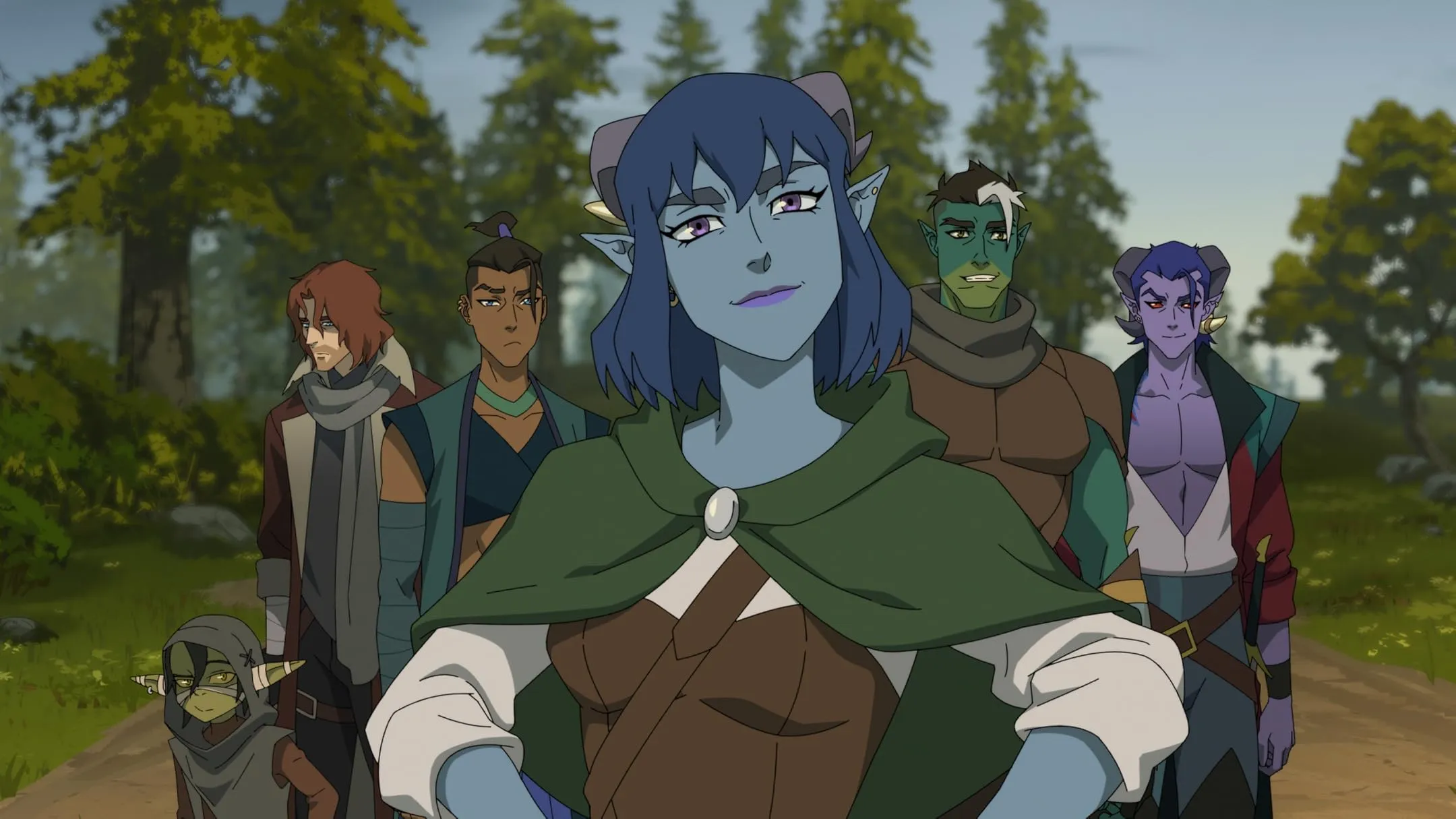

The Mighty Nein, the second animated adaptation drawn from the Critical Role actual play phenomenon, arrives on Prime Video as a series that immediately signals higher ambition and a sharper edge. Set two decades after the events of the first campaign, the story shifts to Wildemount, a continent marked by political volatility and an undercurrent of social unrest that suits the streaming era’s taste for serialized, slow-burn conflict.
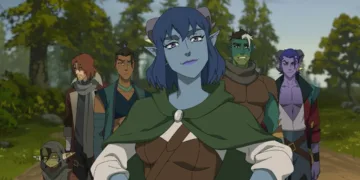
The story follows a cold war between the authoritarian Dwendalian Empire and the faith-driven Kryn Dynasty. Tensions spike after the theft of the Luxon Beacon, a sacred and powerful artifact whose disappearance pushes both sides toward catastrophic escalation. The group that gives the series its title does not assemble as a polished heroic party. They arrive as outcasts and misfits, people shaped by desperation and private damage who stumble into a conflict much larger than their immediate needs.
The show establishes a cinematic, serious tone from the opening episodes and still preserves the sharp, character-focused humor that defined Critical Role’s origins. High-stakes drama and irreverent banter sit side by side, signaling a form of fantasy television tuned to streaming audiences who expect both emotional heft and self-awareness.
The Psychology of the Ensemble: Flawed Heroes in a Fractured World
The series commits to characters whose appeal comes from visible imperfections, aligning with a wider trend in contemporary fiction where authenticity takes precedence over clean heroism. The Mighty Nein come together slowly and almost by accident, so their eventual bond feels earned rather than assumed. They read less like archetypal adventurers and more like wounded people testing the possibility of community.
Caleb Widogast stands at the center of that emotional terrain. His withdrawn, depressed demeanor and direct connection to the cruel archmage Trent Ikithon tie the large-scale political story to a history of personal abuse and manipulation. Through him, the show treats power structures as something that scar individuals, not just nations. Nott the Brave, a goblin rogue who wrestles with substance addiction and deep insecurity, extends that thread. Her relationship with Caleb functions as a fragile emotional scaffold, an early example of mutual care emerging where there had previously been only isolation and self-harm.
Jester Lavorre brings a different kind of coping strategy. Her chaotic energy, relentless pranks, and crude drawings act as a protective shell around a lonely, sheltered upbringing. The ambiguity of her patron, The Traveler, and her unease with that relationship echo a contemporary distrust of unquestioned authority and unseen benefactors. Faith here looks messy and uncertain rather than serene.
Beauregard Lionett channels restlessness and self-sabotage into life within the Cobalt Soul, an institution that prizes order while she keeps spinning away from it. Her story captures the tension of trying to fit within a respected establishment while wrestling with inner chaos. Fjord Stone’s guilt and his mysterious pact place him in a liminal space between ordinary sailor and reluctant instrument of power, while Mollymauk Tealeaf leans on relentless charm as a way to sidestep ominous signs and looming existential threats. Yasha Nydoorin, who initially receives the least narrative focus, moves through the story with an air of isolation and impending sorrow.
The series spends time on each character’s psychological load before forcing them into sustained proximity. That patience gives their fragile loyalty a weight that feels consistent with a culture increasingly aware of trauma, mental health, and the slow work of building trust. The Mighty Nein read as an ensemble shaped by social and emotional fractures, which makes their tentative solidarity feel significant rather than decorative.
Geopolitics and the Systemic Threat
The show shifts fantasy away from simple monster-of-the-week threats and toward systemic forces. Wildemount appears as a landscape of governments, ideologies, and social hierarchies, not just dungeons and wilderness. The cold war between the Kryn Dynasty and the Dwendalian Empire operates as a critique of weaponized nationalism and rigid authoritarian control, echoing real-world anxieties about entrenched power and permanent conflict.
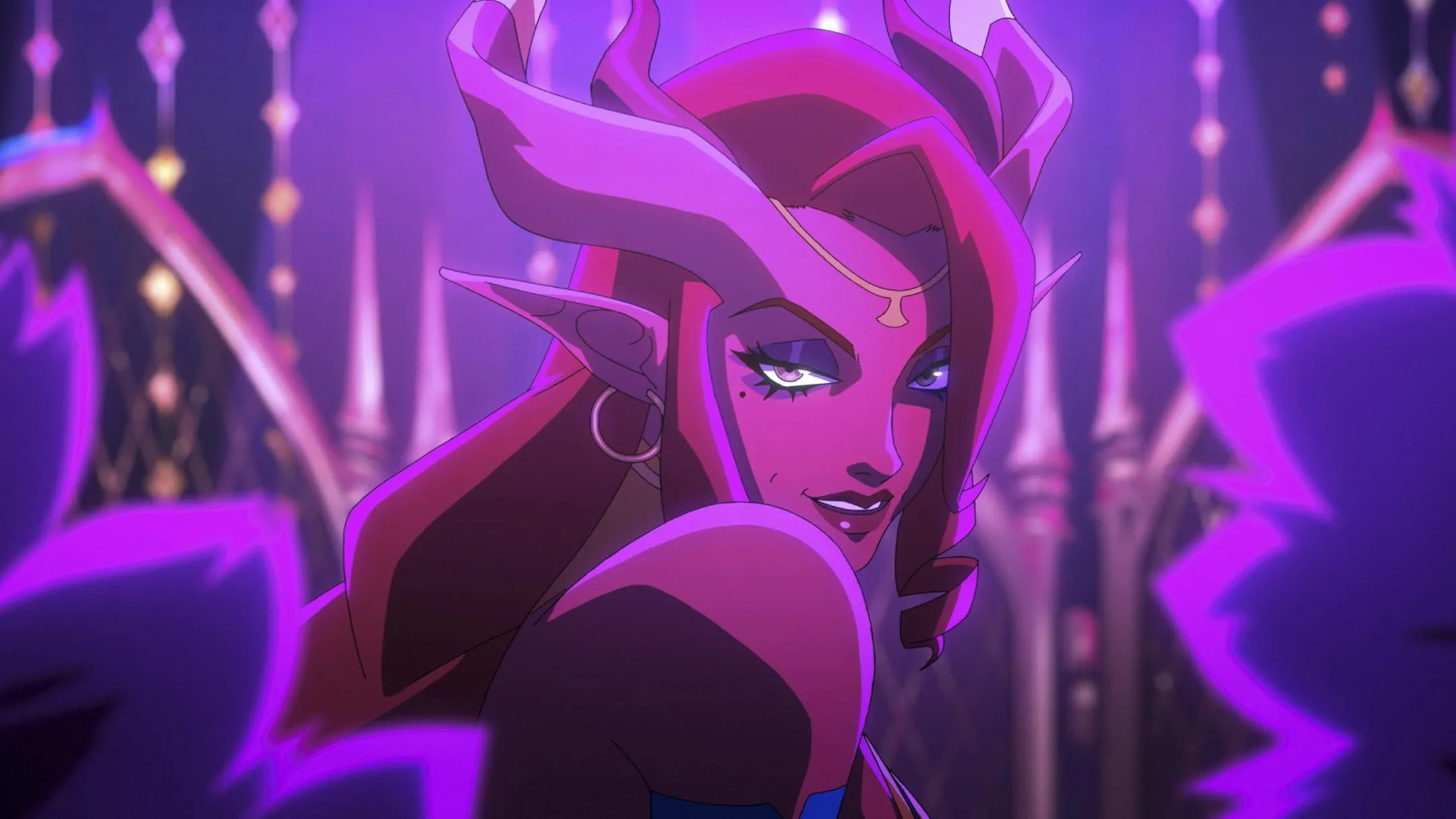
Threats often surface through institutions rather than singular villains. Political corruption, psychological indoctrination, and institutionalized interspecies prejudice shape daily life in this world. The story leans into the idea that harm frequently arrives through systems, policies, and long-standing narratives, reflecting an era of television increasingly preoccupied with structural injustice. The serious tone leaves room for trauma and grief without sliding into constant gloom. The cast’s familiar, rowdy humor acts as a pressure valve, capturing how jokes, found family, and shared absurdity help people survive oppressive circumstances.
Magic receives a similar level of seriousness. Spellcasting appears grounded in the specifics of components and the emotional and physical cost of power. The Luxon Beacon and the rare arcane science of Dunamancy shift Exandria’s lore away from generic fantasy trappings and give the series its own arcane identity within high fantasy television. Ancient artifacts sit alongside complex political machinery, so individual struggles feel both intimate and cosmically charged. The show treats magic, ideology, and governance as interconnected forces, mirroring ongoing conversations about how belief systems and state power intertwine.
Streaming Strategy and Production Excellence
The production choices mirror a broader streaming trend: adaptation as transformation rather than strict transcription. The series reshapes the original campaign by reordering crucial events and expanding backstories that once appeared only as hints at the table. That strategy results in a narrative arc tailored for animation, one that respects the characters’ long history while crafting a more streamlined viewing experience for audiences who meet them first on Prime Video.
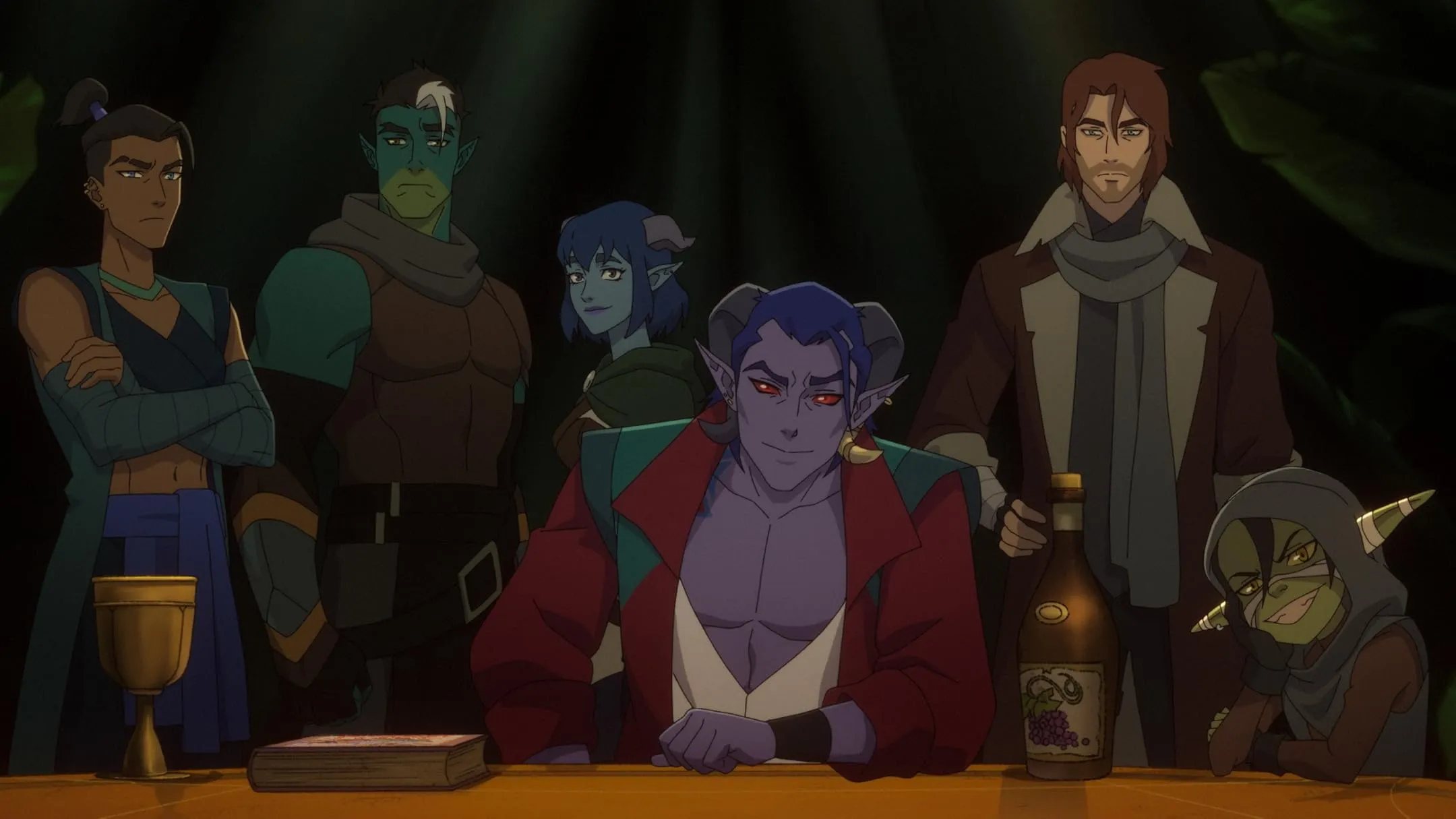
Titmouse’s animation gives the cast expressive designs and action sequences that feel muscular and kinetic, which supports the show’s darker tone without losing a sense of play. The score, described as “Tron meets fantasy,” reinforces that mood, pairing electronic edge with epic scale.
The presence of performers like Mark Strong and Lucy Liu in the supporting cast signals how seriously the industry now treats properties that grew from actual play streaming. The original Critical Role founders return as the main voices, bringing years of familiarity with their characters. Their performances carry an easy mix of vulnerability and humor that reflects both personal investment and a broader shift toward creator-driven genre television.
The decision to run episodes at around 45 minutes speaks directly to streaming habits. The extra time allows for slower character work and more deliberate worldbuilding instead of constant plot acceleration. The full formation of the core group happens later in the season, yet that delay gives the eventual alliance a strong emotional charge.
The season closes on a moment that feels like a continuing rise rather than tidy closure, staying aligned with models that encourage sustained engagement and anticipation for immediate follow-up seasons. The choice signals a long-term cultural strategy, betting that viewers will commit to an expansive, serialized fantasy story built around flawed heroes, systemic threats, and a world that reflects contemporary anxieties about power, identity, and belief.
The Mighty Nein is an adult animated fantasy television series based on the second campaign of the popular web series, Critical Role. The first season premiered on November 19, 2025, on Amazon Prime Video. The series follows a group of flawed outcasts and fugitives whose individual problems become intertwined with a global conflict when a powerful arcane relic is stolen, threatening to plunge the continent of Wildemount into all-out war. Each episode runs for approximately one hour.
Credits
Title: The Mighty Nein
Distributor: Amazon Prime Video
Release date: November 19, 2025
Rating: TV-MA
Running time: Approximately 1 hour per episode (8 episodes in Season 1)
Writers: Tasha Huo, Sam Riegel, Travis Willingham, others
Producers and Executive Producers: Tasha Huo, Sam Riegel, Travis Willingham, Chris Prynoski, Shannon Prynoski, Antonio Canobbio, Ben Kalina
Cast: Laura Bailey, Taliesin Jaffe, Ashley Johnson, Matthew Mercer, Liam O’Brien, Marisha Ray, Sam Riegel, Travis Willingham, Mark Strong, Lucy Liu, Alan Cumming, Tim McGraw, Ming-Na Wen, Anjelica Huston, Nathan Fillion, T’Nia Miller, Anika Noni Rose, Auliʻi Cravalho, Rahul Kohli, Jonathan Frakes, Ivanna Sakhno, Graham McTavish, Felicia Day
Composer: Neal Acree
The Review
The Mighty Nein
The Mighty Nein successfully transitions Critical Role's source material into a sophisticated animated epic. It trades the straightforward action of its predecessor for a more challenging narrative focused on character trauma and systemic political threats. The deliberate pacing and extended episode format allow for necessary depth in worldbuilding and psychological exploration. With its excellent animation and commitment to portraying flawed characters finding earned connection, the series establishes a high benchmark for fantasy adaptations in the current streaming landscape.
PROS
- Exceptional character depth and psychological complexity.
- Mature, darker tone effectively handling trauma and addiction.
- Expanded worldbuilding focused on geopolitical intrigue.
- Excellent animation and cinematic score.
- Thoughtful adaptation strategy that streamlines the narrative.
CONS
- Slower pacing means the full group unity is delayed.
- Season finale feels more like a build-up than a climax.
- Initial focus on certain characters leaves others (like Yasha) less developed in Season 1.