











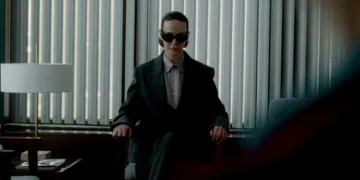




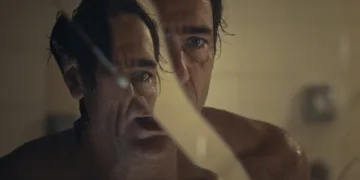












FBI agent Emily Byrne (Stana Katic) vanishes while tracking a serial killer, and she stays gone long enough for the system to declare her legally dead, lost in Absentia. Six years later, the impossible headline arrives: she turns up alive. Her memories have been scraped almost clean and replaced with psychological scars. She walks back into a life that feels like someone else’s. Her husband, fellow agent Nick Durand (Patrick Heusinger), has married Alice (Cara Theobold).
Their young son, Flynn, has grown up knowing Alice as his mother. Family reunions rarely come with this many crime-scene photos. The domestic shock quickly spreads into a public nightmare. A new body turns up carrying the signature of the killer Emily once chased. Very soon the investigation twists, and Emily becomes the prime suspect in a fresh string of murders. This thriller, directed by Oded Ruskin, arrives as a joint USA-European production and wastes no time throwing its lead character into a psychological meat grinder.
The Ghost in the House
This series leans heavily on Stana Katic, and she carries it with force. The role of Emily Byrne calls for a visceral performance, and Katic responds with a dramatic range that stretches well beyond her long-running procedural work. She traces Emily’s physical and psychological collapse with hard-edged conviction. Emily’s memories lie in fragments. The resulting post-traumatic stress disorder (PTSD) leaves her volatile, erratic, and at times frighteningly violent.
She pushes herself to reconstruct the lost years and to reclaim her identity as both agent and mother. That fight for self feels distinctly human. The emotional fallout at home receives attention. Nick sits inside a cage of his own making. He carries guilt for moving forward with his life while Emily endured unseen torment, and that guilt clashes with his present loyalty to Alice, creating an emotional minefield. Alice appears as a woman whose carefully built family collapses in an instant.
The domestic triangle aches, especially for young Flynn. He was a toddler when Emily disappeared and now thinks of Alice as his mother. Emily’s early attempts to connect with him ache to watch. Her brother, Jack (Neil Jackson), offers a fragile, unreliable bridge back to her former world. The series tracks these overlapping points of view with measured care as fragile trust erodes and suspicion starts to take over.
Procedural Past, Prestige Aspirations
The central drive of Absentia lies in Emily’s personal search for the truth about her captivity. That quest runs in parallel with the official hunt for the new killer, an investigation that begins to fix on her as the obvious suspect. The show stacks up suspects and twists, leaning into a Hitchcock-style whodunit pattern. The script leans often on characters making shaky decisions to keep the engine running. Improbability does plenty of heavy lifting.
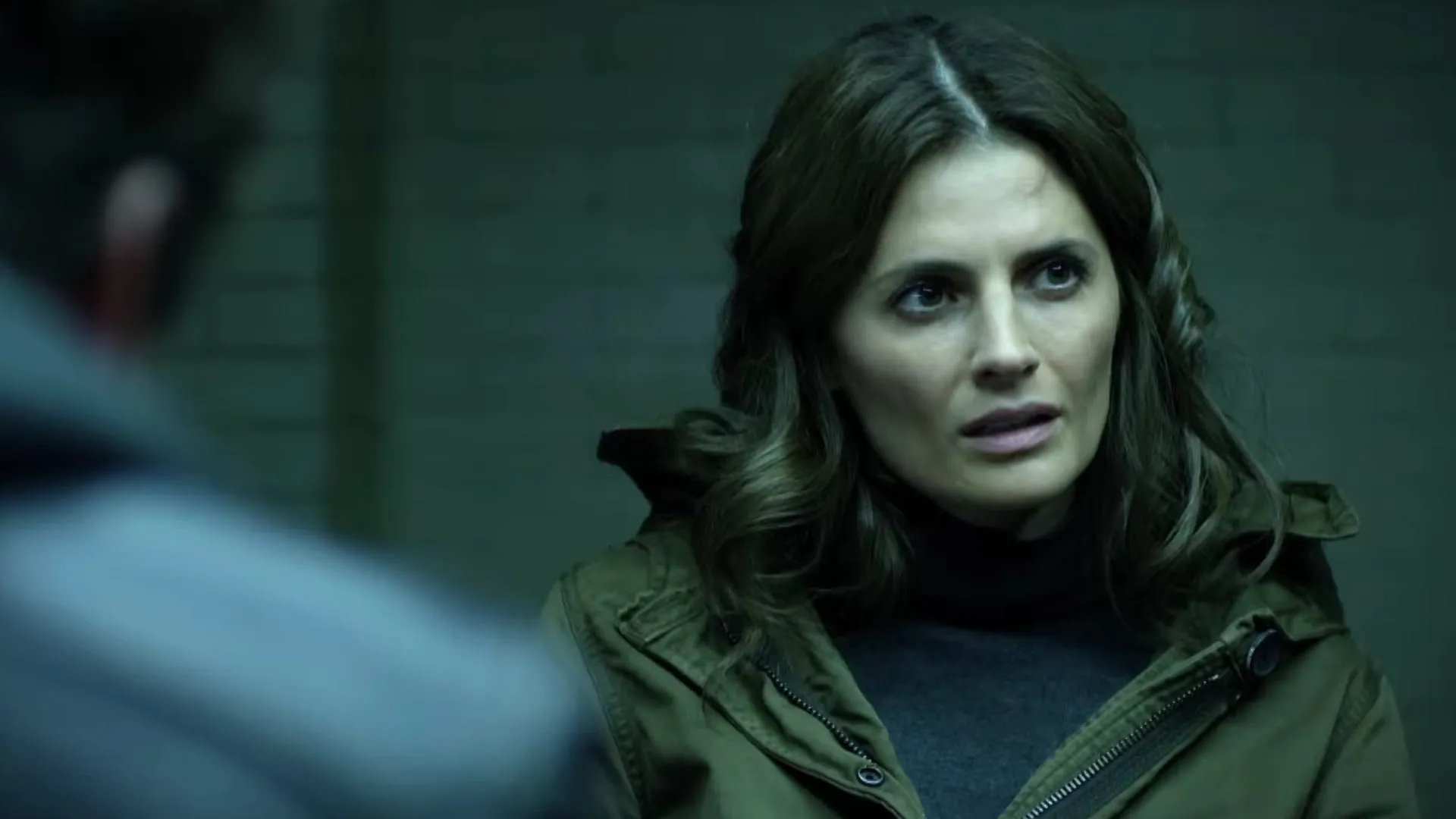
Nick’s repeated willingness to aid his first wife, who now sits squarely in the case, pushes credibility again and again. The series opens at a sprint, hooking viewers fast. Sudden revelations and sharp jolts keep the tension high. The cost of this relentlessness is familiarity. The puzzle feels worn at times. The story presents a “super-smart serial killer,” played with a sneering chill by Richard Brake as Conrad Harlow. He fits neatly into a television stereotype, an overused figure in modern crime storytelling.
The show tries to braid the patterns of a standard police procedural with the darker mood of prestige cable drama. The result delivers intensity and a constant charge. The cost comes when the narrative sidesteps the emotional wreckage in its path. Gunfights, chases, and confrontations often muscle past deeper reflection on trauma. The writers keep the machine racing, perhaps a little too fast, to stay ahead of questions about logic.
Boston via Bulgaria: A Global Look
The show presents a distinct visual style that reflects its international pedigree. Directed by Oded Ruskin, a veteran of acclaimed Israeli television, the series mixes American thriller pacing with a darker European sensibility. The tone stays intense, full of car crashes, beatings, and skeletons. Ruskin uses his wide-ranging cast and locations to create a palpable, frequently grim atmosphere.
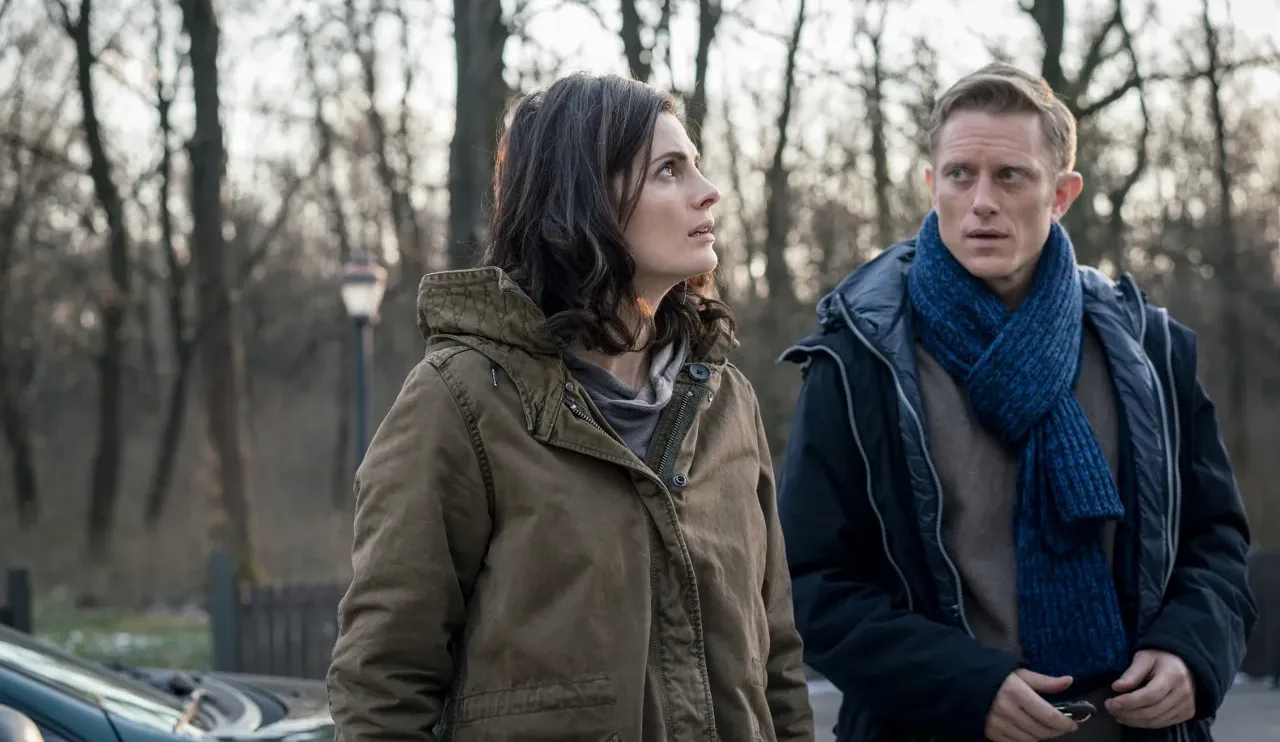
The most striking production choice lies in the setting. The narrative identifies Boston as its backdrop, yet every frame was shot in Bulgaria. That geographic dislocation builds a mood that feels both present and strangely distant. The dark, slightly unreal look matches the story’s paranoid streak. The trade-off comes with local detail. Credible touches of Boston life, down to elements like accents, never quite land and can pull the viewer out of the moment. The performers work hard to push back against that disconnect. Katic remains the firm anchor of the series.
Her physically committed, psychologically haunted performance gives the show its core appeal. Patrick Heusinger and Richard Brake provide strong support that helps steady the narrative whenever the plotting edges toward contrivance. The direction stays slick and tense. The casting choices land cleanly. The production feels professionally assembled, yet its reliance on familiar genre machinery keeps it from standing out in a crowded crime-TV lineup. Viewers may find themselves asking if the raw emotional charge of Katic’s work balances the story’s well-worn beats.
Absentia is an American thriller drama series that premiered internationally on AXN on September 25, 2017, before becoming widely available in the US on Amazon Prime Video, which is also the platform where the third and final season was exclusively released. The series follows FBI agent Emily Byrne (Stana Katic) after her return, six years after being presumed dead. It ran for three seasons, concluding in 2020, and is available to stream on Amazon Prime Video.
Credits
Title: Absentia
Distributor: Amazon Prime Video (for the US and several international territories), AXN (internationally for early seasons)
Release date: September 25, 2017 (AXN, international premiere)
Rating: TV-MA
Running time: 45–60 minutes per episode
Director: Oded Ruskin, Kasia Adamik, Adam Sanderson
Writers: Gaia Violo, Matthew Cirulnick, Samantha Strauss, Josh Putman, Antonina Shevchenko, Stana Katic
Producers and Executive Producers: Stana Katic, Matt Cirulnick, Oded Ruskin, Matti Rosen, Maria Feldman, Julie Glucksman, Antonina Shevchenko
Cast: Stana Katic, Patrick Heusinger, Matthew Le Nevez, Cara Theobold, Neil Jackson, Angel Bonanni, Ralph Ineson, Paul Freeman, Patrick McAuley, Bruno Bichir, Hugh Quarshie, Geoff Bell
Director of Photography (Cinematographer): Ivan Vit, Ben Nott
Editors: Jonathan Eagan, David Handman, Tal Keller
Composer: Federica De Cola
The Review
Absentia
Absentia thrives on Stana Katic’s raw, haunting performance as Emily Byrne, navigating profound trauma and impossible domestic chaos. The series is intense and slickly directed, successfully fusing European mood with American pacing. However, its core mystery leans too heavily on familiar serial killer tropes and relies on dubious character decisions to maintain its plot momentum. It's a compelling, binge-worthy thriller that demands suspension of disbelief, ultimately held back by an over-reliance on genre conventions.
PROS
- Stana Katic's powerful, wide-ranging performance as the damaged Emily Byrne.
- Effective suspense and fast pacing, creating an instantly gripping watch.
- The intense, painful dynamics of the fractured family are handled with care.
- Strong, moody direction by Oded Ruskin, blending European and US styles.
- Strong supporting cast, including Patrick Heusinger and Richard Brake.
CONS
- Over-reliance on the "super-smart serial killer" trope, feeling stale.
- Plot contrivances and improbable character actions strain credibility.
- The geographical mismatch of filming Bulgaria for Boston is noticeable.
- Focus on action often supersedes deep psychological reflection on trauma.
- The central mystery lacks genuine originality or fresh ideas.