




























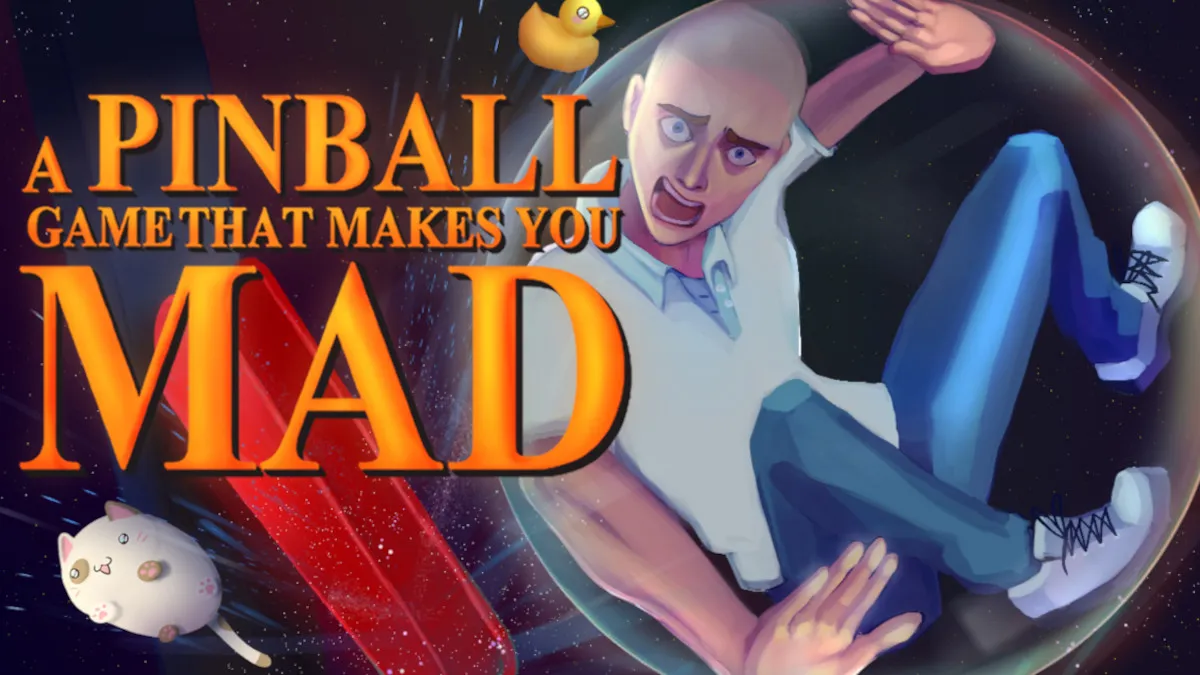

Azimuth Studio, led by developer Devin Henderling, uses A Pinball Game That Makes You Mad to deliver exactly what the title promises. The game presents a fusion of pinball, demanding physics, and tightly constructed puzzle design. The core premise places the player in charge of a sphere that contains a small human figure and asks them to guide it through a dense obstacle course toward a clear endpoint.
Every layout, every incline, and every bumper feeds into a structure that treats frustration as its main emotional resource. From the first button press, the design signals a punishing, highly specific experience that frames the challenge as a deliberate test of control, patience, and tolerance for failure.
The Tyranny of the Single Button
The mechanical focus of A Pinball Game That Makes You Mad is a stripped-down control scheme that becomes the main source of tension. Player input collapses to one deliberate press that fires every paddle and flipper across the level at the same time.
That single action links agency to instant, chaotic consequence across the whole table. Classic pinball elements sit under that system, with bumpers, angled surfaces, and the behavior of mass shaping how the ball travels. Players also gain a small amount of influence through nudging controls that shift the table.
Rapid-fire flipper use familiar from traditional pinball rarely helps here. The system demands exact timing and precise button presses to bend the ball’s path during narrow windows of opportunity. A Pinball Game That Makes You Mad becomes a game of millimeters and milliseconds.
The simple input turns into a demanding instrument for vector control that rewards an understanding of physics over raw reflex. This minimal control philosophy produces steep difficulty and turns each press into a high-stakes decision.
The Architecture of Aggravation
The game sits firmly inside the “rage-inducing” Foddian genre. The controls feel clear and readable, so the challenge comes from level geometry and harsh placement, with no sense of hidden rules. Layouts act as the main antagonist, defined by illogical, unforgiving, and counter-intuitive pathways.
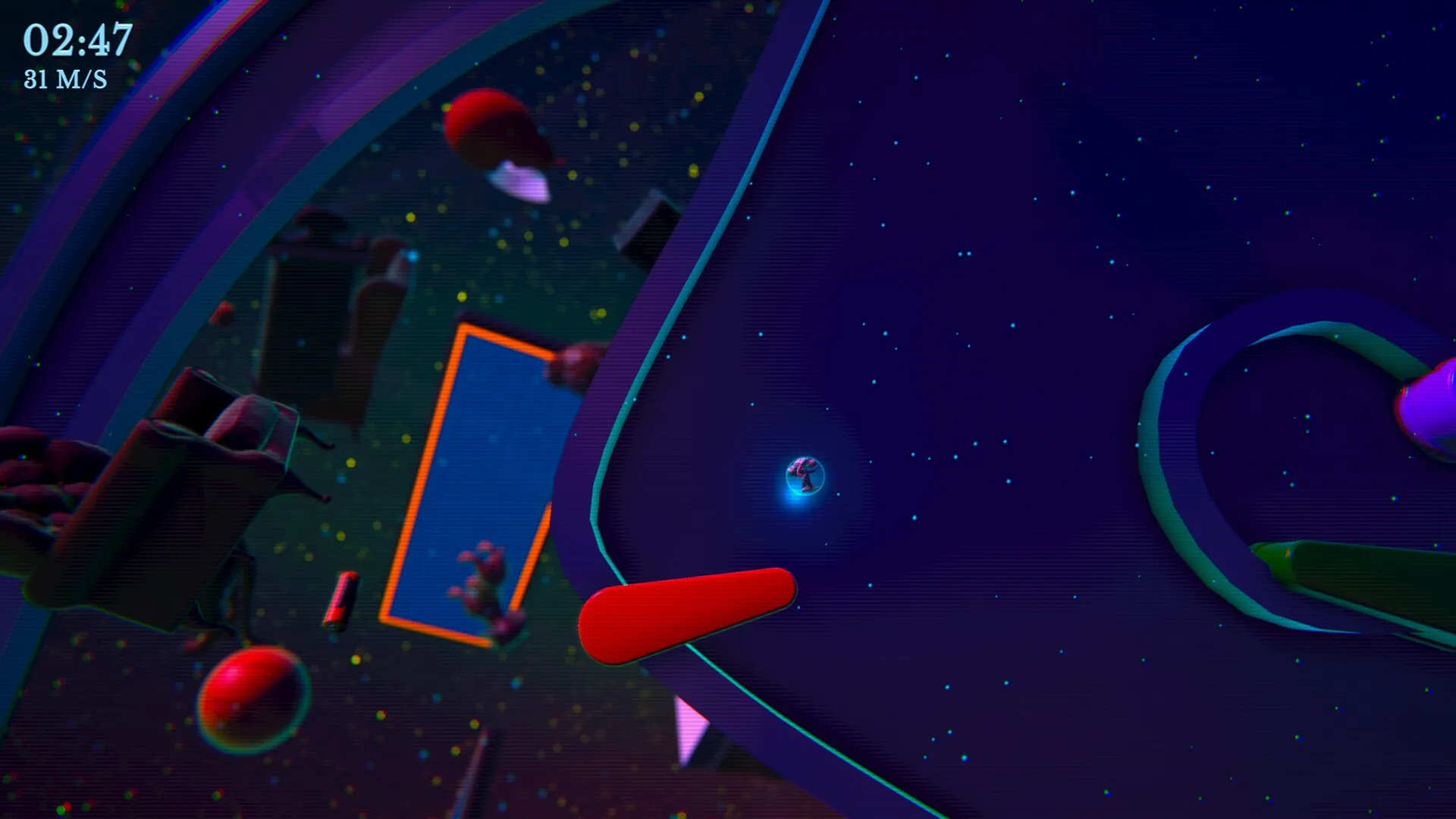
Progress usually requires extended repetition and acceptance of frequent mistakes before any run feels productive. For many players, success feels like a hard-won chain of perfectly aligned physics events that only comes after long practice.
The consequence system stays simple and hits hard. In classic mode, a single misjudged press can spark a cascade that sends the ball plunging backward through large sections of the course, erasing minutes of effort.
That punitive reset loop drives the game’s drama. The experience builds a strong emotional conflict in which the layout appears unfair while the urge to line up the same shot again remains strong, which gives the game an intensely addictive feel.
Absurdity and the Sarcastic Storyteller
Visual and tonal choices reinforce this focus on high-stakes absurdity. The art style leans into low-fidelity, strange, and quirky imagery. The table itself appears as an organic pinball structure floating in deep space, with nonsense objects such as hot dogs, armchairs, and cows drifting through the background. This odd, colorful vista keeps the experience rooted in a sense of deliberate ridiculousness that matches the harsh difficulty.

Audio design supports the same idea. Calm, steady music plays underneath mounting player stress, creating a dry contrast between sound and emotion. The clearest narrative voice comes from the sarcastic, witty, and distinctly British narrator. That commentary system carries most of the storytelling, with constant jabs about player failures and hesitation. The tone aims for sharp snark and humor while staying just short of outright cruelty.
Continuous verbal needling shapes the emotional rhythm and often pushes the player to continue out of sheer stubbornness toward this unseen commentator. Occasional interjections from the developer, sharing personal thoughts, add a small meta-narrative thread that turns the experience into a kind of dialogue between player and creator.
Player Choice and Pressure-Relief Gimmicks
A Pinball Game That Makes You Mad treats difficulty as a core identity and still respects different player tolerances through optional systems. Several quality-of-life features sit alongside the base experience. The Checkpoint System plants specific respawn points that cut into the overwhelming need to restart from the very beginning in classic mode.

The Skip System allows players to bypass a section once they have spent a fixed amount of time failing there. This structure lets players commit to the harsh, unassisted version or soften it with support tools that keep frustration manageable, while the narrator’s snarky remarks after a skip underline that the choice carries a cost to pride.
Outside those practical assists, the game includes humor-driven, mechanically useless buttons. These triggers call up effects such as a sudden jumpscare or the narrator saying the word “lemon,” which act as brief bursts of absurdity that release tension during heavy puzzle sequences. Time modifiers play a more functional role.
The ability to slow down or speed up the game offers valuable control and can turn critical moments into slightly more manageable physics challenges for determined players. Together, these tools let players tune the pace and intensity of A Pinball Game That Makes You Mad so that the relationship between control scheme, punishment, and emotional payoff stays readable and engaging.
The Review
A Pinball Game That Makes You Mad
A Pinball Game That Makes You Mad is a masterpiece of minimalist, punishing design. It brilliantly uses a single-button mechanic to demand extreme precision, translating failure into spiteful motivation via its sarcastic narrator. The intentional absurdity of the visuals and audio design enhances the experience. The inclusion of optional checkpoint and skip features makes this specific brand of frustration accessible to a wider audience, though its difficulty remains high. This is essential playing for those who seek high-consequence physics puzzles layered with absurd humor.
PROS
- Minimalist one-button control demands high precision and mastery.
- Intentional absurd visual style perfectly matches the game's premise.
- Excellent sarcastic narrator and audio design enhances thematic humor.
- Inclusion of optional accessibility features (checkpoints and skips).
CONS
- Extreme difficulty is inherently polarizing and overwhelming for many players.
- Success relies heavily on highly specific, millisecond-perfect timing.
- The core mechanic of sending the player backward after failure can feel overly punitive.