
























![Kingdom Hearts Collection [I-III] Review](https://gazettely.com/wp-content/uploads/2026/10/Kingdom-Hearts-Collection-I-III-1-360x180.webp "Kingdom Hearts Collection [I-III] Review: KHII Holds Steady as Newer Entries Fluctuate 37")



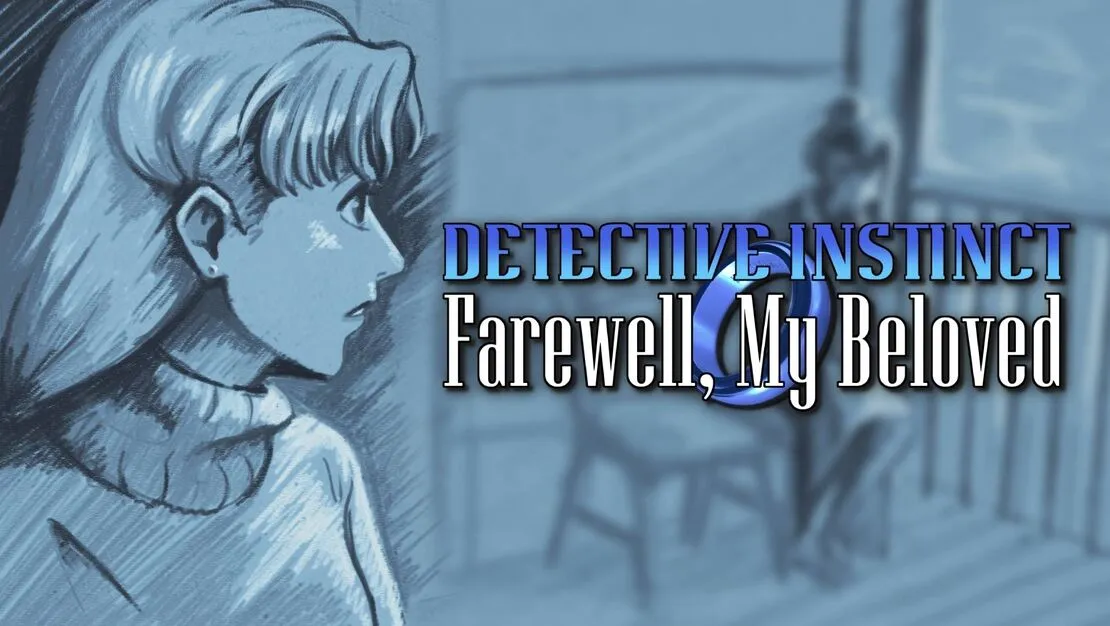

The adventure game and visual novel field currently offers a wide range of approaches. Armonica’s Detective Instinct: Farewell, My Beloved directs its energy toward refinement of tradition. The game returns to the foundations of the mystery genre and draws clear aesthetic and structural cues from series such as Famicom Detective Club and Hotel Dusk. Its compact drama unfolds during a long-distance train ride through the fictional European region of Vendreka.
A quiet study trip for two protagonists, a customizable college student and his companion Emma, quickly shifts course. A mysterious woman disappears from the passenger list, and the key complication arrives early: no one else on the train remembers that she ever existed. This central twist pushes the two literature students into an improvised inquiry into identity and truth, and their search soon extends beyond the question of a single missing passenger.
Narrative as Cultural Commentary
The narrative framework initially follows a classic, geographically grounded mystery that recalls the confined trains of Agatha Christie’s stories. The enclosed carriage space functions as a shared, almost mythic setting for whodunits across cultures, yet Armonica directs that familiar structure into a specific local frame. Vendreka, with its political tension against neighboring Ganbrika, supplies a regional backdrop that shapes how each clue lands.
A simple disappearance gains additional weight and grows into a political mystery that links an individual case to a larger conflict between states. This movement from personal investigation to questions of regional power echoes a technique long present in international cinema, where intimate stakes mirror wider social or historical pressures. Detective Instinct maintains a light, often charming tone while it builds this connection, slipping political detail into dialogue in a way that avoids dense blocks of exposition.
The choice to place two literature students at the center of the story defines how the player reads both the investigation and its cultural reach. The protagonists travel on an academic field trip rather than a professional assignment, and the script emphasizes that they operate as amateurs rather than trained investigators. Their actions stem from curiosity and circumstance. Puzzle difficulty remains anchored to what these students might plausibly figure out, which keeps the investigation grounded and approachable. This focus has trade-offs for agency. High-stakes story beats often unfold with the player positioned as an observer while key figures on the train act out the decisive moments.
The narrative stays consistent with the heroes’ limited authority, yet some players may feel distant from the final resolutions. The game runs about five to six hours, and the story’s ending appears just as the political implications reach their heaviest point. The result feels relatively brief for a narrative that touches on regional conflict, even though the script resolves its mysteries without leaving major threads hanging. The chapter structure supports a measured pace, and new areas become available only when the investigation has earned that step, which keeps the entire experience tightly bound to the train and its immediate social world.
Accessible Systems and Mechanical Restraint
Detective Instinct builds its mechanical design around accessibility, and that choice shapes how players from different experience levels approach both story and systems. The game uses a classic command-select interface, with options such as Talk, Check, Think, Review Notes, and Go To another location. Every interaction grows from this menu structure. New actions arrive little by little in the early chapters, so players learn how to operate the game at a steady rhythm instead of being flooded with options. This careful pacing of commands makes the title friendly to those unfamiliar with adventure games while still preserving a clear procedure for investigation.
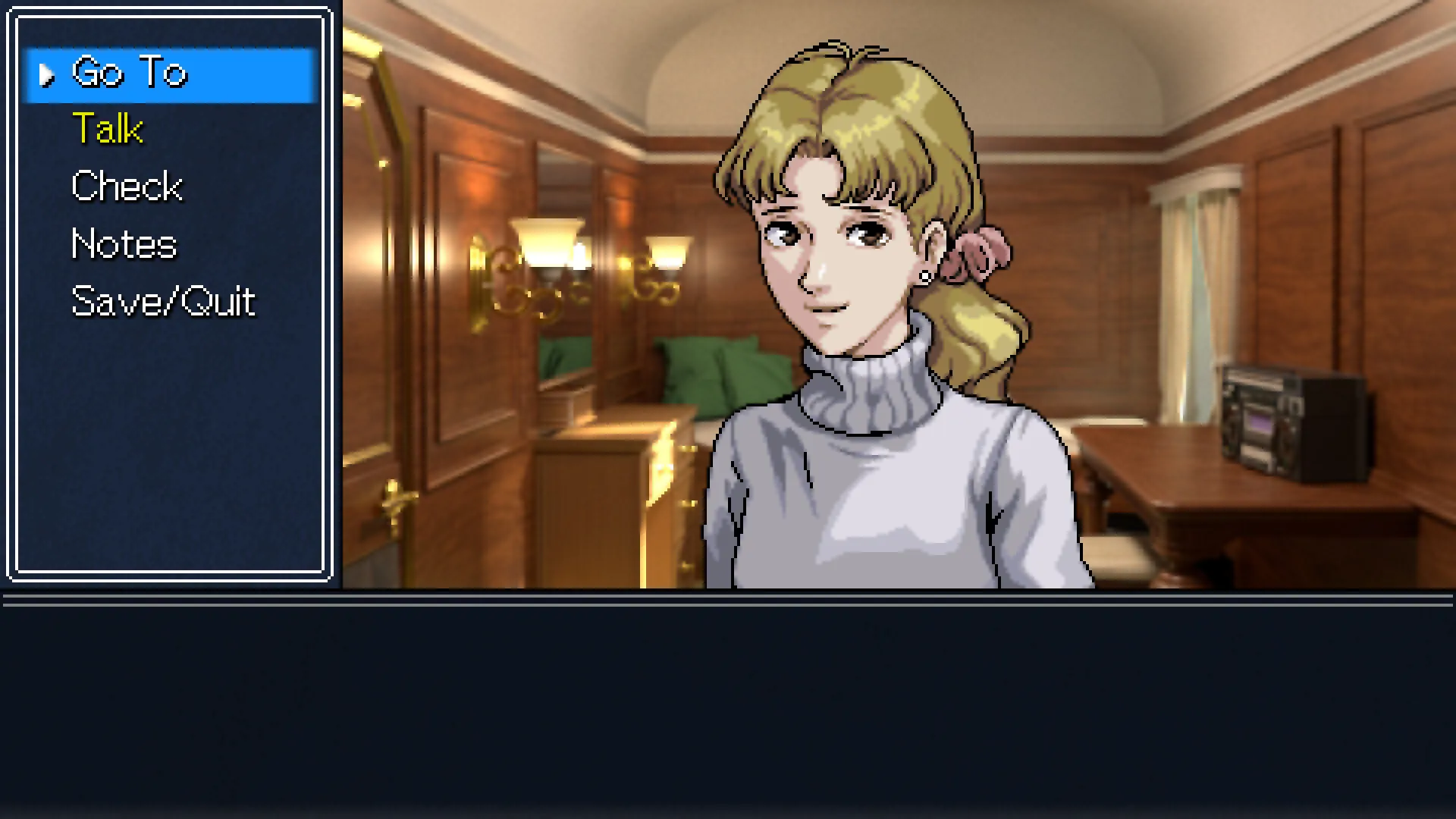
Several quality-of-life systems keep the focus on reading the narrative rather than wrestling with opaque logic. Think and Discuss operate as internal guidance tools. The Think command provides gentle, context-aware hints about the next step without handing over the full solution, while Discuss asks players to talk new information through with Emma.
That requirement to articulate discoveries with a partner gives the investigation a conversational, almost seminar-like tone, as though the mystery were being unpacked in a literature class that happens to take place in a train corridor. Automatic note-taking collects important details as they appear, which helps players recall names, motives, and key events. The growing stack of notes can become visually cluttered near the end of the story because it cannot be filtered, yet it still functions as a useful archive of the case.
Chapter-end recaps and small quizzes reinforce the main line of reasoning and check whether players have followed the central logic. Detective Instinct rarely demands big leaps of deduction and therefore sits at a relatively low difficulty level. This design gives newcomers an inviting entry point into the genre, while veteran players of mystery games may feel that the simplified chain of reasoning reduces the sense of challenge that traditionally defines detective work.
Evocative Presentation and Character Dynamics
The game’s presentation and aesthetic decisions give its cross-cultural mystery a distinct visual and sonic frame. Armonica uses detailed pixel art for character sprites and places them against pre-rendered 3D backgrounds. The mix of sprite work and rendered environments recalls an earlier era of handheld narrative adventure games and draws on that shared visual memory to locate Detective Instinct within a particular international lineage of story-first titles. The choice also reflects a strategic use of resources, building a memorable and consistent look through style rather than technical spectacle.
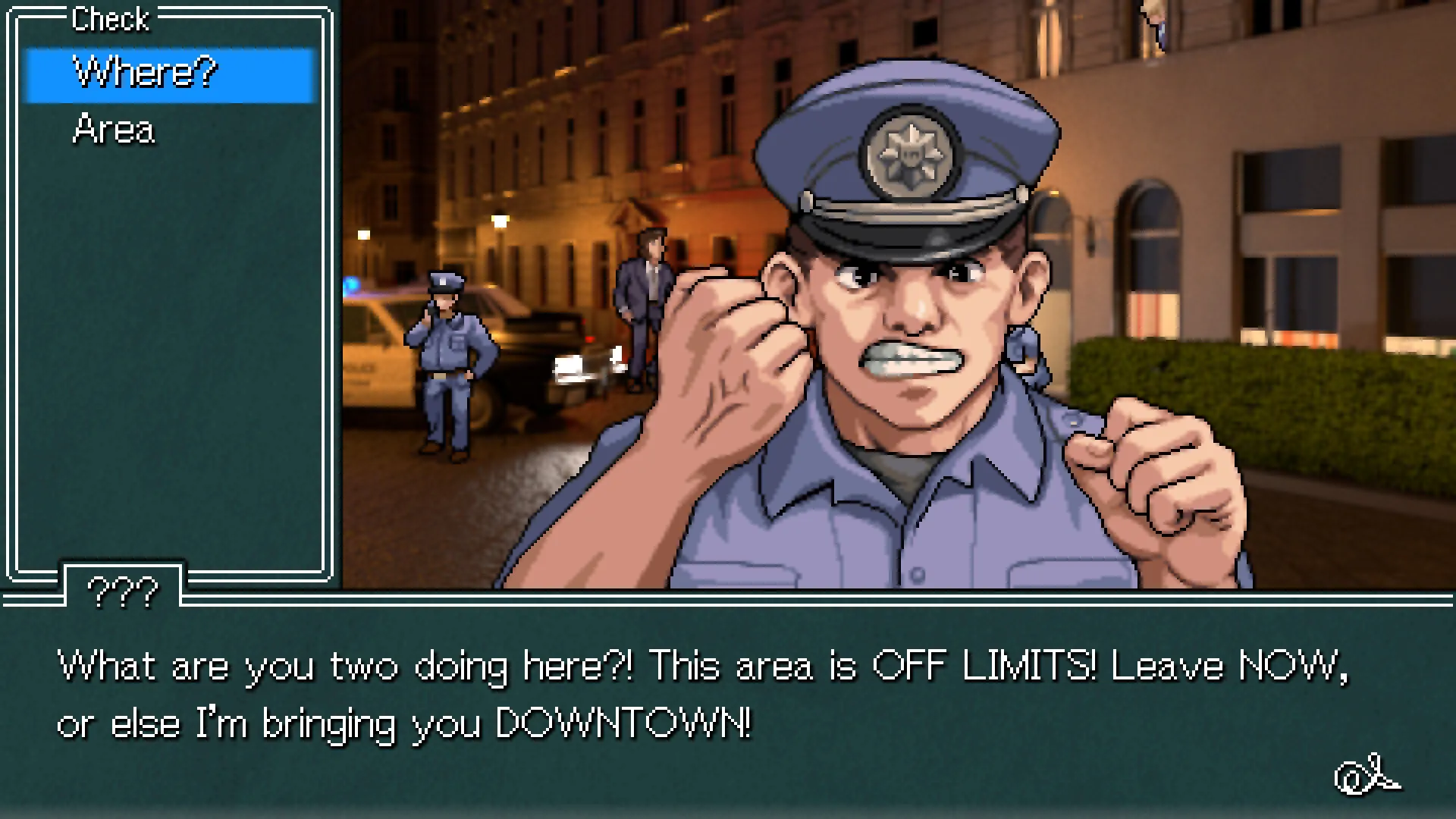
Character writing becomes the primary tool for expressing both interpersonal tension and cultural nuance inside the train. The carriage hosts a varied group of passengers whose personalities fill out the social microcosm of Vendreka.
Among them are the well-meaning but often clumsy detective Daltrey, eccentric golfers, and suspicious bartenders. Their presence brings humor and color to a setting that might otherwise feel static. Many of these characters first appear as recognizable archetypes, such as the curious girl or arrogant aristocrat, yet the story gradually peels back their histories, regrets, and affections.
This progression gives each figure emotional weight and keeps them from functioning solely as devices for plot advancement. Characters who initially read as comic relief later reveal motives and vulnerabilities that invite a more layered interpretation. Side characters frequently possess stronger, clearer personalities than the two leads, and they often set the tone of each scene, driving the story’s momentum from one compartment to the next.
Music strengthens this sense of place and mood. The score, composed by the game’s director, relies on bass, violin, and piano to create an atmosphere that feels both inviting and quietly tense. Audio and visuals work together to frame the train as a self-contained cultural space where personal and political threads intersect. Technical polish is strong overall.
A few interface issues remain, such as the absence of a quick shortcut for toggling the auto-text feature, which would have made extended reading sessions smoother. Even with these small limitations, Detective Instinct’s presentation, character work, and systems join to form a mystery that feels rooted in a specific regional setting while speaking in a language that players familiar with adventure games from many backgrounds can immediately understand.
The Review
Detective Instinct: Farewell, My Beloved
Detective Instinct: Farewell, My Beloved is a successful first step for Armonica. It skillfully updates the classic visual novel adventure. The game’s focus on a character-driven, contained mystery is a strength, backed by a distinct aesthetic and memorable cast. While the core puzzles are simple, and the short duration may disappoint those seeking a sprawling epic, the experience remains highly enjoyable. It is an accessible, charming mystery that prioritizes narrative clarity and flow, making it a compelling introduction to the genre. The title shows significant promise for future stories.
PROS
- Distinct, charming visual style
- Memorable, well-written side characters
- Accessible, helpful clue management systems
- Deliberate, consistent narrative pacing
- Strong retro-adventure aesthetic
CONS
- Short runtime (5-6 hours)
- Low puzzle difficulty
- Limited player agency in the story climax
- Cluttered interface for the Notes system