




























King of Collectibles: The Goldin Touch returns for a third season that expands its scale from a boutique operation into a global powerhouse narrative. Ken Goldin remains the central figure, overseeing an auction house that sources and sells rare sports memorabilia and pop culture artifacts.
The landscape shifts in 2024 with the acquisition of Goldin by eBay. That partnership broadens the company’s reach and raises the financial expectations attached to every deal. The series now chases billion-dollar auction house status, pushing beyond single-item wins to secure entire estates and other high-value, diverse collections.
The atmosphere stays high-energy and aggressive. Million-dollar figures come up with a casual frequency that turns extreme wealth into routine conversation, a familiar move for streaming reality TV that packages luxury as everyday problem-solving.
This season leans into the transformation of collecting itself, from niche hobby into massive corporate enterprise, and it keeps returning to the intersection of personal obsession and massive capital. The show treats these artifacts as assets circulating through a global marketplace, and it presents history as something priced, traded, and scaled.
The Mechanics of High-Stakes Persuasion
The day-to-day operation relies on consignment directors Ryan Krupa, Carlo Civitella, and Dave Amerman. They act as scouts, identifying major collectors and persuading them to consign items for sale. Their scenes emphasize persuasion as labor, with confidence, urgency, and social pressure baked into the pitch. In one instance, the team visits Josh Dawson to see his basketball collection, and the intensity of the conversation makes the pressure inside these transactions hard to ignore.
The strategy often asks collectors to treat sentiment as leverage. A prized item becomes the funding source for an even rarer acquisition, and the show spells out the logic with a specific suggestion: sell a LeBron James card to bankroll a Michael Jordan card valued at over $250,000. The house positions itself to collect commission on the sale and on the subsequent purchase, turning the collector’s desire for the next grail into a two-step revenue stream.
Beneath the bravado sits a constant current of stress about authentication. One verification error could destroy the firm’s credibility, and the season builds real risk out of the push for speed alongside the demand for precision. The transactional nature of modern fandom comes through in these scenes, where emotional attachment becomes a tool for financial gain.
Viral Artifacts and the Influencer Pivot
The show’s inventory range offers a break from traditional sports cards and points toward a changing definition of cultural value. Oddities like the “Cheetozard,” a snack shaped like a Pokémon character, share screen time with historic jerseys, linking digital-era virality with legacy sports history. The series treats that link as a business advantage and presents a world where an object’s worth is tied to its potential for a “like” and its historical significance. It captures how creator culture can recalibrate value, then sell it back through established systems that used to set the rules.
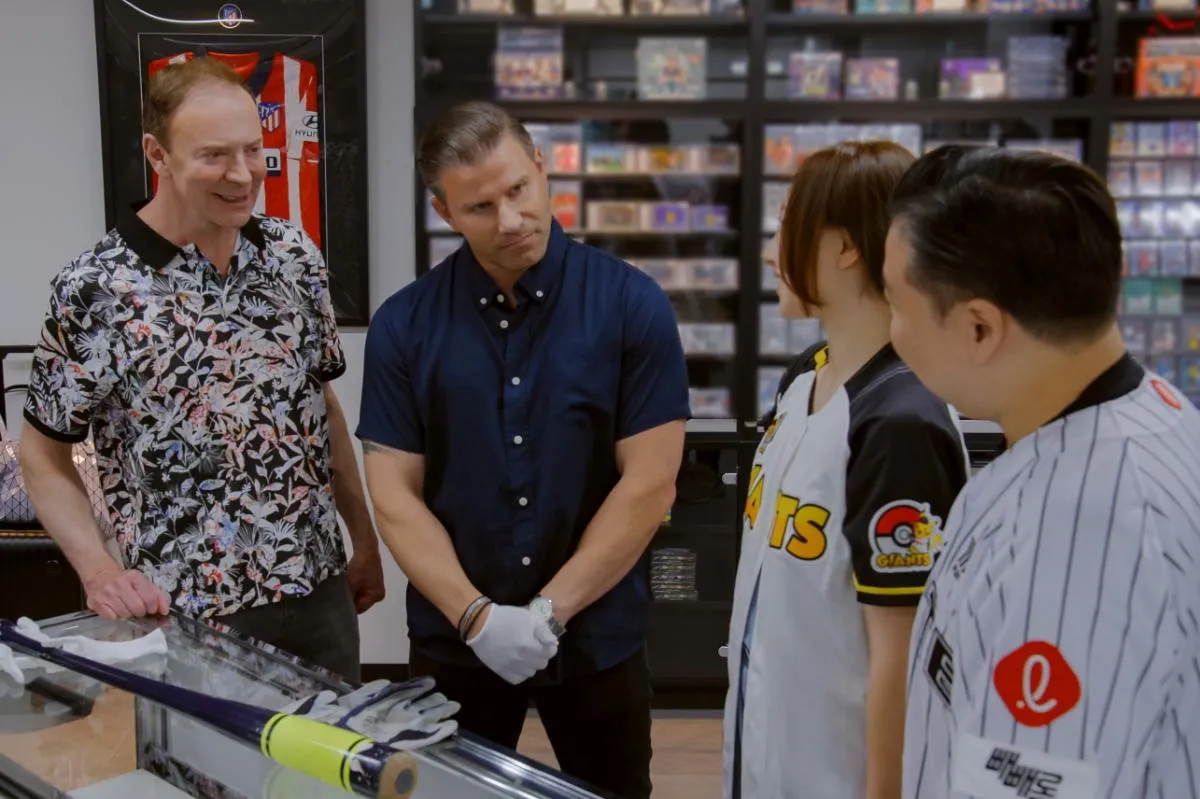
Ken Goldin’s push to modernize his brand runs through influencer outreach. He meets YouTube chef Nick DiGiovanni and interacts with personalities like Logan Paul to tap into their massive follower bases. The marketing strategy relies on social media videos built to go viral, with the expectation that digital attention can raise auction prices through sheer visibility.
Ken’s daughter, Laura Goldin, appears as an adviser on these trends. Her presence signals an attempt to connect legacy collecting with Gen Z interests, and it reflects a television trend where traditional industries learn to perform for the camera and for the algorithm in the same breath. The show treats that shift as normal business practice, even when it plays like a quiet punchline about who gets to define “importance” in the first place. The season keeps tracking the growing influence of creator culture on established business models.
Scripted Hustle and the Psychology of Value
The series follows a predictable structural pattern. Episodes typically open with a pep talk from Ken, feature a celebrity cameo, move to a visit inside a private residence, and end with the auction results. Season 3 feels more choreographed than previous ones. Some “bits” come off staged, including moments where staff gather around a laptop to deliver performative reactions to a social media post. These pre-arranged beats underline the tension between business reality and entertainment packaging.
The glossy presentation still offers a window into the psychology of the modern collector. Some participants treat their items as financial hedges or cultural timestamps, while others seem driven by deep-seated nostalgia. The visual style leans on luxury, framing the collectibles through private jets and high-end sports cars to present them as prestigious history.
That framing supports the astronomical price tags on screen and helps sell the idea that cardboard and fabric belong in the same status category as the machines parked outside. By treating a piece of cardboard or fabric as a sacred relic, the show reinforces the idea that passion can and should be monetized. It reflects a societal moment where everything, including our memories, has a calculated market value.
King Of Collectibles: The Goldin Touch returned for its third season on December 23, 2025, exclusively on Netflix. This season marks a major turning point for the series as Ken Goldin takes his auction house global following the company’s high-profile acquisition by eBay in 2024. Viewers can watch all episodes on Netflix, where the show continues to document the high-pressure world of elite memorabilia trading, featuring everything from legendary sports cards to viral internet artifacts like the “Cheetozard.”
Full Credits
Title: King Of Collectibles: The Goldin Touch Season 3
Distributor: Netflix
Release date: December 23, 2025
Rating: TV-14
Running time: Approximately 28–35 minutes per episode
- Producers and Executive Producers: Brent Montgomery, Ian Sambor, Russ Friedman, Will Nothacker, Peyton Manning, Connor Schell, David Chamberlain, Ken Goldin
Cast: Ken Goldin, Dave Amerman, Ryan Krupa, Carlo Civitella, Laura Goldin, Alex Fung, Joe Montana, Nick DiGiovanni, Logan Paul
Director of Photography (Cinematographer): Blair Madigan
Editors: Michael Chaskes, Aaron Pomerantz, Mac Caudill, Bryan Sandlin
Composer: Chloé-Anne Touma
The Review
King Of Collectibles: The Goldin Touch Season 3
King of Collectibles: The Goldin Touch Season 3 captures the massive expansion of the memorabilia market into the corporate sphere. The partnership with eBay adds a commercial scale that feels impressive and slightly sterile. While the high-stakes deals remain entertaining, the scripted nature of the interactions occasionally detracts from the excitement of the finds. This season provides an interesting look at the monetization of nostalgia for viewers who can overlook the aggressive sales tactics and staged drama.
PROS
- Remarkable items ranging from historic jerseys to viral pop culture artifacts.
- Detailed look at the behind the scenes mechanics of high end auctions.
- High production value and glossy presentation of rare collectibles.
- Clear look at how digital influencers change current market values.
CONS
- Aggressive sales tactics can feel uncomfortable or manipulative.
- Various segments appear heavily scripted for dramatic effect.
- The focus on extreme wealth makes the show less relatable for casual collectors.