


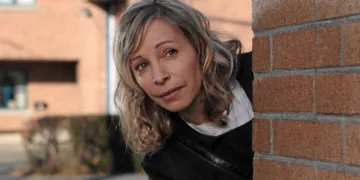


















Mari Storstein’s feature debut, My First Love, introduces 19-year-old Ella (Marie Flaatten) at the moment she leaves home for university. The film frames her as someone ready for the independence that comes with further education, a rite of passage many viewers will recognize.
Ella uses a wheelchair, and she wants to build a life in Lillehammer on her own terms, away from her family home. That plan hits a hard wall the minute bureaucracy enters the frame. A shift in municipal jurisdiction leads to a sudden denial of the personal assistant support she needs for daily life, and the decision pushes her into a residential care home.
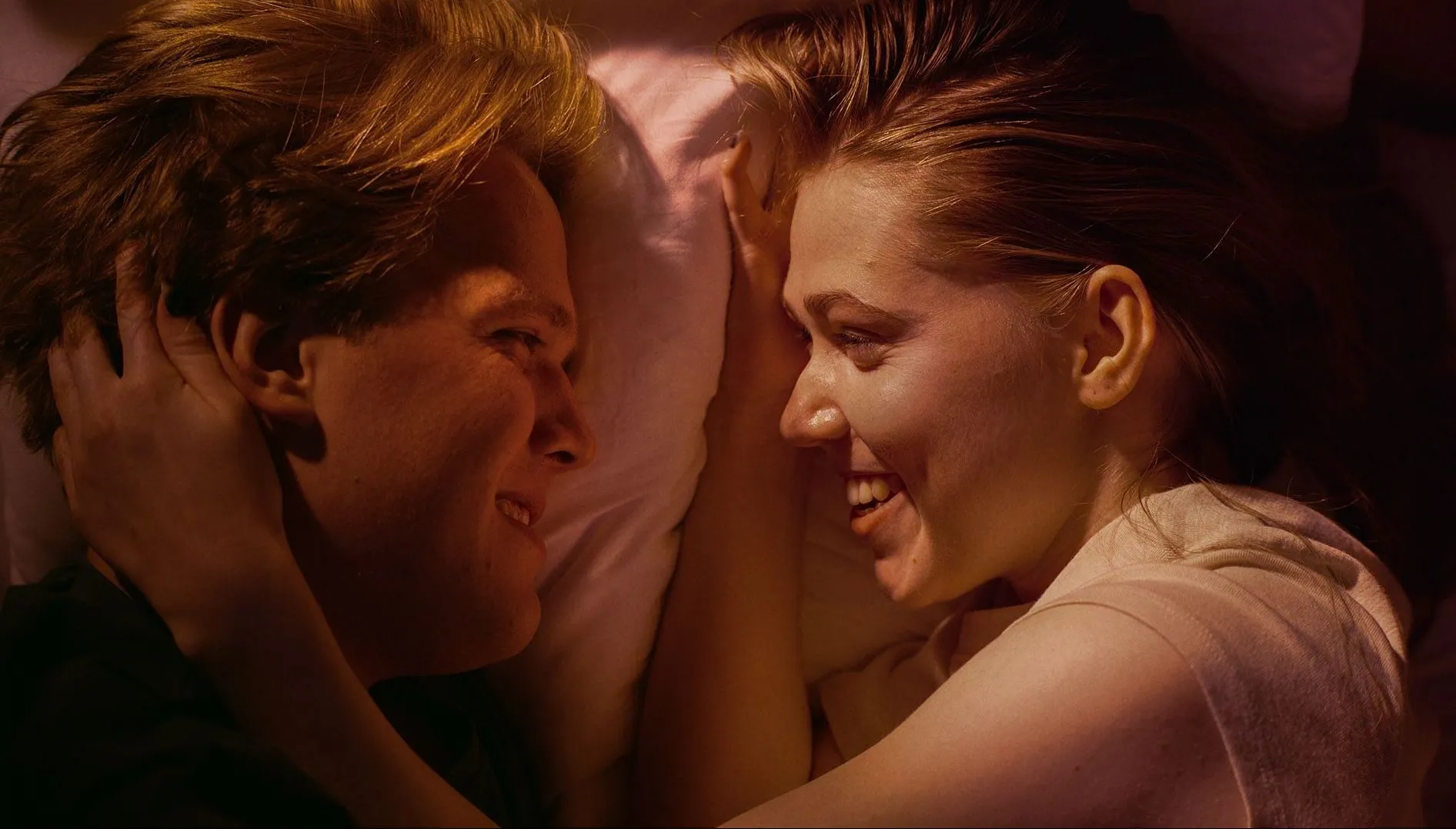
From there, Storstein sets two forces in motion: the bright pull of Ella’s first love with fellow student Oliver (Niels Skåber), and the tightening pressure of institutional control. The coming-of-age shape stays clear and immediate, and the point lands with sharp force: systems that claim to help can still block disabled people from basic autonomy and freedom.
The Institutional Wall Against Independence
The film’s strongest material comes from how directly it depicts Ella’s fight with a structure that trades support for restriction. The rejection of her application for personal support workers acts as the administrative motor of the conflict, turning what should be a milestone into a setback. Inside the residential setting, the day-to-day texture reads like a holdover dressed up as protection. Rules around early curfews and control over personal possessions keep asserting who holds power, and the effect is to treat adulthood like a privilege that can be granted or withdrawn.
Storstein has a firm grasp on how institutional logic can sound reasonable while behaving cruelly, and she makes that visible without resorting to melodrama. The film even spells out the underlying posture in plain language: “overreach is portrayed as care.” One of the most revealing examples comes from the staff’s baffled reaction to Ella and Oliver’s intimacy.
Their response treats her romantic life like paperwork, with consent reduced to procedure and a young woman reduced to a checklist. The film keeps a matter-of-fact tone through daily indignities, including a genuinely shocking moment where a male carer struggles with a sanitary product. Scenes like this underline how little individualized awareness exists inside a one-size-fits-all model. The film keeps returning to the same idea through action and routine: independence is presented as a problem to be managed.
Performance, Romance, and a Scream for Rights
The title points to Ella’s relationship with Oliver, and it also points to the cluster of “firsts” that arrive with early adulthood: claiming a voice, pursuing education, and holding onto independence. The romance is sweet and tender, and the residential home becomes a practical obstacle that keeps intimacy from being simple. That friction gives the relationship a contemporary shape, grounded in logistics and access as much as emotion.
Flaatten, in her debut, carries the film with a sincere presence that feels plainspoken and lived. She moves easily between humor and patience as she handles the way people look at her body and her chair, and she gets a clean character beat in a line to Oliver: “Relax, you’re not going to break me.” Storstein lets that warmth exist alongside anger that never feels performative.
Ella’s arc runs from measured endurance to a final, wrenching scream of frustration, a release that marks her internal recognition of her rights and her commitment to real change. I kept appreciating how the film holds both tones in the same frame: the lightness of teen romance and the heavy, grinding pressure of systemic failure. The emotional realism comes from that coexistence, not from any single dramatic flourish.
Sincerity and Cinematic Form
As independent cinema, My First Love puts authenticity first and treats polish as secondary. Storstein’s background as a disabled advocate gives the project a perspective that feels grounded and specific, with choices that seem informed by lived experience. Some technical elements land as plain.
The score can feel generic, for example, and the aesthetic can read as unvarnished. The film’s narrative structure stays straightforward, with a focus that can feel closer to TV cinema in its concentration on story beats and clarity. The urgency to tell Ella’s story pushes the film toward a plot-driven shape, with scenes arranged to make the institutional pressures legible and the emotional stakes hard to miss.
I read that directness as part of the film’s sincerity. It wants clarity. It wants the viewer to understand what is happening to Ella, how quickly it happens, and how much it costs. That approach makes the experience easy to enter and emotionally immediate, and it keeps the political message front-facing: self-determination and equality are treated as urgent, necessary rights.
My First Love is a Norwegian drama that premiered at the Tallinn Black Nights Film Festival in November 2025. The film, directed by Mari Storstein, is a personal story that follows 19-year-old Ella, a wheelchair user who moves away from home for university but finds her longed-for independence thwarted by bureaucratic obstacles. When her application for personal assistants is denied, she is forced into a restrictive institution, complicating her burgeoning first romance. While its local Norwegian release is slated for February 27, 2026, its international availability is managed by sales agent TrustNordisk.
Full Credits
Title: My First Love (Original Title: Min Første Kjærlighet)
Distributor: TrustNordisk (International Sales), Nordisk Film Production (Production Company)
Release date: Local release is scheduled for February 27, 2026. It premiered at the Tallinn Black Nights Film Festival in November 2025.
Rating: 15+
Running time: 88 minutes or 90 minutes
Director: Mari Storstein
Writers: Mari Storstein, Tomas Myklebost
Producers and Executive Producers: Tøri Gjendal, Thomas Robsahm, Nicholas Sando (Co-producer), Sveinung Golimo (Executive Producer)
Cast: Marie Flaatten, Niels Skåber, Jan Gunnar Røise, Silje Breivik, Silje Storstein, Håkon Johannes Kjølberg Hauge, Clara Penzo Fastng
Director of Photography (Cinematographer): Tomas Myklebost
Editors: Anna Løvlund
Composer: Ingeborg Marie Mohn
The Review
My First Love
My First Love is a crucial, affecting film that uses the tender framework of a coming-of-age romance to launch a fierce critique of systemic oppression. While its direction occasionally favors blunt sincerity over cinematic polish, the authentic central performance and vital, frustrating themes of autonomy make it essential viewing. It’s a powerful reflection of a societal problem demanding immediate attention.
PROS
- Effectively critiques bureaucratic barriers and the infantilization of disabled adults.
- Marie Flaatten’s debut is disarming and emotionally resonant.
- A necessary film that provides an honest perspective on disability rights and self-determination.
- Seamlessly blends light teen romance with serious social drama.
CONS
- The film can feel stylistically simple or like "TV cinema" in execution.
- The music is sometimes bland and detracts from the emotional depth of scenes.
- The narrative is sometimes too direct, lacking cinematic playfulness.
- The urgency of the message occasionally overshadows deep character development for supporting roles.