








![Kingdom Hearts Collection [I-III] Review](https://gazettely.com/wp-content/uploads/2026/10/Kingdom-Hearts-Collection-I-III-1-360x180.webp "Kingdom Hearts Collection [I-III] Review: KHII Holds Steady as Newer Entries Fluctuate 33")







When a filmmaker like James L. Brooks steps back into feature filmmaking after 15 years of silence, the return lands with a particular charge. Brooks shaped decades of American television and cinema, from the finely tuned workplace rhythms of The Mary Tyler Moore Show to the emotional volatility of Terms of Endearment and the newsroom pressures of Broadcast News. His best work treats human interaction like a carefully tuned system, where jokes, conflicts, and quiet beats feed into one another to create messy, empathetic emotional logic.
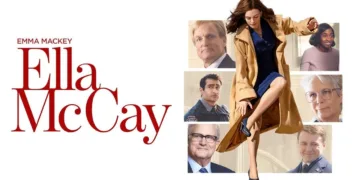
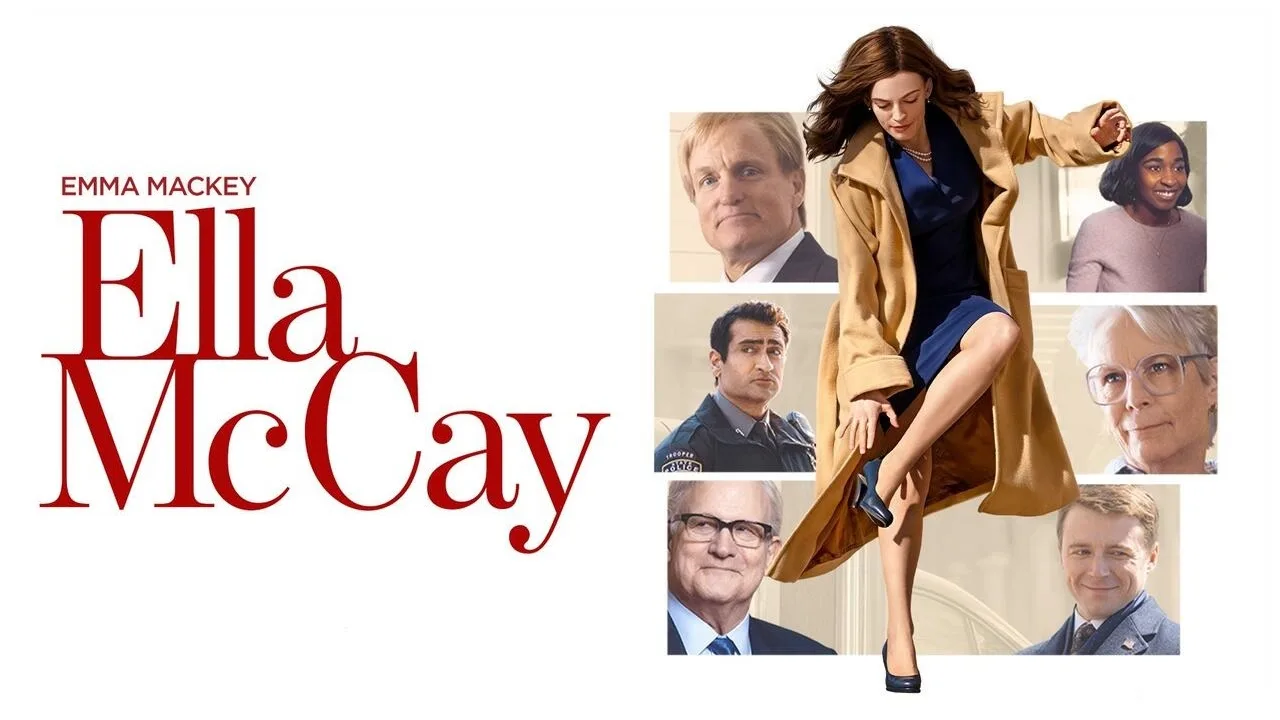
Ella McCay introduces Emma Mackey as the title character, a 34-year-old Lieutenant Governor of an unnamed state, and sets its story over a handful of days in 2008. That period is framed by Ella’s assistant and narrator, Estelle, as a time when people “still liked each other.” Within that compressed window, Ella moves into the governor’s office.
The script stacks her challenges at once: a political scandal sparked by a private lunch-break indiscretion and the sudden return of her estranged, womanizing father, Eddie (Woody Harrelson). These shocks intertwine with the problems of her anxious brother Casey (Spike Fearn) and her self-interested husband Ryan (Jack Lowden), forming a chain of personal and professional tests designed to probe the limits of Ella’s idealized political ethos.
Disconnected Performances and Undefined Characters
Brooks’s strongest films work because the characters come across with granular, lived-in detail, even with all their neuroses. In Ella McCay that textured humanity never quite materializes. The cast is filled with skilled performers, yet the script does not give them clear internal design. The result feels like a set of strong actors working from different rulebooks, their performances drifting away from one another.
Ella herself never gains a fully articulated dramatic profile. Emma Mackey offers a natural, grounded screen presence, and brief flashes of performance suggest Ella’s frantic inner rhythm and sincere devotion to policy. The script, however, does not construct a convincing political operator around her. Her platform reads as sketchy: a focus on “pro-moms” legislation, an odd fixation on cavities, and opposition to the weed industry.
These scattered policy points produce a basic, thin sketch of a politician, so her rapid ascent plays as unearned. The script leans heavily on childhood trauma, built around her mother’s death and her father’s infidelity, which functions as a shortcut rather than the scaffolding for a layered, resilient character. The film asserts Ella’s principled intelligence, yet her decision to share her life with someone like Ryan undercuts that claim on a character level.
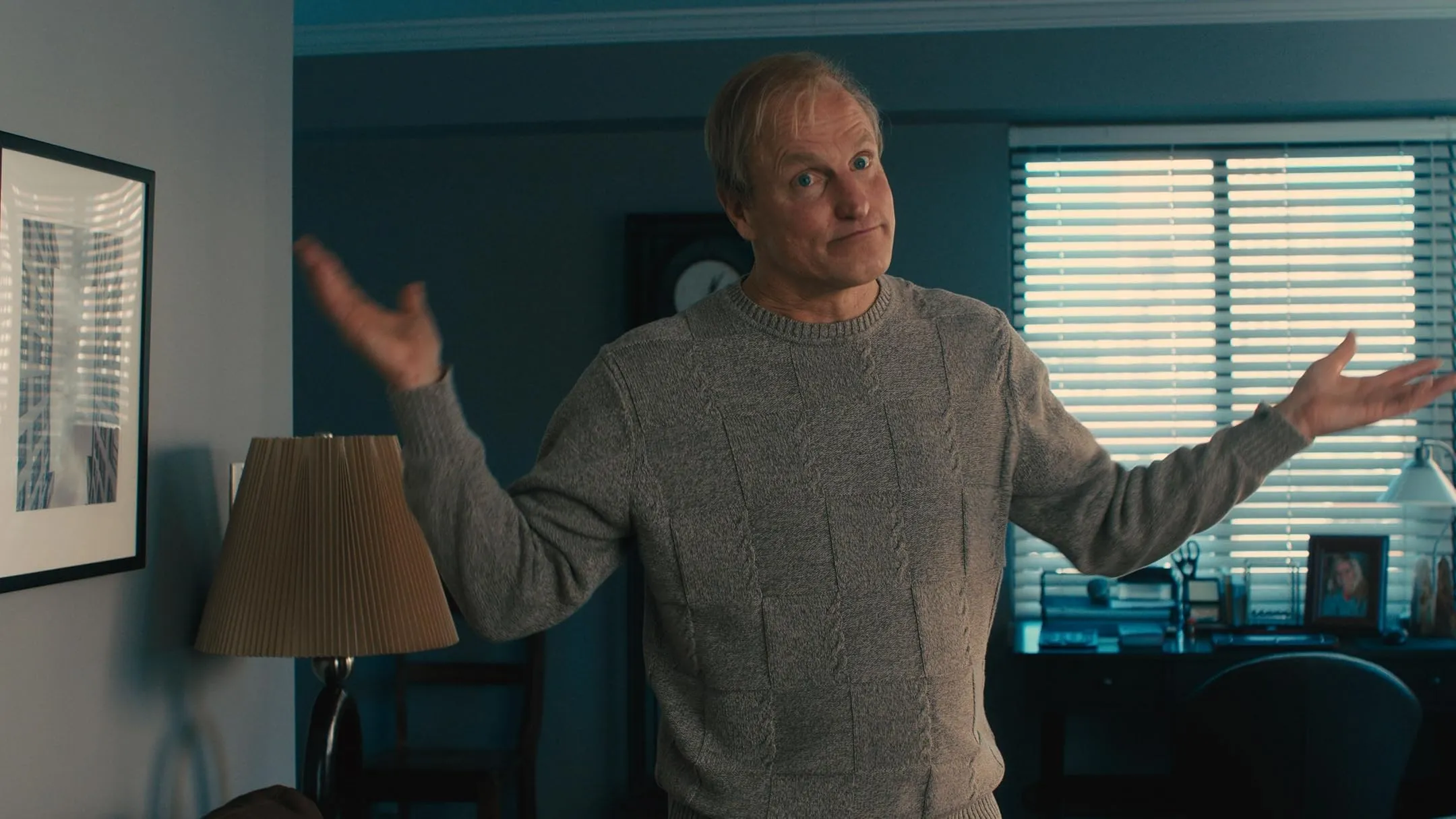
The key male figures mostly operate as flat obstacles in her path. Ryan, played by Jack Lowden, becomes a case study in broken narrative pacing. The script shifts him from caring partner to selfish, attention-hungry liar with almost no transitional groundwork. That sudden transformation feels arbitrary and drains pressure from the marital stakes, because the turn does not emerge from a steady build of behavior. Eddie, played by Woody Harrelson, functions as a narcissist and “twinkly-eyed rascal” whose return demands ongoing emotional labor from Ella. His history of cheating and abandonment never receives a meaningful reckoning, so his plotline comes to rest without a satisfying resolution.
Spike Fearn’s Casey operates like a bundle of narrative triggers. His agoraphobia is treated with a kind of casual dismissal that diminishes the weight of the condition. His arc, which involves an illegal gambling setup and a misguided plan to win back his ex-girlfriend Susan (Ayo Edebiri), feels especially contrived and adds to the sense of narrative sprawl. Albert Brooks, as Governor Bill, delivers sharp, cynical quips that briefly energize the political scenes, yet his relationship with Ella eventually reveals his self-interest and reinforces the pattern of male mentors and relatives protecting their own status ahead of Ella’s well-being.
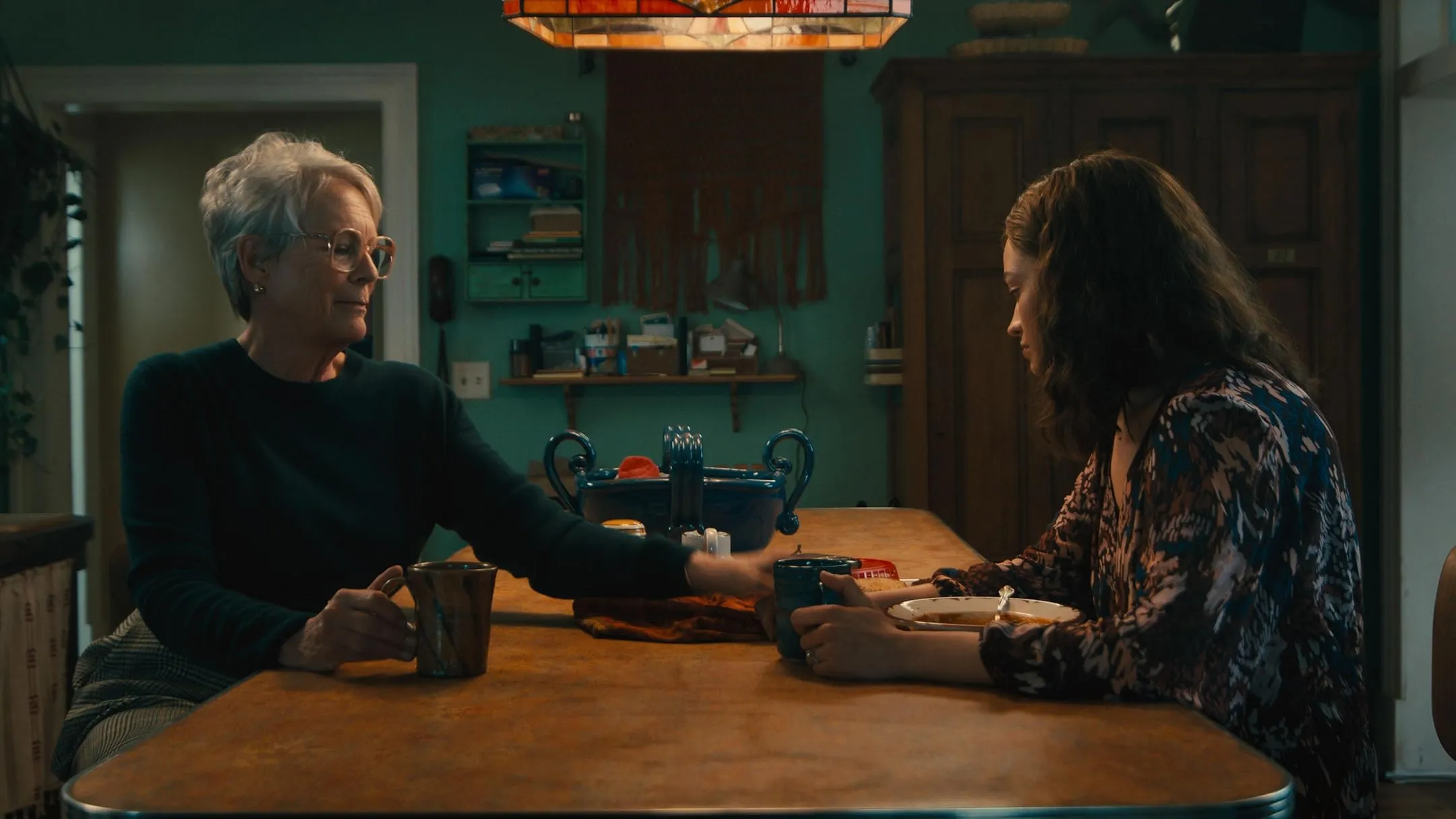
Jamie Lee Curtis plays Aunt Helen as Ella’s tough guardian figure. She fits into the familiar mold of a “salt-of-the-earth” caretaker who runs a diner on a street named “Hope St.” The performance leans into a kind of “feisty shtick,” almost like a broad sketch of a grounded aunt, which contributes to the film’s artificial tone. Julie Kavner, in contrast, turns Estelle into a fully locked-in presence. As assistant and narrator, she provides the steadiest emotional throughline in the film. Even with that anchor, the ensemble never quite syncs. The actors seem to chase different tonal targets, and their rhythms fail to connect into a shared comedic or dramatic pulse.
Narrative Construction and Tonal Misalignment
Ella McCay struggles at the level of narrative engineering. The film lacks the emotional throughline that gives a tightly structured drama its sense of build. Instead, the story plays like a “clunky collection” of tangents, with scenes that feel stitched together rather than arranged along a clear dramatic progression. Estelle’s voiceover often functions like a patch, trying to smooth transitions and rationalize leaps the script has not properly prepared.
The screenplay repeatedly sets up conflicts and then rushes past them. There is a persistent sensation of “all set-up, no payoff.” The lunch-break scandal, framed early on as a threat to Ella’s career, is resolved with such speed that it loses its dramatic force. Eddie’s demand for forgiveness enters as a major emotional hook, yet his storyline fades without a true reckoning, leaving his arc stranded. These choices signal a lack of commitment to the stakes the film initially presents.
Brooks aims for a hybrid form that combines the quick tempo of a 1950s screwball comedy with the emotional weight of an adult drama. The finished film lands in an “uncanny valley,” with timing and tone that do not support either side of that equation. The film does not deliver sustained laughs, and it does not sustain the depth expected of a character-driven dramedy. Comedic beats often misfire.
A running gag about Ella failing to hear her security detail repeats with little variation and quickly goes flat. Casey’s subplot, built around tropes of grand romantic gestures and frantic attempts to win Susan back, feels especially odd and pulls attention away from Ella’s arc without offering fresh emotional insight. Ella’s manic, high-fueled monologue while hiding in Casey’s apartment should function as a key release valve or pivot point, but it lands without significant comedic punch or dramatic shift.
The dialogue heightens the sense of artificial construction. Many lines sound like slogans for political wisdom rather than pieces of conversation. Governor Bill’s lessons about politics and Casey’s heavy-handed metaphor about “hamsters on the same wheel” reach for insight, yet the wording feels strained and theatrical instead of lived-in.
The decision to keep the state and political affiliations unnamed drains specificity from the film’s political frame. That vagueness keeps the story from engaging with concrete political realities and instead creates a simplified world where complex negotiation recedes and “gumption still matters” as the central currency. The setting becomes a thin stage for sentiment, and the resulting optimism feels hollow rather than earned.
Themes of Regression and Failed Idealism
The core thematic conflict in Ella McCay aligns with ground Brooks has covered before: a driven woman trying to balance professional ambition and personal obligation. In this case, the treatment of that conflict leans toward a regressive picture of contemporary female ambition.
The film presents Ella’s political idealism as fragile and easily overwhelmed by her personal life. Her push for a “Moms’ Bill” and her effort to separate politics from donor money receive a “flimsy depiction” of reform, reduced to slogans more than detailed policy. Setting the story in 2008, framed as a “gentler time,” signals a retreat from the harsher edges of present-day political realities.
That choice reduces the sense of urgency and keeps the script from digging into structural questions of power. Ella’s short, highly publicized stretch as Governor focuses less on her practical ability to govern and more on her exposure to external chaos. She turns into a political “Lady Jane Grey,” briefly raised up and then toppled by the turbulence around her.
The screenplay repeatedly returns to the idea that Ella and Casey carry the imprint of Eddie’s choices. Even with that emphasis, the emotional payoff remains weak. Casey’s turmoil and the damage caused by Eddie’s irresponsibility never receive the kind of sustained attention that might reshape the characters. They remain locked inside their trauma, defined by wounds that never move toward honest repair.
The story’s structure places the men in Ella’s orbit on a downward track. Her husband, her father, and her mentor each become sources of regression that undercut her work. The film’s pattern implies that a woman’s attempt to “have it all” collapses because the men around her refuse to grow.
In Brooks’s earlier stories, women such as Mary Richards, who operates within a male newsroom, or Jane Craig, who fights for professional ethics, maintain a sense of agency. Aurora Greenway carries complex contradictions yet retains control over her narrative. Ella McCay does not receive a similar design. The film lingers on her status as someone harmed by others instead of charting a credible path for her to assert control over the systems and relationships that limit her.
Production Quality and Tonal Artifacts
The craft choices around Ella McCay reinforce the sense that the film belongs to an earlier era of studio filmmaking. It plays like a mid-budget adult dramedy from the 1990s or 2000s, a type of project that appears far less often in present release calendars. The running time, close to two hours, feels stretched because of the many subplots that barely connect or pay off. The absence of clear narrative momentum turns the viewing experience into something wearying.
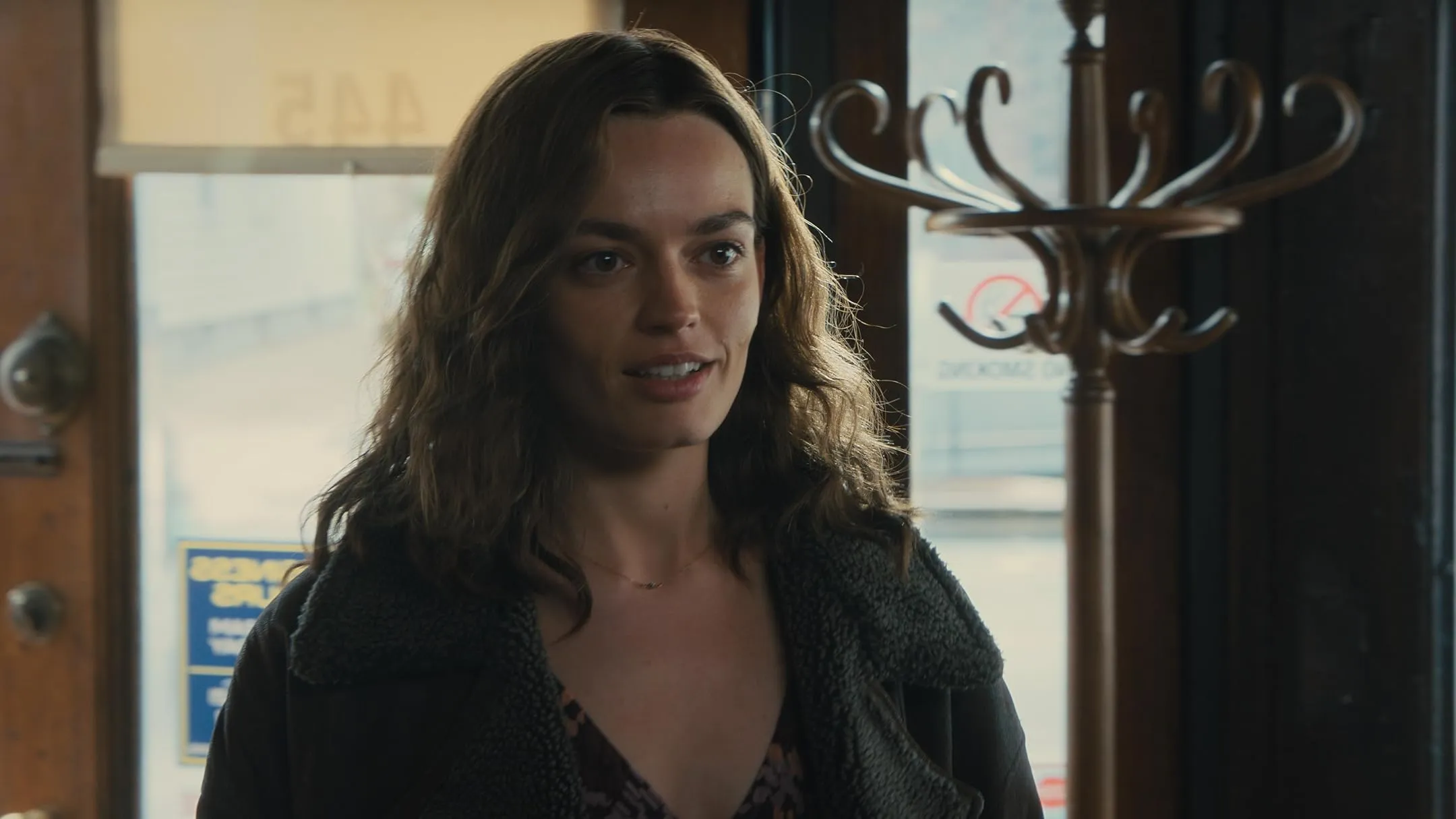
Robert Elswit’s cinematography functions at a competent level without asserting a strong visual language. The images sit politely in the frame and rarely shape the emotional temperature of a scene. In contrast, Hans Zimmer’s score draws constant attention to itself. The sweet, “tinkling” music coats scenes with a layer of sentimentality, applying “schmaltz” to moments that have not earned that emotional crest through writing or performance.
Some technical choices work far better than the storytelling. Ann Roth’s costume design gives the characters a convincing sense of lived experience. Wardrobe choices suggest professional polish during public appearances and private disarray in more intimate settings, carving out character detail that the script struggles to articulate.
Francine Maisler’s casting collects an impressive group of actors, yet certain age-related choices pull viewers out of the story. Emma Mackey is asked to play a 16-year-old, and Jack Lowden, at 35, appears in a flashback sequence under a conspicuous wig. Those decisions echo the film’s broader problem with detail. The aesthetic craft offers brief points of interest, but the visual presentation and costuming never repair the structural issues in the writing or the uneven tonal design.
Ella McCay is a comedy-drama film marking the directorial return of James L. Brooks, known for classics like Terms of Endearment and The Simpsons. The film, which runs for 115 minutes and is rated PG-13, tells the story of an idealistic young woman who finds herself elevated to the role of governor while simultaneously facing a series of chaotic personal and family crises. It had its world premiere on December 9, 2025, and is scheduled for a wide theatrical release in the United States on December 12, 2025, distributed by 20th Century Studios. Given today’s date, you can expect to find this movie playing in cinemas.
Full Credits
Title: Ella McCay
Distributor: 20th Century Studios
Release date: December 12, 2025
Rating: PG-13
Running time: 115 minutes (1 hour, 55 minutes)
Director: James L. Brooks
Writers: James L. Brooks
Producers and Executive Producers: James L. Brooks, Richard Sakai, Julie Ansell, Jennifer Brooks, Seth William Meier, Amy Brooks, Colby Pines, Albert Brooks
Cast: Emma Mackey, Jamie Lee Curtis, Woody Harrelson, Jack Lowden, Kumail Nanjiani, Ayo Edebiri, Spike Fearn, Julie Kavner, Rebecca Hall, Albert Brooks, Becky Ann Baker
Director of Photography (Cinematographer): Robert Elswit
Editors: Tracey Wadmore-Smith
Composer: Hans Zimmer
The Review
Ella McCay
Ella McCay is an unfortunate cinematic misstep that fails to recapture the brilliance of its creator's legacy. The film attempts to blend screwball comedy with deep personal drama but falls into an uneasy, artificial middle ground. A gifted ensemble cast is hampered by a disjointed, illogical screenplay that relies on heavy-handed thematic shortcuts and poorly resolved character arcs. The story lacks emotional authenticity, offering flimsy political ideals and a frustratingly regressive view of female ambition. While Emma Mackey and Julie Kavner shine, the overall experience is one of missed potential and narrative clutter.
PROS
- She displays a natural, appealing screen presence that grounds the protagonist even when the writing falters.
- She provides a warm, grounded voice and a "locked-in" performance as the assistant Estelle.
- The highly effective wardrobe communicates character depth and background that the script neglects.
- The film briefly showcases flashes of James L. Brooks's signature cynical wit and ability to generate sharp dialogue (mostly through Albert Brooks's character).
CONS
- The screenplay is disjointed, featuring too many unrelated subplots and an "all set-up, no payoff" structure that makes the nearly two-hour runtime feel exhausting.
- Key characters, particularly the husband Ryan, undergo implausible, abrupt transformations without convincing motivation.
- The intended blend of screwball comedy and drama fails, leaving the film in an awkward, emotionally artificial state.
- The film addresses political idealism and intergenerational trauma superficially, often relying on heavy-handed metaphors and unearned emotional resolutions.
- The structure suggests the protagonist's professional failure is primarily due to the selfishness of the men in her life, rather than complex systemic or personal struggles.
- Attempts at humor, such as the handling of the brother's agoraphobia or the THC-laced monologue, fall flat or feel out of place.