























![Kingdom Hearts Collection [I-III] Review](https://gazettely.com/wp-content/uploads/2026/10/Kingdom-Hearts-Collection-I-III-1-360x180.webp "Kingdom Hearts Collection [I-III] Review: KHII Holds Steady as Newer Entries Fluctuate 37")





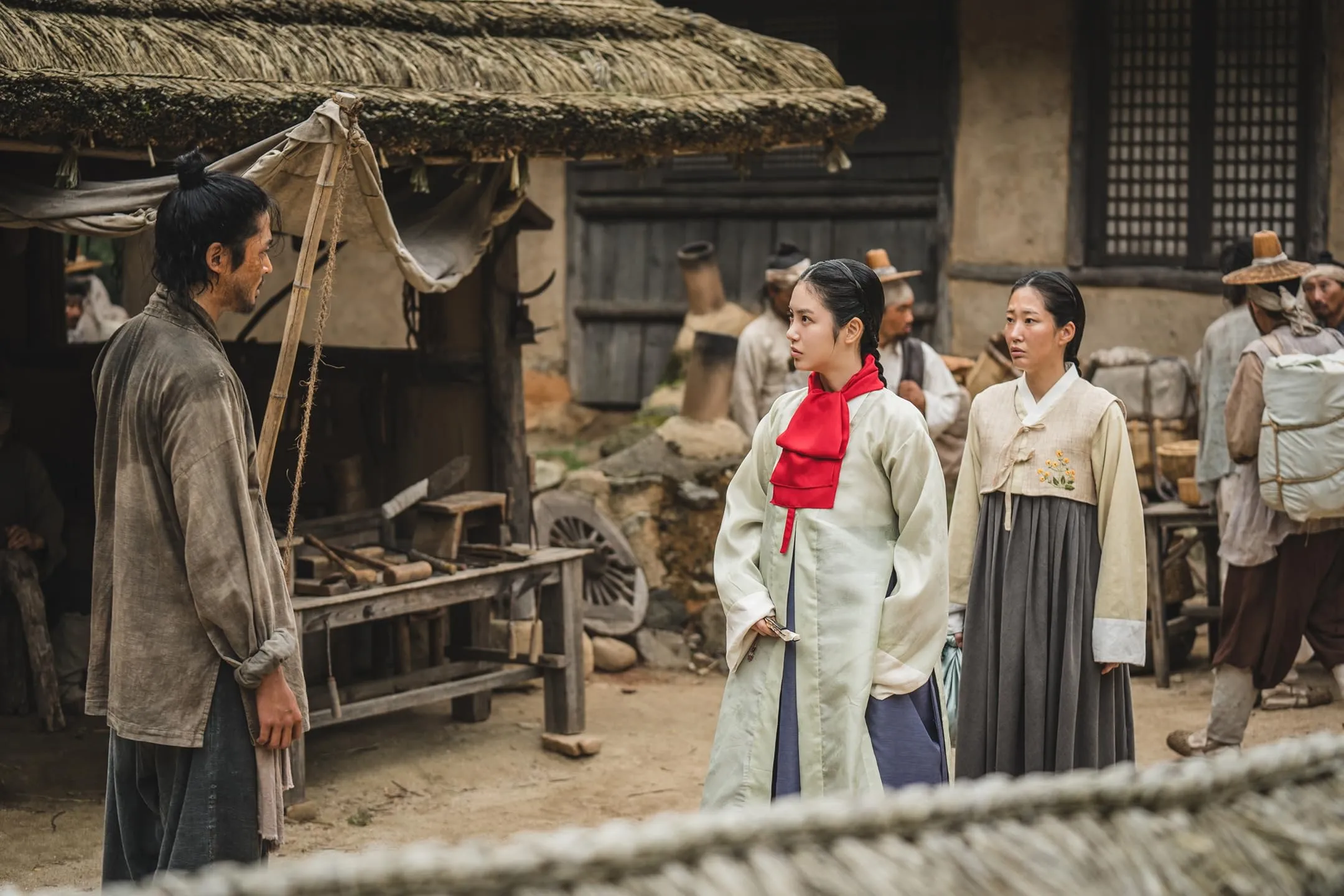
Forget shimmering silks and polished palace floors. This series plants its flag in the grime of Mapo port. The Gyeonggang River never glitters. It rolls by, heavy and murky, carrying the residue of a nation coming apart. As an adaptation of Chae Man-sik’s novel Takryu, the production trades royal intrigue for the daily math of survival among laborers. Nine episodes give us a narrow window into a place where corruption functions like currency. Officials operate without fear, and ordinary people swallow dust while the grip tightens.
The camera keeps returning to dilapidated shacks and muddy streets, and that texture scrapes away the romance that often clings to historical K-dramas. The show keeps its attention fixed on exploitation at the bottom of the ladder. Bandits and middlemen skim wages before a worker can even afford a bowl of rice. That bleak setting becomes the meeting point for three figures caught in the rising silt: Jang Si-yul, Choi Eun, and Jung Chun. The decision to anchor a sweeping story in dockside muck gives the series its bite, and it rarely lets the viewer look away.
Faces Etched in Dirt and Duty
Rowoon drops the flower-boy polish and settles into Jang Si-yul with a face that looks like it has learned every lesson the hard way. Si-yul starts as a minimum-wage worker and later finds a home among bloodthirsty bandits. His worn-down look does a lot of storytelling before the dialogue arrives. The series fills in his tragedy through the Nitanggae rebellion: the loss of his mother and the way corrupt examiners crush his dreams. That history hardens into cynicism. He once wanted to lead. Life taught him to disappear.
Shin Ye-eun gives Choi Eun a sharper edge. She plays a merchant’s daughter pushing back against the institutional sexism of the Choi guild, and the fight carries a modern sting inside the period frame. Choi Eun refuses bribery, holding onto integrity while greed swirls around her like floodwater.
Park Seo-ham brings steadiness to Jung Chun, an honest officer weighed down by idealism. His childhood brotherhood with Si-yul turns his mission into something personal, and the reunion lands with pain instead of warmth. It plays like a quiet inventory of everything that went wrong between them, and Park lets that recognition sit in his posture.
Then Park Ji-hwan walks in and starts quietly stealing scenes as Mu Deok, a bandit leader who mixes cowardice with calculation. The supporting ensemble frequently hits harder than the leads. Bandits and bureaucrats feel lived-in, and their grime reads as performance detail as much as makeup. The cast looks genuinely unkempt, and that roughness reinforces Mapo’s hierarchy without speeches explaining it. The focus on side characters helps the world feel fully inhabited, even while the central trio sometimes gets lost in the crowd.
The Turbulence of a Shortened Current
The nine-episode format becomes the series’ biggest obstacle. Historical epics usually take sixteen or twenty chapters to stretch out their political machinery and personal fallout. Here, an ambitious saga gets compressed into a tighter container. The first three episodes move slowly through world-building, letting the setting settle into the viewer’s lungs. That patience pays off when the 1583 flashback arrives. The moment Si-yul loses faith in the system lands with real emotional force because the groundwork is already in place.
Then the middle stretch starts to drift. The story devotes a large share of time to Mu Deok’s bandit crew. Those scenes add texture and energy, yet they pull attention away from the main trio. The heroes end up moving through events with a restless, directionless feeling, like they’re sprinting on a dock that never reaches the ship.
The script also pushes characters into choices that feel rushed or out of step with who they have been. More time could have let the political schemes develop with a cleaner build. The final two episodes arrive in a hurry, and the rhythm shifts into something close to panic. The ending moves fast and leaves the viewer grabbing for answers. Threads hang loose. The drive to topple the corrupt system never reaches a fully realized payoff, and that messiness matches the port’s harsh reality.
The series keeps its focus on interpersonal drama over any sweeping revolution, which fits the lives it depicts, lives shaped by scraping, surviving, and getting shortchanged at every turn. Still, the finish feels incomplete in a way that nags. Can a nine-episode current carry a story like this all the way to open water?
Visual Squalor and the Weight of Silence
Director Choo Chang-min builds a world that feels claustrophobically real. The cinematography leans into grainy textures and a constant haze of dust, the kind that makes you imagine the smell of stagnant river water. The look reinforces the bleak tone scene after scene. Set design turns away from courtly color and shine, favoring muddy outfits, unwashed faces, and environments that seem permanently damp. It serves the story’s moral decay with zero decoration.
Sound carries its own weight. Folk music haunts betrayals without tugging too hard, and it sits in the background like a warning the characters refuse to hear. The series also knows when to loosen its grip. Brotherhood among the bandits brings short bursts of comedic relief, and those beats feel earned, like a small breath taken between blows. The Gyeonggang River remains the quiet witness, a metaphor for a kingdom sinking under its own greed, watching people try to stay afloat with nothing but compromised choices.
The show keeps returning to conscience and survival, asking how long decency can hold when every system rewards corruption. The depiction of 16th-century trade hierarchies adds texture that reads clearly on screen, and the murky water becomes a mirror that refuses to flatter anyone. These people are flawed, tired, and trying not to drown, and the series keeps their struggles intimate against a backdrop of systemic failure. How much silt can a soul carry before it finally cracks?
The Murky Stream premiered on Disney+ on September 26, 2025, following a special screening of its first two episodes at the 30th Busan International Film Festival on September 18. This gritty historical thriller, based on the classic novel Takryu by Chae Man-sik, is a departure from traditional palace-centered K-dramas, focusing instead on the struggles of the commoner class in a corrupt Joseon-era port. You can watch all nine episodes of the series exclusively on the Disney+ streaming platform, where it has received significant attention for its raw visual style and grounded storytelling.
Full Credits
Title: The Murky Stream
Distributor: Disney+
Release date: September 26, 2025
Rating: TV-MA
Running time: 60 minutes per episode
Director: Choo Chang-min
Writers: Chun Sung-il
Producers and Executive Producers: Pyo Jong-rok, NPIO Entertainment, Anew
Cast: Rowoon, Shin Ye-eun, Park Seo-ham, Park Ji-hwan, Choi Gwi-hwa, Kim Dong-won, Jeon Bae-soo, Ahn Seung-gyun
Director of Photography (Cinematographer): Kim Young-ho
Editors: Shin Min-kyung
Composer: Shin Hyun-sik, Jeong Song-hee
The Review
The Murky Stream
The Murky Stream offers a gritty departure from standard period dramas by focusing on the mud rather than the palace. While the visual world-building and raw performances impress, the nine-episode limit creates a rushed and scattered narrative. The central trio often loses ground to the supporting ensemble. This series remains a bold attempt at realism that ultimately struggles to balance its ambitious themes within a cramped timeframe. It provides a somber, unpolished look at survival in a decaying kingdom.
PROS
- Strikingly realistic and gritty visual aesthetic.
- Strong, unpolished performances from the entire cast.
- Refreshing focus on common laborers and trade hierarchies.
- Evocative folk music that builds a somber atmosphere.
- Compelling camaraderie among the supporting bandit characters.
CONS
- Nine-episode runtime feels insufficient for the complex plot.
- Main leads occasionally lack enough active screen time.
- Pacing feels uneven with a hurried and unresolved finale.
- Narrative focus shifts too far away from the primary trio.
- Script sometimes prioritizes plot needs over character consistency.