

























![Kingdom Hearts Collection [I-III] Review](https://gazettely.com/wp-content/uploads/2026/10/Kingdom-Hearts-Collection-I-III-1-360x180.webp "Kingdom Hearts Collection [I-III] Review: KHII Holds Steady as Newer Entries Fluctuate 37")



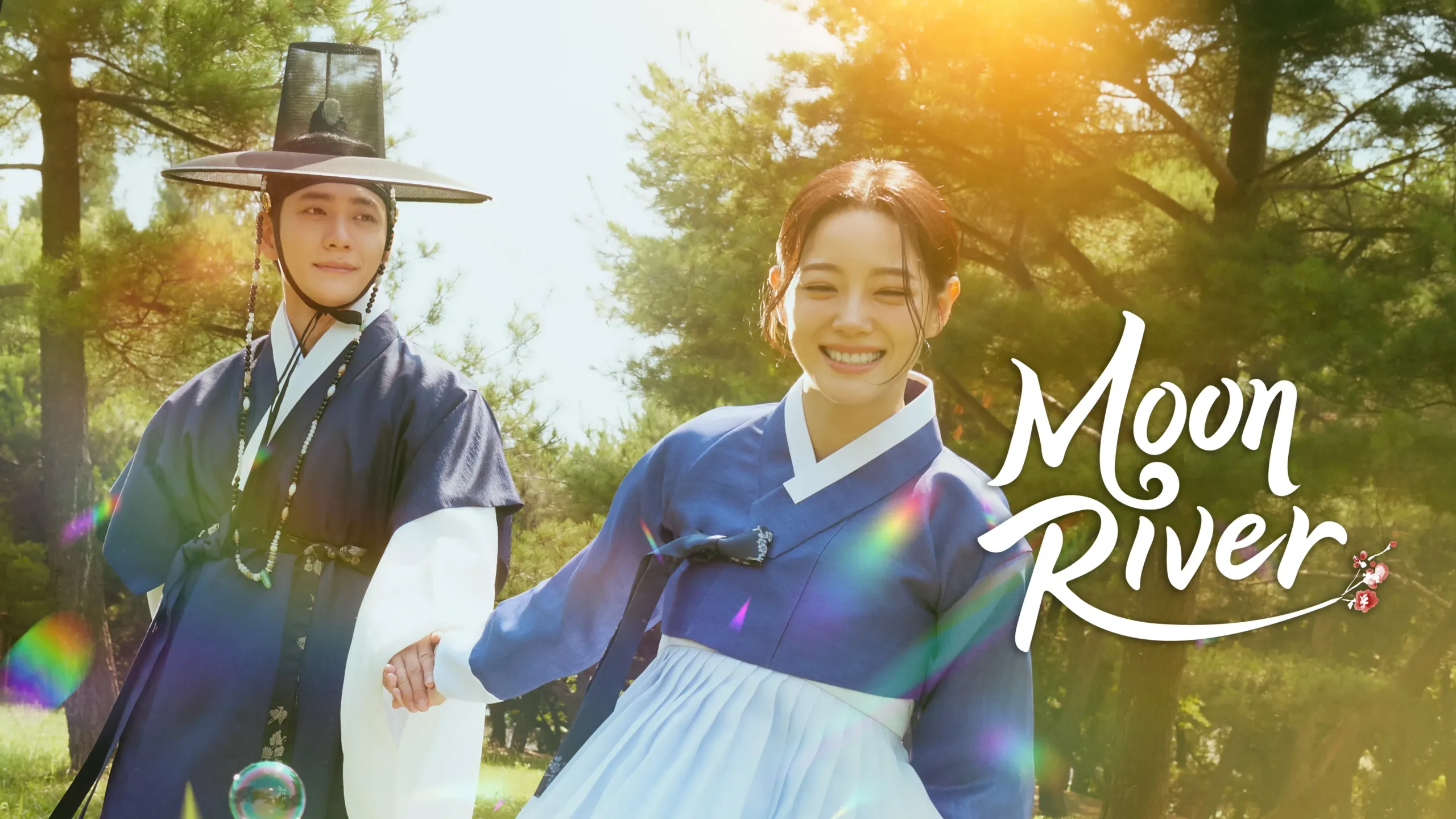

The water in the Joseon palace sits motionless, masking a dynasty’s decay while a man in fine silk measures grief by the second. Moon River opens inside that hush with Crown Prince Yi Kang, a ruler shaped by the empty space his wife left behind. She died five years ago, and the palace has carried the loss like a thorned crown, feeding whispers of betrayal through its corridors.
The story then turns toward the coastal town of Uljin, where Park Dal-i sells salt to keep herself alive. She remembers nothing from before the day she was pulled from the river. Her face matches the dead princess, and that resemblance sends a visible tremor through the capital’s fragile order.
The series treats this doubled image as a living haunting, fastening palace politics to a fear of hidden toxins and buried history. The camera frames the palace and the seaside village as separate worlds with their own textures, each moving toward the moment they will crash into the same frame.
The Spiritual Mechanics of the Fated Bloom
The script builds its spiritual system through Elder Wolha, the guardian who tends the radiant tree. This celestial presence turns destiny into something the audience can see: each flower stands for a red thread of fate, and every name copied into the records blooms as light. The imagery carries a clear suggestion that lives in this era follow a written path, with the tree operating like a glowing archive of souls.
A story from an earlier king and queen sets the warning label on this mythology. Their love fed greed, and that hunger poisoned the spiritual order in a way that still stains the royal line in the present. Fate becomes a physical rule in the series, something witnessed in blossoms and ledgers, something touched only at great cost.
The severed thread darkens the folklore. A bond cut through violence leaves a hollow space, and the god of fate appears with a blunt message: repairing a broken thread invites death. Park Dal-i sits inside that danger. Her aunt, Hong-nan, uses magic to remove Dal-i’s memories, treating the act as mercy meant to conceal a perilous royal identity. The result is a kind of spiritual surgery that reshapes Dal-i into a commoner who believes she was born to slaves.
The series links this forgotten-self premise to Indian parallel cinema, where characters often move through karmic cycles they cannot recall, trapped inside consequences without access to origins. Cherry blossoms press that idea into the visual rhythm. Petals fall at moments of recognition, turning beauty into a countdown. Dal-i’s present life reads like a temporary shield, and the writing makes the condition explicit: if the red thread vibrates again, the protection of her erased memories collapses. The cinematography lingers on blossoms and drifting petals, keeping mortality in view through the same floral language that marks destiny.
The Perfectionist Prince and the Poisoned Throne
Yi Kang responds to loss by building a hard shell of arrogance. His need for perfection spreads into every surface around him, including a color-coded robe system that assigns officials specific shades and demands exact compliance. It plays like control as performance, a way to impose order on private chaos. In public he adopts the reputation of a “thug” prince, using the persona to mislead enemies and shape what the court thinks it knows.
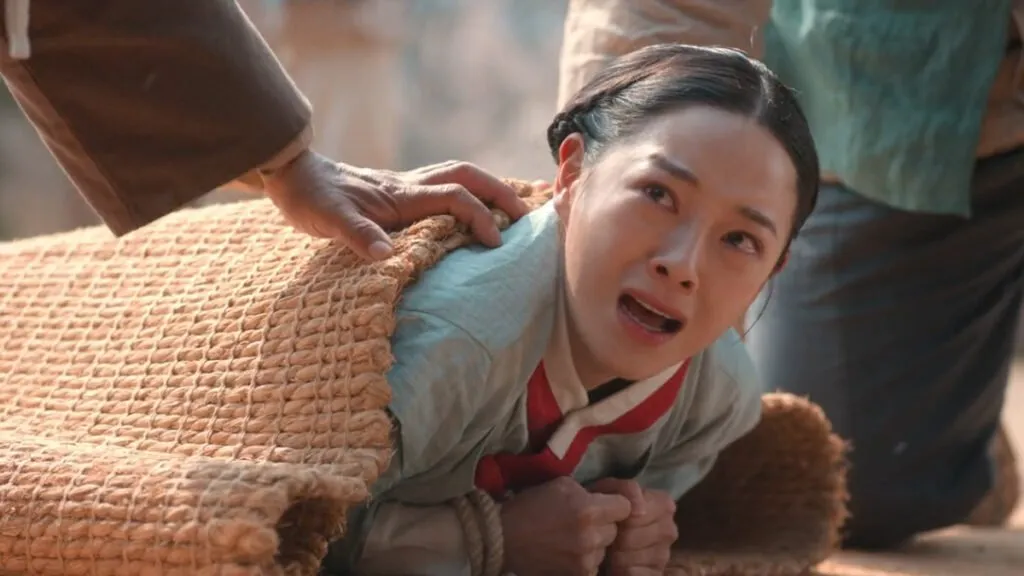
In private, grief stays close. He recognizes his wife’s body only through a poisoned ring, an image that keeps returning like an object lesson in how violence can hide behind elegance. His father’s confession tightens the psychological vise: the King admits he ordered the consort’s death to stop a royal scandal. Yi Kang is forced to live with the knowledge that his suffering began inside his own family.
Minister Kim Han-chul functions as the palace’s real authority, isolating King Lee Hui until the monarch becomes a captive inside his own infirmity. Han-chul’s tool is Zhen bird poison, a mythical substance tied to the Qing dynasty and presented here as the perfect instrument for a coup. It leaves no trace in the blood and makes murder resemble illness, turning the medical surface of the court into a mask for political violence. Han-chul’s confidence shows in his private exchanges with Yi Kang, where he boasts because he trusts the law’s inability to reach him.
He treats the royal family as a problem to manage, and his pressure takes a direct form: he pushes Yi Kang toward marriage with his daughter, Woo-hee, aiming to secure his bloodline on the throne. The show frames this struggle like a slow poison working through a closed system, corroding the moral instincts of everyone caught inside it. The palace stops feeling like shelter. It becomes a battleground where silence and rare toxins do the killing.
The River Climax and the Exchange of Souls
Dal-i’s arrival in Hanyang pushes the central tension into open conflict. She enters as a salt peddler with a sharp tongue and little patience for royal posturing. The moment Yi Kang sees her face, the story’s temperature changes, shifting from court intrigue toward something closer to metaphysical dread. He cannot make peace with the image of his dead wife sitting inside this blunt, practical woman from the coast.
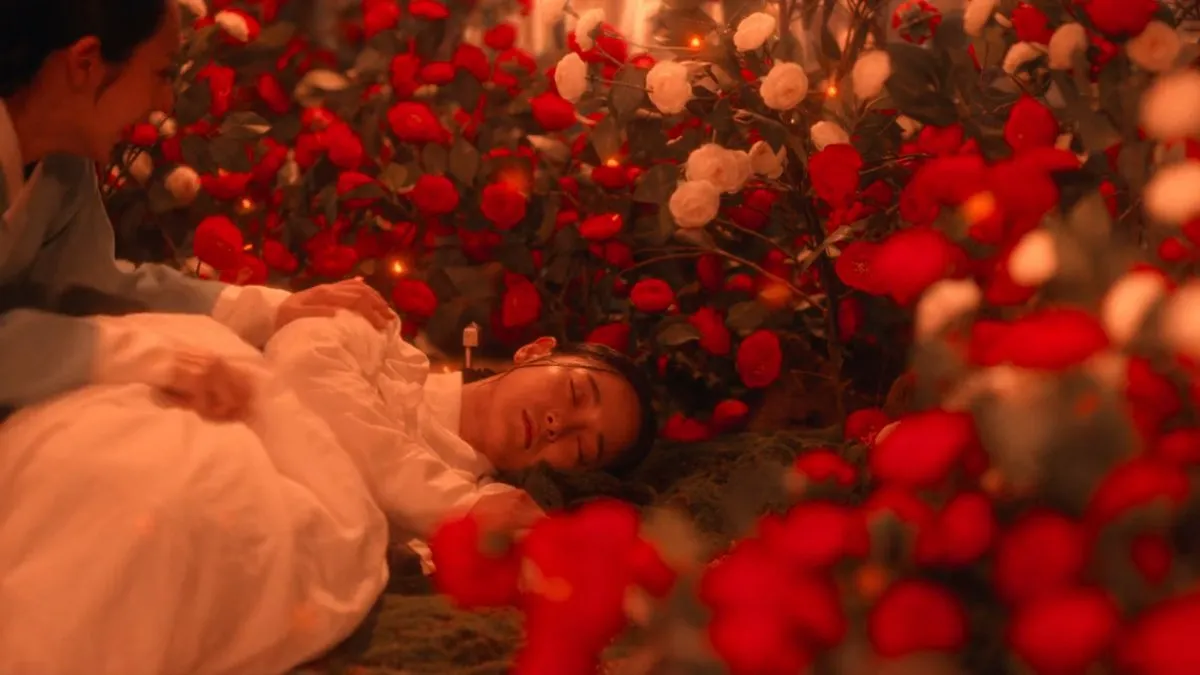
He tries the “falling petal” test, using it to probe for a private memory. Dal-i gives him nothing, and that blankness forces a second round of mourning. Their first encounter underlines class separation through behavior: Dal-i moves with direct action, while Yi Kang clings to protocols and cultivated distance. The scene plays like two social languages colliding in the same room.
The supernatural exchange happens at a moment of extreme physical risk. The mark on Dal-i’s wrist begins to glow as the red thread of fate strains toward repair. They fall into the river together, and their blood mixes in the water, forming a bridge between spirits. The symbolism lands with clarity. Water becomes grave and womb at once, a place that ends one life and starts another. They wake in the wrong bodies, and the role reversal pushes against every social rule that governs Joseon life. Yi Kang must live as a woman carrying salt while slave hunters threaten from the edges of the world.
Dal-i must sit on the throne and face a court of men who want her dead. The plot uses the swap to interrogate class and gender through lived experience. Yi Kang learns the physical cost of commoner survival. Dal-i learns the mental cost of royal responsibility. The series plays the setup for comedy, then uses the comedy to force sharper perception, making each character look through the other’s eyes. The exchange breaks the palace’s stagnant air and creates the fresh perspective needed to counter the Minister’s plans.
The Gun of Woo-hee and the Hermit Prince
Kim Woo-hee arrives as a sharp disruption to tradition. She is a noblewoman who carries a gun and treats it as a declaration of independence from her father and the crown. She refuses the role of pawn in a marriage contract. Her choice to shoot the prince reads as calculated ambition: she wants her lover, Lee Un, on the throne, with herself positioned to rule as his queen. The character plays like a modern antagonist placed inside a historical frame, someone who sees power as something seized through force. Her coldness mirrors the environment her father built, and the series presents her as a product of a palace that rewards betrayal.
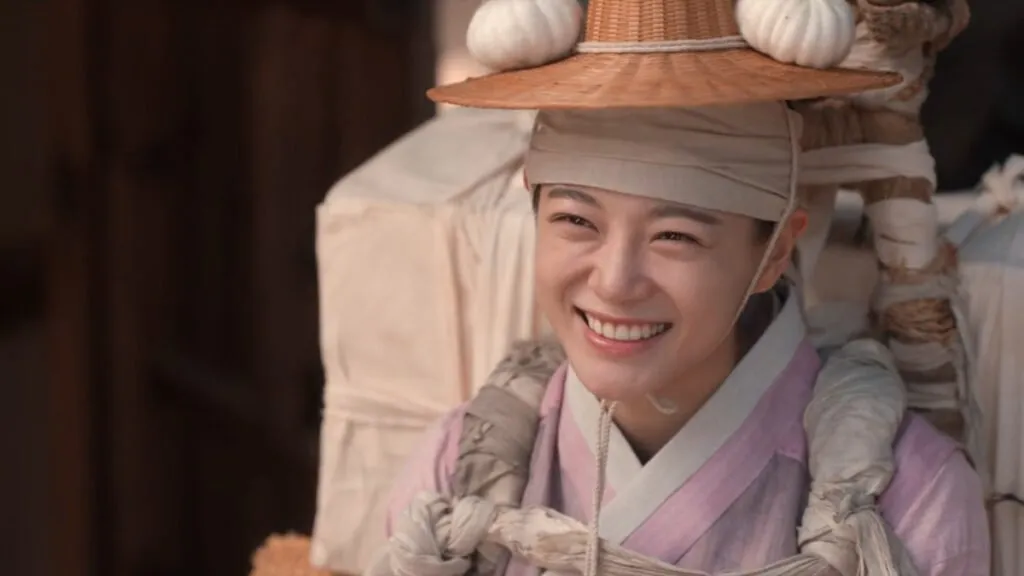
Lee Je-woon lives at Sinjusa temple as a deposed prince, defined by intellect and a preference for plants over politicians. His romance with Woo-hee brings constant friction, and he refuses to lead a coup. He chooses to help Yi Kang investigate the deaths of their mothers. His “contract” with Dal-i works as a neat narrative tool: he uses a broken clock as the pretext to keep her in the city, protecting her while concealing who he is.
The irony is built into the arrangement. Keeping Dal-i in Hanyang keeps her close to the radiant tree that holds authority over her fate. The series ties these four figures together through a history none of them asked for, and their loyalties shift as the truth about Zhen bird poison surfaces. The fight for the throne becomes a fight over the kingdom’s moral survival, with each character weighing obedience to the red thread against the desire to cut it for good.
The South Korean fantasy-romance series Moon River (also known as The Moon Flows in This River) premiered on November 7, 2025, on the MBC TV network. Set in the Joseon era, the drama tells the mystical story of a grieving crown prince and a resilient merchant woman who unexpectedly swap souls, forcing them to navigate each other’s disparate lives. The 14-episode series concluded its original run on December 20, 2025. International viewers can stream the series with subtitles on platforms such as Rakuten Viki and Viu, where it has gained significant popularity for its visual storytelling and the chemistry between leads Kang Tae-oh and Kim Se-jeong.
Full Credits
Title: Moon River (이강에는 달이 흐른다)
Distributor: MBC TV, Rakuten Viki, Viu
Release date: November 7, 2025
Rating: TV-14
Running time: 60 minutes
Director: Lee Dong-hyun
Writers: Jo Seung-hee
Producers and Executive Producers: Kwon Sung-chang, Han Seok-won, Hwang Gi-yong, Yoon Hong-mi
Cast: Kang Tae-oh, Kim Se-jeong, Lee Shin-young, Hong Su-zu, Jin Goo, Kim Nam-hee, Park Ah-in, Kwon Joo-seok
Director of Photography (Cinematographer): Hwang Seong-man, Bae Ju-yeon
Editors: Shin Jee-in, An Jun-hyeun
Composer: Park Se-joon
The Review
Moon River
Moon River succeeds by using folklore to ground its political stakes. The soul-swap mechanic adds a necessary layer of levity to a heavy palace drama. While the pacing slows during the middle chapters, the chemistry between the leads and the striking visual metaphors of the red thread keep the narrative anchored. It is a visually arresting exploration of memory and the persistence of love across different social strata.
PROS
- Striking cinematography and use of floral symbolism to represent destiny.
- Strong lead performances that handle the tonal shifts of the soul swap.
- The use of the Zhen bird poison as a grounded and specific mystery element.
CONS
- Occasional pacing issues in the middle episodes.
- Some secondary political subplots feel underdeveloped.







