



















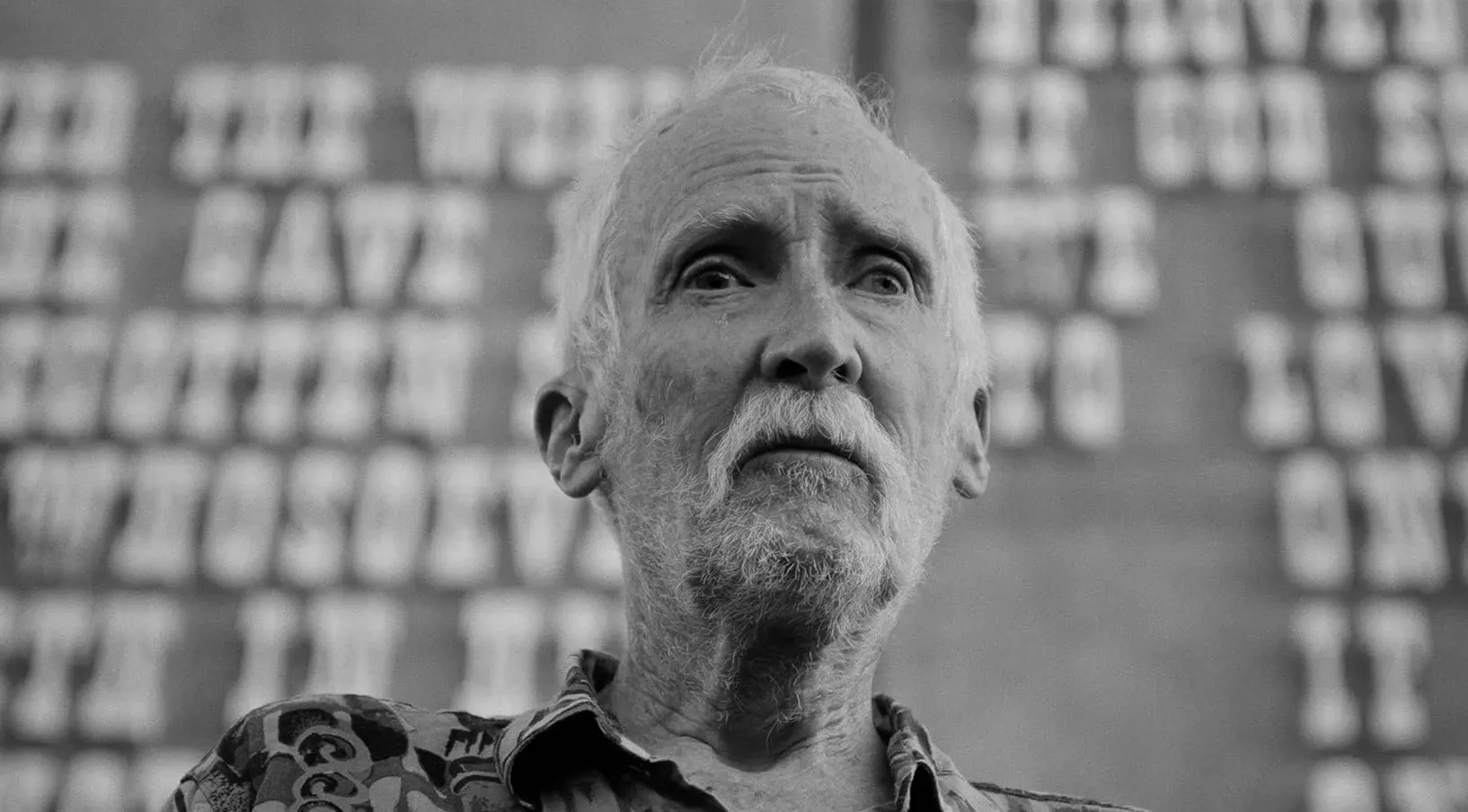
Bundaberg functions as a coastal anchor in Queensland, a regional hub shaped by agricultural work and a working-class tempo. Jaydon Martin places his debut feature, Flathead, squarely inside this Australian geography, letting humidity and local memory hang in the air. The story tracks Cass Cumerford, a seventy-seven-year-old who comes back to the ground he knew as a child, carrying the knowledge that his life is nearing its end.
Running alongside him is Andrew Wong, a younger man charged with keeping the Busy Bee fish and chip shop going, a family legacy built over five decades by his late father, a Chinese immigrant. Martin works in docufiction, mixing observed detail with scripted beats to sit with people who tend to be treated as peripheral.
The title nods to a common local fish, a bottom-feeder that becomes a plainspoken metaphor for the town’s modest, grounded lives. Shot in high-contrast black and white, the cinematography drains the landscape of tropical brightness and replaces it with a hard, spare beauty that presses the film’s concerns into sharper relief.
Portraits of Loss and Labor
Cass Cumerford wears his history on his body. His face looks carved by sun and rough years, and the film frames him like a man marked by addiction and the loss of two children. He drifts through scenes with a cigarette fixed in place and a gaunt silhouette, then meets the cold clarity of medical scans that point toward a body giving out.
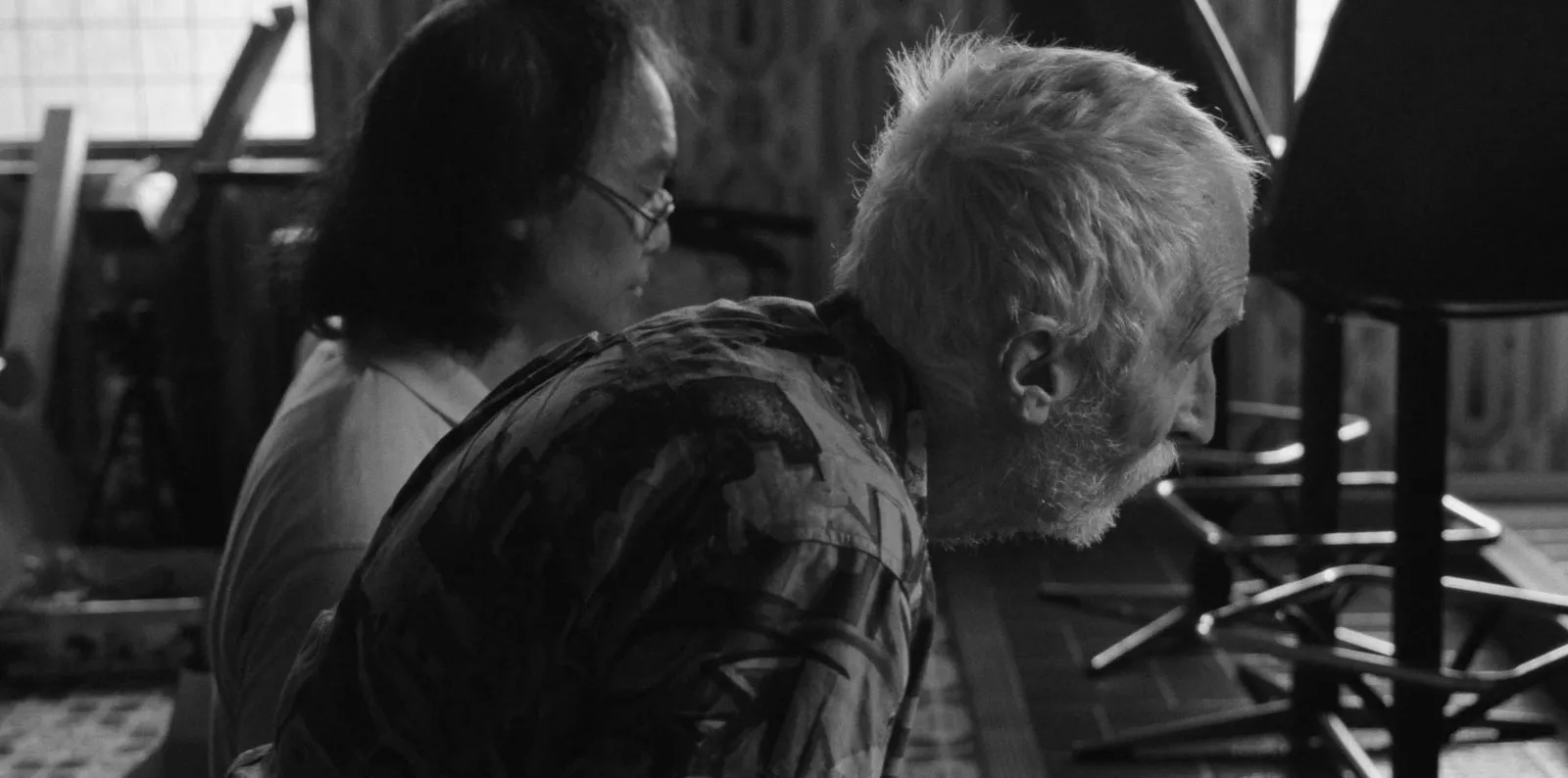
Andrew Wong, by comparison, puts his attention on building strength through a strict weightlifting routine, paired with the public-facing rhythm of a fitness YouTube channel. That routine carries a cultural charge of its own: a global language of self-optimization and online performance set against a town where value gets measured in shifts worked and hands kept busy.
Andrew’s relationship to the Busy Bee shop stays complicated. His father’s work ethic looms over him, and the greasy counters feel like a world he can inhabit without fully belonging to it. He respects the fifty years of labor that financed his education, and the film leaves room for the awkwardness that comes with that debt: gratitude tangled up with distance. During production, Andrew’s father dies, and the loss becomes a hinge that ties Andrew and Cass together.
Their grief reads differently on the surface, yet it places them in the same emotional weather. Andrew searches for steadiness through physical discipline, repeating the mechanics of the gym until they start to feel like a promise. Cass leans toward spiritual repair, scanning for a kind of peace that can sit beside regret. The bond between them rarely gets spelled out, and the film trusts glances, silences, and shared space to do the work.
Taken together, these portraits sketch an Australian reality where inherited tradition and private desire tug at the same person from different sides. Cass returns to a home ground that no longer offers reassurance; Andrew stands inside a family enterprise that does not fully feel like his own. Each man registers the cost of loyalty, and each looks for a way to keep living inside the contradictions.
The Monochrome Pulse of Regional Life
Martin’s choice to shoot in monochrome works like an aesthetic sieve, clearing away the distractions of the bright Queensland coast and pushing texture and shape to the front. The result carries a visible kinship with European social realist traditions, including the work of Roberto Minervini and early Italian neo-realism, where everyday labor and social edges become the main event. Here, hard lighting turns motels into worn-out shells and makes sunbaked fields feel endless, as if the landscape itself has been stretched thin by time.
The film breaks that visual discipline in short bursts by inserting digital color clips from Andrew’s fitness videos. Those flashes land like a jump in register: an online persona polished for an algorithm, then the heavier grain of day-to-day life returning immediately after. In cultural terms, it plays like a collision between a small-town economy and a borderless platform culture, with Andrew’s body becoming the meeting point. He can broadcast discipline to an imagined audience far away, then step back behind the counter where legacy and obligation wait.
Sound deepens the mood. A cappella gospel hymns cut through the rough surfaces with a clean, ringing presence, setting spiritual longing against environments defined by wear and grit. Martin holds a meditative pace, letting small scenes breathe: pub brawls that flare up as local ritual, recreational gunfire treated with the same unhurried attention. Plot does not drive these sequences so much as accumulation does.
The film watches a community where work is scarce and leisure comes out raw, and that steady gaze turns Bundaberg into a study of isolation within the rural working class. The specificity stays intact, yet the feeling carries beyond the region, built from endurance, fatigue, and the stubborn need to keep going.
Seeking Truth in the Dramatized Verité
Flathead approaches atonement through dramatized verité, with real people replaying versions of their own lives. Cass moves through a range of spiritual practices, from the heat of an evangelical preacher’s appeal to the quieter ritual of Buddhist incense. The film treats these encounters as sincere attempts to find meaning, and it shows Cass trying to give shape to a life defined by bad decisions before time runs out. That search lands as cultural, personal, and practical all at once: faith as community, faith as structure, faith as one more tool for surviving the weight of memory.
By keeping documentary observation in close contact with staged moments, Martin reaches for a kind of emotional truth that pure fiction can struggle to access. The viewer stays in an attentive position, close enough to sense privacy without the film forcing confession. That stance also extends respect to the agricultural workers and migratory labor force tied to the region, presenting their routines without polish or romantic varnish. Mundane tasks become the material where meaning shows up, and the film’s black-and-white discipline keeps pulling the eye back to hands, faces, and the quiet repetition of work.
Across Cass and Andrew, the film keeps circling identity and forgiveness through the pressures of place. Cass wants reconciliation with himself and with whatever comes after. Andrew carries a family history shaped by migration and labor, then filters his present through a digital fitness culture that speaks to audiences far from Bundaberg. In this hybrid form, Flathead holds those strands in the same frame, letting spiritual searching, inherited obligation, and daily survival sit side by side without forcing them into tidy alignment.
Flathead made its global debut at the International Film Festival Rotterdam in early 2024, where it earned the Special Jury Award before traveling to major festivals like Sydney and Melbourne. As of December 2025, the film can be streamed internationally on GuideDoc and is available on the Rialto Channel in New Zealand. This striking docufiction piece, captured in high-contrast black and white, offers an intimate look at the lives of the working-class community in Bundaberg, Queensland, blending real-life experiences with a scripted narrative of redemption and grief.
Full Credits
Title: Flathead
Distributor: Portmanteau Pictures, Factotum Pictures, VicScreen, GuideDoc, Rialto Channel
Release date: April 27, 2024
Running time: 89 minutes
Director: Jaydon Martin
Writers: Jaydon Martin, Patrick McCabe
Producers and Executive Producers: Jaydon Martin, Patrick McCabe, Chloé Brugalé, Amiel Courtin-Wilson
Cast: Cass Cumerford, Andrew Wong, Rob Sheean, Hayden Rimmington, Kent Wong, Miguel Angel Jitale D’amico, Tim Lunnon, Adama Suviste
Director of Photography (Cinematographer): Brodie Poole
Editors: Patrick McCabe
Composer: Lachlan Harris, Angharad Van Rijswijk
The Review
Flathead
Flathead offers a stripped-back look at regional Australian identity. By mixing real lives with scripted moments, the film creates a meditation on grief and the search for grace. Jaydon Martin avoids the usual tropes of rural cinema. The choice to use black and white turns Bundaberg into a landscape of memory and regret. While the slow pace might test some viewers, the raw honesty of the performances makes it a standout debut. It captures a specific way of life with dignity.
PROS
- Striking black and white cinematography that highlights texture and mood.
- Genuine, unforced performances from the non-professional cast.
- Evocative use of traditional hymns and local music to build atmosphere.
CONS
- The meditative pacing may feel aimless to those seeking a tight plot.
- A lack of background information on supporting figures can feel isolating.