





























The third season opens by wiping the slate clean. The muddy battlefields and mythic ruins give way to a sterile world of glass and steel. The move into the modern era changes the lens on the immortal protagonist, turning longevity into a kind of social exile. Fushi spent centuries as a quiet, subterranean network of roots. He wakes to discover the world has kept moving, with no place reserved for his guidance.
He reads like a relic surrounded by digital screens, constant noise, and fast food. His creator, the Black Hood, cuts the physical tether that once tied him to the earth, and the “freedom” that follows lands with the dull thud of emptiness. Fushi stands on massive buildings, watching a society that looks calm while feeling spiritually drained. He absorbs the sensory violence of the city through engine roar and the crush of crowds. He gets hit by a truck. He drinks sugary tea. The show frames the modern environment as an assault that never stops, and Fushi’s lack of a clear mission becomes the season’s first and most stubborn problem.
A local high school’s Occult Research Club becomes his first point of contact with anything like destiny. Aoki and Hanna chase a myth while living in hyper-modern reality. They read as a generation raised on logic, yet still hunting for something unexplainable. Their search carries a quiet commentary on cultural appetite: technology keeps expanding, and the hunger for the supernatural keeps resurfacing. The show treats that craving as a response to a world that runs loudly and quickly, then leaves people to sit with a private sense of absence.
Institutionalizing the Divine: The Tasty Peach Foundation
The Tasty Peach Foundation turns the miraculous into an administrative project. It manages the return of Fushi’s ancient allies with clinical efficiency that leans into absurdity, like a corporate department assigned to handle legends. Gugu and Tonari awaken in places that convert their past lives into spectacles for the modern gaze. Bon rises from a sarcophagus to the bafflement of security guards.
March appears in a museum, faced with glass replicas of the people she once loved. The scenes aim straight at a contemporary habit of consumption: history becomes a display case, heritage becomes content, and the living residue of loss gets flattened into something easy to package.
The reunions still carry heavy emotional weight. Fushi finds his friends and then runs into a new kind of distance, one shaped by different needs and new social rules. He assumes March should stay with a new family because they offer quiet and safety. March chooses the messy bonds of her original companions. The season keeps returning to that choice, treating it as an argument for relationships that are imperfect, noisy, and earned.
The group moves into Aoki’s house, and Fushi reshapes the space by expanding the architecture to make room for everyone. The domestic setting creates friction that the show uses well. Ancient warriors and orphans sit around a modern dinner table in contemporary clothes, acting out a version of normal life that feels brittle.
The foundation supplies money and green cards, translating mythic figures into documented residents. That shift strips away their epic status and replaces it with paperwork and oversight. The attempt to fit inside that system produces a quiet humor, the kind that comes from watching immortal history try to follow house rules. The comedy never fully hides the displacement underneath it.
Perfection as Pathology: The Hayase Inheritance
Mizuha becomes the season’s main channel for inherited trauma and social performance. She is a top student living under the constant weight of her mother’s vanity, reduced to an achievement display for a parent collecting trophies. Her daily life reads as pressure made visible, and the show places that pressure inside a school environment that rewards polish and punishes any crack in the surface. Mizuha moves through the halls as an isolated threat. She rejects her peers because she sees them as beneath her attention, a posture that looks like confidence until it reveals itself as armor.

Her discovery of the Guardian Force and the Hayase lineage gives that isolation a target. She finds a picture of Fushi in an old book hidden by her grandfather. From there, her fixation starts echoing the madness that haunted her ancestors across generations. She treats the immortal being as an escape route from a life built on judgment and fear. The artists underline the connection to Hayase through subtle cues. Her facial expressions slip into something predatory in quiet moments, as if the legacy shows itself in the pauses between words.
The show links her psychological deterioration to a culture that demands constant excellence from young women. Mizuha feels like a prize with an expiration date, waiting for the moment her mother decides the shine has faded. That anxiety drives her toward a meaning that promises permanence. She chooses Fushi as her goal, and the season frames that decision as the return of a predatory inheritance in a society that tells itself it has moved past old horrors. Her storyline argues that bloodlines carry fixations along with physical traits, and the dead leave behind hungers that still find a host.
Domestic Horror and the High School Panopticon
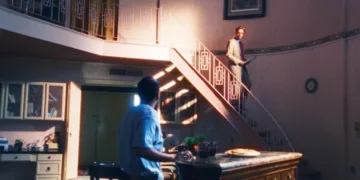
Episode four shifts the season from quirky reunion energy into domestic horror. Mizuha kills her mother during a psychological collapse. Fushi discovers the body and immediately hits a wall: he has no idea how to respond to modern crime. The dread intensifies when the mother appears the next day as if nothing happened, performing a strange kindness and claiming she has become a better version of herself. The replacement feels wrong in a way the show refuses to soften. The kitchen becomes a stage set for terror, with warmth used as camouflage.
Bon clarifies the nightmare by revealing that the mother’s real spirit still watches from the shadows of the living room. The person walking around the house is an impostor. That twist reframes the season’s threat profile. The danger no longer comes from distant battlefields or grand calamities. It shows up inside a home, then follows everyone into school.
Bon proposes a mission focused on protecting peace, and the plan requires Fushi and his friends to enroll in high school to stay close to the girl. The school turns into a surveillance space loaded with hidden risk. Bright classrooms contain a darkness that only this group can see, turning ordinary routines into watchfulness. The Nokkers fade from view as the traditional threat.
A smaller, more intimate terror takes over in the suburbs. The spirit world and the Hayase bloodline collide in the corridors of a normal school, and the season uses that setting to puncture the idea of modern safety. Stability becomes a surface treatment, something maintained by keeping the ugly parts out of sight. Fushi has to learn how to fight an enemy wearing the face of a loving parent, and the show builds its unease from that unnerving familiarity.
The third season of this animated series premiered recently to continue the story of Fushi. Fans can find the latest episodes on Crunchyroll while the show also airs on NHK in Japan. This chapter follows the immortal entity as he explores a high-tech future filled with new problems. It marks a large shift from the previous historical settings to a contemporary urban environment.
Full Credits
Title: To Your Eternity Season 3
Distributor: Crunchyroll, NHK
Release date: October 7, 2024
Rating: TV-14
Running time: 25 minutes
Director: Sayaka Koyama
Writers: Shinzō Fujita, Yoshitoki Ōima
Producers and Executive Producers: NHK Enterprises, Kodansha, Studio Drive, Studio Massket
Cast: Reiji Kawashima, Tomori Kusunoki, Rie Hikisaka, Takehito Koyasu, Mitsuki Saiga, Kenjiro Tsuda, Eri Inagawa, Aya Uchida
Director of Photography (Cinematographer): Yusuke Kawanami
Editors: Akari Saitō
Composer: Ryo Kawasaki
The Review
To Your Eternity Season 3
The shift into a contemporary setting revitalizes the narrative by replacing grand warfare with intimate psychological tension. While the rapid resolution of early plot points feels hasty, the introduction of Mizuha provides a chilling look at inherited obsession and the pressures of modern excellence. The domestic horror surrounding her mother creates a genuine sense of unease that the previous era lacked. This season succeeds by questioning if a world of technological comfort is actually safer than the past. It is a bold, unsettling direction for the series.
PROS
- The transition to a modern urban environment feels fresh and jarring.
- The dynamic between the resurrected companions adds a sense of warmth and history.
- Mizuha is a disturbing and well-developed psychological antagonist.
- The domestic horror elements provide a high level of suspense.
CONS
- Certain plot resolutions feel too convenient or rushed.
- The peaceful start lacks the immediate stakes of the earlier seasons.
- Fushi’s lack of agency in some episodes can slow the narrative momentum.