

























![Kingdom Hearts Collection [I-III] Review](https://gazettely.com/wp-content/uploads/2026/10/Kingdom-Hearts-Collection-I-III-1-360x180.webp "Kingdom Hearts Collection [I-III] Review: KHII Holds Steady as Newer Entries Fluctuate 37")





What price does a person pay for refusing the claim of death? Death Howl frames this question through the descent of its protagonist, Ro. The game lays out its narrative quickly: Ro is a grieving mother who cannot accept the loss of her son, Olvi. She turns to dark, strange magic to cross into the spirit realm, pursuing Olvi’s essence in an attempt to pull him back from the finality of passing over. The story unfolds in a setting that sometimes aligns with Neolithic Scandinavia, a world characterized by unrelenting hostility.
From a design perspective, Death Howl combines the structure of a roguelike deck-builder with the demanding difficulty philosophy associated with the Soulslike genre. The tone is immediately bleak and oppressive, saturated with grief, memory, and sacrifice. Lore does not arrive through long expository scenes. Instead, the game uses symbolic storytelling, letting fragmented encounters and riddles carry the narrative weight. Ro’s goal leads her through a non-linear, freely explorable world full of hostile spirits, so her emotional turmoil plays out inside a consistently unforgiving landscape.
A Bleak Canvas: World, Art, and Atmosphere
Death Howl’s presentation focuses on expressing deep sadness and dread through restrained visual tools. The art direction leans on intentionally rough pixel art, preferring a crunchy, abrasive look over conventional smoothness and sheen. A limited color palette strengthens the sense of bleakness, giving the spirit realm an emotionally wounded quality. The environment shifts its visual language across the game, beginning with dark, moody woodland starting zones and moving into later desert-like territories, with transitions between the four distinct regions flowing naturally across the large map.
Visuals play an active role in storytelling. Textures glitch and sprites twist into distorted shapes, mirroring Ro’s psychological state and pushing the classic pixel style toward something surreal and unsettling. Color carries narrative signals: off-greens and yellows suggest sickness and plague, while red tones mark immediate danger. Character animations, though rendered with minimal pixels, remain expressive enough to convey clear emotional weight. This careful use of minimal detail makes Ro’s isolation feel sharper and more punishing.
Sound design strengthens the oppressive tone of the world. The score is low, heavy, and somber, driven by drums and wailing horns that convey sorrow. The soundtrack stands out, and moments when the music swells, such as during crafting, create a sense of panic instead of comfort, reinforcing the idea that beauty and pain are tightly connected in this space. Ro’s voice work, often reduced to raw, pained vocalizations, anchors the emotional core of the experience. The result is a unified artistic approach that pulls the player fully into Ro’s lonely and tragic purpose.
The Grid and the Graveyard: Combat System
Death Howl structures its combat around the intersection of card management and positional tactics. Battles play out through a turn-based, grid-based strategy system. Each encounter unfolds on an arena whose size and shape can vary. Before the first move, the player chooses a starting square on the grid, and that single decision locks them into the confrontation. That opening placement functions as a kind of strategic declaration, shaping a fight that often feels like a tense, methodical chess match.
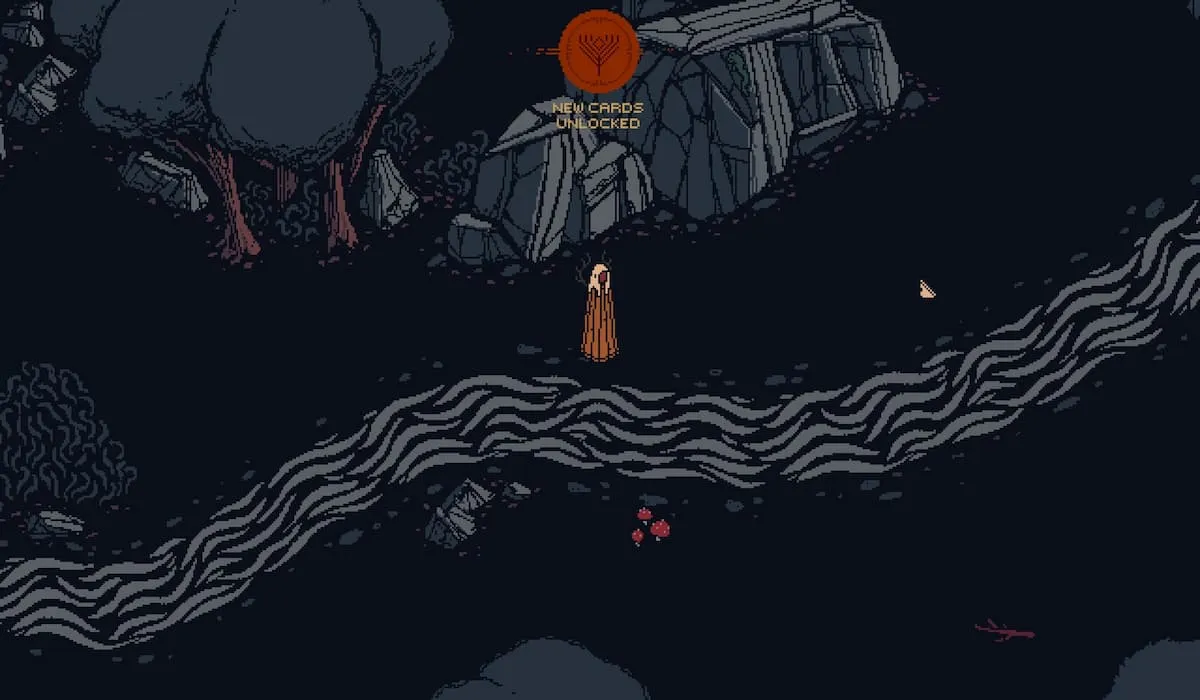
Players assemble a deck of up to twenty cards. The game divides these into melee attacks, ranged attacks, defensive cards, and buffs. Some cards carry an exhaust clause, which limits them to a single use for an entire run. Creating a deck that balances offense and defense in a stable way becomes essential for survival against the spirits that inhabit the world.
Regional mechanics sit at the center of Death Howl’s card system. The game divides its cards into five sets: four tied to specific regions and one group of realmless cards. Using a card outside its home region introduces a mana penalty, which forces players to think carefully about deck building. The system asks the player to choose between a highly specialized deck that performs exceptionally in one area and a broader deck that reduces penalties while traveling across the open world.
The game translates the Soulslike focus on studying enemy behavior into spatial terms. Winning a fight demands an understanding of enemy positioning and movement patterns, not simple repetition of attack timing. For example, learning that a raven attacks only when it sits exactly two squares away in a straight line, or recognizing that a wurm fires in an L-shaped pattern, often marks the difference between success and repeated loss.
This structured process of trial and error presses on every single turn. Totems add another strategic layer. These bonuses appear in the world and grant strong mechanical advantages, but each one comes with a specific drawback, such as increased mana paired with a new negative card in the deck.
The Cost of Grief: Progression and Questing
Progression revolves around careful handling of a fragile resource. The primary currency, Howls (Death Howls), comes from defeating hostile spirits throughout the world. In clear reference to the Soulslike template, these Howls drop upon failure in combat. The player must return to the place of death to recover them; otherwise, they disappear, locking in a constant loop of risk and reward.
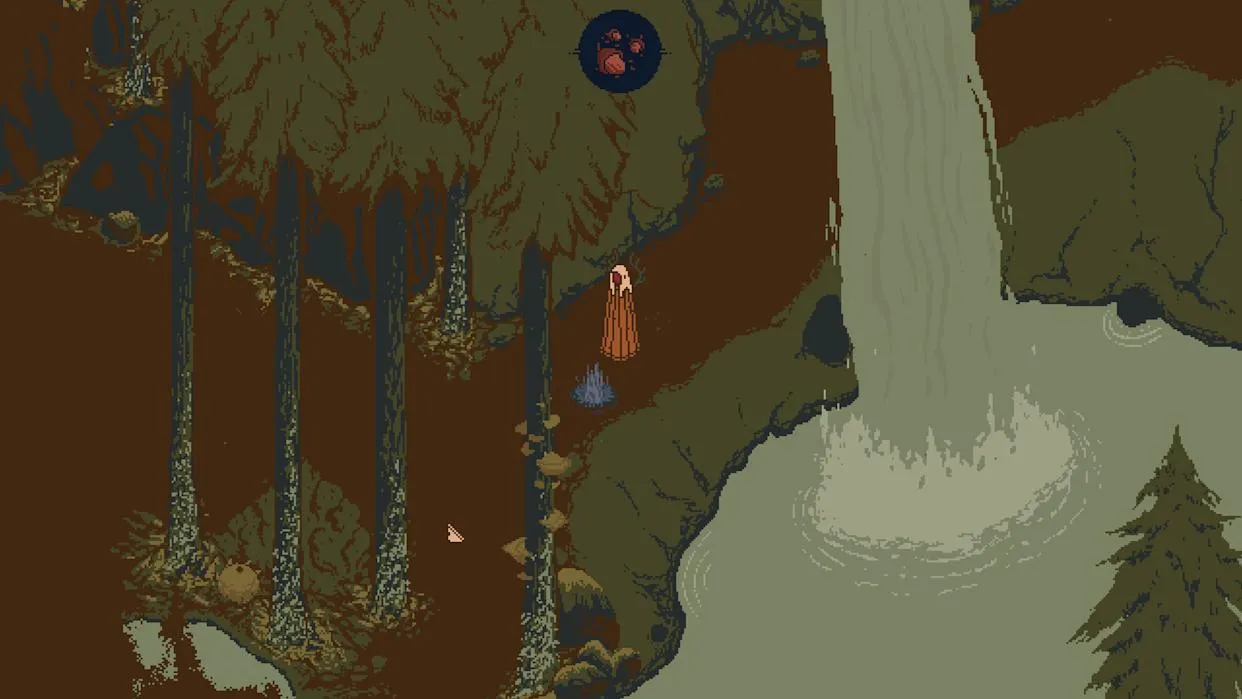 Tension increases because this currency serves two different roles. Players spend Howls to craft new cards and also to create Teardrops at Sacred Groves. Sacred Groves act as rest points and places of healing, comparable to bonfires, but using them restores all enemy encounters. Teardrops grant points for Ro’s skills or abilities and give her extra advantages. Since Howls pay for both Ro’s growth and the expansion of her card pool through Card Crafting, the resource often feels stretched thin.
This scarcity shapes the feel of progression. Players may end up fighting the same enemies repeatedly simply to gather enough Howls. Design choices reinforce this pressure with region-specific skill trees. Investment in one area provides no direct strength gains in other regions. As a result, character statistics do not rise in a smooth, global curve, and difficulty can seem unchanged for stretches of time until a concentrated number of points go into a single regional tree. Optional quests add yet another twist.
Accepting a quest equips a related card that blocks fast travel. Removing this card sends it back to its origin, and the player must physically return to the quest giver to restart the task. This design choice introduces deliberate friction into exploration and movement across the map.
The Review
Death Howl
Death Howl succeeds by fusing demanding Soulslike risk management with a strategic deck-builder on a grid. Its success is rooted in its powerful, tragic aesthetic and unique spatial combat that demands enemy mastery. Though the deliberate progression friction and dual-purpose resource system may lead to repetitive stretches, the haunting atmosphere and profound narrative commitment to grief make it a memorable experience.
PROS
- Haunting, stylized pixel art and atmosphere
- Unique fusion of deck-building and Soulslike risk
- Demanding grid-based strategic combat
- Powerful, symbolic, and evocative narrative
CONS
- Repetitive grinding needed for progression
- Resource (Howls) scarcity creates tension
- Quest mechanics add unnecessary travel friction







