


























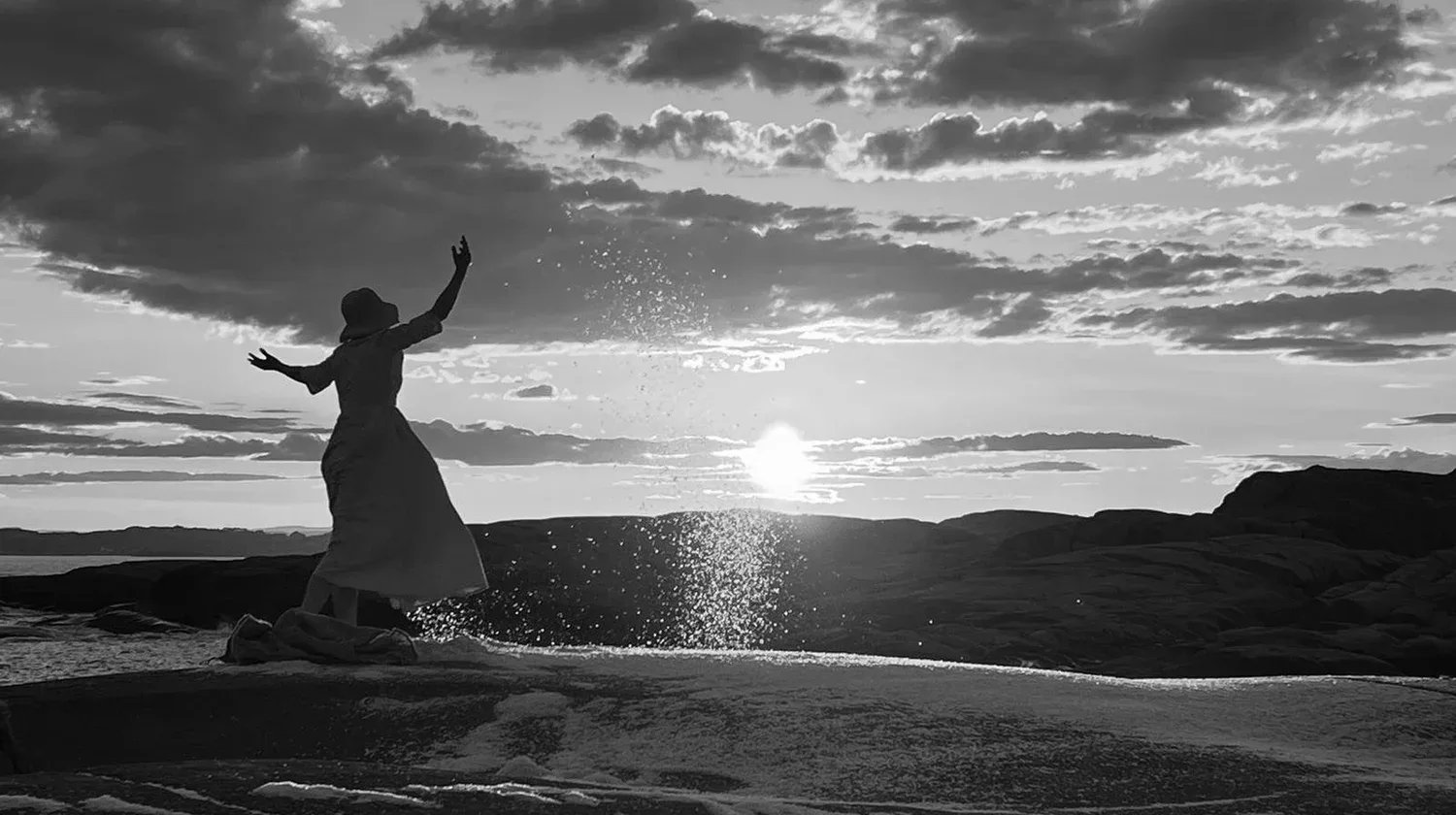

Trillion is the newest film from director Victor Kossakovsky, a filmmaker known for visually driven environmental documentaries such as Gunda. His method favors sensory immersion over conventional narrative structure, and that preference shapes every choice here. The film takes place entirely on a rugged and unforgiving Norwegian peninsula, where dark stone meets the endless churn of the ocean. Within this monumental setting, a single anonymous figure in a plain white dress repeats a silent ritual.
She walks back and forth with heavy sacks, then scatters a pale, fleck-like material across the rocks and into the severe water. The slow and mesmeric repetition of this task creates a mood of unwavering commitment. Rich, charcoal-textured black-and-white cinematography renders the landscape with a monumental presence, turning each shot into a study of scale and texture. The narrative tension grows from the mystery of this action and from the sense that some withheld explanation will eventually attach meaning to this continuous, solitary labor.
Form and the Architecture of Experience
Kossakovsky’s approach calls for close attention to visual form and sound. Cinematographer Egil Håskjold Larsen uses a striking black-and-white style that combines high contrast with intricate textural detail. The monochrome image removes the distraction of color and concentrates attention on the tactile qualities of the setting: slick dark rocks, the seething foam of the sea, and the restless movement of the white dress.
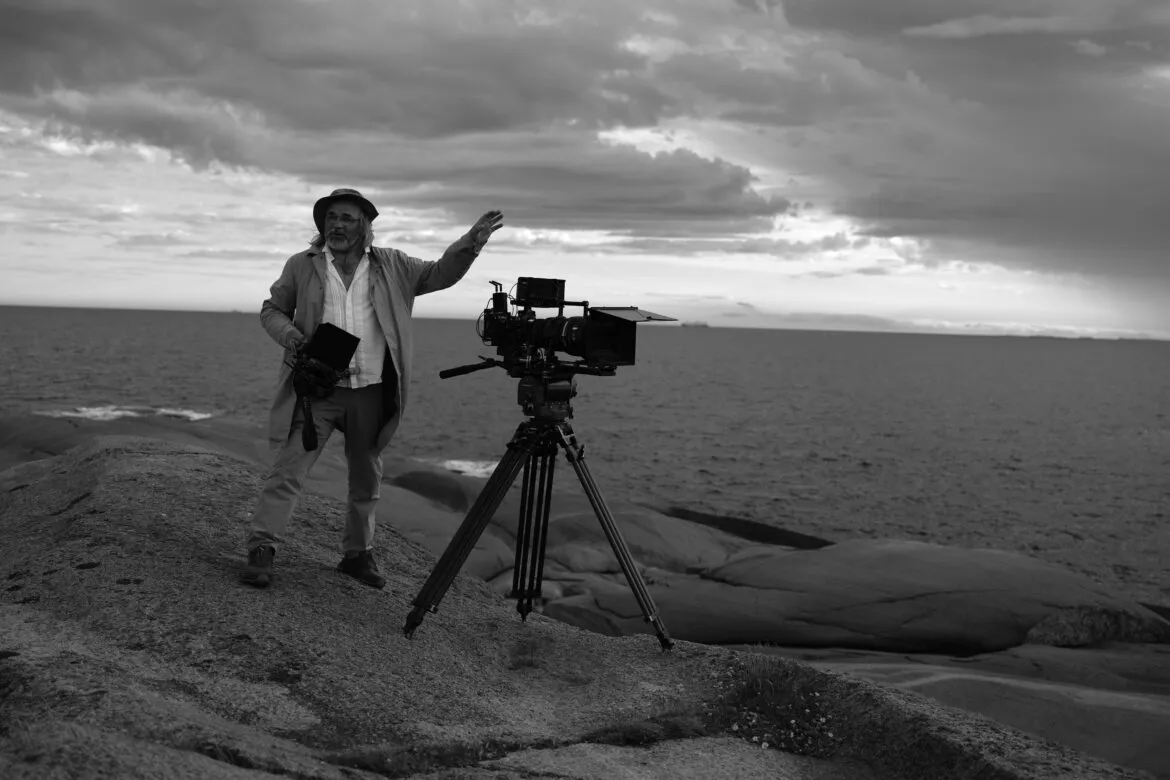
Wide-screen composition is handled with precision, repeatedly underlining the small scale of the human figure against the force of the environment and treating the landscape as a primary presence. Sound designer Alexander Dudarev adds a physical charge to the film. The gusts of wind and the low boom of crashing waves feel weighty, joined by the faint rattle of the scattered material and the controlled but forceful music for manmade instruments composed by Nastasia Khrushcheva.
The cumulative effect suggests that the film is most effective as a theatrical experience, one that benefits from the scale and focus of a large screen to convey the sublime power of the location. The slow, deliberate, and insistently repetitive rhythm of the figure’s task feels harsh by design and echoes an endless, perhaps Sisyphean effort. That repetition gives the story its basic structure.
The Weight of the Gesture
The central narrative question receives an answer only in the closing titles, which explain both the material and the mission. The flecks are fish scales, and the figure is the artist K49814. The title Trillion refers to the approximate number of fish that humanity removes from the ocean each year. The artist’s work collecting and returning the scales to the sea appears as a lyrical ecological apology, an act of atonement for global over-extraction.
The theme gains strength from the vast distance between the scale of the task and the scale of the harm. The film highlights the slow, back-breaking pace required for this act of giving back and the casual, industrial speed at which marine life is taken. Information arrives without direct commentary, and meaning comes from visual poetry and from the film’s attention to the physical act itself. The presence of Joaquin Phoenix as an executive producer links the project to a broader current of animal-rights and environmental activism.
Storytelling as Endurance Art
Trillion works as a stylized experiment in slow cinema that makes only limited use of traditional documentary narrative. It places physical and sensory experience ahead of dialogue and familiar plot beats. The austerity of the presentation and the limited supply of information may irritate viewers who expect brisk pacing or immediate explanation. Kossakovsky designs the film as a kind of puzzle that rewards patient watching once the simple and devastating context becomes clear.
The demand this structure places on the viewer mirrors the artist’s exertion and reflects the weight of the environmental argument. The film finds its strength as a piece of audio-visual artistry, using formal beauty and technical precision to deliver a grave environmental critique and to stand as a cinematic ode to nature and to the difficult work of repair.
Trillion, the latest documentary feature from acclaimed director Victor Kossakovsky, premiered in November 2025 at the International Documentary Festival Amsterdam (IDFA). The film, which follows a solitary figure engaged in a mysterious, repetitive ritual on a rugged Norwegian coastline, is the second part of Kossakovsky’s planned “empathy trilogy,” succeeding his 2020 feature Gunda. The director has stated he is fighting for the film to be seen exclusively on the big screen, aiming to prioritize it as a cinematic art form and refusing sales to streaming platforms or broadcasters. As of today, December 9, 2025, the film is primarily circulating the festival circuit and has not yet secured broad public distribution or a major platform release.
Full Credits
Title: Trillion
Distributor: TBD (Premiered at IDFA 2025; Director Victor Kossakovsky insists on a theatrical-only release.)
Release Date: November 2025 (World Premiere at the International Documentary Festival Amsterdam – IDFA)
Running Time: 80 minutes (1 hour 20 minutes)
Director: Victor Kossakovsky
Writers: Victor Kossakovsky
Producers and Executive Producers: Anita Rehoff Larsen, Joslyn Barnes, Tone Grøttjord-Glenne, Joaquin Phoenix, Susan Rockefeller, Frank Lehmann, Fridrik Mar, Kaja Bjelke
Director of Photography (Cinematographer): Egil Håskjold Larsen, Alexander Dudarev (also listed as Sound Designer)
Composer: Nastasia Khrushcheva
The Review
Trillion
Trillion succeeds as a powerful, experimental piece of cinematic art. It uses arresting black-and-white visuals and relentless pacing to elevate a singular, ritualistic act into a profound environmental statement. The film eschews traditional storytelling for sensory immersion, asking the viewer for patience before delivering its potent, ecologically sensitive message of atonement. It is a rigorous, unforgettable viewing experience best appreciated on a large screen.
PROS
- The high-contrast black-and-white visuals are technically masterful, creating a monumental, textural environment.
- The use of wind, waves, and music creates a deeply physical, atmospheric experience demanding a theatrical viewing.
- The film delivers a unique, emotional ecological statement about human impact and the difficulty of repair.
- A successful, uncompromising execution of Kossakovsky’s distinct, sensory-focused documentary style.
CONS
- The film’s slow, highly repetitive action and lack of immediate context will frustrate viewers seeking a conventional narrative pace.
- The withholding of the central fact (fish scales, artist's goal) until the end may feel arbitrary to some.
- Its structure and form place it squarely within the art-house/slow-cinema genre, limiting its broader accessibility.
- Some may feel the film makes its point but prolongs the running time beyond necessity for the repetitive action shown.