

























![Kingdom Hearts Collection [I-III] Review](https://gazettely.com/wp-content/uploads/2026/10/Kingdom-Hearts-Collection-I-III-1-360x180.webp "Kingdom Hearts Collection [I-III] Review: KHII Holds Steady as Newer Entries Fluctuate 37")



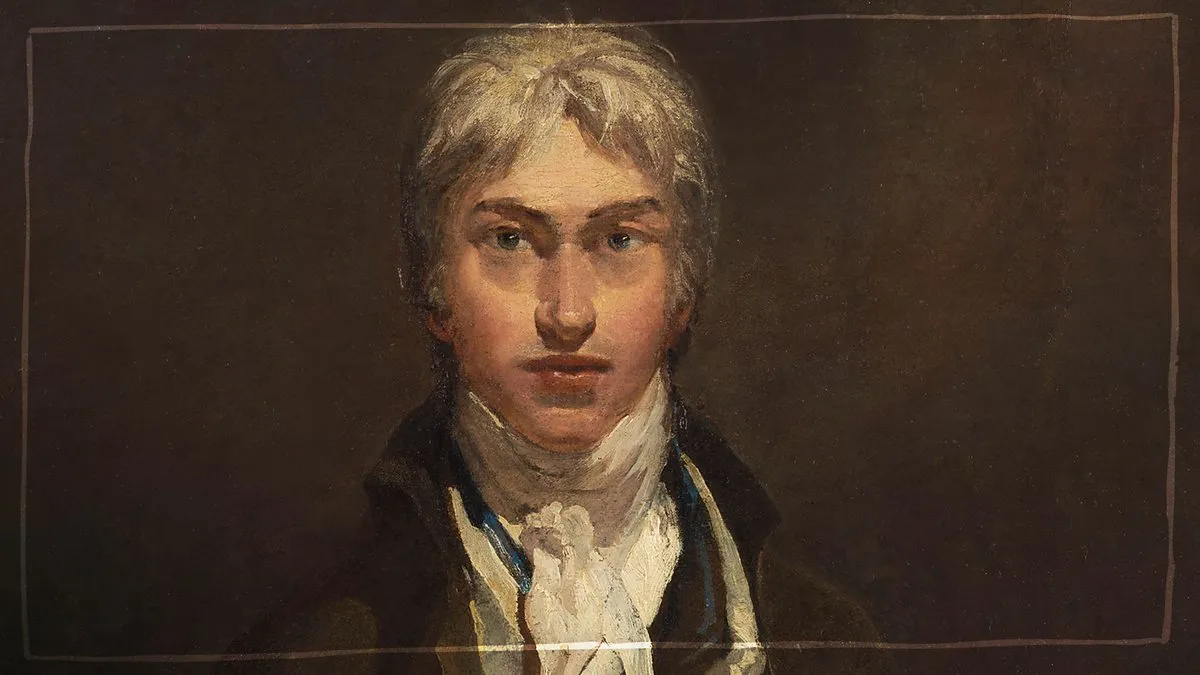

Rosie Schellenberg’s documentary Turner: The Secret Sketchbooks stages a forensic case study of Joseph Mallord William Turner, the British Romantic painter of light and turbulent landscape. His public oeuvre fixed him as a pillar of Western art, and those grand, sweeping canvases operate as a luminous facade, a screen of color and atmosphere.
The film proposes that the more exposed figure, caught in ethical and emotional gray zones, lies within the 37,000 sketches and drawings stored in his private archive. Many of these pages have rarely reached gallery walls, let alone the eye of a camera.
Their accumulated marks promise an intimacy that the finished oils carefully sidestep. The documentary shapes this archive into a cinematic investigation of the “source code” of genius, searching for brief, oblique views of an inner world obscured by public acclaim and by the artist’s own rigorous self-management. The aim is to bring Turner’s personal history into view with an intensity that matches his famous sunsets.
Shadow Play: Trauma and the Psychology of Genius
The film leans on a psychological lens to probe the origins of Turner’s fixation. It traces his difficult movement through Georgian London society, structuring the biography as a sequence of wounds that never fully close. Early trauma dominates this account: the death of his younger sister when he was eight years old, followed by his mother’s descent into mental illness and eventual confinement.
Cheerful material this is not. Clinical psychologist Orna Guralnik argues that these painful beginnings feed directly into the art that follows. She turns to paintings such as Dolbadarn Castle and reads the tiny isolated figure in the foreground and the imposing structure in the distance as a possible visual cipher for Turner’s own isolation, perhaps a displaced image of the institution that held his mother. The film treats this reading like a noir clue, a small figure in the frame that carries an outsized psychological charge.
This psychological thread extends into Turner’s working methods. Chris Packham notes a “hyperfocused” quality in the detailed architectural sketches and suggests that the obsessive draughtsmanship points toward a potential neurodiversity. The comment provides a contemporary frame for an 18th-century work ethic that might otherwise seem merely punishing.
Tracey Emin stresses that Turner, unlike many peers, rose from working-class roots, and the sketchbooks support this grounded pragmatism. They carry images alongside careful calculations for cutting the price of unsold canvases. For an artist drawn to the Sublime, he appears quite happy to behave like a shopkeeper with a ledger. The film argues that the psychological weight of this background shapes his output as deeply as any grand tour of Italy. The mind and the market both leave marks on the page.
The Craft of History: Visual Tactics and Talking Heads
Schellenberg’s structure tries to yoke scholarly rigor to a broader audience, pairing established art historians with a varied group of public figures. The result is a relay of commentary that moves between sharp analysis and amiable, lighter remarks. Packham provides some of the most striking insights as he talks through Turner’s engagement with the raw, uncontrollable power of nature in response to the Alps, identifying an “adrenalised new clarity” in those images.
His reflections on the Sublime cut cleanly through the noise. Ronnie Wood’s contributions, by contrast, carry a more casual energy. His comparison between painting processes and rock song development feels like a side riff, an easy chord change over a complex score. His description of Fall of the Rhine as “very dramatic” lands closer to polite endorsement than real interpretation, a reminder that celebrity commentary sometimes functions as texture rather than analysis.
The visual style of the documentary operates as its own character. Animation reconstructs biographical scenes, washed in a hazy, orange-tinted palette that echoes Turner’s late style and creates a soft, burning glow. These sequences establish mood and a kind of painterly chiaroscuro, with light and shadow arranged to mirror the turbulence of the life under discussion.
At other moments the presentation becomes intensely kinetic. The camera sweeps rapidly across pages, and the swift, almost strobing succession of sketches can induce a mild dizziness. The montage compresses thousands of drawings into a flicker of glimpses, tightening the viewer’s breathing and making the archive feel overwhelming.
It interrupts the long, contemplative look that the artwork itself invites. The film seems most assured in the quieter, more expressionistic compositions where the frame sits still, the paper fills the screen, and the light given to ink and graphite has time to gather weight. In those shots, the documentary borrows something from classic noir framing: a single object or line dominates, the rest falls away, and the mind begins to wander into the shadows around it.
The rhythm of cutting and commentary shapes audience psychology as much as any interpretive claim. Dense stretches of expert talk over rapid images create intellectual pressure, a sense that the viewer is chasing a fast-moving thesis through a stack of sketchbooks. Slower passages, with fewer voices and more time spent on a single drawing or painting, allow the gaze to settle and suspicion to grow, as if the viewer is piecing together a case file. The film uses this alternation of tempo to pull the audience between absorption and estrangement, curiosity and fatigue. The investigation of Turner’s mind feels like a psychological thriller built from paper and pigment.
Beyond the Canvas: Eroticism and Environmental Anxiety
The most startling archival material comes in Turner’s highly explicit private erotic drawings. These sheets open a raw window onto the artist’s appetites and sit at a stylistic angle to his public persona. Early examples appear bluntly graphic, almost purely pornographic, sketched at speed. Later drawings, linked to his relationship with Sophia Booth, carry a different tone.
A tenderness enters the line; the naked figures acquire emotional presence and look more like fully realized people than anonymous bodies. This group of works, impossible to infer from The Fighting Temeraire, offers an unfiltered view of his intimate life. The language of mark-making remains consistent, however. The “frenzied yet strangely controlled whirl of lines” that registers sexual intensity mirrors the same controlled turbulence that defines his painted storms. Desire and weather share a visual grammar.
In the final movement, the documentary turns to Turner’s sense of environmental change. His engagement with the emerging Industrial Revolution signals a clear recognition that human forces could disrupt the natural world. He perceived a capacity for “brutalising nature” long before contemporary environmental discourse took shape. The later works carry this anxiety in their atmospheres and skies, and the film draws a line from those images to a modern ecological imagination.
Turner appears not only as a canonical master, but as an artist working with a striking prescience about industry and damage. Schellenberg’s documentary refreshes a heavily examined figure. The film reconfigures him less as a marble statue and more as a difficult, compromised, and sharply modern man whose sketchbooks operate like a noir archive of a haunted mind.
Turner: The Secret Sketchbooks is a compelling feature-length documentary that explores the private life and psychological landscape of the great British painter J.M.W. Turner. The film’s core focus is the extraordinary archive of 37,000 sketches and drawings Turner left behind, many of which had been rarely seen, including a collection of explicit erotic sketches. The documentary premiered on November 19, 2025, on BBC Two and is currently available to watch on the BBC iPlayer platform. It runs for 59 minutes and features contributions from artists, art historians, and cultural figures like Timothy Spall and Tracey Emin.
Full Credits
Title: Turner: The Secret Sketchbooks
Distributor: BBC Two, BBC iPlayer
Release date: November 19, 2025
Rating: U
Running time: 59 minutes
Director: Rosie Schellenberg
Producers and Executive Producers: Rosy Rickett, Kari Lia, Hamish Fergusson
Cast: Timothy Spall, Tracey Emin, Sir John Akomfrah, Ronnie Wood, Chris Packham, Orna Guralnik, J.M.W. Turner (archival footage/sketches)
The Review
Turner: The Secret Sketchbooks
The documentary succeeds in its archival excavation, using Turner's private drawings to construct a complex psychological portrait. It effectively links personal trauma, social context, and aesthetic innovation, offering new entry points for both the specialist and the casual viewer. While the visual editing sometimes compromises sustained artistic engagement, the revealed intimacy and the prescient commentary on nature’s brutalization make the film essential viewing. It refreshes our perspective on a master long treated as an impenetrable enigma.
PROS
- Unlocks genuinely unseen primary material (37,000 sketches, including explicit erotic works) to explore Turner’s character.
- Uses professional analysis (e.g., Orna Guralnik) and expert observations (e.g., Chris Packham) to credibly discuss trauma, neurodiversity, and creative drive.
- Frames Turner’s late work with contemporary relevance, particularly his awareness of human impact on the environment (Industrial Revolution's threat to the Sublime).
- The mix of contributors balances academic insight with accessible, personal commentary, making the art history palatable for a broader audience.
CONS
- The use of celebrity commentators sometimes results in uninsightful or generalized observations that detract from the scholarly focus (e.g., some of Ronnie Wood's contributions).
- The use of rapid-fire cutting, strobing effects, and busy animations can be visually distracting and undermines the contemplative experience of viewing the artwork.
- Given the title, some segments temporarily discard the sketchbooks to cover more general biography, which may disappoint viewers seeking a purely archival deep dive.







