
























![Kingdom Hearts Collection [I-III] Review](https://gazettely.com/wp-content/uploads/2026/10/Kingdom-Hearts-Collection-I-III-1-360x180.webp "Kingdom Hearts Collection [I-III] Review: KHII Holds Steady as Newer Entries Fluctuate 37")




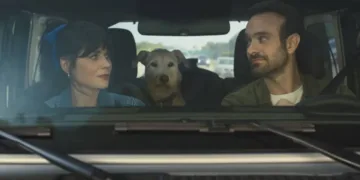
The current streaming era feels flooded with what might be called comfort commodities, movies designed for easy emotional intake and quick digital shelving. Merv slots neatly into this industrial catalogue of soft distractions, parked between the holiday romantic comedy and the pet-focused fable. Zooey Deschanel plays Anna, a precise optometrist, while Charlie Cox appears as Russ, a sincere elementary school teacher. Their breakup has just occurred, yet the pair remain linked through that modern legal and emotional fiction called co parenting, which in this case takes the form of shared custody of their wire haired terrier mix, Merv.
The plot hinge could fit on a prescription pad. The dog’s mental state dictates the human story. Merv turns inward after the domestic split; he slumps into visible canine melancholy once his primary household fractures. The diagnosis of his condition upgrades him from household companion to narrative engine and pushes Anna and Russ back into the unresolved terrain of their relationship.
The animal’s emotional decline produces a kind of therapeutic emergency. Anna and Russ head to a purpose built, dog friendly resort in ever temperate Florida for a corrective trip. The resort operates as a controlled habitat for confrontation and possible repair, a temporary laboratory of forced proximity created by one despondent dog.
The film presents itself as a cozy, dog led romantic comedy, yet its slot in holiday programming reads as a functional decision with little sense of spiritual purpose. Christmas decoration supplies surface glitter, with spiritual inquiry largely absent, a light seasonal coating sprayed onto a story that could play in any calendar window. The dramatic weight concentrates on the pet’s capacity to steer human destiny.
Scripted Sentiment and the Specter of The Parent Trap
Merv’s central device works as a small study in narrative substitution. Classical family cinema often deputizes children to force estranged adults into the same room. Here, the meddling offspring from something like The Parent Trap has been replaced with a silent, despondent creature. The dog’s clinical depression becomes the plot’s prime mover, the animating force that insists on a reunion. This Dog as Matchmaker model retools a familiar relationship trope and hands a kind of pastoral authority to an animal.
The machinery behind the film is easy to read. Predictability functions as a badge of genre loyalty, and suspense drifts into the background. The opening stretch quickly sketches the sour dynamic between Anna and Russ, then moves almost immediately to the veterinarian’s judgment of relationship induced depression in Merv. The setup moves with brisk efficiency and plants the main dramatic question without delay.
Once the story reaches the Florida resort, the pacing drifts into narrative shallow water. A large portion of the 105 minute running time sits in this extended middle act, which can feel elongated and low on urgency. The emotional stakes never quite grow enough to justify such a long simmer. The movie begins to resemble destination filler, a kind of resort cinema that leans on the novelty of setting while deeper character work waits in the lobby.
One structural problem sits in the script’s reliance on external explanation. Supporting figures, especially friends Clark and Stewart, repeatedly serve as mouthpieces for Anna and Russ’s inner lives and for the specific fractures in their marriage. These characters summarize emotions that could emerge through action, gesture or silence. That habit sidesteps the more patient process of discovery and keeps the performers from shaping subtext. The film behaves as if the audience cannot read a strained relationship without spoken annotation. Feeling is described where it could be staged.
This partial dependence on explanation connects to the movie’s habit of padding. The story imports familiar but expendable romantic detours.
New romantic options arrive for both leads in an effort to simulate risk inside a story that clearly intends reconciliation. Russ’s triangle with Jocelyn, another guest at the resort, never gains much charge. It stays thinly written, produces little romantic friction and clears itself away with minimal ceremony. Jocelyn fades from the story once her function has been served.
Anna’s flirtation receives even less oxygen. The imbalance in how the script tests each lead’s loyalty, with more attention on Russ’s temporary interest, tilts the narrative slightly toward his emotional script. His side of the separation feels more closely monitored.
The reason for Anna and Russ’s breakup sits in reserve until late in the third act. This timed revelation might look like a bid for climactic power, yet the delay softens the blow. The breakup has a grounded, serious cause that could have supplied emotional ballast from much earlier in the story. By keeping that information locked away, the film favors petty bickering over sharper excavation of the relationship. Small quarrels fill space where something weightier could sit.
The Persona and the Paradox of Charm
Charlie Cox plays Russ with easygoing appeal. His natural English accent, left intact in an American setting, adds a mild foreign flavor that gives his lighter scenes a conversational charm.

Russ arrives on screen as the more emotionally legible of the two leads. He comes across as sincere and openly vulnerable, the devoted paw rent who even curates Merv’s social media presence with eager care. The script often leans toward his viewpoint. He frequently appears as the hurt party or the one who carries the rawer feelings about the divorce, which nudges the viewer into sympathy with his wish for reunion. That tilt shifts much of the emotional labor of rebuilding onto Anna.
Zooey Deschanel’s Anna draws on the actor’s familiar millennial quirkiness, that mixture of cool distance and sudden warmth.
Anna functions as the tightly wound partner, firmly practical and meticulous about Merv’s schedule and living arrangements. Her reaction to the breakup remains composed and outwardly restrained. Within the film’s moral geometry that position marks her as the figure in need of adjustment. She becomes the person who must be opened up and corrected. Deschanel’s work feels assured yet occasionally self echoing, like a replay of previous characters, with little sense of a freshly imagined inner life for Anna.
The chemistry between the leads often seems oddly static. Each performer has individual charisma, yet their shared scenes rarely produce heat. Moments that clearly aim for lingering romantic tension, such as a staged dance sequence, land with a wooden quality, as if the actors are following steps that never quite sync with the emotion on the soundtrack.
The script shows little interest in convincing the viewer of the couple’s original spark. The contrast between Anna’s ordered, buttoned up worldview and Russ’s casual, whimsical energy stays on the surface. The film asks the audience to accept a history of great love as a given. The evidence on screen remains thin.
The supporting ensemble mainly performs instrumental duties. Chris Redd and Jasmine Mathews play figures who reinforce the central couple’s conflicts or supply the necessary variety of resort personalities. Their characters rarely move past function into depth. A short visit to Russ’s Florida based parents, MJ and Jack, gives the film a fleeting sense of lived in history. The scene offers Anna a moment inside the extended family she once occupied and hints at emotional roots that the script otherwise leaves untouched.
The dog, played by Gus under the name Merv, holds the most stable emotional position in the movie. Gus gives a surprisingly affecting portrayal of canine sorrow without any help from trick voice over or cartoon style slapstick. Merv’s mournful presence steadies the story and acts as the clearest emotional reference point.
The Sacrificial Aesthetic and Cultural Comfort
Director Jessica Swale steers the movie toward a carefully sweet, feather light tone that aims to offend no one, a goal backed up by the PG rating. The design feels deliberate. Merv plays like a prepackaged mood adjuster that asks for very little intellectual or emotional strain.

Visually, the film aligns with the platform house style of present day streaming cinema. The images are tidy and functional, yet largely free of idiosyncratic touches. The project fits a sacrificial aesthetic of content era filmmaking, a look that prizes competence and disposability in equal measure.
The holiday branding of the piece carries a faintly cynical air. The movie offers quick postcard shots of snowy Boston at the beginning and at the close, then spends most of its narrative life inside a sun soaked Florida resort. That tropical environment drains Christmas of any real thematic function. The seasonal coat feels like a marketing directive, confirmation that this is first a dog focused romantic comedy that happens to pass through a holiday window, and any sense of spiritual wrestling stays remote from the frame.
Genre patterning operates with near total loyalty. The film behaves like a cinematic safety device, checking each familiar beat of the exes reconcile template and leaving surprise on the cutting room floor.
For viewers who seek a recognizable Hallmark style rhythm, this mechanical certainty provides comfort. For anyone drawn to formal or emotional experimentation, the absence of risk provokes irritation. The movie’s steady commitment to cuteness and cuddliness erases opportunities for sharper psychological shading or genuine tension. The product has been engineered for ease of consumption and steers clear of discomfort.
What remains most persuasive is the simple charm of Merv and the baseline appeal of Deschanel and Cox. Their presence and the dog’s perpetual adorableness carry a script that rarely rises above derivative pattern. Merv functions as a piece of affective padding, a soft buffer of pleasant images and gentle stakes. The story’s attention leans heavily toward the human couple, which quietly pushes its canine title character into the role of necessary device and keeps him from functioning as constant subject. The result is a mild, predictable piece of streaming entertainment that offers a brief hit of comfort viewing for dog enthusiasts and casual fans of romantic comedy, then evaporates from memory soon after the credits.
Merv is a romantic comedy film that premiered on Prime Video on Wednesday, December 10, 2025. The story follows Anna and Russ, an estranged couple who are forced into an awkward reunion when their shared dog, Merv, becomes clinically depressed after their breakup. Hoping to lift their pet’s spirits, they take him on a beach vacation to a dog-friendly resort in Florida, which unexpectedly forces them to confront their unresolved feelings. The film is available to stream on Prime Video.
Full Credits
Title: Merv
Distributor: Amazon MGM Studios, Prime Video
Release date: December 10, 2025
Rating: PG
Running time: 1 hour 45 minutes (105 minutes)
Director: Jessica Swale
Writers: Dane Clark, Linsey Stewart
Producers and Executive Producers: Matthew Baer, Roma Downey, Kerri Hundley, Kai Raka, Colleen Marshall, Marc Newland, Jeanette Volturno
Cast: Zooey Deschanel, Charlie Cox, Gus the Dog, Chris Redd, Patricia Heaton, David Hunt, Ellyn Jameson, Jasmine Mathews, Wynn Everett, Joey Slotnick
Director of Photography (Cinematographer): Julio Macat
Editors: Annette Davey, Nancy Richardson
Composer: Tom Howe
The Review
Merv
The film is a calculated, streaming-platform comfort commodity. Its sophisticated central premise—that animal depression demands human reconciliation—is ultimately undone by saccharine, over-explained plotting and a fundamental lack of romantic tension between the leads. It will satisfy its core demographic of pet-lovers but fails to justify its lengthy runtime or transcend its superficiality.
PROS
- Adorable, effective non-verbal acting of canine sadness.
- Likable, sincere performance elevates Russ's character.
- A harmless, inoffensive choice for comfort viewing.
- The core concept of "pet-mandated re-coupling" is clever.
CONS
- Pacing slows considerably; relies on external exposition.
- Anna and Russ lack a convincing, necessary romantic spark.
- Avoids confronting the real emotional depth of the breakup.
- Plays every expected genre beat without originality.







