

















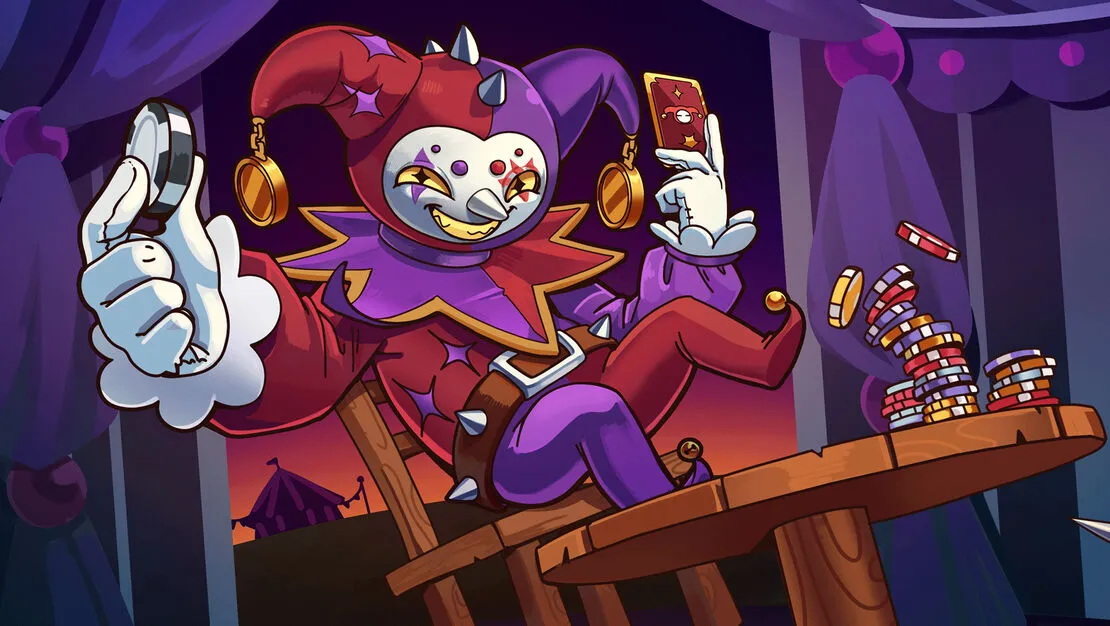

The opening of This Ain’t Even Poker, Ya Joker drops you into a grim carnival scene with a simple, nasty hook: Lester the Jester has you hostage and wants one billion coins for your release. That demand gives the early hours a clean target, and the game builds its first loop around pure momentum.
You start by manually clicking to flip one card. Each flip pays out, so every click converts directly into coins. High cards pay more, which makes the early grind feel readable and steady because the game keeps rewarding the action you are already taking.
That pace ramps up fast once the game expands your play space. You grow from a single card into a seven-card hand, leaning into the familiar incremental rhythm seen in games like Cookie Clicker. Early earnings funnel into upgrades that automate flipping, and that shift changes your role from constant clicking to constant tuning.
Decks unlock, hands multiply, and the screen starts to express the idea of scale through motion. Before long you are managing ten separate hands, each holding seven cards, all flipping in rapid succession. The opening stretch is defined by that transformation: a one-click routine turning into a machine that prints coins while you keep shopping for the next piece that speeds it up.
Strategic Refinement and Expeditions
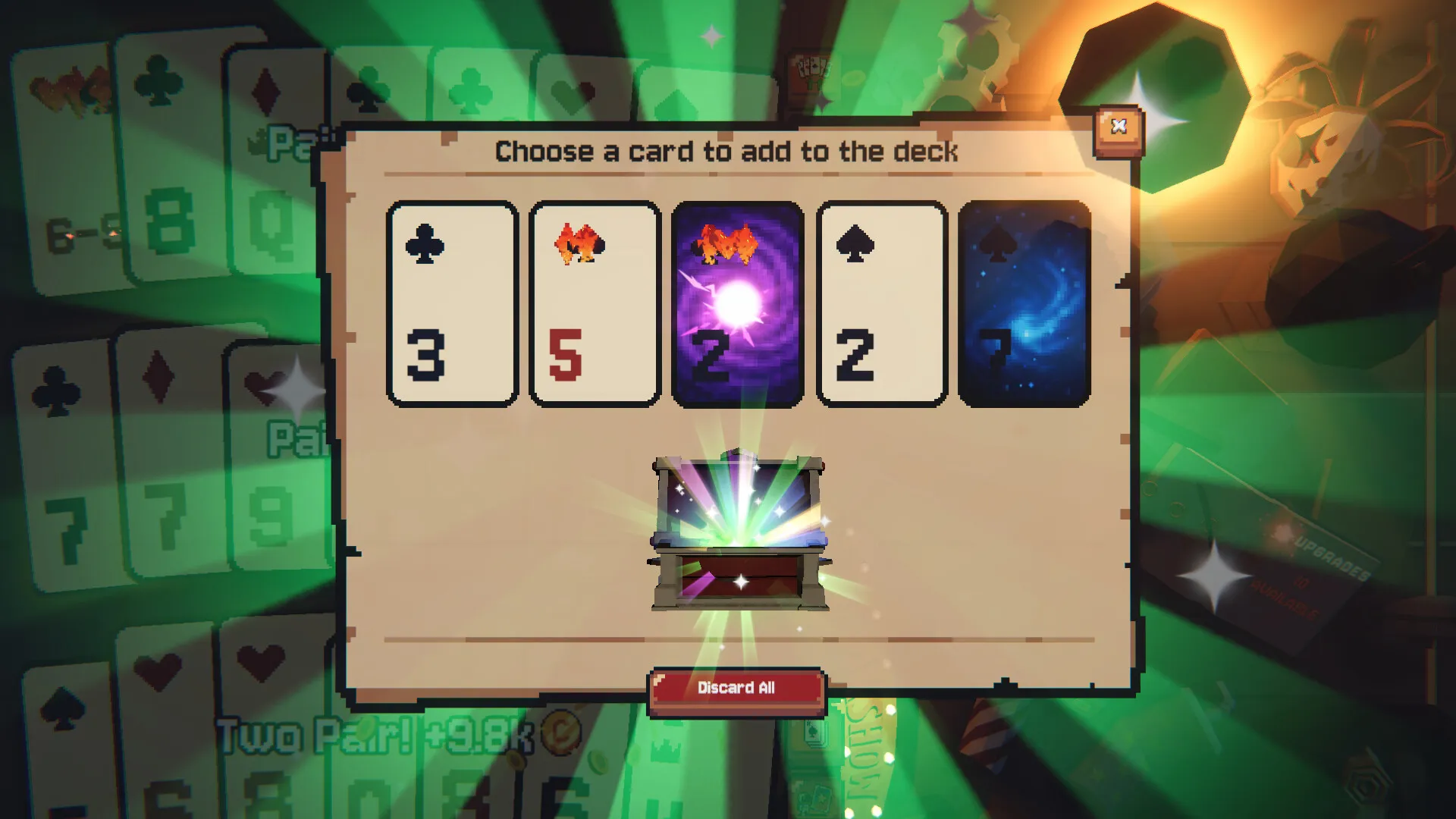
Once the automation engine is running, the game asks for sharper decisions through its deck management systems. The key tool here is Expedition, which gives you direct influence over card quality. You send specific hands on timed quests, and those trips can return non-standard cards that bend poker rules. The rewards can come back with multiple suits, strange numbers, or special abilities that spike your scoring.
A rarity ladder from common to legendary frames the chase, and the better pulls stand out visually while attaching huge multipliers to your coin totals. It turns expeditions into more than a side activity, because each new card has the potential to reshape what your strongest hands look like.
Efficiency also depends on cleaning out the junk. The culling feature lets you destroy low-value cards, thinning the deck so your best pieces show up more often. That kind of trimming echoes the deck-thinning logic seen in games like Balatro, where cutting weak draws can matter as much as adding power. Expeditions also keep a sense of fairness by letting you reject a reward that does not improve your build.
Taking nothing avoids a price hike on the next expedition, so passing can be a smart play instead of a penalty. Throughout all of this, a ledger scroll sits on the table, constantly updating your progress toward the billion-coin target. As your totals climb into the millions, that readout becomes the clearest way to judge how well your current setup is scaling.
Mary the Fairy and the Prestige Cycle
Hitting one billion coins does not open the cage door. The game pivots into its next layer by introducing Mary the Fairy and a prestige system called ascension. The path forward requires you to sell your entire setup to earn Poker Chips, a specialized currency tied to long-term progression. This is a familiar reset structure for incremental games: you cash in short-term power to buy permanent upgrades that reshape the next run.
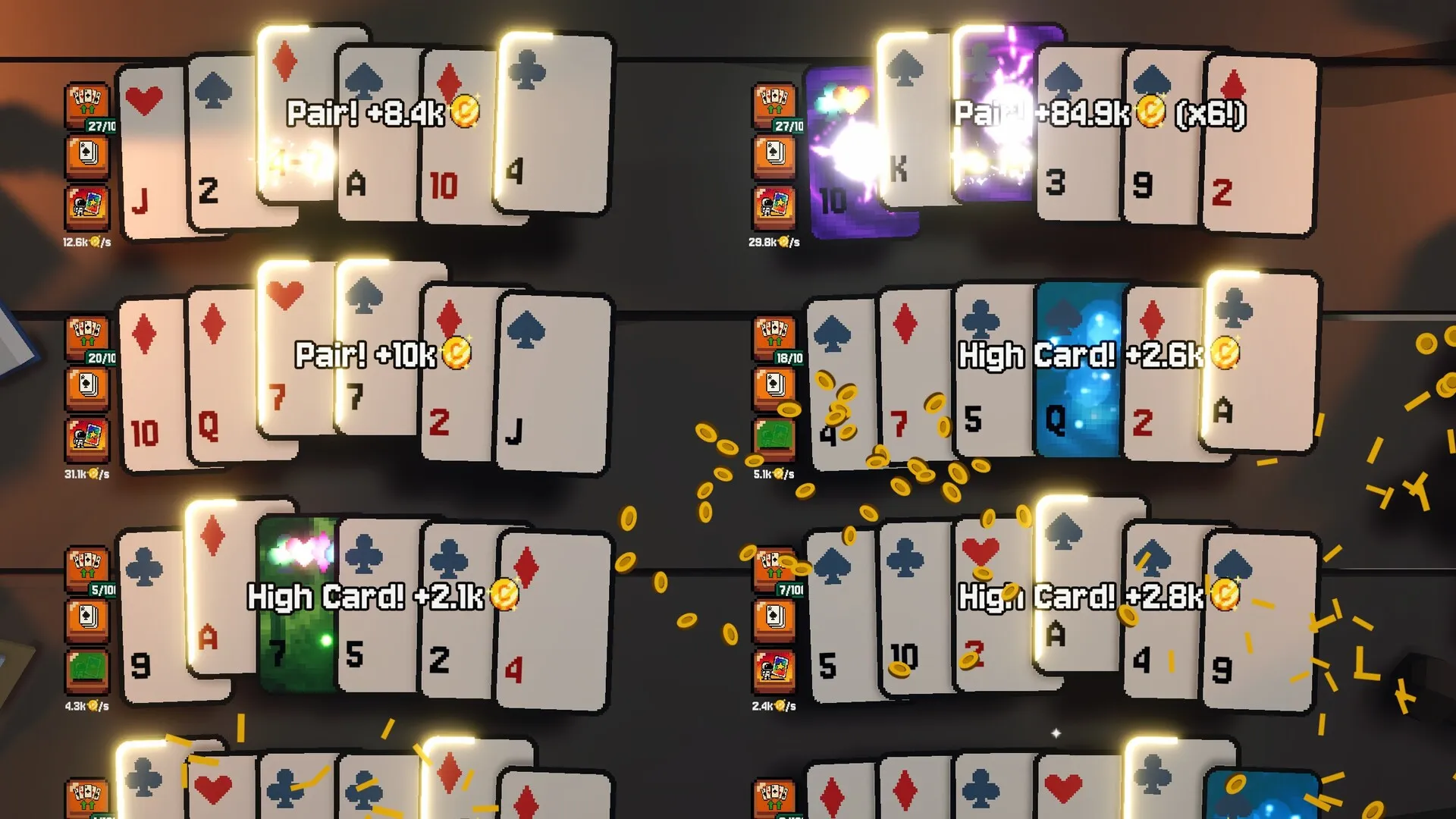
Mary’s shop changes the rules of hand-building in meaningful ways. Her upgrades can alter how hands are formed, including the ability to unlock new winning combinations such as six-card and seven-card hands. With those upgrades online, the number scale shoots upward into sextillions, pushing the coin economy into absurd territory that fits the carnival-nightmare tone. The reset stops feeling like loss and starts feeling like a planned step in a ladder, because each ascension broadens what your next build can do.
Mary also brings structure to the grind through quests and achievements. These objectives ask for concrete tasks like flipping cards a certain number of times or finding specific cards through expeditions, giving you a rotating set of smaller goals between major cash-outs. Beneath the main play area, you can activate interactable trinkets.
Once powered up through the new upgrade tree, they function as additional automated income sources, adding another set of dials to tune while the hands keep flipping. Mary presents herself as helpful, yet the story keeps an uneasy edge. Her motives stay unclear, and that uncertainty hangs over the long push to reach the 250 Poker Chips she demands. The loop settles into a repetitive, satisfying cycle: build up, sell out, buy upgrades, then rebuild with a stronger foundation.
The Final Showdown and Technical Performance
Visually, the game mixes styles to keep the table readable while pushing spectacle. The card table sits in a low-poly 3D space, and character portraits plus special cards lean into pixel art. As your engine accelerates, the screen fills with effects: flashing cards, glowing coins, and UI fireworks that fling across the desktop. The intensity sells the idea of runaway growth, and long sessions can make that constant strobe of rewards feel tiring.
The audio leans much harder on repetition. The soundtrack sticks to a single looping carnival theme, and the automated trinkets add repeating sound effects that can wear thin over time. The game encourages long, semi-passive sessions, so it is easy to imagine players using the volume slider and letting other music run while the machine keeps paying out.
The endgame turns into a literal confrontation with Lester the Jester. The finale frames your poker hands as weapons and asks you to deal one trillion damage to the boss. In this stage you collect Runes that buff attack power, letting your cards hit harder as the fight continues. It takes the “unstoppable slot machine” feel of the earlier loop and pushes it into a combat-shaped structure, with your build choices feeding directly into damage output. Performance is mostly steady, yet a few technical quirks show up in reports from players.
Some mention visual glitches like rogue pixels that disrupt the screen, and others point to high hardware usage, which feels surprising for a game with a sparse, minimalist look. Those issues sit alongside a finale that shifts the game from a straightforward idler into a boss-focused card battler, giving the experience a clear finishing stretch built around pressure and payoff.
The Review
This Ain’t Even Poker, Ya Joker
This game is a compelling entry in the incremental genre, successfully merging the satisfaction of card-based strategy with the addictive nature of an idler. While the repetitive audio and intense visual effects might require some personal adjustments, the depth of the expedition and prestige systems provides a rewarding sense of progression. It effectively transforms a simple clicking premise into a complex engine of numbers. It is a worthwhile investment for those seeking a stylish, low-pressure experience that still offers tactical agency.
PROS
- Deep and rewarding upgrade trees.
- Engaging expedition system for deck customization.
- Stylish pixel art and visual polish.
- Low price point for the amount of content.
CONS
- Monotonous, looping audio tracks.
- Visual effects can be overstimulating.
- Initial tutorial phase is somewhat lacking.