




























The film begins in the soft blur of a grainy demo-tape shot, a plain plastic cassette that triggered a frantic bidding war among major labels. In 1991, Counting Crows were a fledgling folk-rock ensemble working the intimate clubs of Berkeley and San Francisco. The documentary follows their rapid shift from a local circle of musicians, including Dave Bryson and Charlie Gillingham, into a global phenomenon.
That acceleration runs through August and Everything After, a debut album that connected with a post-grunge audience hungry for melodic sincerity. The hinge point becomes the “Mr. Jones” music video, where constant MTV rotation turned a song about craving fame into a lived reality.
In those early days, the band’s chemistry is shown as discovery driven, sustained by collective experimentation. Then commercial success arrives at scale, and the trajectory changes for good. Amy Scott holds onto the innocence of the Bay Area gigs for as long as she can, right up to the moment the industry’s weight settles onto their shoulders.
The Paradox of the Public Eye
Director Amy Scott builds the story around the tension between mass adoration and public contempt. Millions bought the records, while a cynical slice of the culture treated the band like a standing joke. That friction sharpens inside the group: the members moved through a kind of relative anonymity while Adam Duritz became a recognizable icon. Duritz is presented as the functional CEO of the band, a role that carried authority and seeded strain with his bandmates.

The film shares bleak anecdotes of strangers approaching the musicians for a single purpose: to announce their hatred of the band’s success. During the peak of the frenzy, Duritz looked for refuge behind the bar at the Viper Room in West Hollywood, bartending as the mania raged outside. His high-profile romances with television stars intensified the media storm, and the noise began to eclipse the music itself.
Live shows started to feel engineered by demand, described here as “mania shows” where crowds arrived for the hits and little else. Los Angeles celebrity culture pressed the band into maintaining an image that kept drifting from their creative roots.
Vulnerability and the Dissociative Mind
The documentary then steps into heavier terrain with Duritz’s long-term, undiagnosed dissociative disorder. The film links that struggle to the emotionally strained, angsty writing that shaped his career, treating the lyrics as a record of pressure rather than a pose. His condition is tied to the sonic shape of the 1997 follow-up, Recovering the Satellites, which traded the debut’s polished folk sensibility for a more jagged sound. Band members speak plainly about the challenge of working with a frontman frequently caught inside a psychological crisis.
Their accounts cast the concert experience as something closer to witnessing a man process his internal reality in real time, with the stage becoming a public site of private rupture. The lyrics read as a vessel for mental fragmentation, a form of splintering that rarely had public language in the nineties. By connecting clinical diagnosis to artistic output, the film invites a reassessment of songs long brushed off as melodrama.
Hindsight and the Shifting Silhouette
The film’s visual language leans into nineties nostalgia through handwritten captions, VHS textures, and archival photographs, anchoring the storytelling in the era that produced its myth. Scott interviews the band members separately from Duritz, creating space for perspectives that might have collapsed inside a group conversation. Contemporary figures, including Chris Martin and various music journalists, provide an outside frame for the band’s lasting influence.
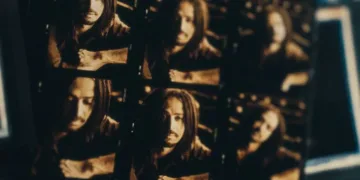
With three decades of hindsight, the participants speak with a candor that youth rarely permits under that level of scrutiny. The narrative ends on a symbolic gesture: the removal of Duritz’s signature dreadlocks. The moment lands as a quiet form of resolution, shaped by years spent behind a public silhouette that functioned like branding. It points toward acceptance of identity apart from the 1990s image-making machine. The film treats that physical change as an emblem of peace after surviving the turbulence of sudden, massive fame.
Counting Crows: Have You Seen Me Lately? is an intimate HBO Original documentary that explores the meteoric rise and enduring legacy of the alternative rock band Counting Crows. Premiering just two days ago on December 18, 2025, the film is the latest installment in Bill Simmons’ Music Box series. It provides a raw look at the band’s transition from the San Francisco club scene to global stardom, centering on frontman Adam Duritz’s struggle with sudden fame and his diagnosis of a dissociative disorder. The documentary is currently available to stream on Max and Crave, featuring a blend of rare archival footage and candid new interviews.
Full Credits
Title: Counting Crows: Have You Seen Me Lately?
Distributor: HBO, Max, Crave
Release date: June 5, 2025 (Tribeca Festival), December 18, 2025 (HBO/Max)
Rating: TV-MA
Running time: 90 minutes
Director: Amy Scott
Writers: Amy Scott
Producers and Executive Producers: Jonathan Lynch, Brian Morrow, Bill Simmons, Jody Gerson, Marc Cimino
Cast: Adam Duritz, Cyndi Lauper, Steve Kerr, Chris Martin, Jeff Ross, Mary-Louise Parker, David Bryson, Charlie Gillingham, David Immerglück, Matt Malley, Dan Vickrey
Director of Photography (Cinematographer): Jonathon Narducci
Editors: Matt Thiesen
Composer: Heather McIntosh
The Review
Counting Crows: Have You Seen Me Lately?
This film offers a clear window into the disorientation of nineties fame. It avoids the typical traps of rock hagiography by focusing on the psychological cost of being a cultural icon. The separate interviews provide a balanced look at a band often overshadowed by its leader. While the ending feels a bit simplistic, the archival footage remains a vital piece of music history. It succeeds as a character study of a man trying to find his footing while his public image remains frozen in time.
PROS
- Unfiltered access to Adam Duritz and his personal history.
- Clear visual style that utilizes period-accurate motifs.
- Balanced perspectives from all active band members.
- Honest treatment of mental health and its impact on creativity.
CONS
- The symbolic ending feels slightly forced.
- The specific focus excludes much of the band's later career.