





























Monome Studio’s This Is No Cave frames itself as a high-speed, gravity-defying action platformer. From the opening moments, it builds a deliberate mismatch between title and place: dark, murky, hazardous caverns that treat every tunnel like a trap. The game drops the player into a continuous run where the central goal stays fixed on velocity, pushing from start to finish in the smallest possible time window.
The lead character auto-runs, guided by what the developers call a “one-click parkour” idea, and that simplicity quickly grows into a system that asks for sharper execution. Speed is reinforced by a second force that never lets the player settle: a giant space worm chasing through the tunnel network.
The result fuses the urgent forward drive of a B-movie monster setup with the mechanical demand to keep moving. In that pairing, the game echoes a familiar thread shared by global cinema and arcade culture, where an external threat sets the tempo and humans respond through technique, reflex, and a little technological cleverness.
Precision, Momentum, and the Auto-Runner Base
The mechanical identity of This Is No Cave comes from taking the auto-runner foundation and turning it into a space for high-level technical play. The protagonist never stops running, and the player’s job becomes a constant effort to seize control from the character’s “freewill” through timing. Inputs revolve around a cursor that directs jumps and actions. The developer recommends a mouse for edge accuracy and precision, and that recommendation signals a high skill ceiling. Handheld play remains viable through twin sticks for movement and direction.
Traversal depends on a set of movement tools that reward planning inside the split-second pace. A thruster or jetpack supplies vertical control, letting the adventurer climb or drop fast, and its limited tank turns every burst into a resource decision. A grapple rope attaches to designated objects, enabling swings around corners and momentum-building arcs that feel engineered for speed routes.
A second input allows the player to steer the swing, so directional control becomes part of the timing test, not an afterthought. The early pacing gives breathing room and leaves space for collecting gems. Before long, the intensity climbs and the game pushes players toward path optimization, where repetition becomes training and the goal shifts to hitting a clean tempo. That loop, with its harsh learning process and fairness in execution, calls to mind the punishing rhythm often described through “Souls-like deaths.”
Global Competition and The Perfect Run
The structure of This Is No Cave funnels player energy into competitive time trials, with a focus that recalls early speed-driven platformers like Sonic and their obsession with optimal pathing. The game includes 30 distinct, non-procedurally generated levels, and each can be played across three difficulty settings. Fixed design matters here because it creates a stable proving ground for leaderboards, where each route becomes a shared text for a global audience to read, contest, and rewrite through practice.

Those integrated rankings act as the game’s main cultural interface, inviting players to measure themselves against strangers across regions, play styles, and hardware setups. Chasing the fastest time often pushes players to skip secondary goals like gem collection and treat every second as currency. That shift highlights the distance between casual clears and the extreme times posted at the top, a gap that can feel discouraging and also functions as the hook for dedicated competitors.
Beyond the main set of levels, an infinite mode with roguelite elements explicitly reaches for the speedrunner community and its appetite for repeatable systems. For group play, the game offers a 4-player co-op/PVP option. The developers also keep adding features such as “ghosts” for racing one’s own performance and “noob-friendly checkpoints” on complex stages, signaling active engagement with a worldwide player base that values constant mechanical tuning.
Aesthetics and The Cross-Media Identity
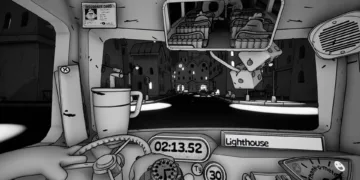
The visual design follows function first, building a readable stage for speed. The caverns sit in a muted, dark palette so key traversal objects and platforms stand out with brighter color cues that support rapid decisions. Small touches, like water trailing down walls, add texture without muddying the read.

The “single-click” pitch invites immediate comparisons to mobile auto-runners, and that comparison raises a real question about streamlined accessibility and depth. The technical execution answers by insisting on precision and routing. The simplified input works as an entry point, then the game asks players to chain systems, manage thruster fuel, commit to grapples, and maintain directional momentum under pressure.
The identity that emerges depends on speedrunning culture and the mindset it carries across gaming scenes worldwide: repetition as craft, mastery as self-imposed discipline, and performance as the language players use to communicate with each other through leaderboards. The game’s staying power rests on that desire to perfect motion, run after run, until the tunnel feels less like a cave and more like a track built for obsession.
The Review
This Is No Cave
This Is No Cave brilliantly executes its vision of high-speed parkour. It succeeds by pairing deceptively simple "one-click" inputs with complex, momentum-based mechanics, like the grapple and thruster. The game demands precision and constant technical improvement from the player, driven by an urgent narrative threat and relentless global leaderboards. While the visual aesthetic is functional, the core loop of repetition and optimization is compelling. It serves as a focused, competitive platformer, rewarding those who embrace the pursuit of the perfect, fastest run.
PROS
- High-speed, momentum-based parkour.
- Excellent synergy between simple input and deep mechanics.
- Strong focus on competitive speedrunning and leaderboards.
- Engaging boss-chase pressure mechanic.
- Active post-launch developer support.
CONS
- Difficulty jump can be severe for casual players.
- Simplified visual style may not appeal to all.
- Requires dedication to repetition for maximum enjoyment.